Italian senator proposes mandatory instruction of wine culture in public schools

dario stefano italian wineAbove: Puglia senator Dario Stefàno (image via Dario Stefano’s official website).

Last week, Italian politician Dario Stefàno, senator from Puglia and member of Italy’s Left Ecology Freedom party, formally introduced a bill in the Italian parliament that would make “Wine History and Civilization” a mandatory subject in Italian public schools.

Together with a panel that included the Italian ampelographer and wine historian Attilio Scienza and enologist Riccardo Cotarella, Stefàno held a press conference in Rome on Thursday where he put forth his proposal and outlined a draft of legislation that would require students in Italian public schools to receive instruction in wine culture for at least one hour per week.

“There is no chapter of our country’s history,” said Stefàno in his prepared remarks (translation mine), “that does not include episodes linked to grape growing and wine. We need to begin to tell Italy’s story through the landmark events that have defined every important passage of history. The moment has arrived for Italy to include ‘Wine History and Civilization’ as a full-fledged and mandatory subject in our children’s basic educational curriculum. After surpassing France in a historic milestone, Italy is today the leading producer of wine in the world. The time has come to fill this cultural gap by teaching the country’s children about one of its defining characteristics. This is not a matter of expanding technical instruction in our trade schools, something that also needs to be promptly addressed. Instead, instruction devoted to the role of wine and grape growing in our country’s history will help to shape our cultural heritage and the education of future generations. There is no doubt that wine and grape growing are already ambassadors of our culture throughout the world. My hope is that we can launch a pilot program as early as next year in two or three regions of Italy and perhaps Puglia could be one of those.”

In his own remarks, Scienza addressed the evolving role of wine in Italian society today:

Italians “have lost the habit of serving wine at home,” he said (translation mine). “Young people around 15 years in age consume alcohol at least once a week but they do so outside the home. And their logic is that of having a good time. We need to bring wine back into our homes, into our schools, and into the core of Mediterranean culture because wine is not for getting drunk: It is the origin of our identity and our belonging. We need to bring wine back to being a beverage of the people. And beyond telling the story of wine as a significant element of our history, we need to convey the idea that wine is fundamental element of the peoples of the Mediterranean. Drinking should not be the source of physical gratification. It should be the source of cultural gratification. In the light of this, we need to reveal the history behind wine. We have stopped sharing this with our youth. Bringing this into our schools is a first step in a process that we need to continue to develop.”

Complete notes (in Italian) from the press conference and transcriptions of statements by Stefàno’s co-panelists can be found on Stefàno’s website.

Natural wine, what the fuss? We have it all wrong…

parzen familyAbove: my now bi-weekly Sykpe sessions with Giampiero Bea — the president of the ViniVeri Consortium of natural winemakers — include a little family time. Our girls are really curious about him and they are starting to get interested in Italian and the fact that their mommy and daddy often speak in Italian.

Just when some had written off “natural wine” as passé, the category seems to have sprung up once again in the wine dialectic and discourse.

Just last week, the Amsterdam-based food and wine writer Simon Woolf published a post on Palate Press entitled “The Good, the Bad and the Ugly… of natural wine.”

“Things get troublesome,” he writes, “when acolytes start to defend wines and producers just because they are ‘natural,’ forgoing any kind of quality control in favor of idealism… Well-meaning and enthused they may be, but in truth [“naturalistas”] are quite poisonous to the natural ‘niche’ as a whole, because they give the flawed impression that no-one in the sector has any skill or selectivity.”

And earlier this month, Eater wine columnist and wine professional Rachel Signer asked “Does ‘Natural Wine’ Deserve Its Own Classification?”

“The natural wine movement is reaching new heights,” she notes, “both in terms of production and consumption. Young, upstart natural winemakers have made their careers in the last ten years throughout France, Italy, and the U.S., thanks in part to high-profile restaurants and bars focusing bottle lists on less manipulated juice. All of which begs the question: Is it time to define these wines so consumers know that what they’re drinking is — to some extent — natural?”

And as surreal as it may seem, even “big” wine is embracing the de facto category: the world’s leading advocate for natural wine Alice Feiring will be chairing a natural wine tasting panel and competition at this year’s Vinitaly, the Italian wine trade’s annual fair in Verona.

The award is “a way to bring the conversation about what wine is — not only natural — to a much larger audience,” wrote Feiring on her blog last month.

“The fact that [Vinitaly] embraced this category is ground-breaking. Frankly, it is a big deal and is bound to shake up the status quo.”

(Alice’s subscription newsletter, btw, is imho the best resource on natural wine today.)

giampiero beaAbove: my chats with Giampiero have radically reshaped my thoughts on natural wine.

For the non-Italophones among us, I’d like to add a voice to that chorus by sharing my excerpted translation of a short post by Armando Castagno, one of the top wine educators and writers working in Italy today and one of the technical tasters and intellectuals I admire most.

“When uttered in the context of wine,” he wrote on Accademia degli Alterati last week, “‘natural’ is not the opposite of ‘artificial’ as those who can’t see the forest for the trees struggle to understand (or worse, don’t realize that they don’t understand).”

“‘Natural’ is the opposite of ‘ideal.’ It is something that doesn’t have a canonical form to which it can aspire or achieve by means of addition or subtraction.”

Make of it what you will, but the conversation on natural wine today is as vibrant as ever — on both sides of that great misunderstanding otherwise known as the Atlantic.

Throughout this dialectic and its metaphysical contradictions, my own thoughts on natural wine have been evolving rapidly thanks to my now bi-weekly conversations with Giampiero Bea, natural winemaker at Paolo Bea and president of the ViniVeri Consortium of natural winemakers.

A few weeks ago, he asked me to give him a hand in raising awareness of the upcoming ViniVeri fair and the consortium’s causes. (You can read my posts on the consortium’s site here.)

In our confabulations, Giampiero has never wanted to talk about whether or not natural or conventional wines are good or bad. He has no interest in discussing the epistemological nature of the dialectic (i.e., what is natural wine? and how do we define it?). In his mind, it seems, these questions have either been resolved long ago or are simply not relevant to his agenda.

The thing he wants to talk about is glyphosate, the compound used in the widely applied herbicide Roundup.

The European Union’s Standing Committee on Plant Health will soon be considering a ban on glyphosate. And Giampiero’s most urgent cause is spreading the word about this issue and drawing attention to a Change.org petition to ban the substance.

He’s also organizing presentations on the threats posed by the widespread use of glyphosate. He plans to take them to elementary, middle, and high schools where students can be affected by the spraying of glyphosate in adjacent fields.

“Yes, it’s important to teach children about spring and the beautiful poetry of flowers blossoming, pollination, and honey,” he said to me on Saturday. “But spring is also the time that winemakers begin to spray their vineyards with herbicides. And my hope is that we can raise awareness of the harm these practices can inflict.”

Giampiero has two sons, both under 10 years old. They both go to schools in a rural area where spraying could have a direct and ill effect on them.

It’s one thing to advocate for or critique natural wine when you live in a major urban center far from agriculture. It’s another when they are spraying glyphosate in your backyard.

And that’s what made a whole new mindset click for me. The discussions of what natural wine is or is not and whether it’s good or bad are perhaps not irrelevant but they don’t address the issue that matters most to me.

What matters most to me — and I believe to Giampiero — is the enogastronomic legacy that we will leave to our children when we are gone.

As Giampiero has said to me so rightly, natural wine is a human right, just like potable water is a human right. We should all have the right to have access to food products grown without the use of dangerous chemicals. Whether or not we choose to exercise that right is another question. But we should all enjoy that right, no matter where we live.

Someday, Tracie P and I will take Georgia P and Lila Jane to Umbria to meet Giampiero and his family so that our children can play together on their playgrounds and we can all share a wholesome meal.

Thanks for reading and for supporting natural wine — for what it’s worth.

Americans really shouldn’t sign the Change.org petition to raise awareness of the glyphosate debate in Europe but please check it out here. And please read this excellent National Geographic article on the current debate over glyphosate in this country (in English).

Hearts, prayers, and solidarity for our sisters and brothers in Brussels

grand place brusselsAbove: the Grand-Place in Brussels (photo by jesuscm via his Flickr).

When I woke up this morning at 5:15 a.m., I discovered that our oldest daughter, Georgia P age 4, had crawled into our bed in the middle of the night and was sleeping soundly between Tracie P and me.

I gingerly made my way to the kitchen where I set water to boil for my tea as I sipped my orange juice and opened my New York Times app on my phone.

For a few very silent moments in our kitchen, alone, I prayed.

How long will it be before I can no longer shield our precious children from the world’s evil and violence?

It’s just another Tuesday morning at our house and our girls are having breakfast as I write this and Tracie is going about getting their clothes, lunches, and show-and-tells ready for school.

And today their parents’ hearts, prayers, and solidarity go out to our sisters and brothers in Brussels.

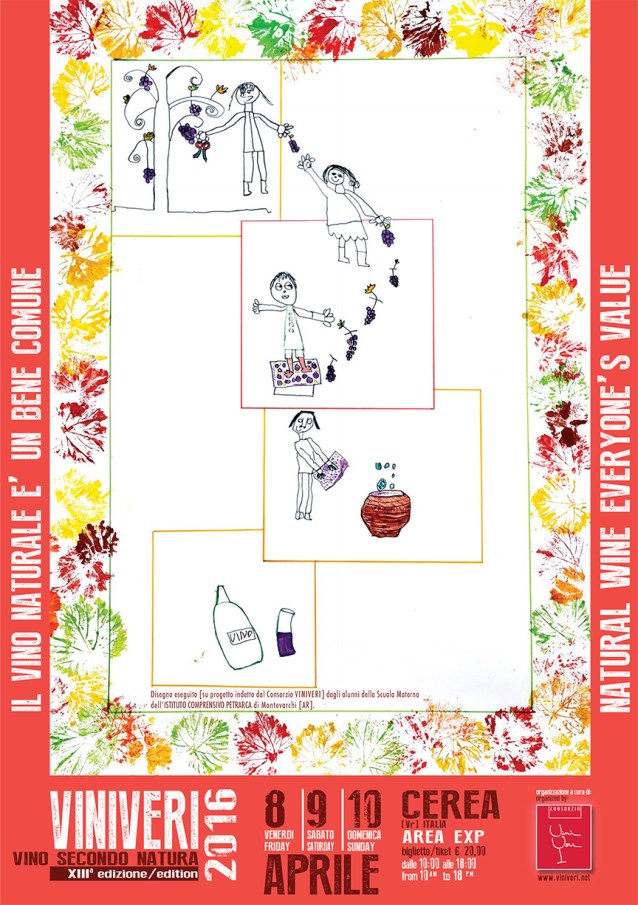
ViniVeri April 8-10 in Cerea (Verona), location, hours, registration PUBLIC SERVICE ANNOUNCEMENT

Giampiero Bea, president of the ViniVeri Consortium, asked me to give him a hand getting the word out this year. And I am glad to do it.

Hope to see you there (I’ll be there on Saturday, April 9).

Click the image below for full-size flier.

PosterViniVeri2016_Ok

We are the world, we are the wine bloggers (Boston, you throw an awesome wine party!)

jeremy parzen wine blogThanks again Rich for the awesome pics you took of our Franciacorta tasting the other night in Boston at Wine Bottega!

It seems like only yesterday but it was really about nine years ago that I started to follow our friend Anthony on social media.

At the time, he was on the road playing guitar with a major recording artist. Traveling across the world and performing in major European and American cities, he would post a note on his social media as he would roll into each new town: “where can I find some natural wine?” he would query. Invariably, like-minded wine lovers would answer with detailed lists of venues where he could find wines that he liked to drink (as the rest of us took notes for future travels).

I was reminded of Anthony’s crowd-sourcing on Wednesday night when I poured Franciacorta for a fantastic group of wine folks at the Wine Bottega in Boston’s North End.

I’ve spent next to no time in Boston over the arc of my wine blogging life yet it was like being welcome by a group of old friends, even though I was meeting most of them for the first time in person.

Please have a look at Richard Auffrey’s excellent post on his impressions of our tasting and his insights into what makes Franciacorta such a unique expression of sparkling wine today (including some of his stand-out wines from the flight).

Thank you, Rich, for your kind words and superb post (and the awesome photos).

Thank you, wine blogger Karin O’Brien and wine educator Roz Angoff, for joining and tasting with us.

Thank you to the owners and staff at the Wine Bottega for hosting and creating such a fantastic space and environment for tastings like this (and thanks for the kind words in your eblast). Great shop, great selection, and great vibe!

And thanks, most of all, to my good friend Adam Japko — wine blogger, cultural entrepreneur, and all-around mensch — for creating the magic that happened on Wednesday.

I’m so lucky to have found a friend in you. And it’s all thanks to wine blogging.

In other news…

select oyster back bay neptune ownerBefore our tasting, we tried unsuccessfully to get into Boston’s sexiest seafood destination these days, Neptune Oyster.
But I did manage to snag a spot at its sister venue in the Back Bay, Select Oyster Bar, on Thursday for lunch.

Man, you just can’t get oysters like that beyond the northeastern and northwestern coasts.

Really superb stuff.

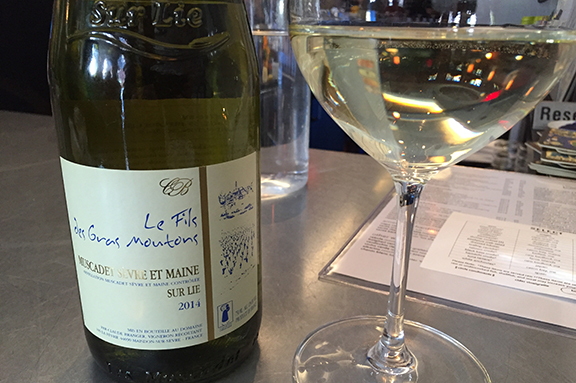
And I also really dug the Branger Muscadet Les Fils de Gras Mouton for just $9 a glass. Great value and great wine (below).

Boston, you throw an awesome wine party! Buon weekend, everyone!

Les Fils Gras Mouton muscadet

Mazel tov, David Keck! One of Food & Wine’s “Best Sommeliers 2016”

david keck food wine magazineAbove: David Keck (left), owner and author of the wine list at Camerata with Elaine Brown, author of Hawk Wakawaka Wine Reviews in Houston last month.

Food & Wine magazine’s “best sommeliers 2016” title couldn’t have gone to a nicer and more talented guy than David Keck, whose progressive, innovative, and delicious list at Camerata in Houston has become an benchmark for groovy wine in Texas since it opened in 2013.

Mazel tov, David!

I should know: it’s my go-to destination for business and pleasure when I’m in my adoptive hometown (I was there last night sucking down a bottle of Cirelli Cerasuolo d’Abruzzo).

David is a member of that tribe of sommeliers whose chops are rivaled only by their sense and embrace of hospitality and humanity. I’m so glad to see him recognized with this impressive title.

In other news…

Really interesting to taste a vertical of Trinoro last night here in Houston, including the 2001 out of magnum.

Not really my style of wine but the 2001 showed beautifully in the glass, with gorgeous freshness, ripe fruit, earnest vitality.

I was told that this was the last vintage Franchetti raised in large cask and it was a true pleasure to drink.

That’s all that I have time for this morning as I board a plane for Boston where I’ll be pouring Franciacorta tonight at the Wine Bottega. Please come out and see me if you happen to be in town. Wish me speed…

trinoro wine franchetti

Taste Franciacorta with me on Wednesday in Boston (and come early for my talk)

jeremy parzen wineAbove: no, I won’t be pouring Chianti Classico on Wednesday in Boston. But we will have a great time nonetheless!

Please come out and taste with me on Wednesday in Boston (details below).

And for those who would like to hear my talk, please come on the early side. About 15 minutes into the tasting, I’ll give a 10-15 talk on Franciacorta and why it is such a unique expression of classic-method wines today. If you can’t make it at the beginning, come when convenient.

Looking forward to tasting with you and thanks for your support! It should be a really fun evening and a great group of people (it always is).

FRANCIACORTA REAL STORY TASTING

with Jeremy Parzen
Franciacorta trade ambassador
for the U.S.

Wednesday, March 16
6:00-8:00 p.m.
The Wine Bottega
Boston, MA

no registration required

The Wine Bottega
341 Hanover St.
Boston MA 02113
(617) 227-6607
Google map

Roagna 2006 Solea drinking great in Houston (‘Cause white wines blow away)

roagna soleaSo much groovy wine being poured in Houston right now, including this 2006 Solea, a Chardonnay and Nebbiolo blend from one of my favorite Langa producers, Roagna.
It was recommended to me by Thomas Moësse, my friend and one of Houston’s leading Italian wine pros. He runs a fantastic program over at Divino Italian Restaurant and Wine Bar (one of my favorite places to hang with Cousin Marty, who joined me last night).

Angelo Gaja has famously talked about Italy’s immense potential as a producer of white wine. And, of course, he became an Italian white wine pioneer when he planted Chardonnay Treiso township (Barbaresco) in 1979.

According to Roagna’s website, Chardonnay was planted in the Pira cru in the southern part of Castiglione Falletto township in the mid-1980s — so not long after Gaja planted his.

The Roagna family acquired the vineyard in 1989 and it would appear — gauging from an image on the Solea fact sheet page — that the first vintage of this wine released by the estate was 1988.

The Chardonnay rows, writes the winery on the site, are at the bottom of the southeastern-facing slope, which is otherwise planted to Nebbiolo.

The first thing that impressed me about this wine was its gorgeous freshness. Not a note of oxidation here despite being a 10-year-old wine.

Come-hither aromas of white fruit gave way to a blend of succulent white and stone fruit in the mouth.

WineSearcher shows 2012 as the current release for this wine. And I don’t know where Thomas hooked up the 2006.

But, hey, I’m not asking questions! I’m just digging these happy days of not traveling and reconnecting with my city.

White wines blow away…

A million magic crystals, painted pure and white
A multi-million dollars, almost overnight
Twice as sweet as sugar, twice as bitter as salt
And if you get hooked, baby, it’s nobody else’s fault, so don’t do it!

Sex in a glass, dick wagger’s wine, and an acidity lover’s wet dream

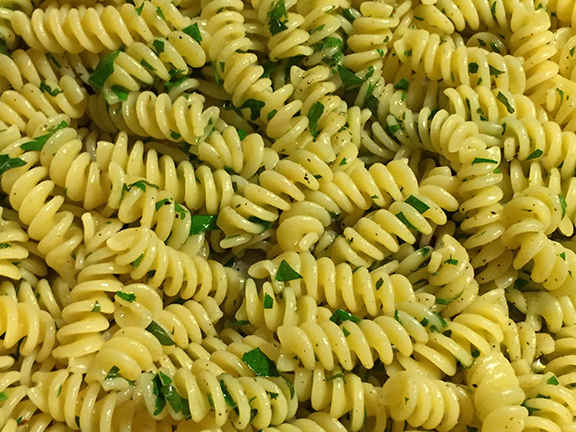
pasta aglio olio recipeSex in a glass, dick wagger’s wine, and an acidity lover’s wet dream.
These are three questionable phrases that I recently (and wisely?) elided from blog posts I was writing.

Well, “sex in a glass” actually made the cut and into the post. The other two were intended for a post I wrote today for the Houston Press about a new and progressive wine list in the most unlikely of places here in Houston (a log cabin, go figure!).

Aaaaa… just another day in the life of an average punter wine blogger for hire, folks!

Moving on to more serious subjects, I wanted to share a recipe for the dish above, which elicited a lot of queries on social media last night.

Basically, it’s an aglio, olio, e peperoncino to which I added a handful of freshly chopped flat-leaf parsley. We didn’t have any long noodles in the house last night and so I used the unconventional (sacrilegious?) fusilli instead.

Recipe:

Over low heat, gently sauté 2-3 cloves of garlic, a half of a handful of freshly and finely chopped flat-leaf parsley, and a generous sprinkling of chili flakes in extra-virgin olive oil.

After 3-5 minutes (and before the garlic begins to brown), remove from heat, remove and discard the garlic, and reserve the oil in the pan.

In the meantime, cook the pasta in generously salted water until slightly undercooked.

A few minutes before the pasta is done, heat the oil over low heat.

Strain the pasta and gently fold into the pan, sprinkling with more parsley and seasoning with salt to taste.

Remove from heat and serve.

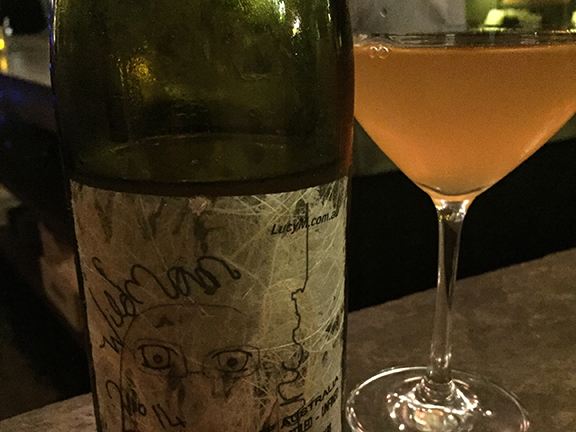
domaine lucci lucy margauxAnother recent social media post (above) also drew a lot of questions.

The wine was the Domaine Luccy/Lucy Margaux 2013 Sauvignon Blanc Wildman Blanc from Australia (below), which had found its way to Camerata, my number-one hangout in Houston and the place where all the wine tradefolk congregate.

Camerata owner and wine director David Keck recommended it when I asked for something slightly oxidative but not too radical on a dreary and rainy night here in the Bayou City.

As David predicted, my buddy Nathan Smith (another one of city’s leading wine pros) and I were blown away by its vibrant fruit character in the wine.

Very cool wine, very cool story.

If you’ve made it this far into my post today, I thank you! And if you live in Boston, please come taste Franciacorta with me next Wednesday, March 16 at Wine Bottega in the North End.

Just another day in the life of an average punter wine blogger for hire…

George Martin, there is no one compares with you

I read the news today, o boy…

jeremy parzen blogDear Mr. Martin,

I hear your voice nearly every single day.

Whenever I load our family into the minivan and bluetooth my iPhone to the stereo, the first track that plays is the audio to the “Abbey Road” mini-documentary from the most recent release of the “Complete Beatles.” It’s the first because it begins with the letter a.

It’s become a ritual for our little girls, ages 4 and 2.

“I was quite surprised when Paul rang me up and said, ‘we’re going to make another record. Would you like to produce it?'”

That’s your first line in the piece.

Little Georgia P and Lila Jane don’t know who you are or why you were so special to their father.

But they know your voice and it only takes a minute or so of listening to the dialog in the documentary before the girls insist that “we listen to Beatles.”

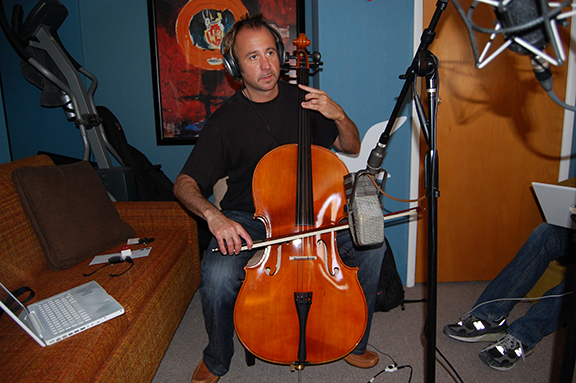
From the first time I heard Paul count off “I Saw Her Standing There” to the countless hours of listening to “Abbey Road” and “The Beatles” (“The White Album”) on my Walkman as a teen; from the time my cello teacher taught me how to play an arrangement from “Eleanor Rigby” when I was 8 years old to the first time a tape engineer pressed record at my first real studio session when I was 19 (yes, I’m old enough to remember 2-inch tape!)… your work profoundly shaped my musical sensibilities and my interest in the recording arts.

Today, in the New York Times, the author of your obituary wrote that your work with the Beatles overshadowed your collaboration with other artists.

Not for me.

To this day, Jeff Beck’s “Blow by Blow” and “Wired” are among my favorite recordings, albums to which I return over and over again in times of emotional and spiritual need.

Once, at a session in LA when I was in my early twenties, I met an engineer who had worked as the tape operator at Abbey Road studio on the “Wired” sessions. To shake his hand, knowing that he was the one who pressed “record” when you said “roll tape,” was electric.

There are countless other unforgettable albums you gave us, each priceless.

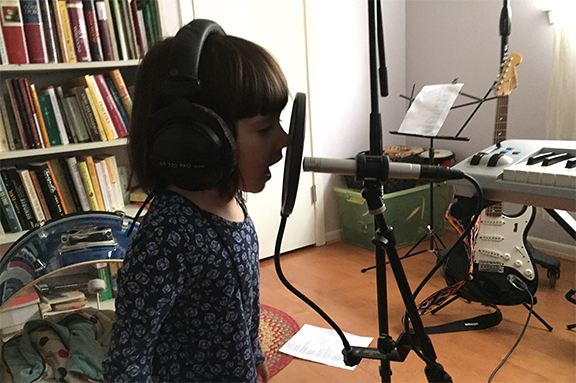
We have a small recording studio in our home and our girls are already excited about the recording arts. It will be years before they understand what a “producer” does and before they know who you are.

But they know your voice well. And I’m looking forward to their lifetime of discovering your work and your magic.

Thank you for everything you did for us and everything you gave us. There is no one compares with you.

Roll tape… one, two, three, four…

Your devoted fan,

Jeremy

georgia in the studio