Freedom’s just another word for shitty wine: Houston defiant in the face of corporate distributors Houston wine buyers find creative ways to source labels beyond mainstream channels

best italian wine list houstonAbove: Thomas Moësse authors my (current) favorite Italian wine list in Houston at Divino. There’s a lot of great Italian wine in my adoptive city and it seems that more is finding its way here every day.
Not a lot has changed in the way wine is shipped and distributed in Texas since I moved here nearly eight years ago.

The two biggies — Glazer’s and Republic — continue to control 99 percent an overwhelming majority of the market and small and independent distributors continue to be thwarted by restrictive policy and excessive regulation of wine sales.

The main issue is that it is illegal in Texas to use an outside fulfillment warehouse or delivery trucks. In other words, you have to own your own temperature-controlled storage and vehicles. Those costs are prohibitive for a small business owner who’s trying to bring small allocations of wine to the state.

Heavy taxation on wholesale wine sales is another issue (yes, taxation in Texas, people). Unless you are working with big volume, it’s nearly impossible to compensate for the bite that the state takes from your profit and still deliver competitive pricing. (Errata corrige, July 7, 2016: currently, Texas “subjects mixed beverages [i.e., alcoholic beverages] to a total tax of 15.25 percent [between] the mixed beverage gross receipts tax and the new mixed beverage sales tax, – 1.25 percent higher than in 2013.” That’s nearly twice the 8 percent sales tax that Californians pay in San Diego, my hometown, for example.)

The Texan political class claims deregulation as its battle cry. But when it comes to the wine trade, Austin legislators have regulated our right to drink artisanal wine into the ground. Here in Texas, freedom’s just another word for shitty wine diminished diversity in the marketplace.

When the newly appointed editor at the Houston Press asked me to do a round-up of “wine deals” for summer, I reached out to our city’s growing number of progressive wine professionals and was wholly impressed by their “out-of-the-big-wine-box” approach.

For July’s Loire Fest, which will include 20+ Houston wine-focused venues, the organizer bargained with distributors (large and small) to get the best deals on by-the-glass pours. That’s going to translate into aggressive pricing for average Giovannas and Giuseppes like me.

Another example is the model embraced author of my favorite Italian wine list in Houston. He sources many of his wines directly in Italy and then works with small distributors to bring them in. They are willing to take on the risk because they are confident that they won’t be saddled with unsold wine.

Even a restaurant like Prego, a workhorse Italian in an upscale Houston neighborhood since 1983 (as the name reveals), has a compact but sturdy list of groovy Rhône-variety rosés from natural and forward-thinking Californian producers sourced from courageous “small business owner” distributors.

Any one of my hipper-than-though hipper-than-thou W-burg colleagues would find plenty of good wine to drink this summer in my adoptive city. And it’s all thanks to a new generation of Texan wine professionals who find ways to get us the wine we want (and the wine we don’t know that we want).

Bottoms up, Houstonians! Here’s to our best wine summer yet and here’s my post today for the Houston Press.

My wife, my lover…

From the department of “I read the news today o boy…”


A song I wrote last Sunday.

On this day on Father’s Day in 1975
A boy sat in his daddy’s lap
And then began to cry
Because there was soon to be a rift inside this house
It all went south

Then some years had passed before
The boy moved far away
And then he met the girl who would
No longer lead astray
And then there was a place for him that he could finally call his own
Some how this house became a home

Before I met you I could hardly tie my shoes
Before you came into my life I could never lose the lonely blues
But knowing that you love me there’s no way that I could lose
You are my wife and lover, you are my muse

Fast forward to a time, a couple years from now
And then rewind to find the reason
In the where and what and how
The woman brought the very best out of you
When she said I do

Watch her hold the babies
When the thunder makes them cry
Hear her tell them that she loves them
And you’ll wonder why it took so long
To get here from that day in 1975
Doesn’t it feel good to be alive?

Before I met you I could hardly tie my shoes
Before you came into my life I could never lose the lonely blues
But knowing that you love me there’s no way that I could lose
You are my wife and lover, you are my muse

jeremy parzen wife tracie

Speak Ruché (Italian Grape Name and Appellation Pronunciation Project)

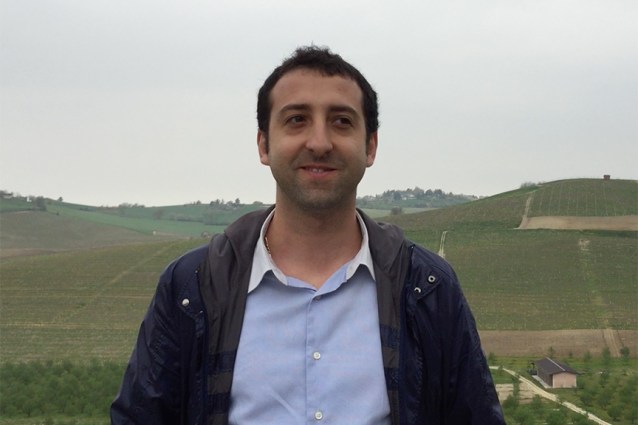
montalbera ruche piedmont wine barberaAbove: Piedmontese wine professional Paolo Bersighelli spoke Ruché for my camera in April of this year. Click the image or scroll down for the Italian Grape Name and Appellation Pronunciation Project video.

Doesn’t a glass of slightly chilled Ruché sound great for dinner tonight?

Just because it’s summertime and we’re not reaching for “big” Nebbiolo doesn’t mean we must abandon Piedmont red.

Before I headed to Vinitaly this year, I made trip to the heart of Ruché country where I visited the Montalbera winery and shot these videos with Piedmontese wine professional Paolo Bersighelli for my ever-expanding Italian Grape Name and Appellation Pronunciation Project.

Sadly, so many people mispronounce Ruché because of its outwardly French morphology.

Hopefully today’s video will set the record straight.

Montalbera has a newly christened and sparkling tasting facility btw and is definitely worth the trip. I liked the wines a lot and am glad to see that they have a growing presence in the U.S.

Thanks for speaking Italian grapes!

Elvio Cogno, Barolo great and legacy producer, dies at 79

In the light of last week’s events, I wanted to wait a little bit before sharing this press release, which was issued on Monday, June 13 by the Elvio Cogno winery. I’m a huge fan of the estate and have had the great fortune to taste so many fantastic vintages of Marcarini that were made by its namesake.

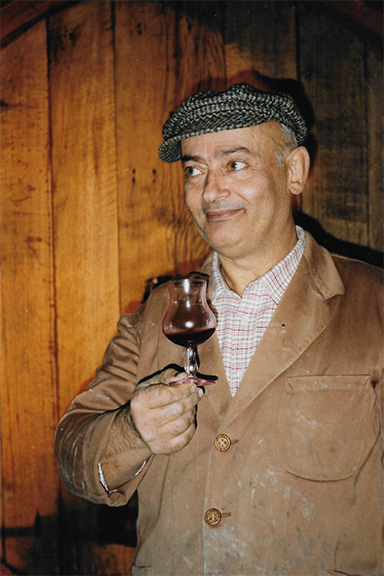
elvio cogno deathWine producer Elvio Cogno passed away Sunday evening, June 12 at the St. Lazzaro Hospital in Alba after a prolonged illness. Founder of the prestigious Elvio Cogno winery in Novello, he was considered a patriarch of Barolo and Nascetta wines.

His career began at Ristorante dell’Angelo in La Morra. There, Elvio Cogno, class of 1936 and born in the small town of Novello, began thinking about producing his own wines.

His dream finally took such strong hold that in the mid-1950s, with the efforts and interest of a business partner and the growing prestige of his bottles, Elvio Cogno decided to leave the restaurant business and dedicate himself to viniculture. He began to collaborate with the Marcarini winery, who managed splendid vineyards in Brunate (in the township of La Morra), cultivated with nebbiolo grapes for Barolo.

Elvio’s work was immediately directed towards high quality production, oriented towards developing the great potential of the wines of the Langhe.

His first Barolo was bottled from the great vintage of 1961. Already in 1964, Elvio Cogno was among the first to write the name of the vineyard on the label, a practice that was well ahead of his time. The first wine was naturally Brunate, which demonstrates his pride and awareness in this wine and in the uniqueness of its terroir.

In just a few years, Cogno-Marcarini became one of the most important wineries in the zone.

Towards the end of the 1980s, however, Elvio Cogno began to think about changing direction. He felt he had reached a point in his life when it was time for him to begin a solitary adventure. Thus in 1990, with enormous sacrifices and courage, he purchased Cascina Nuova in Ravera, a large homestead located just outside of Novello.

Elvio Cogno was 60 years old when he decided to start anew. His daughter Nadia and son-in-law Valter Fissore soon officially entered into his winery business alongside him.

Their first nebbiolo harvest was in 1991; they released their wine four years later as Barolo Ravera, and it was the first label to include a menzione geografica, or cru vineyard, something that would be officially regulated and delineated only years later.

In 1996, Elvio Cogno handed over the reins of the company to his daughter Nadia and son-in-law Valter Fissore. However, he remained generous with advice and was active in the successes of the winery up until the onset of his illness, which resulted in his withdrawal from activities several years ago, and in his death yesterday, at 79 years old, ending the full and active life of one of the patriarchs of Barolo.

Elvio is survived by his wife Graziella, his daughter Nadia, his son-in-law Valter, and his granddaughter Elena.

The funeral will be held on Tuesday, June 14 at 10:30 am at the St. Martino church of La Morra. The Rosary will be held in the same church this evening, June 13, 2016 at 9:00 pm.

Hearts, thoughts, and prayers for Orlando

Our hearts, thoughts, and prayers go out this morning to the victims in yesterday’s shooting in Orlando and their families.

The senselessness of this wanton violence is almost impossible to fathom. But it is tragically real.

I remember all too well being a high school student in San Diego, California when the San Ysidro massacre happened (not far from where I grew up). In its reporting today, the New York Times cited that shooting as the first “mass shooting” in our country.

More than 30 years later, the haggard nature of yesterday’s attack is just as hard to comprehend as it was when I was a teenager. But today, our improbable attempts to understand it are fraught with ideological and political under- and overtones.

Now more than ever, we must look to our humanity and our faith as we try to wrap our minds around such darkness.

G-d bless the victims and their families and G-d bless America.

“Brunello is gas!” F.T. Marinetti’s clairvoyance (and Stefano Cinelli Colombini’s brilliant blog post)

mussolini wine favorite 1933In August of 1933, Hitler had been in power for less than a year and Mussolini’s grip had been bolstered in the nearly 11 years since the Fascists’ March on Rome.

Two years later, the Italian dictator would launch the second Italo-Ethiopian war and Hitler would introduce the Nuremberg Laws. The Second World War was already on the horizon.

In August of 1933, Italy heralded the modern era of wine marketing with an exhibition of top Italian wines in Siena, a stone’s throw from Montalcino.

The slogan of the wine fair had been penned by the founder of the Futurist party — the poet, essayist, and critical theorist Filippo Tommaso Marinetti.

Brunello è benzina!

Brunello is gas! it rang.

Marinetti and the Futurists were obsessed with the notion of velocità (velocity) and the newly born age of gas-powered automobiles and airplanes.

To the ears of his compatriots, the motto was an unmitigated endorsement of Brunello as an expression of the new italianità, a word that is often misunderstood and misused today. At the time, it didn’t just denote Italian identity. It stood for the renewed Italian identity and for Italy’s intellectual, artistic, and political resurgence as an imperial and colonial power.

All of these thoughts and images have been brimming in my mind after translating my friend and client Stefano Cinelli Colombini’s brilliant post on the 1933 wine fair and the role it played in the evolution of Brunello’s own rise.

I highly recommend it to you and I know you will find it as thought-provoking as I did (especially the anecdote about Tancredi Biondi Santi).

And for Italian speakers, the post appeared in the original today on the popular Italian wine blog Intravino.

So many thoughts but so little time today.

Buona lettura e buon weekend. Enjoy Stefano’s post and have a great weekend. Thanks for being here.

López de Heredia? YMMV but isn’t that what it’s all about?

Lopez de HerediaWhen cousin Jonathan and I landed at Vera in Chicago on Tuesday night, I had swore to myself that we wouldn’t drink López de Heredia. After all, there are so many great lots on this iconic Spanish list and López de Heredia is a wine that I’ve been following and have known well for many years now. Why not expand my knowledge of Spanish wines at one of the best venues in the U.S. to do so?

But when our server revealed the pricing, it was just too tempting to resist.

The 2001 Viña Tondonia Reserva (above) rewarded us with one of the best bottles of López de Heredia that I have ever enjoyed — if not the best.

The fruit in this fifteen-year-old bottling delivered zinging white and stone fruit flavors. But the thing that really blew me away was that the fruit aromas were so nimble that they gently eclipsed the oxidative character of the wine.

Man, what a wine!

pork skewer recipeWhen our server shared the excellent price of the 2000 Rosado (which is not on the list; you have to ask for it), how could we say no at that point?

Here the fruit was equally vibrant (juicy ripe red) but there was a note of funk on the nose that simply refused to go away as the wine aerated in our glasses and the open bottle.

I was reminded of something that Giuseppe Rinaldi (the great natural winemaker and advocate and producer of some of the world’s great wines) said this year at the Vini Veri fair in April.

“Industrial wine, if you can call it wine,” he told a group gathered for a vertical tasting of Barbacarlo, “needs to be perfect. It needs to be precise, exactly the same every time. A natural wine, by definition, will have imperfections.”

As Jonathan and I thoroughly enjoyed every last drop of our “imperfect” wine, I couldn’t help but think of how “perfect” our experience.

With the first bottle, it felt like it had been opened for us at exactly the right moment in its evolution. With the second, as much as we loved it, we were reminded of nature’s “imperfection.”

And isn’t that what is so thrilling about natural wine? To me it’s the knowledge that you are consuming a living wine with all the joys and disappointments that life brings with it. I love those wines the way I love my wife and my family and my closest friends — warts and all.

To live in a world filled only by perfection would be no life at all.

It was a great night at Vera and it was also lovely to meet the new wine director there, Christy Fuhrman. I’ll be curious to see the direction where she will take this iconic list the next time I visit.

Huge thanks to Christy and the staff at Vera and to López de Heredia for an unforgettable evening and dinner.

Chicago photo essay

I was born in this beautiful troubled city and I love visiting here. Heartfelt thanks to everyone who made the Franciacorta tasting such a great experience. Here are some snaps…

millennium park beanMillennium Park

chicago art instituteArt Institute of Chicago

chicago cultural centerChicago Cultural Center

best hotdog chicagoChar dog

Six glasses stood between him and his Master Sommelier title

master sommelier texas david keckAbove: Newly minted Master Sommelier recounts the tense moments as he and 62 other candidates awaited the results of their examinations in Aspen last month.

Just a few years ago, even as its visibility had grown considerably, the Court of Master Sommeliers received only a sliver of the number of applications it receives today. The last time I asked, more than 600 people had applied to join its ranks in one year alone. That’s a lot, especially when you consider that there are only 237 Master Sommmeliers (including David) worldwide. And that’s also a lot of disappointment. Only a handful of candidates will pass the grueling examinations: theory (probably the toughest), wine service, and the dreaded blind tasting, where candidates must correctly identify at least five of six wines.

Last week I sat down with newly minted Master Sommelier David Keck of Houston (above). Happily for his and my adoptive city, he returned victorious from the Aspen exams in May. But he was one of just three new Master Sommeliers in a group of 63 who had been seated for the tests.

In my post today for the Houston Press, I share a little bit of his experience waiting to find out his results in blind tasting.

In other news…

Have you ever wondered why so many wines from Piedmont are called bricco this and bricco that?

I wrote a post (of which I am particularly proud) on the origins and usage of the term last week for the Tenuta Carretta blog.

And in case you’ve been pondering Arneis lately, check out this post I translated for the nice folks (and my clients) at Carretta.

In other other news…

I’ll be moderating a panel and attending a luncheon at the Wine and Food Festival in the Woodlands (Houston) on Friday. I believe there are still seats available. So please join me for some day drinking if you are so inclined.

Right now I’m on a plane heading to Chicago where I’ll be leading a standing-room-only guided tasting of Franciacorta at Perman Wine Selections. Apologies to all who couldn’t get in and thanks to all the wine professionals who will be coming.

Man, it was tough to say goodbye to our girls and Tracie P this morning after a super fun weekend of carousel rides, giraffes and zebras, dinosaurs, and French fries and milkshakes. But hey, someone’s got to pay the bills… See you on the other side…

parzen daughters

Sauvignon scandal in Friuli? Much ado about nothing: no charges filed against any winemakers implicated in inquiry

natisone river friuliAbove: the Natisone river runs through Frliulian wine country.

They actually knew it was coming.

More than a year before the media-dubbed “Sauvignon connection” scandal appeared in the local press, Friulian producers of Sauvignon Blanc were aware that authorities were scrutinizing their production.

According to the agricultural superintendent for Friuli at the time, Vannia Gava (a vocal member of the separatist Northern League political party), winemakers from her region were doctoring their wines to give them aromas that didn’t align with the classic profile of Sauvignon Blanc grown there.

“It seems,” said Gava in an interview published by the Messaggero Veneto in May 2014, “that certain well-known Friulian wineries are using additives, preservatives, and chemical perfumes, some of which are carcinogenic. They are added during bottling, especially when it comes to Sauvignon [Blanc].”

More than a year later, in September 2015, the Friulian mainstream media reported that authorities had raided a number of high-profile Friulian wineries and confiscated wines and winemaking materials. According to the report, officials accused the winemakers of using unauthorized additives that would enhance the wines’ aromas.

cristian specognaAbove: Cristian Specogna, one of Friuli’s leading and most respected producers of Sauvingon Blanc. Investigators’ lab results found that he uses native yeasts to ferment his wines.

Today, more nine months after anti-adulteration agents’ raids, no charges have been filed against any of the alleged wrongdoers.

And the lab results show that no unauthorized enzymes or cultured yeasts were found in the wines seized and tested by authorities.

I’ve seen the report myself.

When I visited Friuli in early May, I had the opportunity to meet and discuss the ongoing episode with three winemakers there — two who were not implicated in the controversy and one who was.

All three told me that they are confident that no charges will be filed. And all concurred that winemakers implicated in the inquiry are now stuck in a bureaucratic limbo: there is no word as to when officials will clear their names.

It’s not my place to speculate as to what prompted authorities to launch the investigation. But I know for a fact that they acted aggressively, descending on the accused winemakers’ facilities in great numbers and with a significant show of force. And prior to the raids, officials had tapped the winemakers’ phones.

In at least one case, a Sauvignon Blanc producer was forced to appear at his son’s school in the custody of Carabinieri (the Italian paramilitary police). As for all of the producers implicated in the investigation, wines by that winemaker were shown not to contain any unauthorized additives.

One of the winemakers I met with in May pointed out to me that there exists no list of unauthorized yeasts for the production of Friulian Sauvignon Blanc. In other words, even if authorities had discovered that selected yeasts were being used to give the wines aromas that didn’t align with sanctioned varietal expressiveness, there would be no legal basis to charge the winemakers accused of wrongdoing.

In the end, it was all much ado about nothing. Yet neither authorities nor local media have moved to share investigators’ findings.

What to make of all of this?

In the short-term, the authorities’ aggressive and misguided attitude and media’s blood thirst for clicks have gravely damaged the Friulian “wine brand.” When in Venice last month, a prominent sommelier told me that he “prefers the reds” of one the winemakers implicated in the inquiry.

In the long-term, I know that the industrious and earnest winemakers of Friuli will recover from the blow. It will take time but I believe the excellent wines they make there deserve our attention and our respect.

And I encourage you to seek them out.

Thanks for reading…