Italia mia, it’s not addio but arrivederci.

Over the last few weeks, a number of Italian wine folks have written asking me if I’m attending this or that tasting, if I’m available to meet with a visiting winemaker, when I’m coming back to Italy, if I’ll be at Slow Wine…

It’s incredible to think that I haven’t been back to Italy in nearly 12 months. There was a time when I traveled to my spiritual homeland six to nine times a year.

It’s next to unbelievable to think that I haven’t even left Texas since I attended my mother’s funeral in San Diego in November. I used to be on the road two weeks every month, leading seminars and events across the U.S.

I’m both happy and sorry to report that my work in Italian wine is coming to an end.

The number one reason for that is that Tracie’s career is going so well (poo, poo, poo!) that she needs me here to take care of the girls, the dogs, and the house, etc. I made a more than decent living in the wine business for 20+ years. Tracie was a stay-at-home mom for the first decade of the girls’ lives. But now she’s the bread winner and I’ve shifted to supporting her success.

I was fortunate to have such a rewarding arc in Italian wine: when I started out in 1999, the category was just taking off; by the time I left NYC in 2007, fine Italian wine had become a contender.

But wine and food were a detour for me: by working in Italian enogastronomy, I was able to support myself and then later my family. My greatest interest was in Italian culture and history. Wine and food were a means to keep me connected to the land of Petrarch, Pasolini, and Pontormo while bringing home the pancetta, as it were.

I won’t be returning to Europe until this summer when we visit as a family. But we will be tourists — no longer “authorized personnel.” Instead of dragging our daughters to wine country, I’ll be taking them to see the Vatican and the Uffizi (places of my youth!).

I’m not going to stop writing about Italy. But I’m also going to expand my focus to reflect my other interests, like Italian literature and our growing activism here in Texas.

Italia mia, thank you for all you’ve given me. This is no addio. It’s just an arrivederci.

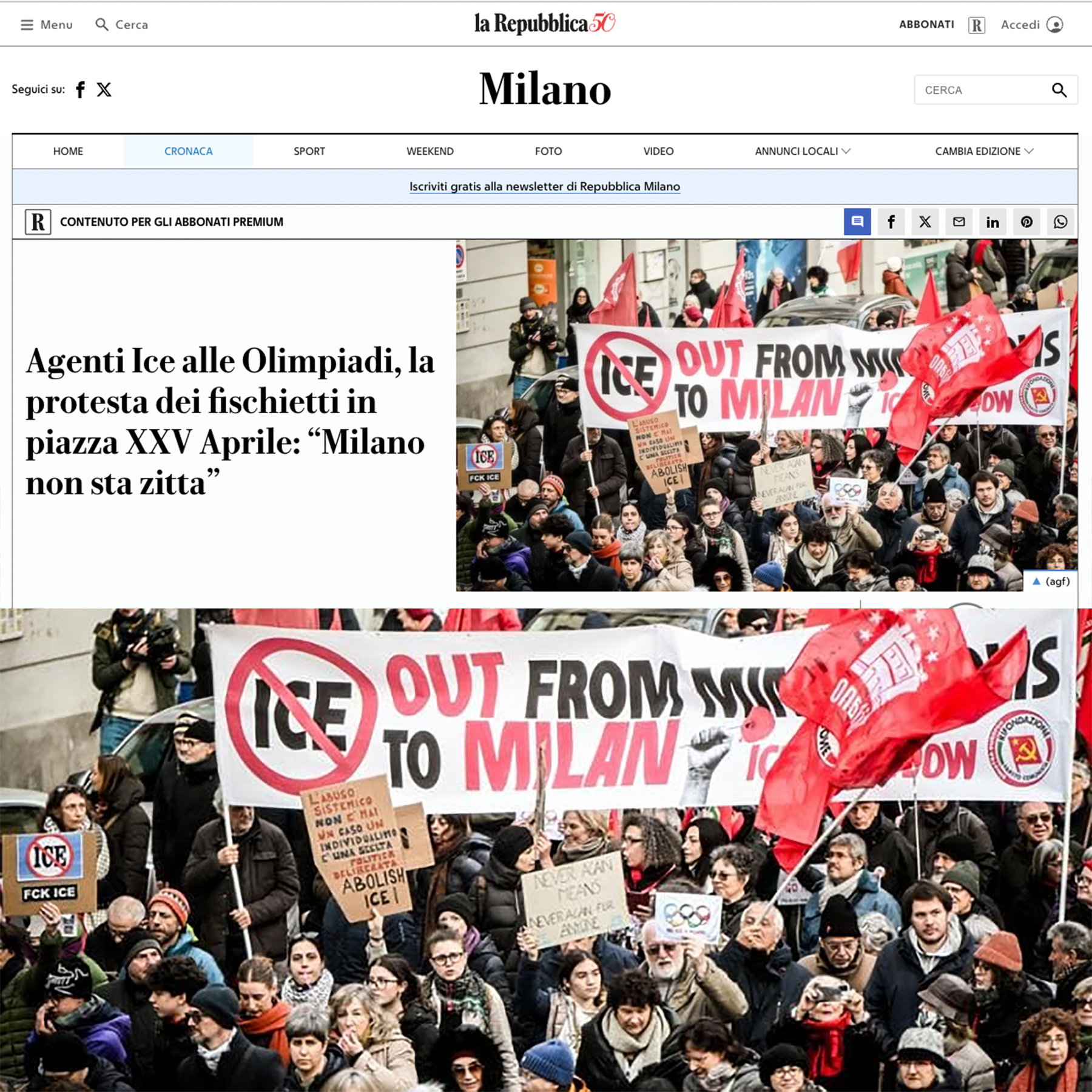
ICE protests in Italy? “Round ups” resonate among Italians familiar with history.

The Italian word for “round up” (as in the raids conducted by ICE in the U.S.) is rastrellamento, literally, a raking up.

For Italians old enough to remember World War II, the term evokes memories of the “Black Shirts,” Mussolini’s paramilitary thugs who seized undesirables, enemies of the state, intellectuals, foreigners, homosexuals, Jews, etc.

For those familiar with history, the scenes broadcast from Minneapolis around the world reverberate with Italians who have studied what happened in their own country in the 1920s and 30s.

It’s no wonder that the Milanese took to the streets to protest the presence of ICE agents at this year’s Winter Olympics. (Yes, the U.S. sent ICE agents to the games; Google it.)

To illustrate what I’m talking about, please have a look at this iconic sequence from the neorealist classic film Rome: Open City.

The movie was made in 1945 using the war-torn streets of Rome as the backdrop and citizen actors as the “face” of the tragedy.

Look closely at the characters in the YouTube clip below and you’ll see the same terror and sorrow that I’ve seen as families are being torn apart by federal officers in our country.

Please join me — and the Italians — in standing up and speaking out against our government’s inhumane, racist policies.

My mom’s panzanella recipe summons some great memories.

As I’ve been sorting through my mom’s papers and photographs, a number of gems have already emerged: postcards from her trip to the U.S.S.R.; her diary from her sojourn in Africa (both trips were key elements in her narrative); my grandmother’s wedding announcement; my maternal grandparents’ immigration papers…

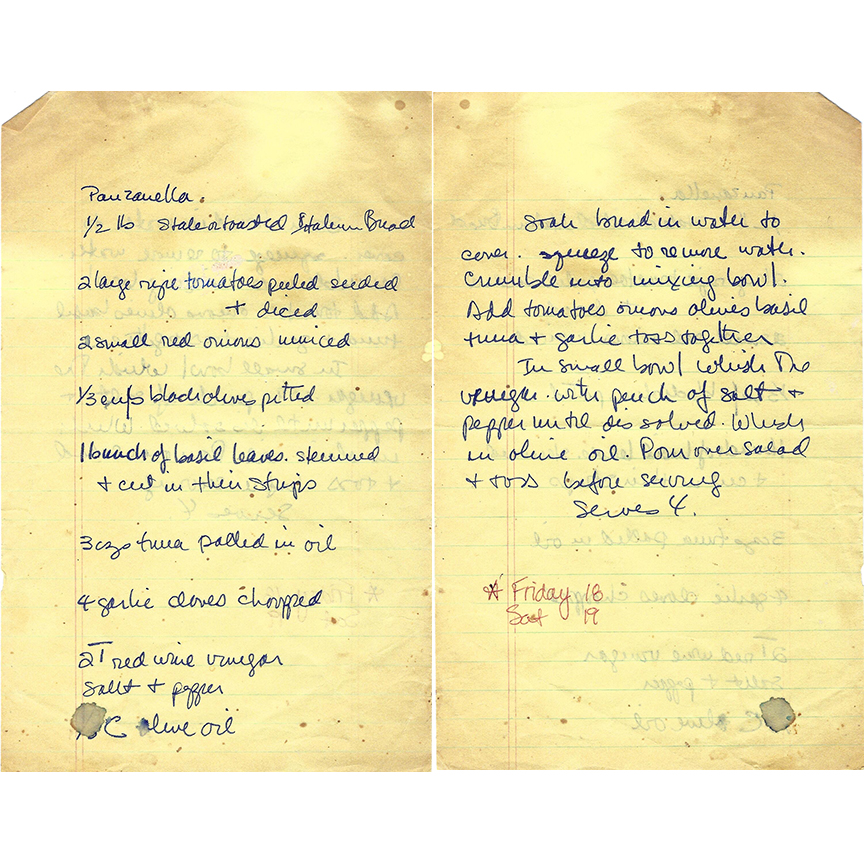
But nothing brought a bigger smile to my face than the discovery of Judy’s handwritten panzanella recipe.

Judy first tasted panzanella — the classic Tuscan summer bread salad — when I took her to Bagno Vignoni, a small village in Montalcino wine country where a thermal pool occupies the space of the town square. The year was 1989 and I was in my second academic year at the University of Padua.

My friend Riccardo’s mother spoke no English at all. But she took my mom by the hand and led her to her kitchen where they prepared her first panzanella together. What a magical moment that was.

Judy was fiercely proud of her panzanella recipe and she loved to tell the story of how she learned it — a great tale to share at her epic dinner parties.

I’m so geeked to post it here.

Now that I’m no longer traveling in the food and wine world two weeks every month, I’ve been thinking about what I should write about here.

Judy’s recipe was just the food for thought I needed.

Panzanella

1/2 lb. stale or toasted Italian bread
2 large ripe tomatoes, peeled, seeded, and diced
2 small red onions, minced
1/3 cup black olives, pitted
1 bunch of basil leaves, stemmed and cut into thin strips
3 cans tuna packed in oil
4 garlic cloves, chopped
2 tbsp. red wine vinegar
salt and pepper
1/2 cup olive oil

Soak bread in water to cover. Squeeze to remove water. Crumble into mixing bowl. Add tomatoes, onions, olives, basil, tuna, and garlic. Toss together.

In small bowl, whisk the vinegar with pinch of salt and pepper until dissolved. Whisk in olive oil. Pour over salad and toss before serving.

Serves 4.

MLK Day is behind us, Black History Month is around the corner. Do something “on purpose” this year to observe and celebrate.

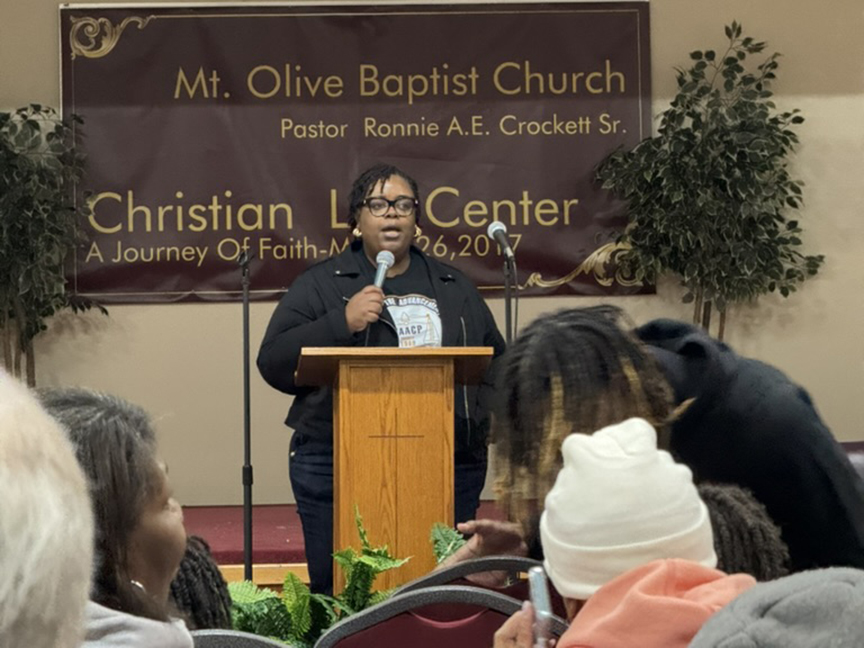
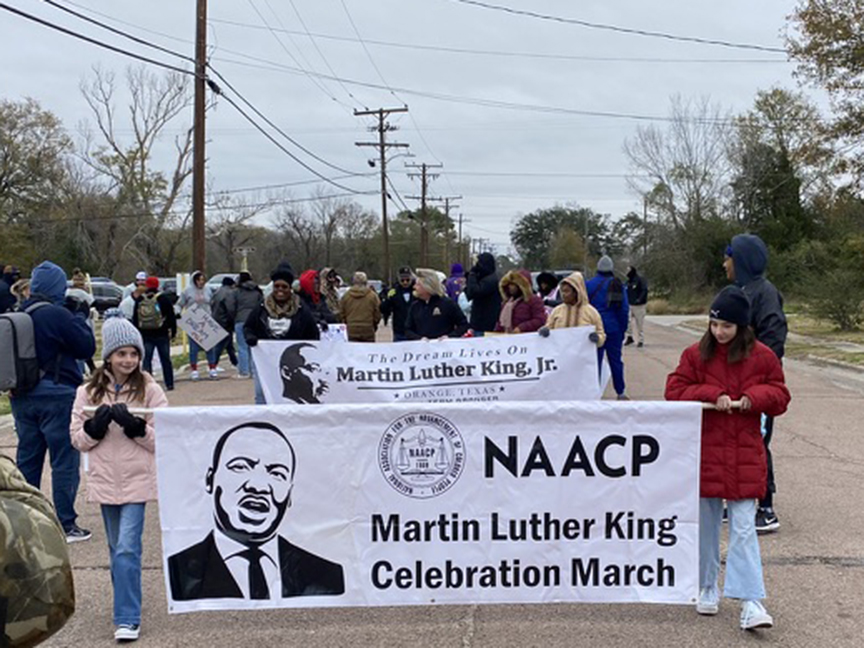
Today’s post is dedicated to my good friend MaQuettia Ledet (above). She and I first met in 2018 when the local chapter of the NAACP had just begun to revive the historic Orange, Texas MLK Day March.

Today, she is the chapter’s vice president and she has grown the event with fantastic results. By my count, there were 200 people at yesterday’s presentation (a far cry from the handful of people who came out in 2018); the speakers were all compelling and engaging and the music was fantastic.

In just seven years, she took a moribund but cherished tradition and has transformed it into a living, breathing agent of community support. She was the mistress of ceremonies at yesterday’s event and man, it was just super.

I was asked to give a short talk about “protecting freedom.” I told the story of Fannie Lou Hamer and how her power as an orator was a key step in bringing about the Voting Rights Act.

That campaign included the now famous quote: “Is this America, the land of the free and the home of the brave, where our lives be threatened daily, because we want to live as decent human beings?”

In 1971, she called out the newly founded National Women’s Political Caucus for not including issues faced by Black women in their platform.

That’s the speech that gave the historic civil rights movement one of its most iconic battle cries: “Now, we’ve got to have some changes in this country. And not only changes for the black man, and only changes for the black woman, but the changes we have to have in this country are going to be for liberation of all people — because nobody’s free until everybody’s free.”

I closed my talk by noting that as long as people are dying in ICE custody (the third person to die in custody this year, detained in Minneapolis, had passed the night before) no one in this country is truly free.

It’s what MLK called the “inescapable network of mutuality, tied in a single garment of destiny. Whatever affects one directly, affects all indirectly.”

Thank you for reading and thank you for observing and celebrating MLK Day. What are we doing for Black History Month “on purpose,” as my friend Annette likes to say?

MLK Day “on purpose”! Protest ICE with FIEL tonight.

Happy 2026, everyone!

It’s already shaping up to be a year full of immense human challenges. The vulnerable among us are facing — quite literally — life and death stakes.

For our family, MLK Day always represents a “New Year’s Day” when we check in with our values and our dreams for a better America.

I’ve got good news to share for the occasion.

The advertising company that posts our MLK billboard overlooking the Neo-Confederate monument in Orange (erected 2017) gave us a returning customer deal.

Our MLK billboard is already active and will remain in place throughout Black History Month. Thank you, B.!

And last year’s GoFundMe had a surplus that made it easy to get us to where we needed to be with our new discounted rate (it’s still open if you want to donate to next year’s billboard).

Parzen family is not planning a protest at the Neo-Confederate site on MLK Day. Inclement weather has made the protest challenging for the last two years. Stay tuned: there will be a protest in February during Black History Month.

But we will be attending the MLK March in Orange with our friends at Mt. Olive Church, a historic Black church in Tracie’s hometown.

Btw that is Lila Jane and Georgia in the photo above carrying the banner for the March a few years ago.

We hope to see you there! Please spend your MLK Day “on purpose,” as my good friend Annette P. likes to say!

In other news…

Houston friends: meet us TONIGHT at Dunlavy Park at 5pm for FIEL’s “ICE out of Houston” protest.

We are praying for the family of the woman who was murdered by them in Minneapolis this week.

We are praying for all the Brown people in our country who are living like Jews in Nazi Europe, afraid to go out lest a government official threaten them.

My ancestors were immigrants who fled the Cossacks (quite literally). They are my children’s ancestors, too. We cannot stand by idly watching the dehumanization of Brown people — any people! — in our country.

We hope to see you tonight. Let’s make 2026 the year of the change!

The worst year of my life, the best year of my life. Holiday blues, open mic at Emmit’s Sat. 12/20.

Man, it’s been the best of times and it’s been the worst of times.

Losing my mom in October was a crushing blow to my heart this year.

And the heartless way my brothers have treated me and my Texas family in the meantime has left me with an emptiness, a void in knowing that my family in San Diego is now totally gone.

I haven’t felt this alone since Brooklyn, post-9/11.

Watching my children grow this year has been one of the greatest blessings of my life.

Georgia is turning 14 this week and both girls fill me with joy and pride at their myriad accomplishments.

Knowing that they and Tracie will stand by me, even through the helter-skelter and the pell-mell, has filled me with hope and peace in this darkest of times for me.

There’s also something else that I’ve felt this year: I do have a family that loves me, I do have children who are thriving, I do have a partner who lifts me up emotionally and catches me when I fall.

It’s a far cry from the drug-taking, alcohol-guzzling 14-year-old that I was after my family was fractured by catastrophe and my older brother handed me my first hit of weed.

I’ve never felt so much love and support in my life.

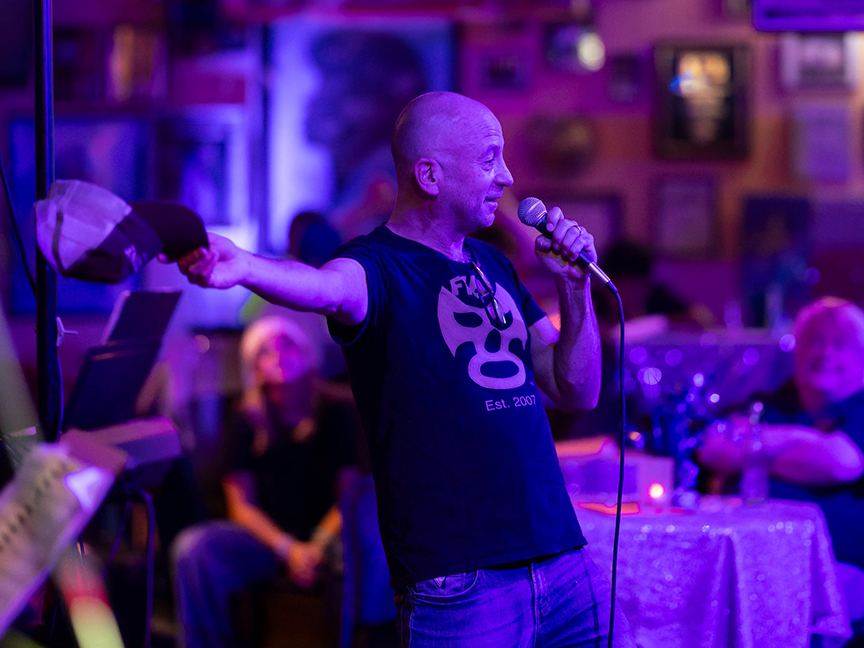
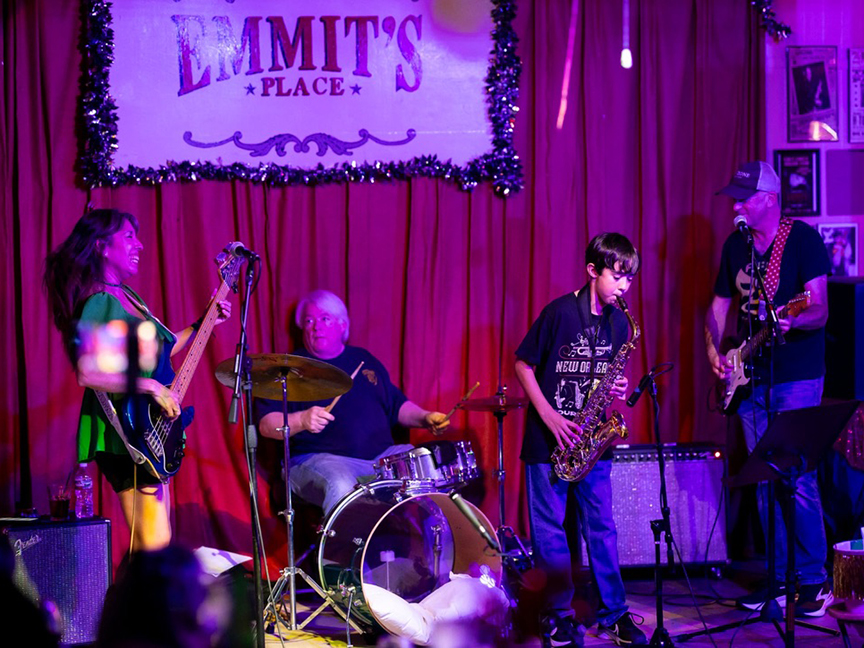
My bandmate Bela Adela and I are going to be singing about life’s blues at Emmit’s Place in southwest Houston on Saturday, 12/20, 2-6pm, where we will be hosting our final open mic of the year.

The last event in October was packed and we are expecting a big crowd for our holiday show.

The Rhythmix, the coolest middle-schooler jazz band, will do a set and a ton of people are stopping by for the open mic and jam.

I hope you can join us as we close out the worst of years and the best. Thanks for your support and solidarity.

Prince Alessandrojacopo Boncompagni Ludovisi, beloved Roman gallerist and revered winemaker, dies at 53.

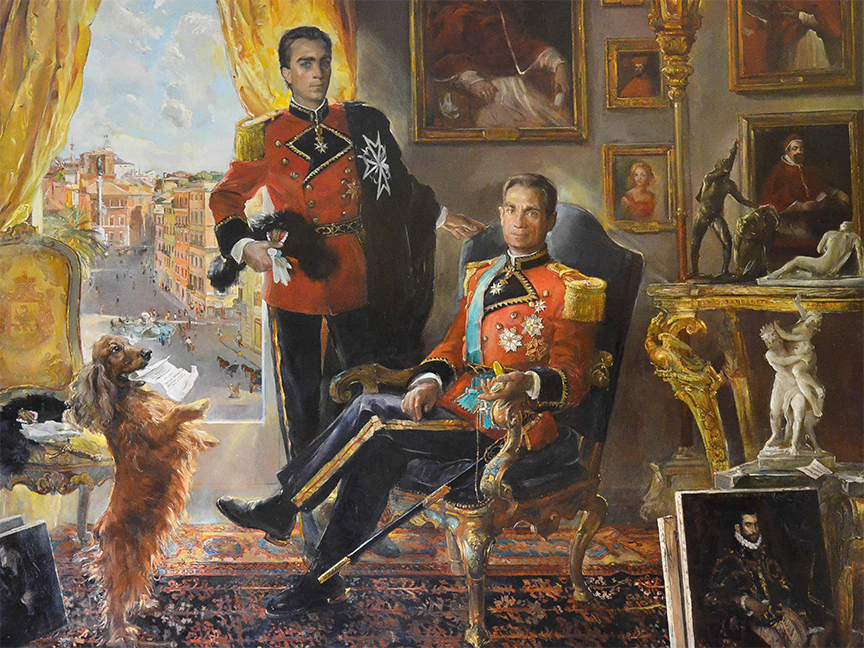
Above: prince Alessandrojacopo Boncompagni Ludovisi (left) and his father Paolo. You can view the portrait and other images from the prince’s life on the Tenuta di Fiorano website.

The Italian wine world mourns the loss of one of its brightest figures this month: prince Alessandrojacopo Boncompagni Ludovisi, who died last week after battling a short illness according to mainstream media reports. He was 53.

American wine professionals and restaurateurs knew him because of the famous wines he and his family produced just south of Rome along the Appian Way.

But in the Italian capital, where he lived on Piazza Spagna, he was widely known as the prince gallerist, a collector of modern and contemporary art, custodian of his family’s sprawling collection of Renaissance, baroque, and mannerist paintings. He regularly mounted shows by top artists. And he ran an arts and wine educational program led by leading Italian wine writer and intellectual Armando Castgano.

Some may remember a heady time in the Italian wine business, in the first decade of this century, when aged white wines from the Tenuta di Fiorano were sold for astronomical sums in New York City. In his weekly Times column, Eric Asimov featured the library releases, including his visit at the winery and farm built by Alessandrojacopo’s uncle Alberico.

At the time, one of the city’s leading wine mavens, Charles Scicolone, would openly remark that yes, the white wines were very good. But the reds, he said, were the wines that landed Fiorano among the world’s greatest. He later organized a dinner, attended by Eric and me among others, where we tasted a vertical flight of astounding Bordeaux blends.

Many years later I would host the prince at Rossoblu in Los Angeles where I was wine director. What an incredible night, tasting back into the early 80s with the prince!

He had flown to California just for our sold-out event. I asked what he planned to do before returning to Rome. I’m going to view a portrait of one of my ancestors at the Getty, he said.

It turned out to be Pope Gregory XIII, the same one that gave us the Gregorian calendar.

Sit tibi terra levis Alexander Iacobe.

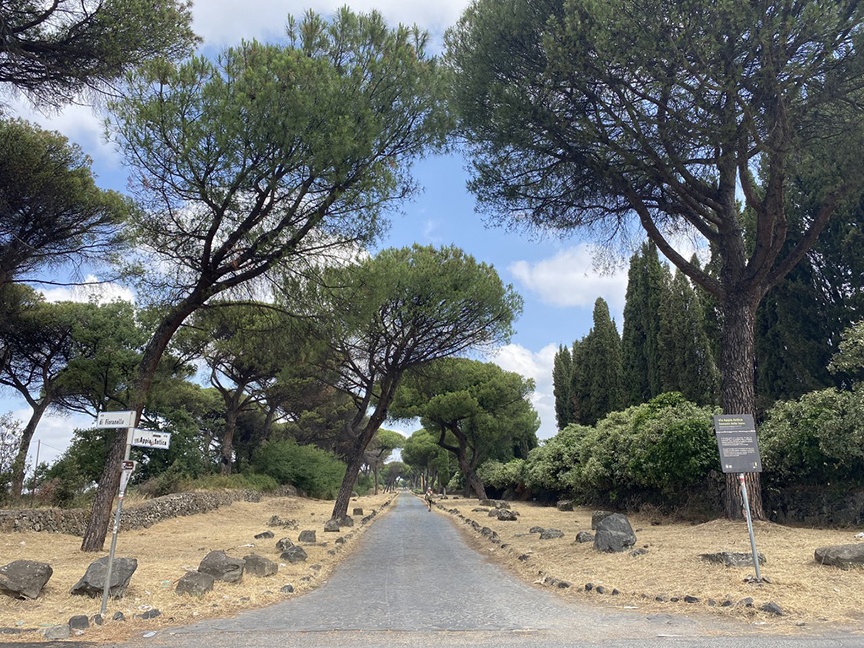
Below: the estate lies adjacent to one of the most beautifully maintained stretches of the Appian Way. It can’t be seen in the photo but it stands just to the right of the road. Note the name of the crossroad: Fiornello (after Fiorano).

Happy holidays!

Happy holidays 2025, everyone! Here’s a little slideshow from our year, accompanied by our 2025 Christmas song! Georgia, Lila Jane, Tracie and I are all looking forward to the season with family and friends. Wishing everyone a wonderful end of the school year and a very merry Christmas!

To transcend the human: finding solace and meaning in Dante and Pasolini.

The loss of your mother, as I’ve learned, is a life-changing, soul-searching epochal event in life.

It’s been only natural for me to turn to music, literature, and art to try to make sense of the unimaginable — she’s gone.

A word, an ancient neologism, kept coming to mind: trasumanar.

It was coined by Dante in his “Paradiso.” It means to transcend the human, to transhumanate as it were, to pass beyond the state of being human.

In the Paradise, Dante describes his sensation after encountering Beatrice, his earthly love and spiritual guide. He evokes the Greek myth of Glaucus, the human fisherman made immortal.

Trasumanar significar per verba/non si poria, writes Dante, transcending the human cannot be described with words. Look to the example of Glaucus to understand such transformation.

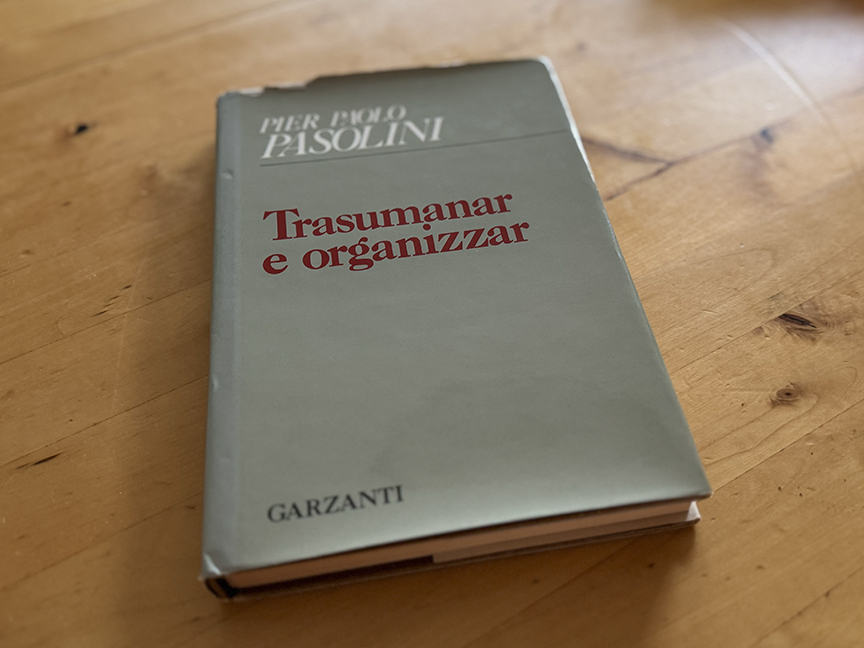
Pasolini used the lemma in the title of his last poetry collection, Transumanar e organizzare (1971), transcend the human and organize.

He juxtaposes transcendence into the divine with the earthly task of political activism. Both are necessary elements of life, one might infer.

I’ve been reading Pasolini’s book. The poems are dense, sometimes surprisingly playful, sometimes overly erudite for some readers; other times they are profound and offer harsh insights into human nature. They are always beautiful, always subversive.

For readers who don’t speak Italian, I highly recommend my friend Stephen Sartarelli’s Selected Poetry of Pier Paolo Pasolini (University of Chicago).

See also this review of Stephen’s book in the Nation. It gives an overview of Pasolini’s life and work, warts and all.

There are also a number of recent translations of Dante’s Paradiso.

The book in the photo above is a first edition that I recently obtained (another story in itself).

I’ve sought to express in words how I perceive, how I feel my mother’s passing. Alas, transcending the human is not something that can be described in words. But I will continue reading and writing as I search, however endlessly and hopelessly, for meaning in her death.

Thanks for being here and letting me share my grief.

A southeast Texas Thanksgiving, an antidote to the family blues.

Man, the last two months have been a crash course on the darkness of grief and the harsh, cold family dynamics that accompany the loss of a parent.

It’s been a rough ride for me.

But respite came last Thursday in the form of a traditional southeast Texas Thanksgiving.

I was so depressed on Thursday morning — the first major holiday since my mom passed — as I drove to Orange, Texas where Tracie grew up.

But it was literally “on the bayou” where 20+ family members greeted me with open arms, love, and shoulders to cry on.

Thanksgiving with Tracie’s family is always a blessing. And the food is extraordinary, for real.

But this year’s holiday reminded me that in spite of grief, in spite of the terrible ways that people can treat each other… I do have a family that loves me, respects me, and wants my children to thrive.

We drank a bottle of 2013 Smith Madrone that I’d been saving and it sang in the glass. Heartfelt thanks to my friends Julie Ann and Stu, owners of the winery, for sharing it with us. It meant even more that it came from Julie Ann: she and I grew up in the same La Jolla neighborhood.

Treat your family well. It’s the only one you’ve got. It was the old folks’ only wish that we all stick together. Southeast Texas reminded me of that this year and I am so grateful for that.