My favorite restaurant in Naples? You’ll find it at the gates of hell! Yes, literally, the gates of hell.

This let me crave, since near your grove the road
To hell lies open, and the dark abode
Which Acheron surrounds, th’ innavigable flood;
Conduct me thro’ the regions void of light,
And lead me longing to my father’s sight.
For him, a thousand dangers I have sought,
And, rushing where the thickest Grecians fought,
Safe on my back the sacred burthen brought.

Virgil, Aeneid, Book 6

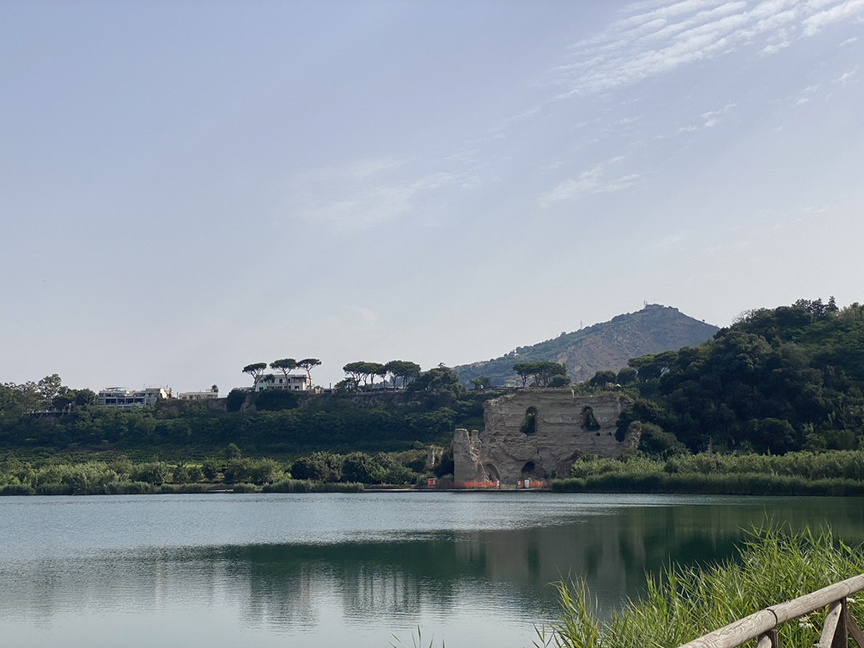
That’s Aeneas, the founder of Rome, speaking to the Sybil at the gates of the underworld along the banks of Lake Avernus in Pozzuoli (Naples), above.

Those familiar with the Western Canon will immediately recognize the scene: book six of Aeneas’ story is one of the most powerful works of ancient literature, emulated and imitated by generations of European writers, including Dante, who modeled his own journey through hell on that of the Roman hero.

Can you imagine my utter thrill when I realized my favorite restaurant in Naples is just a three-minute walk from the site of Aeneas’ descent? I practically fainted I was so excited!

Thanks to friends in the wine trade, I discovered the magical Akademia Cucina in the hamlet of Lucrino, a village in Pozzuoli.

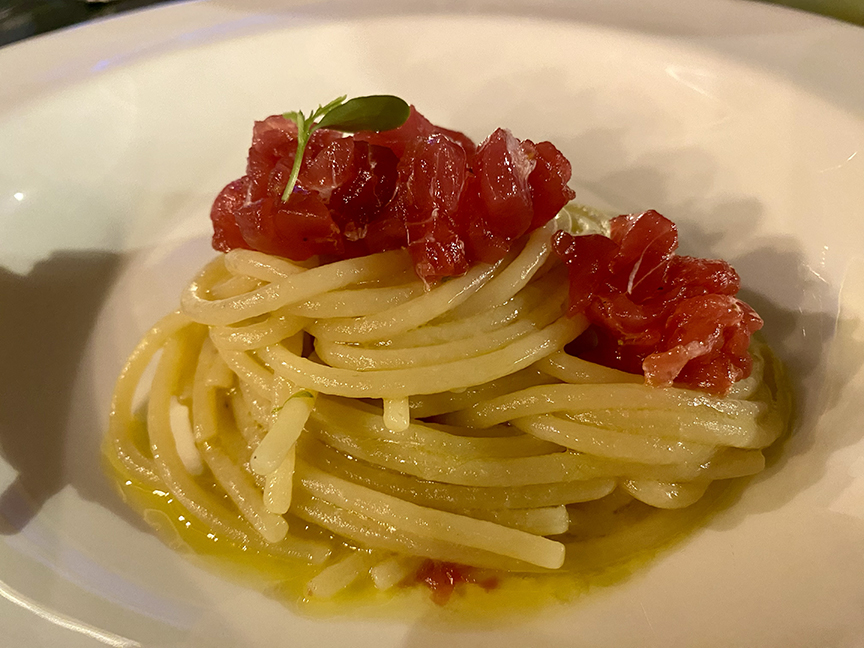
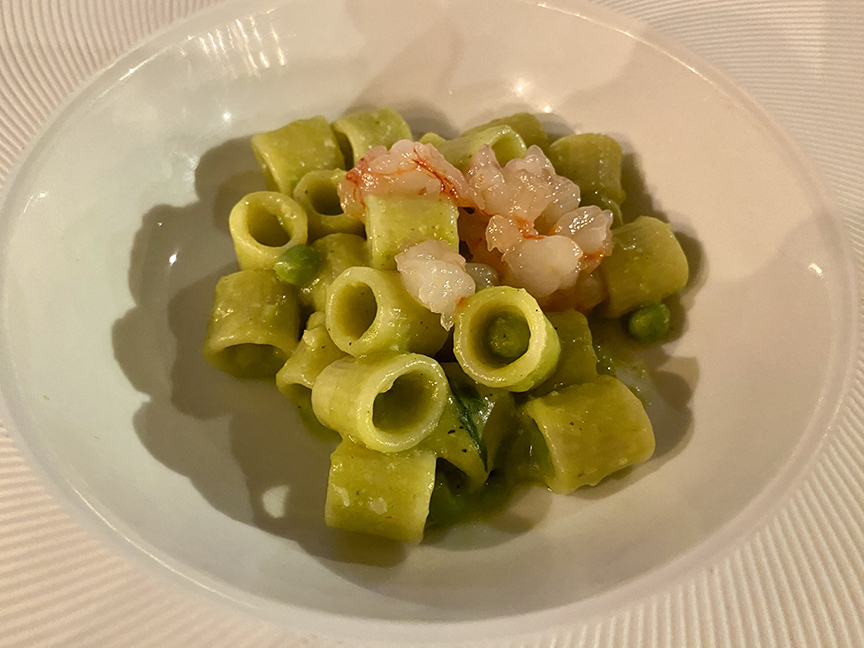
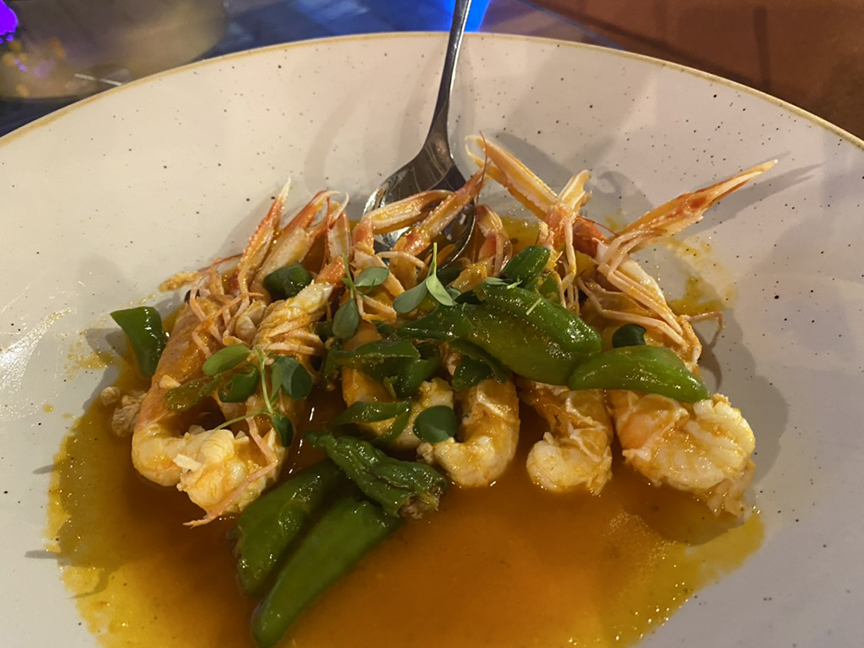
This was, hands down, the best dining experience of my 2024. Man, this place has it all: location, vibe, ridiculously good seafood, great wine list, and the perfect tone for a hedonistic community that likes to dine on the late side. I LOVED this place.

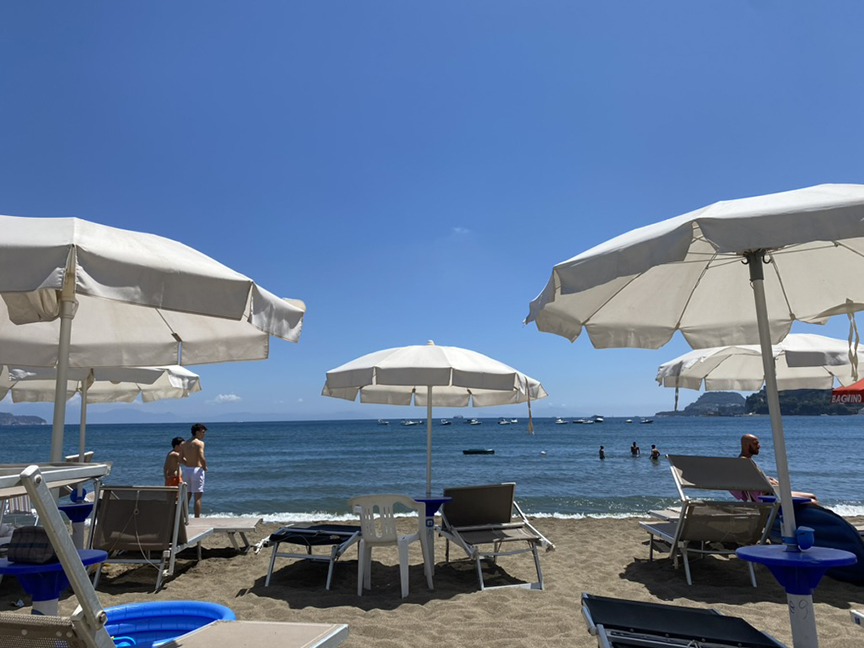
Here are some photos of what I ate and where I swam.

And wow, the nearby hotel where my buddies suggested I stay, Albergo delle Rose, was just my speed in terms of pricing and convenience.

There’s an urban light rail train that stops in Lucrino: a 45-minute ride to Naples proper (perfect) and connections to all kinds of little towns and gorgeous sea views; wonderful beach access across the road; a ferry from nearby Pozzuoli takes you to Ischia. It was a dream for me.

But the oneiric quality of my sojourn was mostly shaped by this locus, this “place” where Aeneas first made landfall and the Greeks first colonized southern Italy. History and literature came to life before me. It was a wonderful experience that I highly recommend for your summer tour.

Trump viewed from Italy.

During my early years as a student in Italy in the late 1980s, it wasn’t uncommon for my classmates to invite me to their family’s home for Sunday lunch. Their parents and sometimes their grandparents would join us, eager to ask me questions about the U.S. and tell me about their lives.

Whenever the elders would talk about wartime in Italy, their stories would paint themselves before me like a Neo-Realist film.

Nearly 30 years have passed since then and none of the grandparents are around anymore.

Many of them suffered greatly during the war and nearly everyone lost a loved one, even those progenitors who were card-carrying members of the Fascist party.

Over the course of my travels, I’ve met plenty of right-leaning folks in Italy who are not ideologically opposed to Trumpism. I’ve probably met more who find his policies repugnant. (Their preponderance may be due to the fact that I tend to hang-out with lefties.)

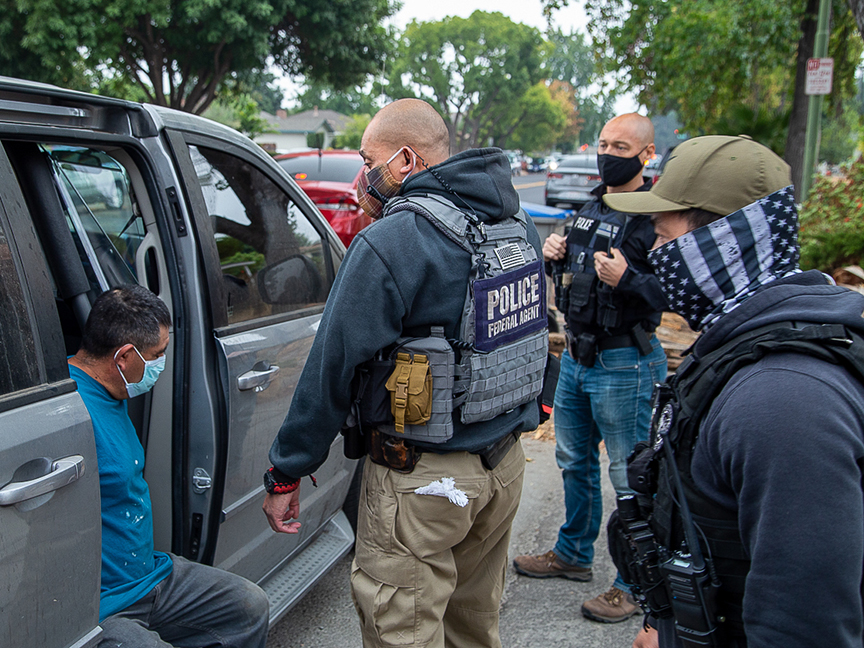
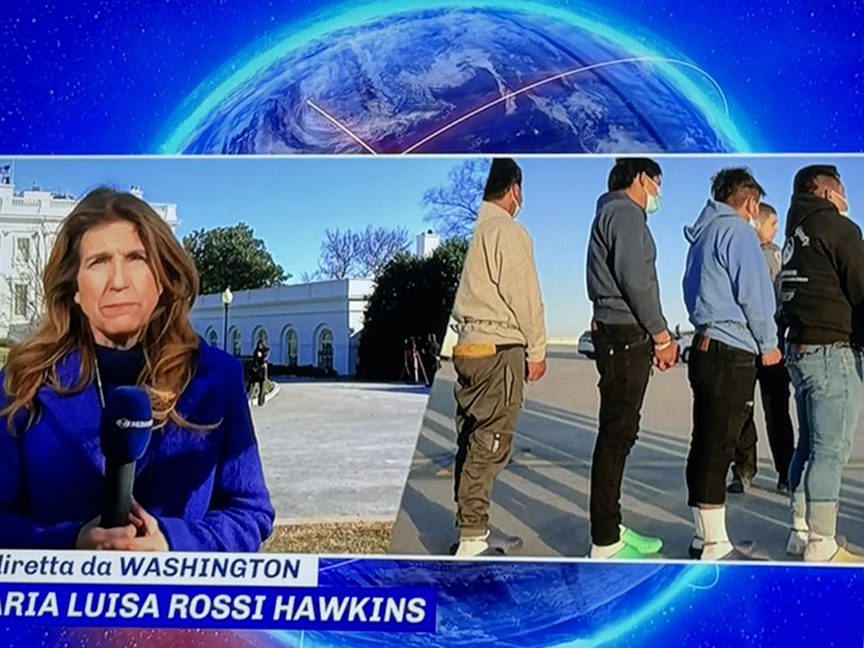
But for all Italians, the images of roundups and raids evoke memories of the rastrellamenti (from rastrello, a rake) conducted by the Fascists and later by the Nazis in their country from 1922-1945.

Few survivors remain today but their children still carry with them the generational trauma endured by their forebears.

One of my best friends in Italy comes from a family that hid Jews in the cellar of their winery during the war (there was a concentration camp nearby). There is a government plaque displayed at the winery entrance honoring their family’s courage. She, obviously, wasn’t yet born. Her uncle, also born after the war, has spoken often of the ways Jews were treated there during Fascism and the subsequent German occupation.

Traveling to Italy for the first time since the election, I discovered that even my most conservative friends are bewildered and nonplussed by the first two weeks of the new administration. They still can’t even seem to wrap their minds around why or how Trump was re-elected.

I can only imagine what their grandparents would say.

Happy Ferragosto! See you week after next.

Happy Ferragosto, everyone!

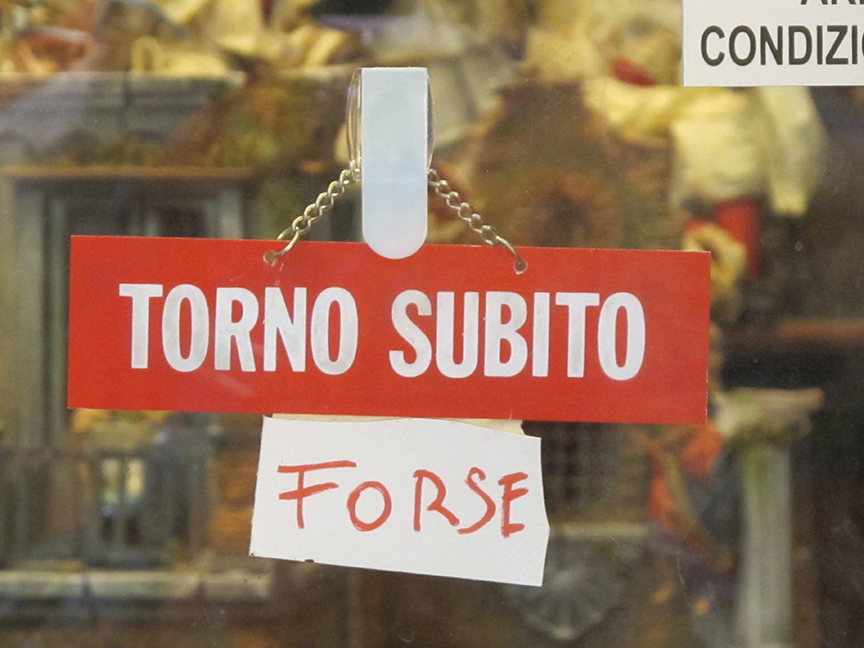
Above: “Torno subito (forse),” a shop sign I snapped many years ago in Italy, “I’ll be right back (maybe).”

What is Ferragosto and what does it mean for Italians? Here’s something I wrote a few years ago for the Italy-America Chamber of Commerce Texas.

Enjoy the time off and see you week after next!

*****

In case you’re wondering why you are already getting so many auto-replys and vacation responses to your emails to colleagues and friends in Italy, it’s because in August the Italians celebrate Ferragosto (officially August 15), the Italian nationwide vacation.

It’s actually an ancient tradition that can trace its roots to the days of Emperor Augustus (63 BCE-19 CE) who proclaimed it an annual celebration and day of rest following the traditional harvest.

During the Fascist era, the Italian government offered citizens incentives to travel for Ferragosto by offering discounted train fair. It was during this period that the holiday became such an important date on the calendar for the Italian people. By the 1960s, Ferragosto had become a highly popular holiday and cultural phenomenon.

Today, an overwhelming number of Italians take their vacation the week of Ferragosto.

Many small businesses close and many large companies give their employees vacation time on or around Ferragosto. Basically, the whole country — except for people who work in essential jobs and sectors — takes a vacation and heads to the beach or the mountains (the best place to be during Italy’s hottest month).

Ferragosto can be frustrating for Americans who do business with Italy because in the U.S., the week of Ferragosto and the last two weeks of August in general are normal workweeks.

But for Italians, the holiday and its observance are such an important part of their yearly rhythms and culture that everyone knows to expect delays in getting work done during August.

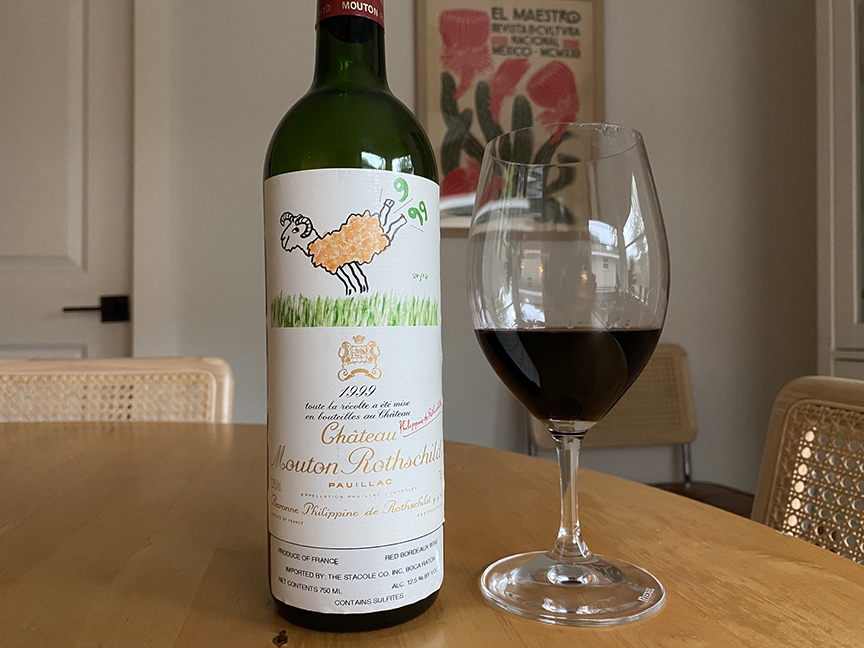
Mouton Rothschild 1999 for my 57th birthday. Thanks for all the wishes and so happy to be back home!

Heartfelt thanks to everyone who reached out yesterday for my birthday! I finally made it home from Italy and had a wonderful day with Tracie and the girls.

And for dinner, we opened a very special bottle: the 1999 Mouton Rothschild, featuring art by Raymond Savignac (1907-2002).

Wow, what an incredible wine! It was fresh and vibrant on the nose and rich with slightly underripe red fruit on the palate. Tannin was very smooth but this wine could have aged many more years, no doubt. Extraordinary.

The bottle had been given to us earlier this year by the husband of a colleague of Tracie’s with whom we have become close.

When Hurricane Beryl made landfall a week ago, Tracie wrapped this beauty up and took her to her parents’ house in Orange, Texas, where they never lost power.

She then carefully kept it cool but not too cold in a cooler where she had to constantly monitor the ice. It was a heroic effort. We had planned to open it for the holidays with family but after it had traveled under stress, we felt like it was a better bet to open it for my birthday. It was my birthday, after all! I’m so glad we did. Paired beautifully with our favorite Texas BBQ. It had been stored impeccably. It would have been a pity for it to be damaged. But it was glorious! Thank you again, from our hearts, Richard and Elaine! A wine we’ll never forget, a memory we will cherish.

Our neighborhood still looks like a war zone, with fences blown out, felled vegetation lining the streets, and main stop light still out of order seven days after the storm. Nearly 260k people without power still.

Coming home to the girls on my birthday after an arduous journey (stuck overnight at Dulles!) was so sweet for me. For all the challenges we face, it feels pretty good to be 57. I’m so proud of the girls and love them and Tracie so much. So much about our life now heals my soul. Too many blessings to count. Poo poo poo!

Thanks again for all the wishes. And G-d bless former president Trump and his family. I’m glad he’s okay. Maybe this terrible episode will help us all to to tone down the rhetoric.

Stay tuned for notes from my trip. Thanks again! It was a very special birthday for me.

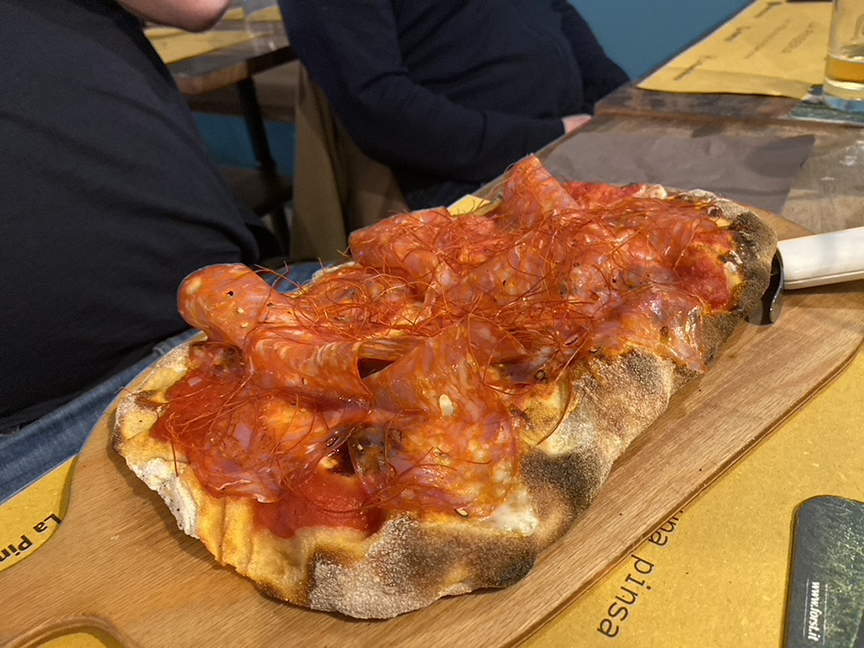
Move over pizza, pinsa is here to stay. #pinsaenvy

No one knows for certain where the word pinsa came from. It is believed that it is a inflection of pinza or pinzo meaning extremely full.

What is known for certain is that this Italian neologism first began to appear around 2008 in Rome. By the late 2010s, it was a well-established lemma in the Italian language.

I had seen pinserie in Italy’s capital (pinserie, pin-ze-REE-eh, plural of pinseria, pin-ze-REE-ah, a place where pinse are made). But I was surprised when I returned recently to my beloved Brescia in Lombardy in the north to discover that there is now a popular pinseria there.

It would seem the pinsa is here to stay!

By seemingly every definition, a pinsa is neither a pizza or a focaccia (even if those words are nearly seamlessly interchangeable in Italy depending on where you are and what you are eating).

But the concept is the same: high-quality flour pies fired in a convex oven, sometimes with toppings already added, other times with toppings added after the pie is churned out.

The etymon pinzo is suspected because the toppings of a pinsa or pizza or focaccia can be considered a “filling,” the way a pastry or a calzone is “stuffed.”

The pinse at the Pinseria in Brescia were excellent.

I also really loved their jalapeño poppers. Yes, you read that right. Italians are WAY into what they call “jalapeño poppers,” even though they don’t use jalapeños but rather a red Italian-grown pepper.

The concept is the same as for jalapeño poppers in the U.S., except here they use high-quality ingredients (instead of Sysco).

The jalapeño poppers at the Pinseria were great and so were all the Roman street food apps. The beer list was great, too.

Move over, pizza! I hope you’ll recover from your pinsa envy!

Happy Italian Liberation Day! A great day to renew our commitment to fight Fascism!

Today is April 25, Italian Liberation Day, the commemoration of the end of Fascist and Nazi rule in Italy in 1945.

Like every year on this day, I take time out to browse the wonderful Archivio Luce, Italy’s historical photography and cinema library. The editors always do a 25 Aprile feature in the days leading up to the national holiday.

It’s also a day that I think back to my early years as a student in Italy in the late 1980s. Many of the parents of my friends at the time were already young adults by the time war arrived in Europe.

Many of the fathers had been soldiers in the Fascist army. They told me stories of prisoner-of-war and concentration camps where they were confined after they were captured in Russia or Africa. My professor’s father was killed by the Nazis in the terrible Cephalonia massacre in occupied Greece.

One of my early mentors in Padua, the great philologist Gianfranco Folena, had been held as a political prisoner in a concentration camp. I would sit rapt on my classroom chair as he would talk about teaching Greek to his fellow prisoners, many of whom were intellectuals like him.

There is war on the continent today and Fascist politicians continue to rise on both sides of the Atlantic. Italy’s current government is its first “post-Fascist” coalition and it openly traces its origins to Mussolini’s party.

I can only wonder what professor Folena would say today.

Just like every year, I scan the faces in the photos and try to imagine what it felt like to taste freedom after more than two decades of murderous authoritarian rule.

And every year, I renew my commitment to fight Fascism. This morning my Instagram feed is filled with posts by Italian friends and colleagues who proudly declare themselves “anti-Fascists.”

Happy Liberation Day! Long live the anti-Fascist Republic and long live our commitment to fight Fascism!

Screenshots via Archivio Luce.

The bunga bunga party is over. Berlusconi, Italy’s long-time buffoon prime minister and political huckster, has died.

Image via Wikipedia Creative Commons.

By the time a wide-eyed U.C.L.A. undergrad made their way to Italy in 1987, the country’s socialist government was thriving, the economy was booming, a year of university studies, even at a top school, cost around $300, and “there was a Benetton on every corner in Manhattan,” as one of their professor’s put it.

But by the early 1990s, that had all collapsed as the government led by socialist leader Bettino Craxi went down in flames and scandal.

That power vacuum led to the rise of the first post-modern politician, as many have called him, Silvio Berlusconi. As he himself openly put it, he got into politics so that he could change laws in order to make himself richer, pay fewer taxes, and avoid legal jeopardy. As he achieved all three of those personal goals, he drove the country’s economy into the toilet with bloated borrowing and destroyed Italy’s image as a progressive nation who protected its vulnerable and cherished its cultural legacy.

He also became the first, in his own words, to legitimize the far and fringe right. Today, the roots of Italy’s first post-fascist (in other words, its first post-war bona fide fascist) government can be traced to his tenure.

Back in the early 2000s, when Italy was the president of the European Union, I was recruited to be an interpreter at the Italian Mission to the United Nations. Because Berlusconi, prime minister at the time, was tasked to address the General Assembly as the president of the EU, the mission needed an extra full-time interpreter. I was assigned to foreign minister Franco Frattini, who represented Italy at the gathering, while the senior interpreter was assigned to Berlusconi.

I never met him but I did attend a meeting where he spoke — and I held my nose.

After his notorious sexual predation parties became well documented by the media, my bandmates and I wrote and produced a song about his bunga bunga. We recorded it in Austin, Texas for our 2011 album “Freudian Slip” (Aeronaut Records). You may have heard it on season 1 (episode 2) of “Emily in Paris” (listen below).

Many have said that Berlusconi created the paradigm, the road map for our country’s own post-fascist, post-supremacist political monster.

But let us not mention the name of that Devil… lest he appear.

Read the Times obit here.

Congratulations to my friend Laura Castelletti, the new mayor of Brescia! In a right wing northern Italy, she and her city are a glimmer of leftist hope.

De humanis illustribus…

Congratulations to my longtime friend Laura Castelletti on her win as the new mayor of Brescia!

Her city is part of Italy’s northern industrial corridor, a network of metropoles that stretches from Turin to Venice.

In recent decades, those cities, once hubs for labor unions and progressive movements, have increasingly shifted toward the right. Parties like the Northern League (now called the League for Salvini Premier, a reference to its leader, the autocratic, xenophobic homophobic, and Russophile Matteo Salvini) have long dominated local politics.

Historically, Brescia has had both conservative and progressive governments. But it has remained a center for leftist thought and policy. Today, its historic downtown is known as the “Stalingrad” of Italy, one of the last bulwarks of progressivism in an increasingly “post-Fascist” Italy (last year, when Giorgia Meloni was elected as Italy’s prime minister, she was widely called the country’s “first post-fascist leader” and “first hard-right leader”).

For the last 13 years, Brescia has been my home away from home and Laura has been a warm and generous friend. I couldn’t be more thrilled to see her achieve this long-desired goal. My beloved Brescia couldn’t be in better hands.

Evviva Brescia e i bresciani! Evviva la sinistra!

Long live Brescia and the Brescians! Long live the Left!

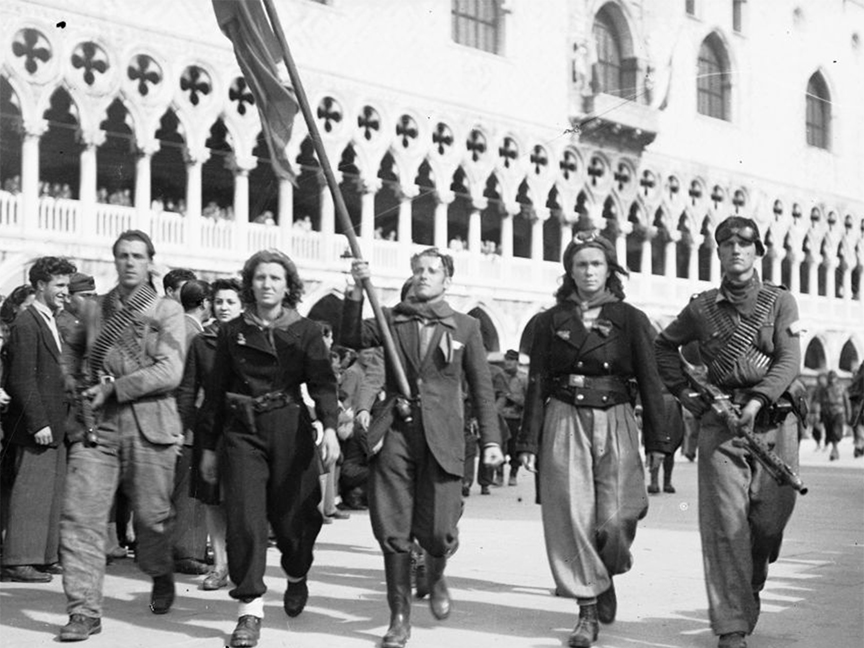
Happy Italian Liberation Day! Long live a united, free, and anti-fascist Italy!

Above: Italian resistance fighters in Piazza San Marco, Venice in 1945 (images via the Archivio Luce).

Today is Italian Liberation Day: Festa della Liberazione, April 25. Established in 1946, it commemorates the end of Nazi and Fascist rule in Italy.

It’s a national holiday in Italy and most Italians took yesterday and today off from work (an Italian ponte or bridge, as it’s called, a long weekend).

This morning, a colleague and friend from Italy sent me the following message.

“Buon 25 aprile,” he wrote. “Viva l’Italia, libera e antifascista 🇮🇹”

“Happy Liberation Day. Long live Italy [and may it remain] free and anti-fascist.”

Check out this slide show by the Archivio Luce. It features images from Italy after Mussolini’s fall.

Happy Italian Liberation Day! Long live Italy and may it remain free and anti-fascist!

In Turin, a 17th-century villa looks out over the old city.

My Vinitaly began not in Verona but in Turin, the capital of Piedmont and former capital of Italy, one of Italy’s most beautiful risorgimento cities, with the architecture and urban planning befitting a world touchstone.

Not far from its origins in the Cottian Alps, the mighty Po river flows through this majestic metropolis, hugging its eastern border and dividing it from the rolling hills where the Villa della Regina — the Queen’s country house — looks out over the famed Mole Antonelliana, one of Italy’s most recognizable architectural landmarks.

I wish I could tell you more about the 17th-century villa, just up the road from the Queen’s sojourn, where a group of my colleagues and I were hosted by one of the city’s leading citizens.

But I can share the foods we ate.

There’s really nothing quite like vitello tonnato when it’s homemade. Thinly sliced veal topped with a sauce made of anchovies, capers, and olive oil-cured tuna. It’s a Jewish boy’s dream.

Also above, those are the classic tuna-stuffed eggs from the Piedmontese culinary canon, otherwise known as “deviled” in Anglo-Saxon culture.

These stalks of Apium graveolens were slathered with creamy gorgonzola. Please try this at home.

No self-respecting torinese host would end a meal sans fromage. After all, the region is renowned for its pastures, breeds, and traditions.

I wish I could reveal more about our host and the reason we were gathered there in the days leading up to the fair.

But that will all come in time… Thanks for sharing the adventure with me and more to come!