No Place Like Home

After all the recent (and drastic) changes in my life, I didn’t have anywhere to attend High Holy Day services in NYC and so I decided to come home, where I spent Yom Kippur with my brother Tad, his wife Diane, their kids, and my mom Judy at Temple Beth El in La Jolla, where I had my Bar Mitzvah some twenty-seven years ago (when this now thriving congregation worshipped in the living room of a house on La Jolla Scenic Dr.).

The services were good, my fast was easy, and it was great to be with my immediate family (hadn’t spent the holidays with them in way too many a moon). Rabbi Graubart, who plays a pretty mean Havdalah service on 6-string (Yom Kippur fell on the Sabbath this year), gave a good sermon on forgiveness (citing the story of Joseph and his brothers), something the world — and my life — is in need of (both to give and to receive). We broke the fast at Tad and Diane’s, where, after dinner, I played guitar with my nephew Cole, who’s getting really really good.
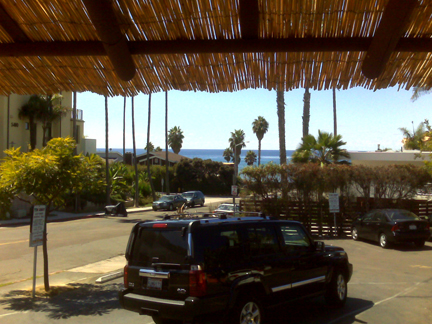
view_bahia.jpg

Above: the view from Bahia where I grinded down on a Carne Asada Burrito with Guacamole and drank a beer with my bro Micah.

Today (Sunday), I went to one of my all-time favorite taco stands, Bahia Don Bravo on La Jolla Blvd., with my brother Micah, who, like brother Tad, is a super successful lawyer based in San Diego (he also has a Ph.D. in anthropology from Case Western).

I found this crazy site called Burritophile that lists the address and phone number etc. And I thought that I had too much time on my hands!

The weather is beautiful today (we’re about to go down to the La Jolla Cove and jump in the water) and we sat outside where we both ate Carne Asada Burritos with Guacamole and drank a Negra Modelo.

The burrito’s chopped onions, cilantro, tomatoes, and guacamole were fresh and the beef tasty. And, man, that beer tasted good as we gazed out at the water (which was looking particularly beautiful today, with different layers of blues and greens).

Life sure has been crazy lately and it’s been a really, really hard time for me. It’s good to know that some of the good things in life don’t change… like a Carne Asada Burrito and a beer on La Jolla Blvd. a few blocks from my old elementary school, Bird Rock Elementary.
“The Big Test for High[ly] Alc[oholic] Wines”

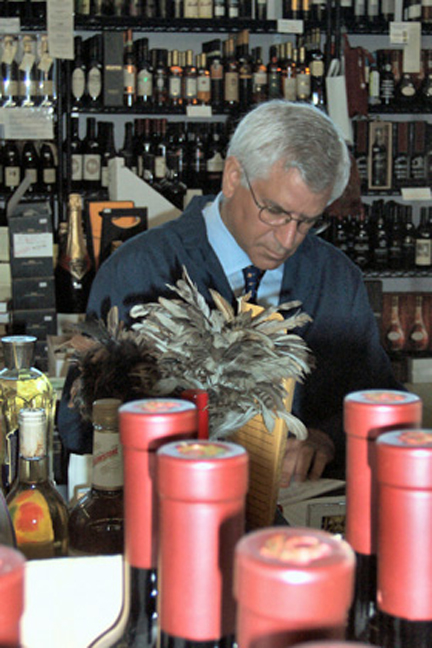
A few days ago, my older brother, Tad Parzen (a top-knotch lawyer who owns and runs a governmental/educational/legal consulting firm in San Diego, CA, and who has worked with a number of the state’s biggest school districts), introduced me — via email — to the wine program manager at Jonathan’s, a gourmet grocery and wine store in La Jolla where we grew up (and where Tad, his family, and my mother still live).

Since I had just read the recent article on Darrell Corti and “Zingate” in The San Francisco Chronicle, I sent him the link and asked for his perspective. Here’s what he wrote back:

“Hey Jeremy, The Corti Bros. are definitely stirring the proverbial wine pot out here, but the high alc wines just keep coming. I’m a fan of both old world rustic elegance and new world lush, lip smacking wines. The big test for quality high alc wines is their ability to maintain appropriate amounts of acidity and minerality. [italics mine] Obviously, balance is the key. When people ask me why domestic wines have more fruit and alcohol than the old world versions, my cliche’d response goes something like: when did you start drinking coca-cola and when they tell me, I generally say that is when europeans had their first glass of wine. Speaking of trends, for every 1 bottle of old world wine purchased at the store, at least six domestic bottles are purchased. Definitely stop by the shop next time you’re out here…

Happy drinkin,
Patrick”

I like his analogy about Coca Cola: Americans (and Californians in particular) want their wine to taste like soda pop and not like wine… and I guess there’s nothing wrong with that. In fact, as Patrick points out, “for every 1 bottle of old world wine purchased at the store, at least six domestic bottles are purchased.”

But I am disconcerted by the notion that a highly alcoholic wine can be balanced. With today’s technology (whereby fermentation is accelerated and whereby the water and alcohol in wine are separated — through “reverse osmosis” — and then blended back together), it’s easy to make wine with high alcohol content.

Minerality and good acidity come from nature, from the fruit and the land, and can only be achieved naturally (although many Californian winemakers, even high-end wineries, actually acidify their wines by adding acid! Why do you think that so many people complain of headaches after drinking fancy Californian wine?).

In fact, the highly alcoholic wines of California are by their nature imbalanced and don’t taste like wine. They smell like alcohol and they taste like “tobacco”, “chocolate”, “boysenberry pie”… To me they taste like cough syrup.

Californian wines can tend to have higher alcohol content in part because of the California wine country’s warm climate. But it is the Californian winemaking style — and not nature — that creates “new world lush, lip smacking wines,” wines that — in my opinion — have no business be served at a meal because they lack the balance that makes wine an organic element in the human diet.

Time for me to get off my soap box? Yes, indeed. There’s nothing inherently wrong with liking Californian and California-style wines and Patrick is right to sell and serve his customers wines that they like. De gustibus non est disputandum.

In all fairness, I have tasted many Californian wines that I like, notably older Cabernet Sauvignon from producers like Stag’s Leap Wine Cellars and Corison and others (Keens, my favorite steakhouse in Manhattan, has a wonderful vertical of Corison going back to the early 1990s). And Darrell Corti has introduced me to some excellent Sonoma Coast Syrahs.

It is a pity, nonetheless, that generations of wine lovers will not know the truly mineral flavors of a great Chablis or the tar and manure aromas of an earthy Barbaresco. But, then again, maybe I’m crazy to want my wines to taste like rocks and shit.

Zingate? A Voice of Reason in a World Gone Mad

A few years ago, on a memorable sojourn at the Castello di Brolio in Chianti Classico, the Baron Bettino Ricasoli (great-great-great grandson of the “Iron Baron” Bettino Ricasoli, who reshaped the landscape of Tuscan viticulture in the late 19th century) urged me to visit Darrell Corti in Sacramento, telling me that he was perhaps the most erudite and refined collector of Italian wine that he had ever met. The following year, when I went to make a recording at The Hangar in Sacramento (a great studio), I drove to the other side of town to Corti Brothers, the wonderful gourmet food and wine store co-owned by Darrel. When I introduced myself, Darrell produced a copy of my Maestro Martino translation (UC Press, 2005), which he sells in his store, and asked me to sign it.

darrel.jpg

Above: the erudite Darrell Corti in the wine section of Corti Brothers.

Since that time, I have seen Darrell in Sacramento and New York on a number of occasions. His knowledge of wine (and Italian wine in particular), his erudition, his mastery of Italian, and his worldliness are a model to which I aspire. Whenever I have had the chance to discuss wine with him, I come away — as if by osmosis and not by reverse osmosis! — enlightened in ways that surprise and enrich me.

And whenever I travel to Sacramento to record, I shop at Corti Brothers every chance I get: Darrell’s selection of olive oil is among the finest I’ve ever seen and the servers in his charcuterie department never mangle the prosciutto by slicing too thickly or thinly.

Darrell has been in the news lately, following an episode that has been dubbed “Zingate.”

Last week Olivia Wu published this story in The San Francisco Chronicle where she reveals that an internal memo on Darrell’s tasting policy was leaked to the press. But the fact of the matter is that Darrell openly tells wine salespersons that he won’t taste with an alcohol content greater than 14%. As Darrell has told me directly, he feels — and I agree wholeheartedly — the California “modern” winemaking style has spun out of control, with wines that have been deconstructed and reconstructed to have excessive alcohol content and flavors that have nothing to do with wine.

I loved this passage from the interview:

“Look at the description of wine today. What’s the first word? Chocolate! Wines are supposed to taste like fruit. It’s like food these days. They used to make something with three ingredients. Now the chef puts in 12 ingredients. And sometimes they cancel each other out. The same is happening to the wines.”

Thank goodness for Darrell Corti, a voice of reason in a wine world truly gone mad.

I also found this article on Zingate and Darrell, worth checking out.