Nelle botti piccole: good wine in small barrels?

nytimes_pour.jpg

Since Thursday, when Eric Asimov mentioned my blog in his, I’ve received countless emails and some interesting comments, including the following from winemaker and wine educator Eric Lecours, who wrote me from Burgundy (where he is working with Étienne Grivot at Domaine Grivot):

The catastrophe is in two wines in Italy: Brunello di M[ontalcino in Tuscany] and Barbera in Piemonte. With Brunello the trend seems irreversible, huge, fat and sweet. The Barbera though is heart-breaking. Probably the most versatile grape on the planet, the quality versions are drowned in oak. It reminds me of California SB [Sauvignon Blanc], anything above $10 a bottle has to be rich and oaked. Good for Sancerre I guess.

To paraphrase Neal Rosenthal: it’s worse than maquillage; you can take that off. Once you put this stuff on, you can never take it off. It touches the very soul.

Clearly, the question of new oak and Italy plays on the heartstrings of many. As much as I pine for the wines I tasted in the late 1980s and early 90s, before the use of barrique became so widespread in Italy, I was thrilled to see that there is a growing movement of wine lovers, enthusiasts, and winemakers (like Eric) who share my view that new oak masks the varietal characteristics of Italian grapes. I hope that Italian winemakers will take note.

Reflecting on the modern vs. traditional and new oak vs. botti dialectic, I remembered the Italian proverb nelle botti piccole sta il vino buono, literally, “there’s good wine in small barrels,” or figuratively, “good things come in small packages.”

The saying refers not to small, new French oak barrels (barriques) but rather to the Italian caratello or carrato, a small and sometimes elongated barrel used to store wine (possibly from the Latin carrus or “cart”; others believe the term derived from the Greek keration, a diminutive of kèras, or “horn,” because of the barrel’s shape). As early as the sixteenth century, small barrels were used in Italy to make sweet wines like Vin Santo and Sagrantino (the latter was not made as a dry wine until the 1970s) and there is evidence that small barrels were also used during the 1500s in a winemaking technique now called the governo method, whereby a small amount of sweet, dried-grape wine is added to dry wine (and in some cases, a second fermentation takes place).

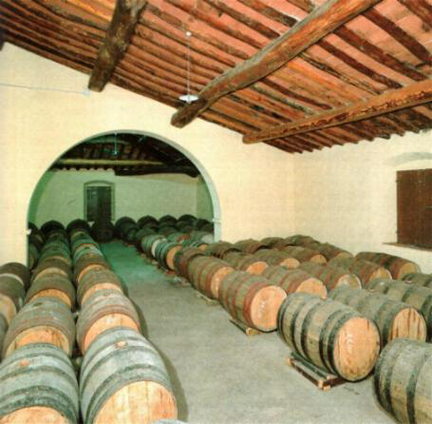
caratelli.jpg

Above: caratelli used to make Vin Santo.

Perhaps a more appropriate translation of the proverb would read: “coveted, sweet wine comes in small barrels.”

A propos wine in small packages, last night found me at Park Blue in midtown, a wine bar that specializes in half bottles, with roughly 150 different labels in its cellar (Per Se is the only restaurant in NYC, the owner told me, that has more half bottles on its list). Even though half bottles are not good for aging wine, they can be fun: especially at a place like Park Blue, with so many to choose from, the lower price point allows you to enjoy different wines in one sitting.

Among other wines, I was eager to try the 2001 Barolo by Massolino. I had never seen a Massolino Barolo in 375ml format and had yet to taste that vintage. I have tasted the 1996 and 97 on numerous occasions and I’ve always felt that Massolino was an excellent wine at an excellent price, a classic expression of the appellation. The wine was much “hotter” (higher in alcohol content) than the wines I had tasted previously and it didn’t taste as earthy as I remember for previous vintages.* It would appear that Massolino has abandoned its traditional style. On the other hand, Antonio Galloni just gave its flagship wine, the Barolo Rionda, a glowing review in The Wine Advocate, a publication that favors “modern” style wines. Am I wrong to begrudge Massolino when the winery seems to have achieved a new level of success with its current winemaking style? To borrow a phrase from François Villon, I miss the wines of yesteryear (as per my note below, I intend to retaste the wine and post new tasting notes).

Click here to read about my tasting with Franco Massolino.

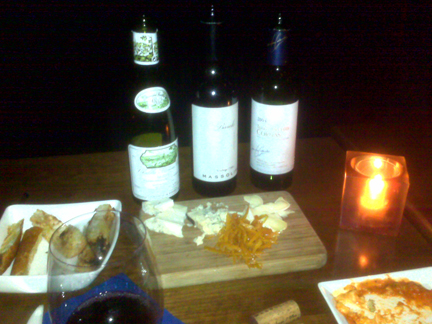
park_blue.jpg

Above: half bottles at Park Blue.

The service at Park Blue was uneven but our server did know the wine list very well. The small plates were just okay but the cheese selection was great. The atmosphere there (music, lighting, and seating) is very relaxing and I’m glad to have discovered a wine bar, with an interesting list, that stays open late in midtown.

In other news, my good friend Charlie George and his family were evacuated from their home in Rancho Santa Fe, California (not far from where I grew up). They’re all safe but, at the moment, he doesn’t know if his house survived the fire. I’m keeping my fingers crossed for him.

I see your hair is burning.
Hills are filled with fire.
If they say I never loved you
You know they are a liar.

— Jim Morrison

*When I tasted the wine, I perceived notes of new oak but when I inquired, the importer assured me that winemaker Franco Massolino does not age this wine (from Serralunga) in new oak. I’m going to make a point of tasting again (this time in 750ml format) and will post new tasting notes. It’s possible that the wine was tainted by some bacteria in the botti in which it was aged. In any event, I will retaste the wine and post a new tasting note.

Dialogue in the Agora* and Kind Words from a Colleague

A few days ago, I was inspired to translate a few passages from Luigi Veronelli’s Catalogo dei vini d’Italia after I read a piece by Eric Asimov in The New York Times about misconceptions in the world of wine. His observation that “oaky is bad but oak is good” made me reflect on my immovable opposition to barrique (i.e., the aging of wine in small, new oak barrels). As Eric pointed out rightly in his post yesterday, the introduction of barrique in Italy was one element in the modernization of Italy’s wine industry and it needs to be viewed in the historical context of the evolution of Italian winemaking.

Eric also had kind — too generous, really — words about my blog. Check out his post to see what he said.

Toward the end of his post, he mentions one of his (and one of my) favorite traditionalist winemakers, Il Poggione, a producer of Rosso di Montalcino and Brunello di Montalcino in Sant’Angelo in Colle, in the province of Montalcino (they also make excellent olive oil).

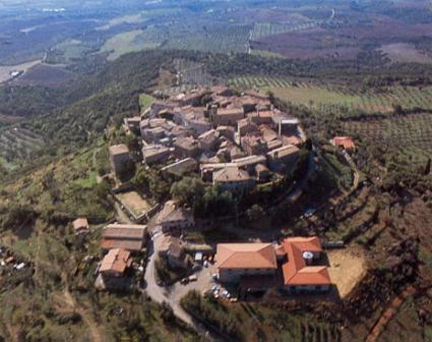
sant_angelo_in_colle.jpg

Above: Sant’Angelo in Colle as seen from above (in colle means literally “on the hill”). Il Poggione and its vineyards lie at the highest point of the appellation in and around the town.

I’ve tasted Il Poggione’s wines going back to the 1970s and one of the best bottles of wine I’ve ever had was a 1978 Rosso di Montalcino (yes, a Rosso) on a freezing night in January with winemaker Fabrizio Bindocci and his son Alessandro. I’ll never forget that dinner. We had taken the bottles from Il Poggione’s cellar and walked across the square to the Trattoria il Pozzo.** It was so cold that Fabrizio put the wines on the mantle of the fireplace to bring the wine to room temperature. We also drank an excellent 1985 Brunello Riserva that night with our bistecca alla fiorentina (the Tuscan porterhouse), always served al sangue (blood rare).

Il Poggione is one of the original three producers of Brunello and was already making wine when Biondi Santi created the appellation in the late nineteenth century.

To this day, winemaker Fabrizio refuses to barrique his Brunello, nor will he pull out his olive groves and replant with vines (he could make the winery’s owner more money if he were to do so). He believes in “promiscuous” farming (where olive groves, fallow fields, and vineyards all lie side-by-side) and allows game to forage on the estate. “That’s part of the terroir,” he once told me, “that’s part of what makes the wine Brunello di Montalcino.”

Like Biondi Santi (the originator of the appellation and undeniably its greatest producer), Il Poggione only uses grapes grown at 400 meters asl and above (note the panorama in the image above). As Franco Biondi Santi has pointed on numerous occasions (Eric did a great piece on this last year in The New York Times), the Brunelllo or Sangiovese Grosso grape (a clone of Sangiovese) needs the altitude and its cooler nights to achieve its aging potential (the grapes are cooled in the evening and thus ripen more slowly).

Thank goodness for winemakers like Fabrizio who continue to make traditional wines while other labels (some of them at the bottom of the hill) produce the barriqued, block-buster wines that the ratings-based publications seem to prefer. As Eric points out rightly, there is a place under the sun for both styles.

*αγορά or agora, in ancient Greece, an open space (usually the public market) that served as a meeting ground.

**IL POZZO
Trattoria
a Montalcino (SI)
fraz. Sant’Angelo in Colle – piazza del Pozzo, 2
Tel. 0577/844015

Luigi Veronelli as Poseidon and a Trident Made of New Oak

Those who know me and read my blog are well aware of my distaste for “barriqued” wines, wines aged in small new oak barrels. And while there’s nothing worse to my palate than a barriqued Nebbiolo (a grape always ruined by barriques in my opinion), there are many wines — I must concede — where the use of barriques is a positive element.

Some of the famous reds of Burgundy, for example, benefit from barrique aging (oak, when used judiciously, allows gentle oxidation through the pores of the wood). Eric Asimov was 100% correct to point out, as he did in last week’s The New York Times, that “Oaky may be bad, but oak is good.” (Click here to read what Eric had to say about this post.)

When it comes to Italian wines, however, there is no doubt in my mind that Italy’s three greatest grapes — Nebbiolo, Aglianico, and Sangiovese — show much better when aged exclusively in large old oak traditional barrels, botti [BOHT-tee]. The question of barrique in Italy is a thorny one and generally inspires heated debate among Italian wine connoisseurs, lovers, and enthusiasts. Some of us begrudge Italian winemakers for abandoning traditional winemaking techniques. Many point to the popularity of the Californian winemaking style (which favors barrique aging) as their source for inspiration (and marketability), others cast their stones at Parker, The Wine Spectator, et alia, deriding them for favoring barriqued wines.

I recently came accross an original edition of Catalogo dei vini d’Italia (Catalog of the Wines of Italy, 1983), one of the first great modern encyclopedias of Italian wine, edited by the beloved Luigi Veronelli (1926-2004), enogastronome, publisher, and one of the architects of Italy’s current food and wine renaissance (it’s not its first, btw). I was stunned by what I read in the preface and the characters who appeared there. I believe the passage below (translation mine) to be an important document of the history and development of barrique in Italy. Read on and you might be surprised.

Veronelli writes in the preface:

    In 1982, just over a year ago, I made a trip to California for the purpose of “study” with Mario Schiopetto, Giacomo Bologna, and Maurizio Zanella – three names mandatory for those who love wine. We left on Friday May 20 and we returned June 6. As far as wine tasting was concerned, the trip was a pleasurable yet painful Way of the Cross. At every tasting (and I mean every one and there were many), we looked at each other in disbelief.

    It’s not easy to express the flood of emotion that engulfed us. We were bewildered by a reality very different from that we had imagined. We were surprised by the excellence of nearly every wine poured for us. We were embarrassed by the fact that we had to rein in and conceal our shared enthusiasm (in part, I must admit, in order to defend our own “interests”). But, above all, we were enraged: why did Italian winemaking lack (and where would it find) such young, bright, informed, and commercially minded enotechnicians with university degrees in enology?

    I had to force myself not to lash out and offend. But I did tell the three winemakers that they must take note (and documented my declaration by putting it to paper): “If we do not immediately change course, we will be ousted – in another ten years or less – from the fine wine market.”

    How should we change? The answer is sure to be long and is of extreme importance. I call upon all well-intentioned persons to partake in this dialogue. But I will limit my response by laying forth certain “provisions” that must not be delayed: first, serious study of enology; second, meticulous varietal selection (both in the selection of clones and their uses on a subzone by subzone basis); third, yields need to be cut in half; fourth, eradication of vines grown in the lowlands (excluding, it goes without saying, the so-called grave [gravelly or pebbly] plains and a few other suitable plains); fifth, vinification in barriques (small oak barrels). [boldface mine]

    Another result of the trip was a “moral conversation” – which I published in L’Espresso – between an enotheic [wine-worshiping] journalist and Piero Selvaggio, owner of Valentino restaurant in Los Angeles.

    “After my stay in California and my visits to vineyards and cellars, thanks to you Piero, I would like to be not enotheic but rather Ennosigaios [“Earth Shaker,” byname of Poseidon, Gr., enosis “shaker,” gaïos “land”]. If I had Poseidon’s trident, I’d shake the earth.”* [boldface mine]

    “Don’t be silly: I receive excellent wines even from Italy.”

    “But they are too few: our history stretches back 2,000 years and these [Californians] have already outpaced us in ten short years. It goes without saying: I’m furious. If I had my way, I’d drown all those guilty of this crime, the authorities and the enotechnicians.”

    “Isn’t there a saying in the Veneto, Veronelli? Co l’acqua toca ‘l cul tutti impara a nodàr [“When the water touches one’s ass, one learns to swim.”] We [Italians] will learn to swim.”

    “If I had my way, I’d drown them all in their wines. They taste worse than water.”

    How is it possible – I ask referring back to the first and last “provisions” above – that after all these years our enotechnicians don’t know about the use of barriques? [boldface mine]

(Catalogo dei vini d’Italia, ed. Luigi Veronelli, Milan, Mondadori, 1983, pp. 8-9, translation mine.)

On May 20, 1983, he recounts in the following pages, Veronelli organized a seminar for winemakers and journalists at Palazzo Antinori in Florence: the featured speaker was the “dean” of Californian winemaking, Russian-born and French-trained, André Tchelistcheff, who introduced the use of barrique aging and modern winemaking techniques to Californian winemakers beginning in the late 1930s. In the final passage, he stridently declares that barrique aging is a “sine qua non” for long-lived wines and he notes, such wines will live side-by-side with Italy’s younger wines (and he makes a highly important distinction: wines intended to be consumed young should not be barriqued, while age-worth wines should be). He points to the following Italian winemakers who have already achieved success in their experimention with barrique aging: Incisa della Rocchetta, Antinori, Gaja, Ca’ del Bosco, Maculan, Ronchi di Cialla, Castelluccio, Abbazia di Rosazzo, Castello di Volpaia, and Podere Castellare. It’s interesting to note that he does not include his fellow traveler Giacomo Bologna in this list (since many believe that Bologna, with the famed Bricco dell’Uccellone, was the first to produce a barriqued wine in Piedmont).

In my time, I’ve drunk some great Super Tuscans, wines, which, by definition, have been aged in barriques.** I remember well my early years in Italy (1989-92) when I drank some famous vintages (notably 1985) of Sassicaia, Ornellaia, and Pergole Torte etc., thanks to my friends the Marcucci brothers in Bagno Vignoni near Montalcino. Over the last few years, I’ve also had the chance to taste some of these wines again in NYC — now among Italy’s most collected and coveted. Although I don’t care for these wines, I believe that they paved the way for other Italian wines to make it to this country by showing the world that Italy could produce world-class Bordeaux-style wines. Is barrique so bad? The answer is no: historically, oak can be good when it is used judiciously, with the right grapes. Veronelli certainly saw the future of Italian wine and we certainly shouldn’t begrudge him for that.

Above: the beloved Luigi Veronelli, food and wine writer and historian, publisher, and a guiding light in the Italian renaissance of gastronomy and enology.

* Veronelli uses Nettuno or Neptune, the Latin name for Poseidon, in the original. I’ve translated it as Poseidon because the Greek name is more commonly used in English, especially when accompanied by the deity’s pseudonym, Ennosigaios.

** At least one Italian wine authority, Franco Ziliani, indicates that Nicolas Belfrage coined the term Super Tuscan (to denote fine Tuscan wines classified as vino da tavola or table wines) and was the first to use it in 1985.

Veronelli “subversive” editor and activist (just the facts)

Above: the jacket for one of the few extant exemplars of Pino Bava’s Italian translation of De Sade’s Historiettes, contes, et fabliaux with illustrations by Italian artist Alberto Manfredi, published by Veronelli in 1957. Veronelli was sentenced to prison for obscenity that same year but never served time. The book was one of the last burned publically in Italy (image courtesy of Veronelli Editore, Bergamo).

My October translation of Veronelli’s preface to Catalogo dei vini d’Italia (1983) inspired a few other bloggers, notably Eric and Alan.

Later in the year, when I met my dissertation adviser and sometimes collaborator professor Luigi Ballerini for a holiday drink, he reminded me that he was working at Rizzoli Editor in Milan in 1964 when Rizzoli published Veronelli’s now required-reading Cocktails. Luigi (Ballerini) has many fond memories of the congenial Veronelli, including a dinner hosted by Veronelli at his home in San Siro (Milan) to thank his editorial staff. “It was the first time I tasted Château d’Yquem,” said Luigi (Ballerini), who was 24 years-old at the time of their meeting, “Veronelli held it up to the light and showed us how it turned emerald in color.”

After Veronelli’s passing in 2004, many apocryphal anecdotes regarding his life have been published on the internet. Curious to find out more about his activism and his controversial publishing career, I recently contacted Gian Arturo Rota, president of Veronelli Editore in Bergamo, and submitted the following questions (in italics). I have translated Rota’s answers below.

Beyond being the architect of the Italian food and wine renaissance, Veronelli was also an editor who published poetry and literary works. What were his principle literary interests?

He began in the 1950s publishing works by De Sade, Anatole France, philosophical works (like Giovanni Emanuele Bariè’s concept of neo-trascendentalism) and political works (like Pierre-Joseph Proudhon), and books on gastronomy (like Le ghiottornie di Gabriele d’Annunzio* and Apicius). He also published books on sports.

He published magazines as well: I problemi del socialismo (Problems of Socialism and Il gastronomo (The Gastronome).

Veronelli closed the doors of Veronelli Editore [his publishing company] in the 1960s because he wanted to devote himself exclusively to his work as a journalist and writer. His literary interests? A bit of everything, I would say, with a predilection for classical authors and for eighteenth-century France. He was a highly erudite man.

Veronelli was also politically engaged: what were the defining moments of his political life?

Inasmuch as he actively worked for a political party, his interest in politics didn’t last long. He worked for the Italian Socialist Party when – as he liked to say after the Tangentopoli scandal** – socialists were still serious. Keep in mind that he was a friend of Lelio Basso, one of the party’s founders and one of its most illustrious theoreticians, and a contributer to his magazine I problemi del socialismo.

Veronelli’s “occupation” of the train station at Santo Stefano Belbo and the translation of De Sade: on the internet, there are contradictory, apocryphal accounts. What were the facts?

September 19, 1980: Veronelli attended a rally in Asti (and not in Santo Stefano Belbo) where grape-growers and winemakers had gathered to discuss the then serious problems faced by Asti’s viticultural community. He had promised that he would speak on behalf of grape-growers only if those politicians responsible – in his view – for the situation would also attend. The politicians did attend and gave their patent answers without assuming any responsibility. The thousands of grape-growers who had gathered in the square begged him to speak. He did. In his harsh speech, he emphasized the fact that the grape-growers needed help and that their rights needed to be defended. Spurred by the crowd’s enthusiasm, the grape-growers took the stage and asked their colleagues to block the streets and occupy the Asti train station. Veronelli encouraged them to do so and he was later accused and convicted for aggravated obstruction of a public thoroughfare. He was granted amnesty four years later [and did not serve time in prison].

Regarding De Sade’s Storie, storielle, e raccontini),*** I know that it was one of the last – if not the last – books burned in a public square in Italy. The court of Varese [a town north of Milan] ordered it burned because the book contained texts and images that had been deemed obscene. Veronelli attended the bonfire and to protest his sentence, he applauded and laughed the entire time. He sentence to jail-time was however commuted and he was never imprisoned.

Notes:

* Gabriele d’Annunzio (1863 – 1938) was one of Italy’s greatest poets, dramatists, and novelists. Known for his insatiable appetites (for food, women, and adventure), he often wrote about his culinary exploits and feats. Ghiottornie (from the Italian ghiotto or “insatiably hungry for”) can be loosely translated as “the oversized appetites” of Gabriele d’Annunzio.

** Tangentopoli or “bribesville,” the widespread political corruption scandal, unraveled by the Italian authorities’ Mani pulite or “clean hands” campaign in 1992.

*** Historiettes, contes, et fabliaux or “Stories, Tales, and Fables,” published in Paris as early as 1800 in Les crimes de l’amour or “Crimes of Love.”

Addendum:

See this informative obituary published in The Independent.

The Lice of Wine Writing Redux

For propriety’s sake, this post must begin with an errata corrige: my recent post on my dinner with Leslie Sbrocco included an erroneous literary attribution (to Eugenio Montale). In fact, it was twentieth-century Italian novelist Carlo Emilio Gadda who wrote: “Pronouns! They’re the lice of thought. When a thought has lice, it scratches, like everyone who has lice…. and they get in the fingernails, then… you find pronouns, the personal pronouns.”

“Ah! the world of ideas! What a fine world! Ah! this, I, I…,” says Gadda’s autobiographical character Gonzalo in Acquainted with Grief, “among the almond blossoms… then among the pears […] I, I… the foulest of all pronouns!”*

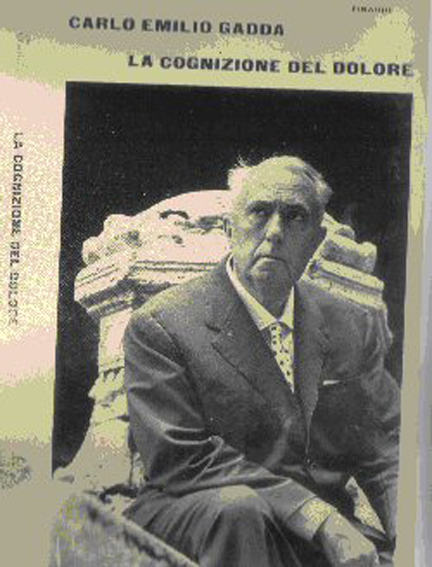
gadda.jpg

Above: Carlo Emilio Gadda, the great twentienth-century Italian novelist. We’ve all been “Acquainted with Grief,” haven’t we?

Over the weekend, in speaking with journalist and wine writer Peter Hellman about all of the upcoming tastings and wine events in NYC, we shared our dismay at the state of wine writing today and what I like to call the “lice of wine writing”: tastings notes so impossibly subjective, so beleaguered by the presence of the “I,” that they are bereft of meaning.

An avid reader of wine writing, Peter pointed out the absurdity in a recent promotional email where two very famous wine publications were quoted about the same wine:

Parker: “The 2003 Cornas La Louvee is a blockbuster. Glorious aromas of flowers, blackberries, roasted meats, espresso roast, and white chocolate flow from this full-bodied, concentrated, modern-styled, impressively-endowed, full-throttle Cornas. Drink it now and over the next 15+ years. 93pts”

Wine Spectator: “Tight and structured, with lots of iron and mineral notes framing the black cherry, plum, briar, tar and olive paste flavors. Long finish sports mouthwatering acidity. Very impressive for Cornas in 2003. Best from 2007 through 2015. 800 cases made. 92pts”

As Peter pointed out rightly, the tasting notes in the two passages are “mutually exclusive.” As I’ve asked many times before, how can a wine really taste like so many different things? And, come on, “mouthwatering acidity”? What the hell does that mean?

He also directed me to the website of Château Palmer where a similar discongruous hypertext emerges. Of all the I-can-taste-and-write-more-descriptors-than-you descriptions that I found there, the only one that showed some sanity was the wise Jancis Robinson, who, it seems to me, always takes a much more objective approach to wine writing and tasting notes, a style much more real and accessible to both the expert and the lay person:

Very, very deep crimson. Very intense and nervy – impressive on the nose – but more obviously big and fruity than the more delicate Ch Margaux… Slightly charred and smoky. Round and fresh and very beguiling. Real lift and only the slightest hint of inkiness on the finish. Bravo! Very fine tannins – very suave and polished with good density while still being Margaux. Very sweet. Hints of modern idiom but very gentle. Super silky texture. Sinewy – but polished sinews!

Hers is a more poetical approach and she avoids the subjective virtuosismo of the Parkers, Wine Spectators, and Tanzers, who just can’t resist the “I taste this, I taste that” one-upmanship** (as Peter pointed out, Tanzer is probably the only person in the world who knows what “Vermont granite” tastes like… Next time I go to Vermont, I’ll be sure to eat some).

When will wine writers come to their senses (pun intended) and realize that these overblown descriptors are the lice of wine writing???!!!

When I read “blackberries, roasted meats, espresso roast, and white chocolate” and “black cherry, plum, briar, tar and olive paste,” I scratch my head and like Gadda’s Gonzalo, I find lice in my fingernails — the lice of wine writing.

*Gadda, Carlo Emilio, Acquainted with Grief (original title: La cognizione del dolore), translated from the Italian by William Weaver, Braziller, New York, 1969, p. 86.

For the original Italian, see: ibid., La cognizione del dolore, Einaudi, Torino, 1970 (1963), p. 123.

In the passage, Gonzalo (Gadda) tells his doctor that he doesn’t need anyone but himself for a diagnosis of his ills, anyone but his “I.” Then, all of a sudden, a thought bursts from his mouth:

“Ah! the world of ideas! What a fine world! Ah! this, I, I… among the almond blossoms… then among the pears […] I, I… the foulest of all pronouns!”

The doctor smiled at this outburst; he didn’t understand. Still he seized the chance to direct into more serene channels their words, if not the man’s humor and thoughts.

“And why, for God’s sake? [the doctor asks Gonzalo] What have they done wrong, pronouns? When a person thinks something or other, he still has to say, “‘I think…'”

“Pronouns! [Gonzalo answers] They’re the lice of thought. When a thought has lice, it scratches, like everyone who has lice…. and they get in the fingernails, then… you find pronouns, the personal pronouns.”

**I write anti-chauvanistically “one-upmanship” and not “one-up-personship” because I believe that women have finer noses and palates in wine tasting and that they dispense with the ever-present male bravado that accompanies wine enthusiasm and connoisseurship.

“Acidity is like a bra”: Dinner with Leslie Sbrocco

Addendum: please look for another post of the “Lice of Wine Writing” coming early next week.

There are wine writers and then there are wine writers. Friday night found me at an undisclosed location dining with the lovely and immensely charming Leslie Sbrocco, whose entirely novel approach to wine writing and tasting has made her one of the most popular wine personalities in the U.S. today (not to mention the fact that she’s simply a lot of fun to be around).

leslie.jpg

Leslie launched her wine-writing career with a book written expressly for women, the aptly titled Wine for Women, and has written for countless newspapers, magazines, etc.

What I like about her approach to wine is that she avoids the canonical wine descriptors and encourages her readers and audience to draw from their own personal experiences to describe the wines that they are tasting.

The celebrated twentieth-century Italian poet Eugenio Montale once wrote famously — or at least this quote has been attributed to him — “i pronomi sono i pidocchi della poesia,” “pronouns are the lice of poetry.”

ERRATA CORRIGE: Montale did not write “pronouns are the lice of poetry.” (I realized my graduate-school-days memory was a little rusty so I did some snooping around until I found the correct attribution.) In fact, twentieth-century Italian novelist Carlo Emilio Gadda wrote: “Pronouns! They’re the lice of thought. When a thought has lice, it scratches, like everyone who has lice… and they get in the fingernails, then… you find pronouns, the personal pronouns.”*

To borrow [Gadda’s] phrase, affected tasting notes are the lice of wine writing and tasting.

Here’s a great example, drawn from the website of a restaurant in Boston:

“2003 (Oregon) Chardonnay, Willamette Valley, Clos du Soleil, Domaine Serene ~ rich aromas of mineral, lime, toast, fig; rich and round palate of peach, pear, star anise, clove, long creamy finish 67.00”

Of all the wine made in the U.S., I find the Willamette Valley’s style among the most palatable and had some great Pinot Gris when I traveled through there with Nous Non Plus. But, for crying out loud, is it really possible for a wine to taste like all of those things? And while there are many wine professionals out there whose noses are so well trained that they can indeed perceive different levels of flavor and aroma (sometimes called secondary and tertiary), is there really someone out there who can taste all of those descriptors? I don’t want to taste wine that tastes like that (if it really does). Of all the affected wine descriptors, I think my favorite is “star anise.” I mean, when is the last time that anyone put star anise in their mouth?

I can’t even count how many times I’ve seen people turned off when they hear some would-be wine expert/snob rattle off a series of descriptors that most people would never have had any contact with let alone relate to. The best way to describe wine is to draw from your own personal experience and memory. That’s what is so great about tasting wine, especially when you taste it in the company of others. That’s the eureka moment of wine tasting: when two people find that they share a common sensation and sensorial memory in the act of tasting wine. (I do like this glossary of wine tasting terms, which eschews the affected terminology that you find among the ostentatious and the barkers.)

This summer when I was invited to a tasting of nine Barolos in the home of Jay McInerny (we also drank a Chablis Butteaux 1992 Raveneau and Hermitage Blanc L’Orée 1991 Chapoutier from his cellar for dinner), he complained to me about how the editors of his wine column insist that he provide tasting notes. Wouldn’t the world be a better place, we mused, if instead of writing tasting notes, wine writers wrote poems about the wine they taste?

As we enjoyed a Chambave Rosso 2004 Le Muraglie Ezio Voyat (from the Valle d’Aosta, one of my favorite wines), I told Leslie how much I admired her for making that break from the conventions of wine tasting and wine tasting notes and how I felt that it resonated with her readers and audience. It’s people like Leslie who are helping to make wine approachable and accessible to a whole new group of people, who would otherwise be intimidated and turned off by wine.

“One of my favorite examples,” she told me, “is how I help people to understand what acidity [in wine] is. ‘Acidity is like a bra,’ I tell them. ‘It holds everything up.'”

*Gadda, Carlo Emilio, Acquainted with Grief (original title: La cognizione del dolore), translated from the Italian by William Weaver, Braziller, New York, 1969, p. 86.

To the Emperor’s Censor: Parole in Libertà!

I was appalled but not surprised to learn that my friend, natural wine champion and excellent writer Alice Feiring, had been kicked out of the Robert Parker chatroom when she joined a charged discussion/thread that took shape in the wake of Lettie Teague’s recently published and already much-talked-about piece on Barolo.

Evidently, the chatroom’s policy does not allow wine writers to weigh in when another writer is already participating — directly or indirectly — in the thread. See Alice’ post on the episode here.

The good news is that Lettie Teague has launched a very positive dialogue on Barolo. In her article, she addresses a highly contentious and often divisive issue or, rather, body of issues: can Barolo be consumed young? if it can’t, what’s the point of buying it unless I can cellar it for 20 years? what defines Modernist vs. Traditionalist Barolo? and, after all (and here’s where it gets really tricky), where does the line of tradition end/begin? and what does tradition mean when we see that winemaking styles are constantly changing? Whether or not you agree with Lettie and/or you appreciate her research and tasting notes, she has sparked a hypertext that will certainly help to enlighten would-be Barolo collectors and/or lovers.

In some ways, the current dialectic is analogous to that of Postmodernism, wherein any discussion on the nature of Modernism and Postmodernism has to be prefaced by a discussion of where the historical avant-garde ended (and what, if anything, can come after Postmodernism???!!!). The discussion becomes even more complicated when you consider that (as the erudite Darrell Corti recently pointed out to me) Renato Ratti radically changed the nature of Barolo with his 1971 bottling. Did the “tradition” of Barolo begin only in 1971? Does Ratti’s approach to Barolo mark the birth of Modernism in Langhe? Does this make Paolo Scavino a Postmodernist producer? More on this in another post…

The bad news is that once again, the Emperor of Wine has sent his censor into the αγορά or agora, the “marketplace” (where thinkers, writers, and, in this case, nebbiolophiles gather to contemplate sensation and its meaning) to stifle our dialogue.

Granted, Alice is well known for her strong positions on winemaking and her critical eye and absolute and fierce devotion to the wines she loves have more than once bruised the ego of a peer and/or colleague. But shouldn’t Robert Parker — of all people!!! — encourage positive and meaningful dialogue on wine, wine collecting, and wine appreciation? The Parker chatroom should celebrate her superb wine knowledge, reason, and wisdom… if not for anything else than for the love of wine.

Borrowing a phrase coined by the father of the historical avant-garde, F.T. Marinetti, I have three words for Parker and his censor: parole in libertà! “words in freedom!”