What is not: a simpler manifesto for Natural Wine?

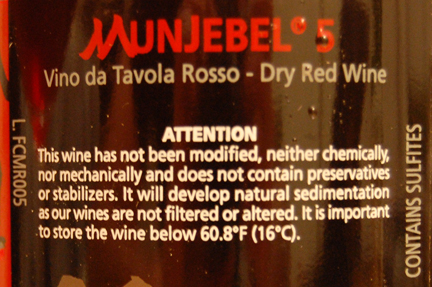
Last night, as Tracie P and I were sitting on our living room couch, watching our Sunday night TV (gangsters and zombies, please), munching on an excellent potato and leek torte that she made, and sipping Cornelissen’s 2007/2008 Rosso Munjebel 5, it occurred to me that one of the most tormented aspects of the tortuous quest to define “Natural Wine” is the fact that its definition is, by its very nature, a definition of what is not.

In many ways, the art and science of producing Natural Wine are defined by what the winemaker does not do: no chemicals in the vineyard, no pharmaceutical yeast in the cellar, and no manipulation of the vinified must (or as little as humanly possible, because human intervention is required on some level).

The Natural Wine Authorities seem to agree that Cornelissen’s wines are impeccably Natural (and I certainly do not want to descend into the abyss of the Natural Wine debate here). I’m sure even the Grouchy One would agree that Cornelissen’s wines are Natural (even though he’s probably pissed that he doesn’t import them).

In any case, Cornelissen’s “Natural Wine” credo, as published on his label (above), seemed to me a succinct and excellent way to define what Natural Wine is by describing what it is not. (Check out Cornelissen’s site here.)

O, and the wine?

For however difficult they are to track down and buy, Cornelissen’s wines are not prohibitively expensive.

Although the wine was slightly “hot” on the nose (as we say in the biz, denoting high alcohol content), we loved it: bright fruit, bright acidity, light in body, and a rich grapey meatiness that was fantastic with Tracie P’s torte.

Is it a wonderful wine? Yes. Is it a life-changing wine? I’d have to say no. Tracie P noted that it reminded her of the vino paesano that she used to drink when she lived in Ischia.

We enjoyed it thoroughly with our gangsters and zombies and we remembered that sometimes the simplest things in life are the best.
15 is the new 10: scenes from an Asian wine pairing, thinking outside the Bento box

Last night, for the second year in a row, I served as sommelier and speaker at Saheli’s annual benefit in Austin, “Discovering Asian Food through Wine.”

SAHELI is a nonprofit organization based in Austin, Texas, that provides assistance to Asian and other immigrant families dealing with domestic violence, sexual assault and trafficking.

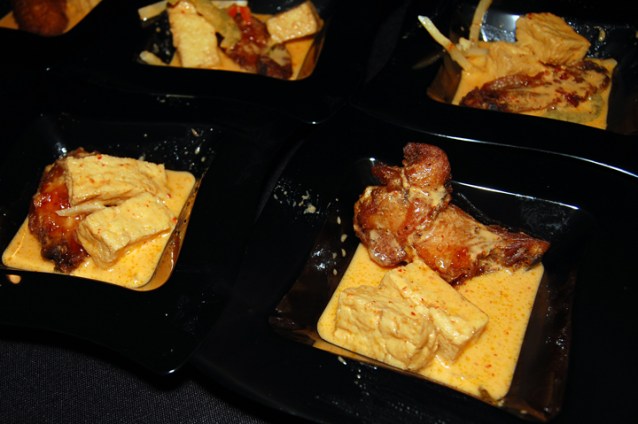
This year, Tracie P was able to join me and we had a blast pouring and talking about wine, admiring the many ladies dressed in traditional Asian garb, and tasting the FANTASTIC Asian dishes paired with European and North American wines.

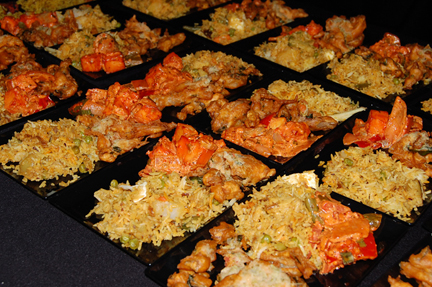
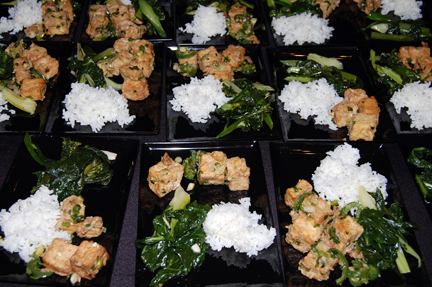
Roughly 150 persons attended the event and it was amazing to see the sea of colors and patterns formed by the tasting plates all lined up for the guests to sample.

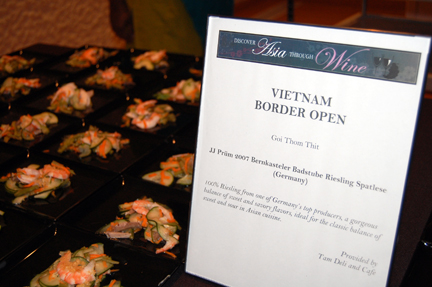
The organizers had asked me to select wines at a median $15 price. We were very fortunate to find a great price on the JJ Prüm 2007 Bernkasteler Badstube Riesling Spätlese, a no-brainer pairing for the tart and often intensely spicy flavors of Asian cuisine. What a fantastic food wine…

The wine that impressed me the most was the Planeta 2008 Cerasuolo di Vittoria. I’m not generally a fan of Planeta. I mean, who needs another buttery Chardonnay or oaky Merlot from Sicily? But then a few years ago my friend Marco Barat insisted that I taste it with him. I discovered that this wine is true to its appellation and deliciously well priced (around $15). When done right, Cerasuolo di Vittoria is one of those wines that always wows the first-time taster. It was great to watch the guests ooo and aaa over its bright fruit nose and gritty earth. It went great with the Kibbeh (below).

I also loved how we were able to put together a fun flight of wines using the $15 rule: by taking advantage of a mixed case discount, looking for special value, and balancing the higher priced with the lower, I was able to deliver the goods.

When people ask me buying tips, I always tell them: 1) buy from an independent retailer and get to know your merchant well (so that the seller knows your palate and will alert you to special pricing; 2) always take advantage of case discounts (I rarely buy just one bottle of wine); 3) once you establish your budget for wine, use an average per bottle cost so that you have a variety of wines (for drinking every day, for Saturday night dinner, and for special occasions).

And remember: 15 is the new 10!

On the subject of pairing Asian cuisine and European wine, check out Lyle’s hot-off-the-presses post on the new Lotus of Siam in NYC (I’ve only been to the one in Vegas when my band NN+ has played there and am dying to get to the new one in the City).

I also led a private tasting this week at the elite River Oaks Country Club in Houston. But price wasn’t an issue there! The night ended with 03 Sassicaia and 06 Ornellaia… not really my speed but one of those professional hardships I was forced to endure…

What is the secret of Soylent Merlot?

SPOILER ALERT: Please do not click on the below YouTube if you want the answer to be a surprise.

But please do click on the comment thread from yesterday’s post on Soylent Merlot and the Montalcino Syndrome, which includes insights from two Italian winemakers (Giampaolo Venica and Marilena Barbera). And please add your voice to our chorus.

The Montalcino Syndrome… It’s about people, people who lie, and people who face the agony of telling the truth…

What Parzens will be drinking for Thanksgiving

If you live in California and would like to drink what Parzens will be drinking this year at their Thanksgiving, check out my current offering at Do Bianchi Wine Selections (my wine club).

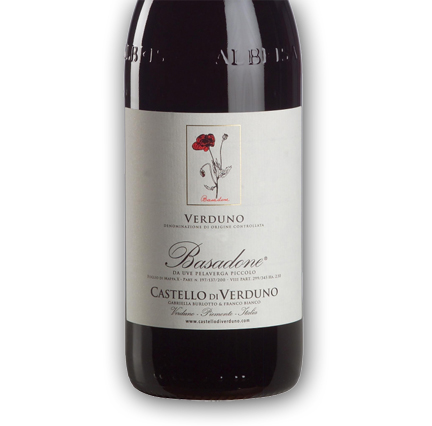
The year was 2006 and I was working in New York as the media director for a high-profile Italian restaurant group that also happened to be a direct importer of Italian wines. Earlier that year, I had made the annual trek with my colleagues to the Italian wine fairs, where we met and tasted with a young winemaker at the natural wine fair, Vini Veri: Mario Andrion of Castello di Verduno, producer of awesome Barolo and Barbaresco and a then relatively obscure grape called Pelaverga…

Click here to read the rest of the story.

The least Piedmontese of the Piedmontese wines

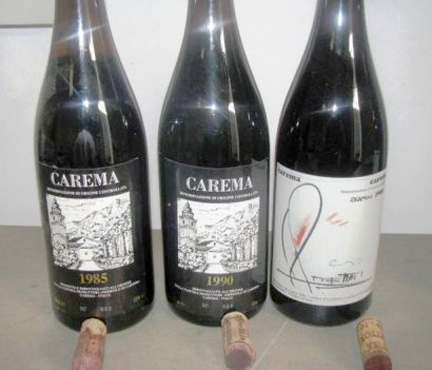
Envious as I am? Click here to read my translation of top Italian wine blogger Mr. Franco Ziliani’s post on a “truly moving” vertical tasting of the “least Piedmontese of the Piedmontese wines.”

Just wait until the mimetic desire kicks in…

Tracie P on the wines of Campania

Tracie P is blogging again! :-)

Click here to read her post on the wines and grapes of Campania, the first part in a series on Italian wines.

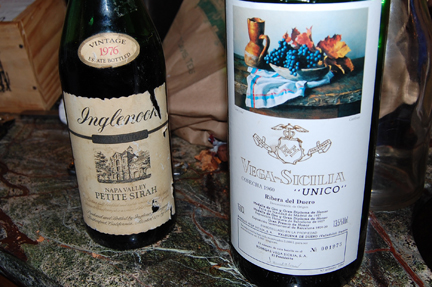
Vega-Sicilia Unico 1960 (magnum) for Alice Feiring

Many wonderful bottles were opened last night in the home of our good friends Patricia Winston and Bill Head to celebrate Alice Feiring’s first visit to Texas.

But it was Alfonso who gave her the BIGGEST Texas welcome with an unforgettable bottle of 1960 Vega-Sicilia Unico in magnum (!) and original wooden case. I was blown away by how savory and rich the wine was, vibrant and with an acidity that I frankly wouldn’t have expected in a wine this old. A truly amazing — in so many ways — bottle of wine.

Patricia and Bill had assembled a who’s who of Austin-based winemakers, collectors, and wine professionals for the occasion. But it was Devon Broglie (right, with me, center, and Alfonso, left) who stepped up to the plate to extract the cork. Nice work, Devon!

Even Alice looks TALLER in TEXAS! That’s our good friend, journalist, author, and radio personality Mary Gordon Spence (right).

What a great night, great wines, and great folks…

There might just be a few spots left for a dinner to be held in Alice’s honor tonight in Austin at Vino Vino. In her words, the wines we’ll be tasting are “hard-core natural.”

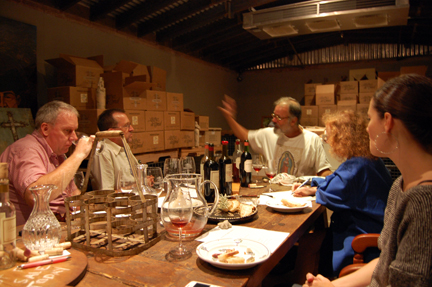
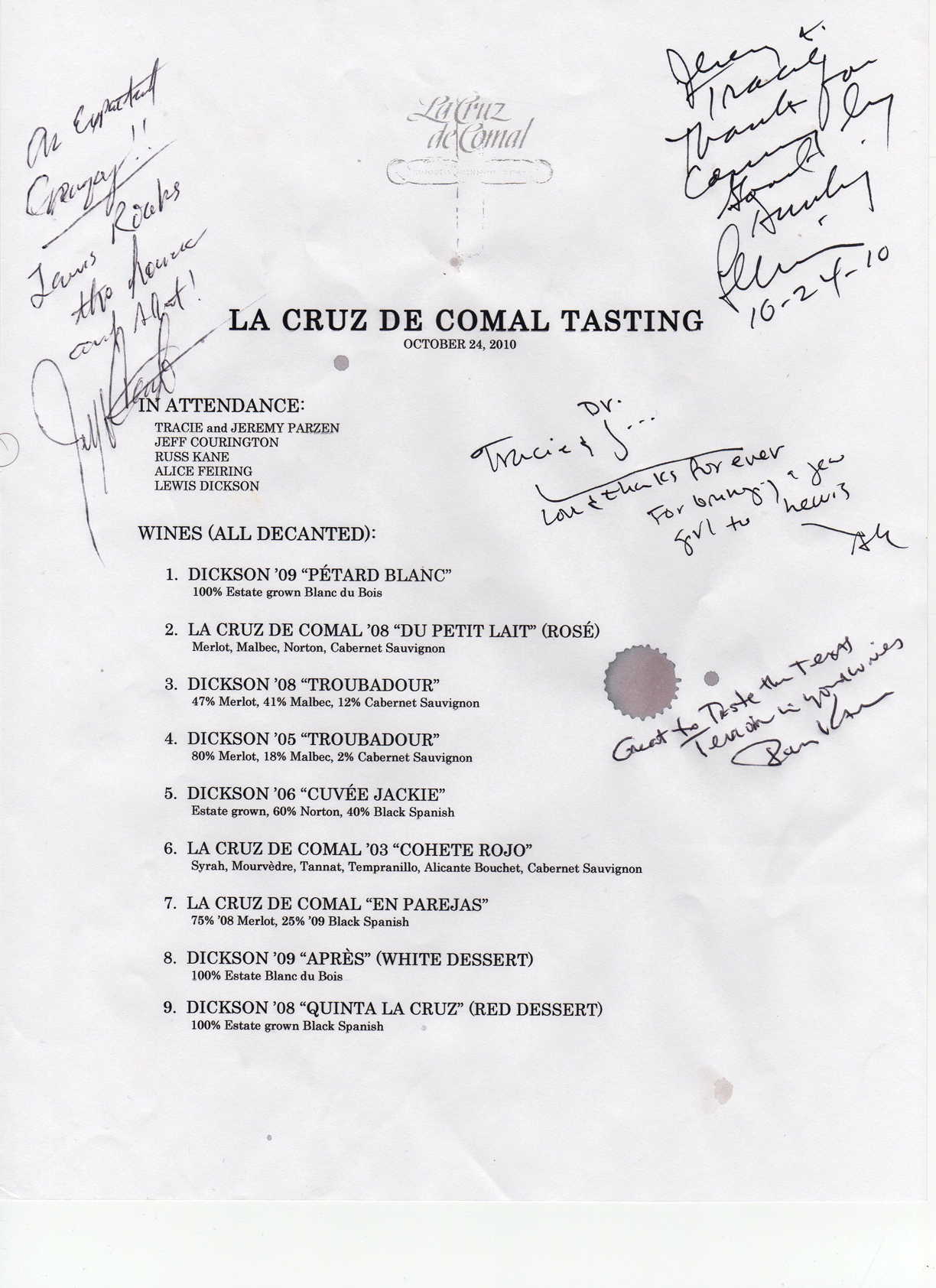
Tasting with Alice Feiring and Lewis Dickson, Cruz de Comal, Texas Hill Country

Vineyard walk and tasting with Alice Feiring, Russ Kane, Jeff Courington, and winemaker Lewis Dickson at the Cruz de Comal winery, Texas Hill Country.

Click image for flight tasted.

Sunrise with a Brunello master: Sangiovese is safe in Montalcino

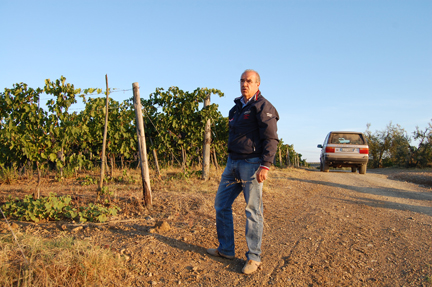
One of the most thrilling experiences of my recent sojourn in Tuscany was a sunrise ride through the vineyards of Il Poggione with the estate’s winemaker Fabrizio Bindocci (above). I’ve known Fabrizio for seven years now and I consider him a friend and a teacher. Born and bred in Montalcino, he is one of its top winemakers and one of the appellation’s greatest defenders and protectors. In recent years, he has spoken — passionately, eloquently, and very publicly — in favor of not changing Brunello appellation regulations to allow for grapes other than Sangivoese.

And I don’t think that Fabrizio would mind me calling him a toscanaccio: he has the sharp wit and the sometimes acerbic tongue for which Tuscan men have been famous since their countryman Dante’s time and beyond. I try to visit and taste with him every year and I’ve never known him to mince words.

I love the wines he bottles, for their integrity and for their purity, for what they represent and the people who make them, and for their honest and utterly delicious aromas and flavor.

Of course, my $48K question to Fabrizio was will the modernizers of Brunello succeed in changing the appellation regulations and obtain their desired allowance of international grape varieties in the wine?

Brunello as a monovarietal wine, i.e., 100% Sangiovese, is safe, he told me. And he doesn’t fear that the new and decidedly modern-leaning regime in the Brunello producers association will attempt to change the Brunello DOCG to allow other grapes. The body, he said, is currently studying verbiage for the soon-to-be unveiled “new” appellations under the EU’s Common Market Organisation reforms. (This summer, authority to create new European wine appellations passed from the individual states to the European Commission in Brussels.)

The bottler-members of the association are evidently considering a new appellation, putatively called “Montalcino Rosso,” that would allow for more liberality in creating blends raised in Montalcino. This would seem to represent a palatable compromise — my words, not his — between traditionalists who want to preserve Brunello and Rosso di Montalcino as monovarietal wines and modernists who what to cash in on the de facto Montalcino brand (again, my words, not his).

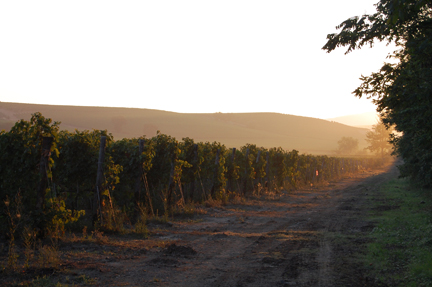
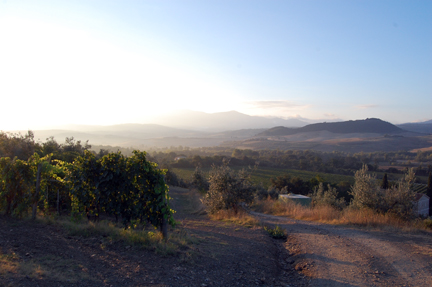
Daybreak in the vineyards of Montalcino during harvest is a sight that everyone should see before leaving this earth. There is a light that brings a transcendent clarity to the mind and the soul.

As the sun rose over this immensely beautiful place, I couldn’t help but think of Dante and the roles that light plays in his Comedìa as metaphor of knowledge and love.

I was relieved on that morning to discover that (it seems) Brunello has emerged from its selva oscura, its dark wood. (Observers of Italian wine will appreciate my paronomasia.)

Midway in the journey of our life
I came to myself in a dark wood,
for the straight way was lost.
Ah, how hard it is to tell
the nature of that wood, savage, dense and harsh
the very thought of it renews my fear!
It is so bitter death is hardly more so.
But to set forth the good I found
I will recount the other things I saw.

Indisputably Natural in San Diego: Cornelissen, Dettori, López de Heredia

N.B.: Jaynes Gastropub does allow corkage, for a reasonable fee, for wines not offered on their wine list.

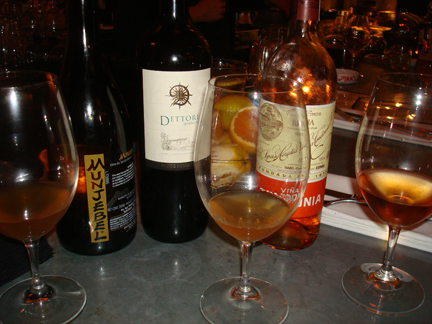
Chrissa, her husband Dan, Rikkers, and I opened a memorable flight of indisputably Natural wines last night at Jaynes Gastropub in San Diego. I write “indisputably Natural” with a capital N because any mention of Natural wine these days seems to spark the ire of some of the more cranky among us here in the enoblogsphere. But there’s no doubt in my mind that the community of wine bloggers who have laid claim to this precious and widely coveted epithet would agree that the three wines in question fulfill the criteria prescribed by even the most rigorous enforcers of Natural wine doctrine and dogma.

Perhaps nowhere has more been written about the wines of Frank Cornelissen than at Saignee and, ubi major minor cessat, I will defer to Cory’s excellent blog for a treatment of Cornelissen and the cult that has taken shape around him.

The wines, raised on the slopes of Mt. Etna, are not easy to come by in this country and I was thrilled to finally get my hands on some. Together, we tasted the 2007 Munjebel Bianco (native yeast, skin contact, no SO2, no filtration). Munjebel is dialectal toponym for Mt. Etna, btw (akin the Sicilian Muncibeddu or the Italian Mongibello, meaning monte bello or beautiful mountain).

The synthetic cork bulged out slightly from the lip of the bottle’s neck and the shoulder was very high. I believe this was due to a second fermentation in the bottle and the wine had a slight spritz to it.

I don’t have time today to go into the epistemological implications of this wine, which I find fascinating (the wine and the implications). But I can report that I thoroughly enjoyed it (bright acidity, bright citrus fruit, balanced alcohol). I believe the wine has not yet stabilized (it had rested for about a week in my wine locker in San Diego before we opened it last night). I’m looking forward to opening the other bottles in my allocation: this wine is alive, IT’S ALIVE, as Dr. Frankenstein might say.

The 2006 Bianco by Dettori? This was simply one of the best wines I’ve ever had in my life. Not a great vintage for Dettori but sure to be a 20+ in its cellar life. Tannic and rich, bright bright acidity and a crunchy mouthfeel. It took some time for this wine to open up but it was purely sublime.

We also ordered the 1998 López de Heridia Tondonia Rosado from Jayne’s list. The oxidative wine was a perfect closer after the thought-provoking, intense whites (orange wines, really), and was a fantastic pairing for my schnitzel and spaetzle (recommended by Jayne). Anyone who visits Do Bianchi regularly knows just how much Tracie P and I love LdH — anytime, anywhere.

After dinner we went to a new club on El Cajon Blvd. to see Jon’s band the Fairmounts play their blend of 60s soul.

That’s A.J. Croce (yes, Jim Croce’s son!) on keyboards… how cool is that? They completely rocked the house…

Wrapping up this quick San Diego trip (to ship and deliver wine for my wine club 2Bianchi.com), I just had to share this photo of my awesome nephews Abner and Oscar (brother Micah and sister-in-law Marguerite’s children).

Abner is holding a photo of his great-great-grandparents, mama Judy’s grandparents. It’s so remarkable to think about how far we’ve come from Russia, Poland, and Austria. And how radically the world has changed since then.

Would they have ever imagined that their progeny would be drinking unyeasted wines from the slopes of Mt. Etna on the far-flung shores of California?