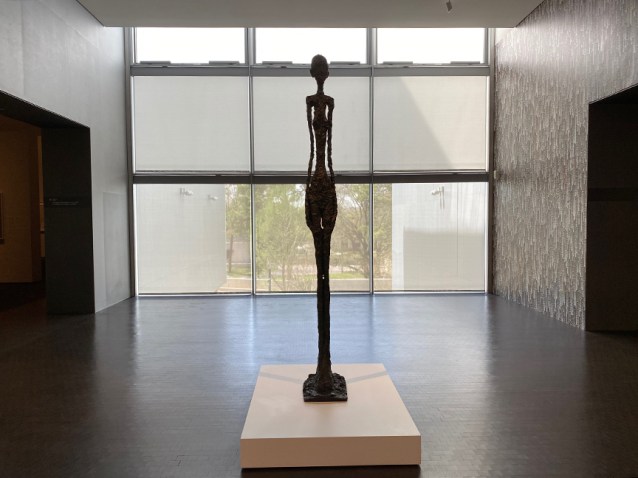
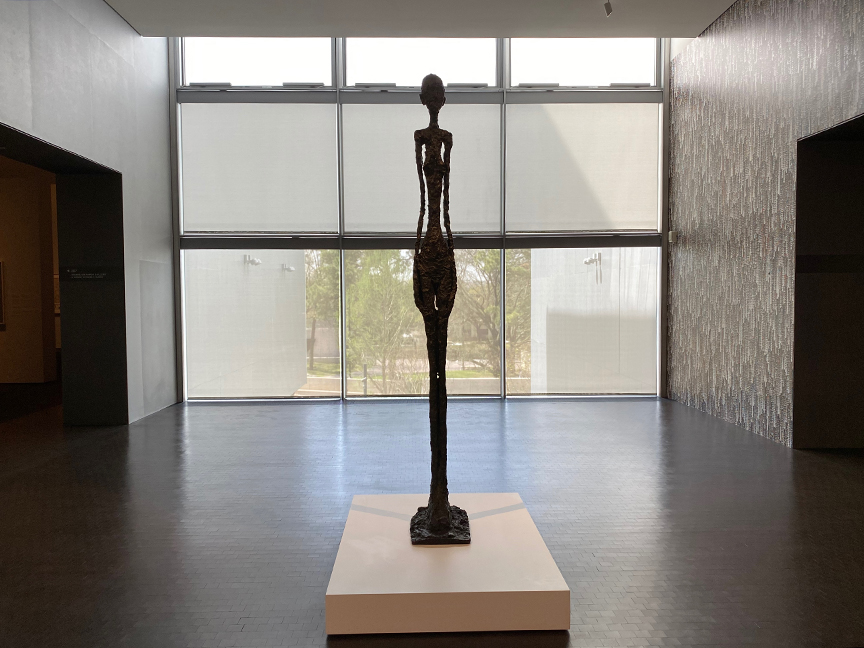
 Above: Alberto Giacometti, “Large Standing Woman I,” 1960 (Houston Museum of Fine Arts).
The world of wine blogging owes an immense debt to Alder Yarrow, whose pioneering blog Vinography offered an early model and roadmap to a generation of wine-focused social media users when it launched in 2004. By 2007, he would become the first wine blogger to be invited to speak at the Aspen Food and Wine Festival. And his writing also began to appear in some of the top wine world mastheads, electronic and otherwise. His is a path that so many have followed or aspired to in the meantime.
That was all the more reason that it was disconcerting to read his recent post “Wine Bloggers: An Endangered Species.”
“I think I finally know how my wife’s grandmother felt,” he wrote sorrowfully. “A year or two before she passed at the age of 100, I asked her how she was doing as we sat down together for a meal. She said, ‘I’m just fine, but I’ve been alive too long. All my friends are dead’…”
After his survey of the current field of wine blogging, he pines, “I definitely feel a bit doddering, having just pruned off all that deadwood only to discover what amounts to a stunted little group of branches clinging to life.”
It’s stunning to read that in a time when wine blogging has firmly shifted away from its early “tasting and technical notes” model to a deeply self-aware and socially conscious paradigm.
Just think of blogger sommeliers like Tahiirah Habibi and Liz Dowty. Their courageous posts last year disrupted one of the wine world’s sacrosanct institutions, the Court of Sommeliers. Thanks to them, the lives of wine professionals across the spectrum are safer today.
Some may protest that they are not traditional wine bloggers like the ones Alder references in his post. Yes, their posts appeared on Instagram (and not a WordPress-coded site). And yes, one used videos and live stories instead of written word. Even though they weren’t using the conventional blog post format (that Alder and his contemporaries used), they were regularly updating their readers on an internet platform by means of an online journal — the very definition of blogging.
With the media they shared publicly, they literally reshaped the world they inhabit. That’s some pretty powerful stuff, if you ask me. And it’s an indication that wine blogging, although no longer focused on the latest exclusive (and exclusionary) tasting or sample, is very much alive and kicking harder than it ever has. Tahiirah and Liz don’t get paid for their posts. They do it because they are called to a higher purpose: activism through media. Sounds like blogging to me.
It’s important to underline that Alder’s contribution to the world of wine blogging cannot be overestimated. That’s especially true because one of the other wine blog models of the genre’s early years was authored by an internet troll whose work sadly presaged much of the nastiness that would seep throughout the world of wine media. Alder offered aspiring wine writers a balanced locus amoenus and high quality writing that they could look to as they carved out their own space in the corners of the internets.
And wow, Alder, I’m not sure how you missed this, but there are so many of them out there.
Just think of Cara Rutherford’s wonderful blog Caravino. Based near Albany, New York, she posts traditional tasting and technical notes three to four times a week (the last time I counted).
Or what about Kat René in Houston? She’s a prolific collector and author of one of the most popular wine blogs in the country right now, Corkscrew Concierge.
Cathrine Todd, another highly active and superbly talented wine writer, posts regularly on the multi-author blog hosted by Forbes and her own site, Dame Wine.
(Just think how many wine posts appear on Forbes these days. No, that content isn’t hosted on a traditional, stand-alone, WordPress-fueled site. But it still fits the conventional definition, above, of what blogging is.)
Or what about my former Slow Wine colleague Pam Strayer’s excellent and newly launched blog Organic Wines Uncorked, a site that has disrupted the California wine industry?
I have immense respect for Alder. And I’ll be the first to tell you that he’s a lovely person who has used his status and visibility over the years to make the world of wine a better place — socially and professionally, I’ll add.
But when I look his list of currently active wine blogs, I find that it’s riddled with lacunæ (including some but not all of the writers I mention above). To his list I also add the myriad wine writers and wine trade observers who use social media platforms to host their media. Just because you’re blogging on Instagram, Facebook, or even Forbes or Medium doesn’t mean that you are not a wine blogger. Then add to that mix the countless writers who post on sites and social media for wine shops, importers, distributors, and even wine industry law firms etc.
Pointing to the writers I’ve included in this post on a wine blog, I’d say that the world of wine blogging is more diverse and compelling than ever before. And I’d like to thank Alder for getting this conversation started — on a wine blog.

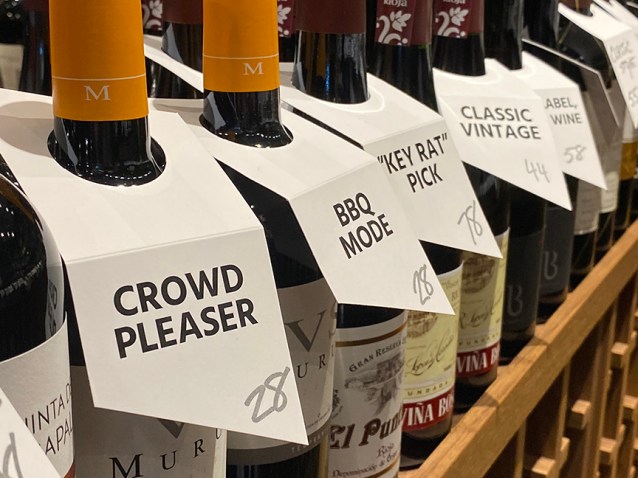 From my colleague Nicola Perullo at the Slow Food University of Gastronomic Sciences in Piedmont to leading sommelier and author Pascaline Lepeltier in New York City, wine thinkers across the world are trying to forge a new language — a new dialectic — to describe the tasting experience.
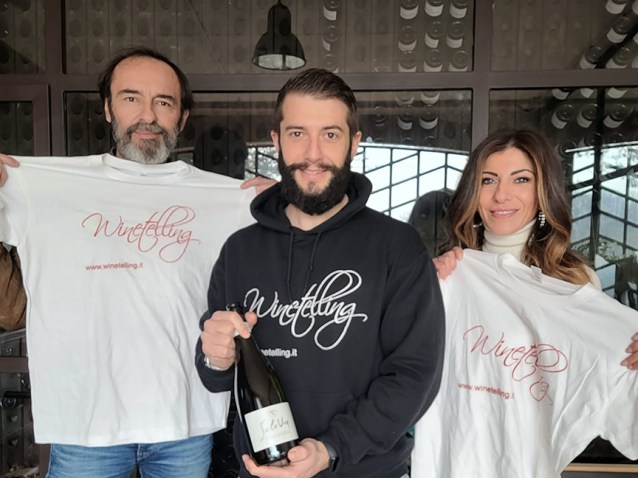 When you Google “Riccardo Fabbio,” the first result is a video interview by an Italian YouTuber entitled
 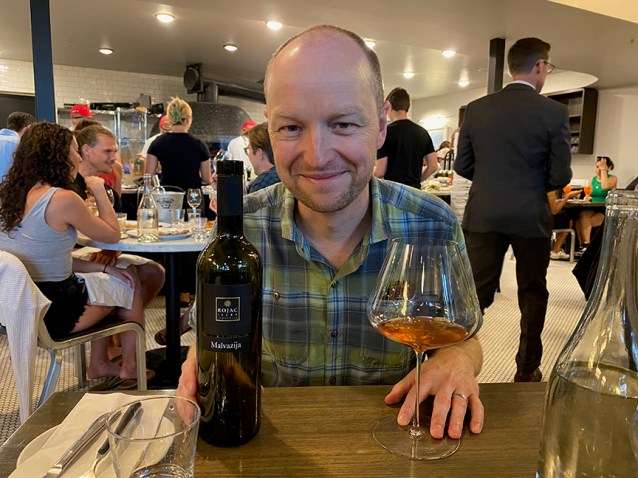 Another Italian-focused wine blogger who’s in my feed is Kevin Day, author and editor of
  Image via Shutterstock.
 It meant a lot to me when my longtime friend and colleague
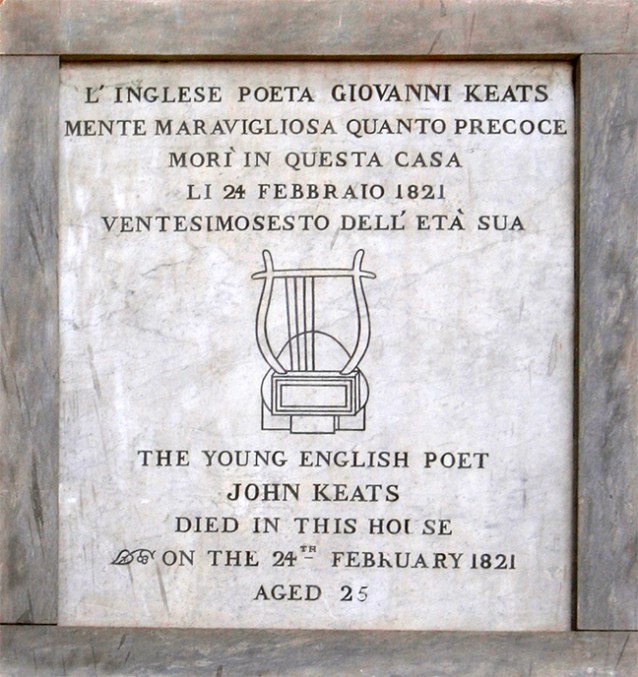 Above: a plaque outside the Keats-Shelley museum in Rome located in the palazzo where Keats died at age 25 (image via
  Above: the Arcari + Danesi flagship vineyard on Mount Orfano on the southern edge of Franciacorta.

 Do Bianchi
