Nothing like lunch at Tony’s, a Napa Cab I actually liked and Aldo Sohm and Levi Dalton

From the department of “Jar, you’re just bragging now” says Jon Erickson

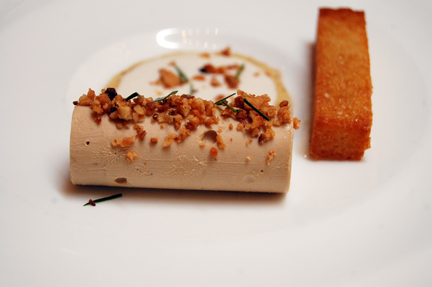
Above: Tony’s foie gras au torchon is one of his signatures and one of the dishes where simplicity and purity of flavor is offset by detail in the presentation.

How could Giovanni’s visit to Texas be complete without a meal at Tony’s in Houston?

Tony is my client (I curate his website and his media relations) but he’s also become one of my best friends in Texas and he is the architect and author of some of the most stunning meals I’ve ever had. Yesterday, Giovanni and I drove to Houston to meet Cousin Marty for lunch and a confabulatio that centered around… yes, of course… food and wine

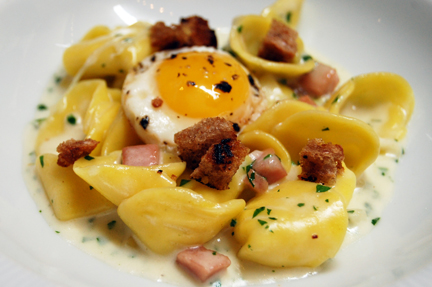
Above: Orecchiette with seared mortadella cubes and runny quail egg.

The secret to the rich yellow color of his pasta, said Tony, is locally sourced, organically farmed eggs. “But it’s also the fact that I use only flour and mineral water imported from Italy,” he added. Some would argue that sparkling mineral water is key to super pasta like this. But Tony insists that still water (acqua naturale) is a sine qua non.
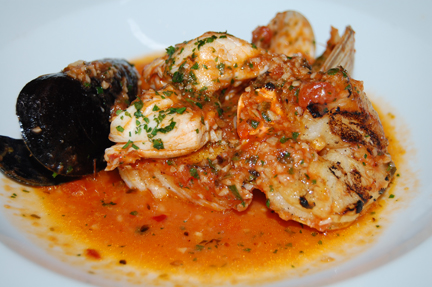
Above: Halbut and seafood medley “al Mare Chiaro,” named after the neighborhood in Naples.

Tony’s is the only place in Texas where we eat fine seafood (a category we reserve otherwise for our trips to California). This dish was simply stunning in its simplicity and presentation (and my camera didn’t do it justice, frankly).
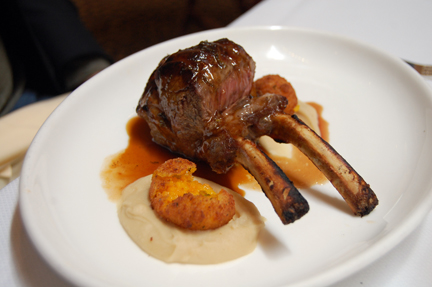
Above: Lamb chops.

Tony likes to tease me, calling me the chiodo (the nail) because I’m so careful about what and how much I eat. Lamb chops would have been a bit much for me for a Tuesday lunch but Giovanni dove in with gusto.

Above: General Manager and wine director Scott Sulma’s selection was right on.

And the wine? A tall order considering the fact that one of Italy’s top winemakers was seated at our table. And let’s face it, my general disdain for the Californian style is well known to my colleagues at Tony’s. But it also seemed right to have Giovanni taste something from my home state. GM Scott’s selection, Palmaz Vineyards 2007 Cabernet Sauvignon, delivered acidity, earth and gorgeous dark fruit, and balanced alcohol and wood. It was superb with the Bucatini all’Amatriciana that I had as my second course, playing beautifully against the savory guanciale in the dish. Chapeau bas, Scott!

Above: Nobody does it better than Tony.

I can’t conceal my pride in sharing the Tony’s experience with my good friend Giovanni, who made the trans-Atlantic crossing to see, hear, taste, and feel what life is like in Texas, California, and America.

Above: Two of my favorite fressers.

Thanks, again, Tony for yet another fantastic meal and an unforgettable experience. Ti ringrazio di cuore…

In other news…

Question: What could be better than a conversation with one of my favorite New York City sommeliers?

Answer: An interview with one of my favorite NYC sommeliers conducted by one of my favorite NYC sommeliers.

Click here to listen to Levi Dalton’s conversation with Aldo Sohm (pictured above).

This just in from @Pike_Place (Seattle)

Brother Tad just sent this photo from the Pike Place Market in Seattle where he and family are visiting today. I’m envious!

Obsessed with K-ZO in LA

Since I began commuting monthly to Los Angeles to work with Sotto where I curate the wine list, I’ve become obsessed with K-Zo, a wonderful Japanese restaurant on Culver Blvd.

I took Giovanni there yesterday for lunch before we headed to the restaurant. It was fantastic.

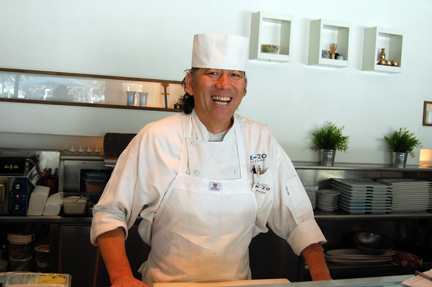
Chef/owner Keizo Ishiba (above) is so cool and I’ve waited on him at Sotto. Super nice guy and a master in his kitchen. Can’t recommend it highly enough.

In other news…

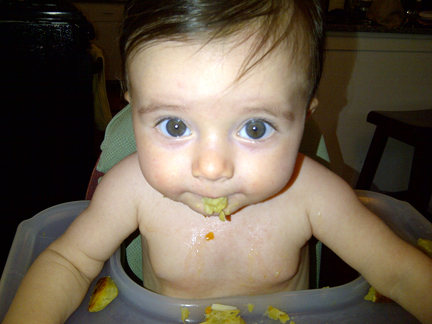
Sweet potatoes!

Tracie P has been blogging about Georgia P’s baby led weaning here

Giovanni and I are heading to Napa today… Stay tuned!

Happy anniversary Joanne and Marty! @TonyVallone

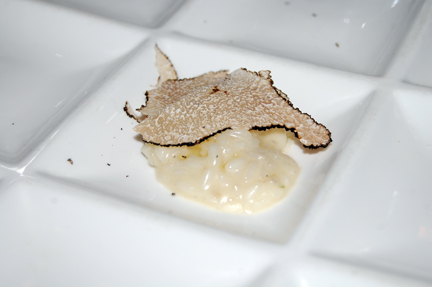
Above: Dinner in the wine library at Tony’s last night began with a simple risotto alla parmigiana topped with a few black truffle shavings.

The Levys gathered last night in Houston to celebrate Joanne and Marty’s fortieth wedding anniversary.

Continue reading

A second earthquake devastates Emilia (remembering the Emilian Renaissance)

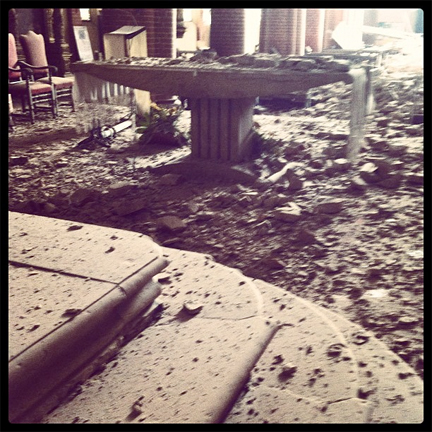
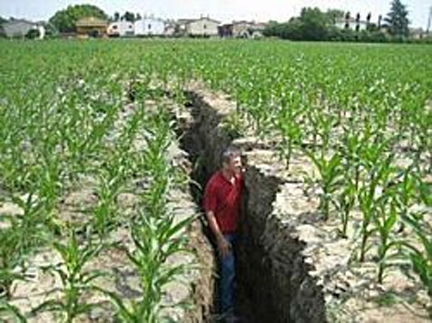
Above: The Duomo in Mirandola had withstood the earthquake of May 20 but crumbled this morning in a 5.8 magnitude earthquake. Photo by Cris Provenzano via Instagram.

According to the reports I’ve been seeing this morning in the Italian news feed, there were at least 39 tremors in the region of Emilia this morning beginning at around 9 a.m. At 11:24 a.m., a 5.8 magnitude earthquake struck in the town of Mirandola (which lies at the center of a triangle formed by Ferrara, Modena, and Mantua).

The New York Times reports that at least eight persons died this morning. Thousands of people have been left homeless and scores of factories have collapsed or been closed because of structural damage.

Photo via AGI.it.

In an uncanny twist of fate, the township of Mirandola had planned a town hall meeting this evening with earthquake experts who had hoped to calm local residents (the Mirandola township has a great website, btw, an indication of the industriousness and uprightness of the people who live there).

Of all of Italy’s regions, Emilia and its beauty are perhaps the most challenging for foreigners to understand. Emilia is a land of intellectual and sensual pleasures and partly because it is not a producer of fine wine (aside from a few exceptions like La Stoppa in the province of Piacenza), most enogastronomic travelers tend to gloss over its cultural patrimony after they’ve dined at one of the regions many culinary meccas. (My favorites are Trattoria Bianca in Modena and Ristorante Canossa in Reggio Emilia.)

Whereas the Venetian and Florentine Renaissances produced iconic works of figurative art that continue to attract tides of tourists each year, the Emilia Renaissance delivered the great epic poems of the sixteenth century (think Ariosto and Tasso), wildly popular intellectual hits of their day but sadly forgotten in comparative literature curricula today in Anglophone countries.

To contemplate [historic] Humanism without one of its greatest voices, Giovanni Pico della Mirandola (whose family hailed from the town where the epicenter of today’s earthquake occurred) would be to disregard one of the greatest chapters in humankind’s intellectual development.

Our thoughts and prayers go out to the people of Emilia…

Parmigiano Reggiano producers selling earthquake-damaged cheese

Photo via ControLaCrisi.org.

According to a report by the Italian news agency ANSA, Parmgiano Reggiano producers lost up to 10% of their production in Sunday’s 6.0 magnitude earthquake in the Province of Ferrara.

Last night, I learned (via Facebook friend, Chiara Rich) that a number of the cheese makers are offering the damaged wheels to consumers at discounted prices.

According to a post by Arci Modena:

    the distribution can take place within 20-30 days without the cheese having problems… The following products can be ordered:

    – 14-month old in vacuum-packed pieces weighing 500 grams or 1 kilo at €11.5 per kilo.
    – 27-month old in vacuum-packed pieces weighing 500 grams or 1 kilo at €13 per kilo.
    – spreadable cream in 250 gram packages at €11 per kilo.

If you’ve never had fresh, creamy “spreadable” Parmigiano Reggiano, I can assure you that the airfare to Bologna and the short drive to Modena would be worth the price of admission and then some…

Click here for more info…

Why Restaurants Matter (the bourgeois social compact) @EatingOurWords

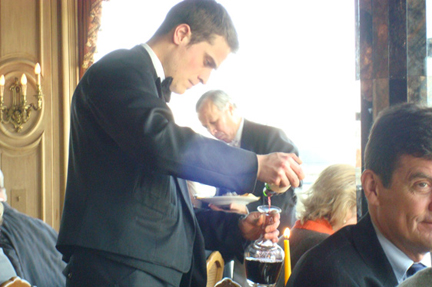
Above: I spent an obscene amount of money taking Tracie P out to dinner at the Tour d’Argent in Paris three years ago. But when you consider the fact that we still talk about it and how much fun we had, there’s no doubt that it was worth every penny — one of the most memorable meals of our lives. Here’s the link to my post on the lunch.

When I was an undergrad at U.C.L.A. in the late 1980s, my great uncle Ted, a Beverly Hills commercial developer (motels were his thing), loved to take me to his favorite “continental cuisine” dining spot. The only catch was that we had to finish dining by 6 p.m. so that we could take advantage of the “early bird special” (think beef Stroganoff and baked Napoleon). I’ll never forget his anxiety when the bill arrived: did the server already include the gratuity? did he charge us the correct amount? had he cheated us for a dish that didn’t arrive? I was too young at the time to drink legally but there was no way that uncle Ted was going to spend money on a bottle of wine. The prices for wine were “highway robbery,” I remember him saying to grandma Jean (his sister).

I loved uncle Ted a lot, especially for his humor and his loud snorts when we would eat at his favorite Chinese restaurant. “The mustard really helps to clear your sinuses,” he would say to my delight as he wiped the sweat from his brow.

He was from a generation that believed — across the board — that the restaurateur was going to try to swindle their patrons.

It’s important to remember that he was the child of people who never went to restaurants: he was born in the first decade of the twentieth-century in New York to Jews who had fled antisemitism in Austria (and the limited opportunities of their station in society). Even when they landed in the U.S., the thought of spending money in a restaurant was abhorrent in their view.

Today, the culinary landscape has changed drastically. When, in the late 1990s, our enogastronomic culture shifted from Julia Child and James Beard to Molto Mario, Lidia’s Italy, Kitchen Confidential, and Bobby Flay, our food “writers” and taste-makers had become themselves restaurateurs. And a new restaurant culture was born in our country: instead of being taught what we could make at home, they began to teach us how to make the dishes that they made in their restaurants. And they also opened a window on to the inner workings of restaurants.

For my generation (and for yours as well if you’re reading this), the thought of not going to restaurants would be abhorrent. Just contemplate what Sex and the City would have been without restaurants as a backdrop for the soap opera (where a diner was the backdrop for Seinfeld. a show that ended in 1998, the same year that Babbo opened).

This is just one of the reasons that I’ve been surprised and frankly upset by the reaction to my recent post on Corkage, a Privilege not a Right for the Houston Press.

Today, I followed up with a post on Why Restaurants Matter (and Why You Should Tip Generously). One of the things that occurred to me as I wrote it was that for the first time in history, the patrons and servers in the social compact of restaurateurship are social equals and intellectual peers. In other words, where the servers were once proletariat and the patrons bourgeoisie, today both are members of the bourgeoisie.

Here’s the link to the post, which includes some notes on how the Industrial Revolution shaped the restaurant experience as we know it today.

In other news…

Our hearts and prayers go out to the victims of Sunday’s earthquake in Emilia-Romagna, which had its epicenter in Finale Emilia (above).

Here’s the NY Times coverage.

As I was looking around the internets this morning looking for information about the tragedy, I was reminded of the terrible 1976 earthquake in Friuli and I found this chilling YouTube video.

In it, a young man, who was taping a Pink Floyd album using a microphone, captures the terror of his family as they react to the shaking of the earth.

Puttanesca is not for prostitutes…

Originally published in January 2008, this post is one of my favorites.

Above: spaghetti alla puttanesca. There’s one thing we can all agree on: “sugo alla puttanesca” (literally “whoreish sauce”) is made with tomatoes, olives, capers, salt-cured anchovies, garlic, and chili flakes (give or take an ingredient or two). There’s no questioning that it tastes good.

In the wake of my post-new-year’s eve post “Taittinger alla puttanesca”, fellow bloger Marco wrote me, collegially questioning my belief that “sugo alla puttanesca” should not be attributed to prostitutes or their culinary preferences. I promised Marco that I would do some more research and another post. Here’s what I found:

1) the earliest text to reference pasta “alla puttanesca” cited by the Grande dizionario della lingua italiana (edited by Salvatore Battaglia) is Raffaele La Capria’s 1961 novel Ferito a morte (translated as The Mortal Wound, 1962).

2) according to a study commissioned by the Unione Industriali Pastai Italiani (Italian Pasta-Makers Union), pasta “alla puttanesca” first became popular in Italy during the 1960s.

3) a search in The New York Times electronic archive revealed that the first mention of “puttanesca” sauce in the paper was made on January 28, 1972 by restaurant reviewer Jean Hewitt in her review of Trattoria da Alfredo (then located at 90 Bank street): “spaghetti Puttanesca [sic], which has a tantalizing tomato, garlic, anchovy and black olive sauce.”

4) in her landmark tome on Neapoitan cuisine, La cucina napoletana (1977), Jeanne Carola Francesconi attributes the creation of sugo alla puttanesca to Ischian painter Eduardo Maria Colucci (1900-1975) who — according to Francesconi — concocted “vermicelli alla puttanesca” as an adaptation of alla marinara or “seaside-style” sauce.

But the definitive albeit anecdotal answer to this conundrum may lie in an article published by Annarita Cuomo in the Ischia daily, Il golfo, in February, 2005: “Il sugo ‘alla puttanesca’ nacque per caso ad Ischia, dall’estro culinario di Sandro Petti,” “Puttanesca sauce was born by accident in Ischia, the child of Sandro Petti’s culinary flair.”

According to Cuomo, sugo alla puttanesca was invented in the 1950s by Ischian jet-setter Sandro Petti, co-owner of Ischia’s famed restaurant and nightspot, the “Rancio Fellone.”* When asked by his friends to cook for them one evening, Petti found his pantry bare. When he told his friends that he had nothing to cook for them, they responded by saying “just make us a ‘puttanata qualsiasi,'” in other words, “just make us whatever crap” you have (see my original post for a definition of the Italian puttanata).

“All I had was four tomatoes, a couple of capers, and some olives,” Petti told Cuomo. “So I used them to make the sauce for the spaghetti.” Petti then decided to include the dish on the menu at the Rancio Fellone but “spaghetti alla puttanata didn’t sound right. So I called it [spaghetti] alla puttanesca.”**

Petti’s anecdote is probably tenable but is by no means exhaustive (from a philological point of view). To make matters worse, Colucci was Petti’s uncle and it’s unclear why Francesconi attributes the dish to the painter. But philology is an inexact science: the origin of sugo alla puttanesca probably lies some where between the isle of Ischia and the Amalfitan coast, where tomatoes, capers, olives, anchovies, and garlic are ingredients of choice. It’s clear that the dish emerged sometime after World War II when tomato-based sauces grew in popularity among the Italian middle class. My philological sensibility leads me to favor the “puttanata/puttanesca” theory over any other and there is no evidence — at least that I can find — that points to prostitution as the origin of the dish.***

There’s one thing we can all agree on: sugo alla puttanesca tastes good.

* A rancio fellone is a sea spider or spiny crab, a common ingredient in Mediterranean cuisine.

** Like the French à la, the Italian expression “alla” (the preposition a + the definite article la) denotes “in the style of” or “after the fashion of” and is always followed by an adjective (not a noun); alla puttanesca sounded better to Petti because puttanesca is an adjective (while puttanata is a noun).

*** In his Naples at Table (1998), the otherwise venerable but hardly philologically minded Arthur Schwartz reports a number of apocryphal etymologies whereby Neapolitan prostitutes are indicated — in one way or another — as the originators of this dish. He even goes as far as to write that a seemingly celebrated nineteenth-century courtesan, Yvette “La Francese” (Yvette the French [prostitute]), a native of Provence, may have created the dish to assuage her homesickness. The fact that the dish emerged during the 1950s would seem to dispel any romantic notions of pasta alla puttanesca in nineteenth-century Neapolitan bordellos. Brothels were outlawed in Italy in 1958.