
 It was a true honor and pleasure for me to lead a tasting of wines from 19 members of the Grandi Marchi (Top Estates) Institute winemakers yesterday in Houston. And it was amazing to see how many of the “principals” made the trip.
From Piero Mastroberardino (the institute’s president) to Federica Rosy (Pio Boffa’s daughter, the new generation of the Pio Cesare winery, and the youngest person to present), it felt like Italy’s wine aristocracy had bivouacked along the Gulf Coast.
Today, the group is on its way to Boston to present their wines and then it heads to New York where it’s going to host a luncheon at the New York Wine Experience.
Before the event, Piero showed me a letter his grandfather had received in 1932 from a Texas-based importer. Prohibition would soon be repealed, it declared, and said importer wanted to order wines from the family’s estate. Galveston and New Orleans would be their ports of entry.
Piero’s 2011 Taurasi showed gorgeously as he shared notes on his favorite vintages of the wine stretching back to the 1930s.
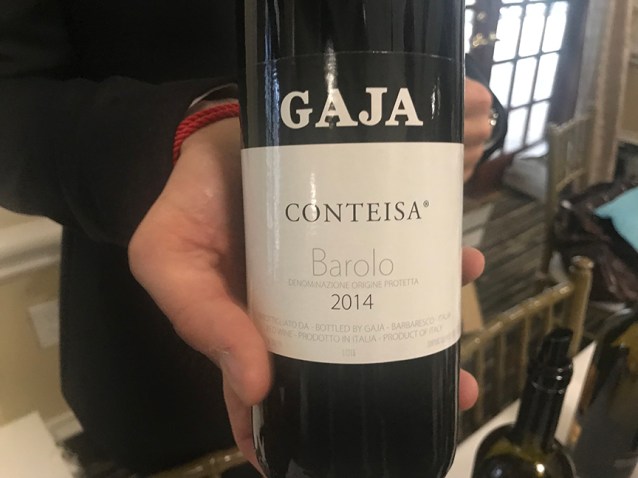
 Another highlight yesterday was the 2014 Barolo Conteisa by Gaja, the second release of this cru from the winery since it reclassified it as Barolo in 2013. It was my first taste of the new designation.
And I was really impressed by Giovanni Gaja, who has stepped up recently to join his sister Gaia in traveling for the family’s properties. In his presentation, he offered some interesting insights into how their vineyard management team has been responding to the challenges of climate change.
Another highlight was the Umani Ronchi 2011 Conero Riserva (above).
I remember tasting these wines back in New York in the late 1990s. Their Verdicchio and white blend also really blew me away. it’s a mystery to me why American lovers of Italian wine haven’t discovered these yet. Great wines.
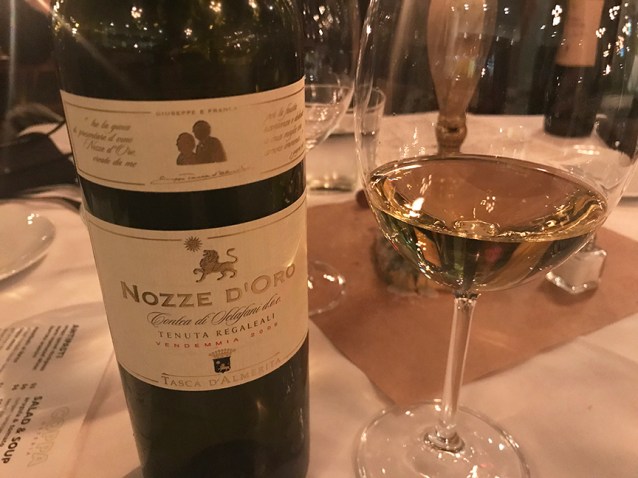 And dulcis in fundo, Alberto Tasca treated me to a bottle of Tasca d’Amerita 2008 Nozze d’Oro over dinner and a lively conversation on sustainability and the legacy of organic farming in Italian viticulture.
For Americans, the 2012 vintage of this wine — a blend of Inzolia and “Sauvignon Tasca,” a spontaneously mutated clone from clippings planted on the estate during the first world war — is available only in New York, he said.
But last night the 2008 was thoroughly enjoyed in Houston. Ten-year-old white wine from Sicily, still showing fresh and with vibrant fruit? This wine has “enohipster” written all over it. I loved it.
As I read the morning’s New York Times feed over breakfast with the girls and Tracie, I laughed out loud when I stumbled upon Mimi Swartz’s column Jeremiad.
“Non-Texans,” she wrote, “are still stunned to discover that even people who don’t live in Austin know about Tuscan blends and Karl Ove Knausgaard.”
We tasted a good Tuscan wine or two yesterday in Houston. But Cesare Pavese was the novelist we discussed at the event, not Knausgaard.
A big shout-out to IEEM USA for putting on this great event. And thank you for thinking of me as presenter!
 It didn’t occur to me until I got back to Texas week before last from a whirlwind trip across the U.S.: despite two visits over the years to Ronchi di Cialla — one of the pioneers of Friuli’s native grape revival and one of its most acclaimed and soulful winemakers — I had never tasted the winery’s Pignolo.
 Hurricane Ike struck southeast Texas, where Tracie’s parents live, just a month after we started dating in 2008. Back then, people in Louisiana and Texas were still reeling from the aftermath of the 2005 hurricane season, which included Katrina and Rita.
 The news ricocheted across the enocentric internet yesterday afternoon: in
  Scion of the legendary winemaking family from Piedmont, Giovanni Gaja (above) is just one of the
  High fives, hugs, and congratulations filled the air last night at
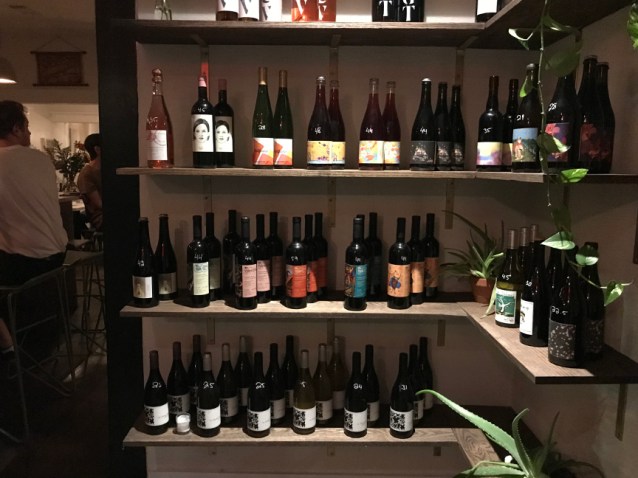
 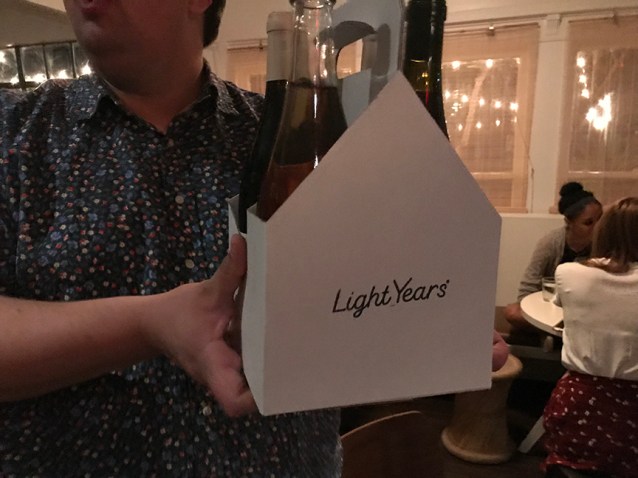 “We finally have the wine bar we’ve been dreaming of,” said one noted Houston wine professional to another.
  What is natural wine? Most would agree that natural wine is wine that has been organically farmed, spontaneously fermented (using ambient yeast), and bottled with as little intervention and sulfur as possible.
 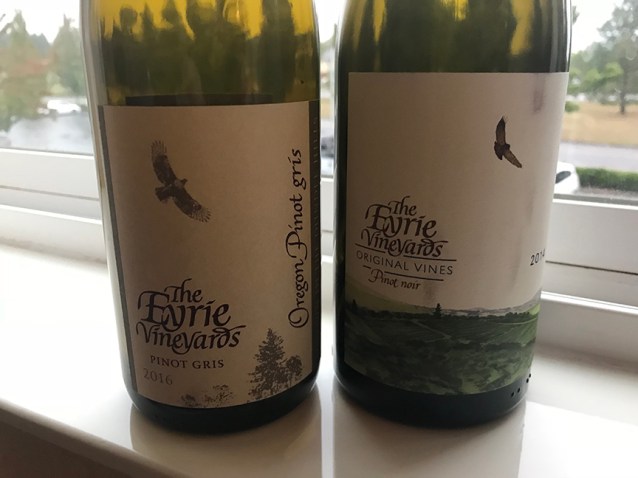 The locals joked last night at the famous Nick’s Italian Café in McMinnville, Oregon in the heart of Willamette Valley wine country: there used to be a tube, they told me, that connected the Lett family’s winery to the restaurant. Their Eyrie Vineyards cellar is just a stone’s throw away (literally).
 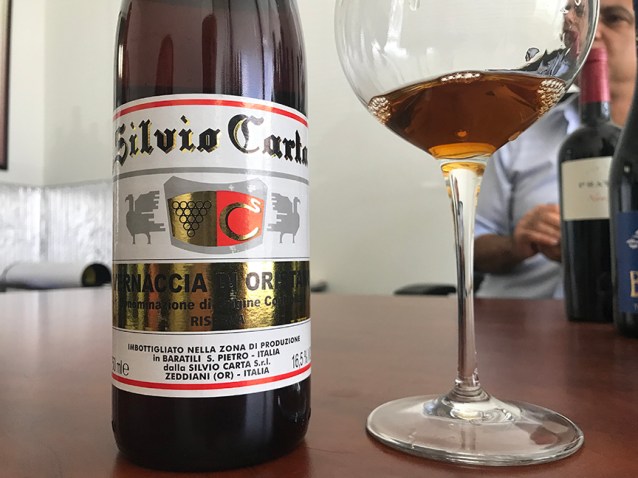 “I don’t want this tradition to be forgotten,” said the importer who brings in this classic from Sardinia, the Silvio Carta Vernaccia di Oristano from Sardinia (2005 vintage).
 Another highlight was the Eleva 2013 Valpolicella Ripasso Tenzone.
 I’m not sure who imports Miani to California but G-d bless them!
 And I just have to give a shout out for the tagliolini al limone at Gino Angelini’s Angelini on Beverly, one of the best Italian restaurants in the U.S. imho. It’s just so good that I have to get it every time, a Platonic expression of Californian-Italian that plays on the bounty of great produce here.
 Manhattan was abuzz with ministerial week at the UN when my taxi brought me to the city yesterday.
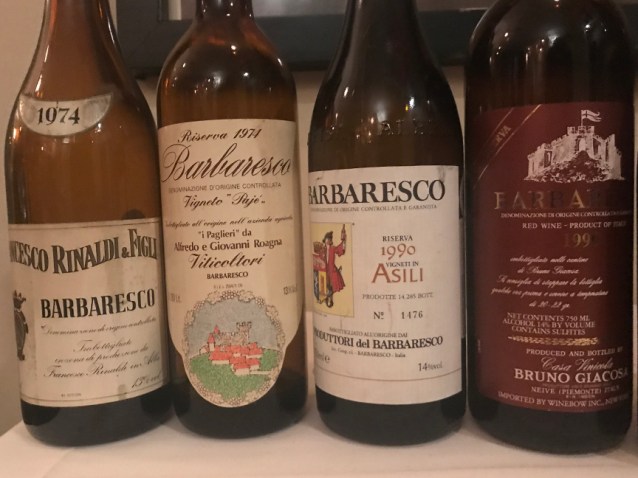
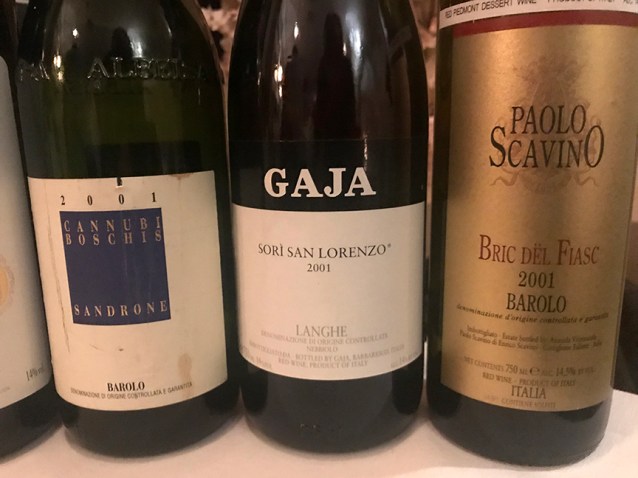 Most agreed that the standouts in the three indisputably illustrious flights were the Produttori del Barbaresco 1990 Barbaresco Asili and the Bruno Giacosa 1990 Barbaresco Riserva (Red Label). According to at least a couple of the tasters, the 1990 vintage was the only Giacosa Barbaresco riserva that he ever released without vineyard designation.
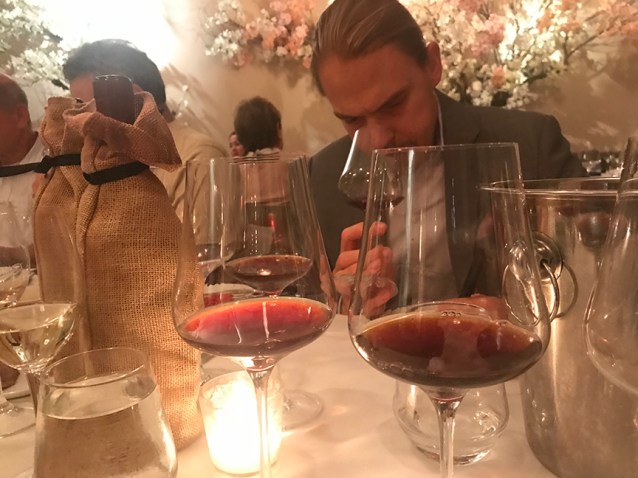 Heartfelt thanks to my dear friends Ken Vastola who “sponsored” my participation and Eric Guido (above) who organized the excellent dinner and superb wine service.
 Do Bianchi