
 Anyone who’s ever spent a significant time around the legendary grape grower and winemaker Aleš Cristančič (above) knows that he loves to talk about sex and sexuality. (I’ll never forget the time my band played a crazy wild gig at his winery, Movia, below. But that’s another story for another time.)
To some who know him only peripherally, it may seem like a cliché, not uncommon among European and American men of a certain age. But over the years of our interactions, it’s become clear to me that his obsession with sexuality is not just an expression of attenuated or hyperactive masculinity. No, Aleš has plenty of manliness and sexual confidence to go around, even beyond his sensual discourse.
When we spoke a few weeks ago, we discussed his reflections on polyculture vs. monoculture and how he is working to bolster and foster polyculture on his family’s estate in innovative and immensely thoughtful ways.
On my last trip to Italy before the lockdowns in January 2020, my visit and tasting at Movia prompted a powerfully compelling discussion of how the rise in monoculture has begun to homogenize winemaking, even at the highest levels of production.
 It’s a conversation that was presaged not so many years ago in an article by Slow Food founder and essayist Carlo Petrini where he bemoaned Piedmontese growers who are grubbing up less lucrative, lesser known grape varieties and replanting their vineyards entirely to more bankable Nebbiolo.
Although they haven’t yet published on the topic, Melissa Muller, a chef turned winemaker, and her husband Fabio Sireci, a legacy grower at Feudo Montoni in Sicily, shared with me a study on their successful experimentations with polyculture, conducted over many years. It’s a work in fieri they explained. But gauging from their preliminary survey, it’s not hard to imagine that many winemakers will read it eagerly.
I recently caught up with Aleš by phone and asked him to expand on some of the observations he shared with me in 2020. That call resulted in a wonderful, if somewhat chaotic, interview published last week by my client Ethica Wines, his U.S. importer.
In our chat, he makes a really profound point about clonal selections. Nurseries may provide you with a genetically perfect clone. But where, he asks, did that clone come from originally? It’s not the result of massal selection in his vineyards, he explains. And so it’s lacking some of the local genetic information that vines acquire through massal selection and decades of growing in the same place. This means that grape farmers around the world are increasingly using the same clones and as a result they are promoting homogeneity and monoculture with adverse effects on the wines’ quality.
He also talks at length about what he calls “passion” in the vineyards. He’s referring to pollination and how the vines and other plants compete for sexual fulfillment. That tension, he believes, especially when well managed through polyculture, is key to creating wines that speak of place, of terroir to borrow a cliché. When stronger clones are introduced to a vineyard with old vines, they tend to hoard the pollen and as a result pollination isn’t equally distributed, as it were. That results in uneven ripening and diminished quality, he contends.
There are some real gems in this wild and crazy piece and I highly recommend it to you. Thanks for checking it out.
Please consider giving to Unicef’s Ukraine child refugee fund. This link takes you straight to the donation page.
 Happy Mother’s Day, Tracie P!
 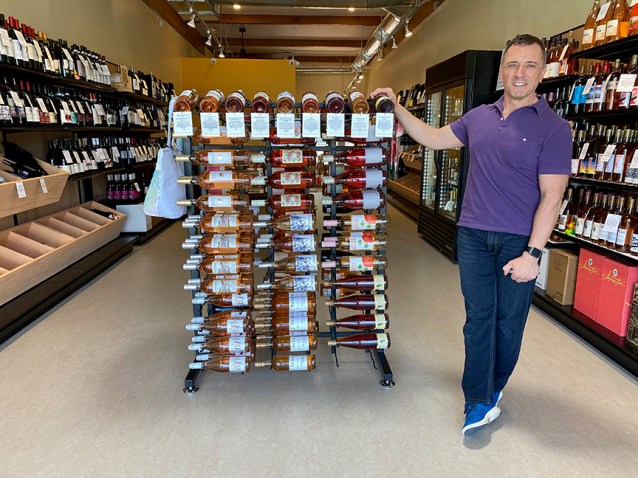 Just had to give a shout-out this week to John Libonati (above) and his awesome natural-focused wine shop
  Guest post by Davide Camoni.
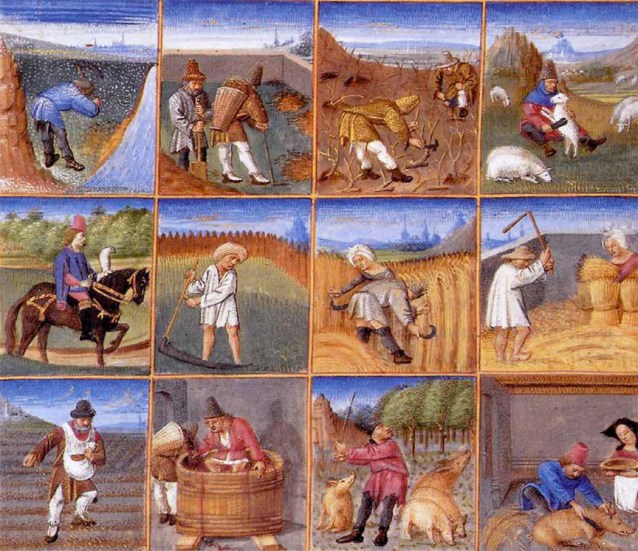 Above: an agricultural calendar from a “painted book” (circa 1309) of Pietro de Crescenzi’s treatise on farming, possibly executed in his lifetime. There numerous extant 13th and 14th century manuscripts of his book Ruralia Commoda and translations of his work became instant best sellers in the 15th and 16th centuries in Europe. Note the October panel where the figure is crushing grapes. Image via
 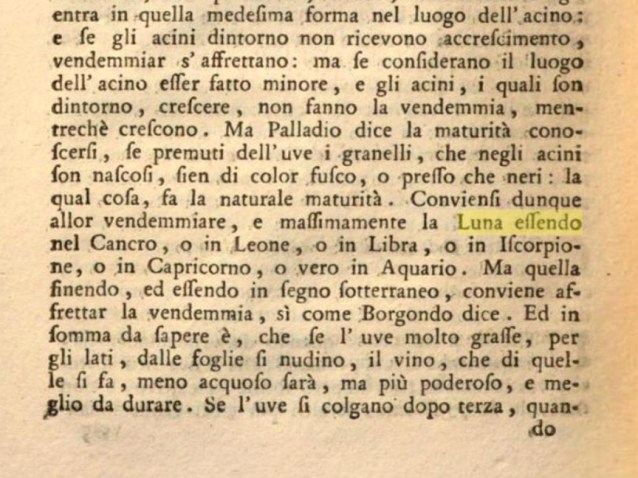 Above: a folio from a 1784 Italian translation of the Ruralia. The work’s popularity only began to wane in the modern era.
 Above: an image captured in Milan in 1943. Note the Duomo in the background. Image via
 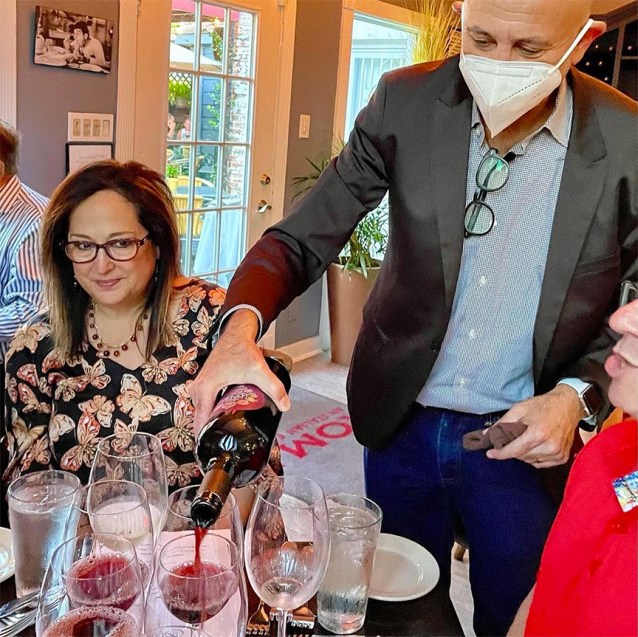 It meant a lot to me when my longtime friend and colleague
 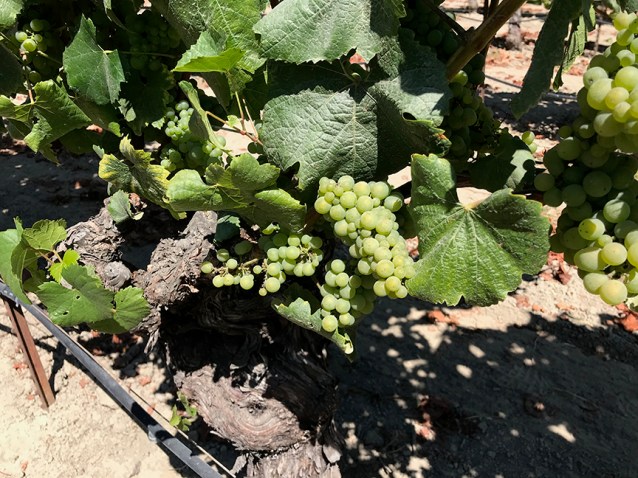 Back in the late aughts following the big bang of the enoblogosphere, there was probably no word more maligned, no term more associated with the wine establishment as “Chardonnay.”
 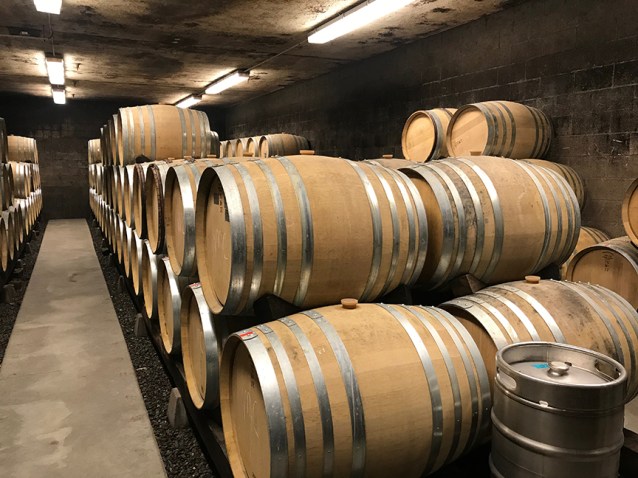 One of the key moments in my own personal Chardonnay sea change was my repeated visits in pre-pandemic years to northern California wine country where the opportunity to taste a broader spectrum of Chardonnay entirely reshaped my perception of the category. By my September 2019 trip for the Slow Wine guide, my third for the imprint, I had discovered so many expressions of Chardonnay that we both loved. From Santa Ynez to west Sonoma coast, there were myriad winemakers — many of them négociants — that had never found their way into our glass along our überhipster wine route.
  Another seismic shift was also happening: we were becoming more experienced wine drinkers. As we strived for many years to birth our “cool palates,” we began to realize that a great lacuna had formed in our wine tastes. And ten years into that arc, we became aware of that gap because we had started to taste some of the great expressions of Chardonnay with more finely honed tasting chops.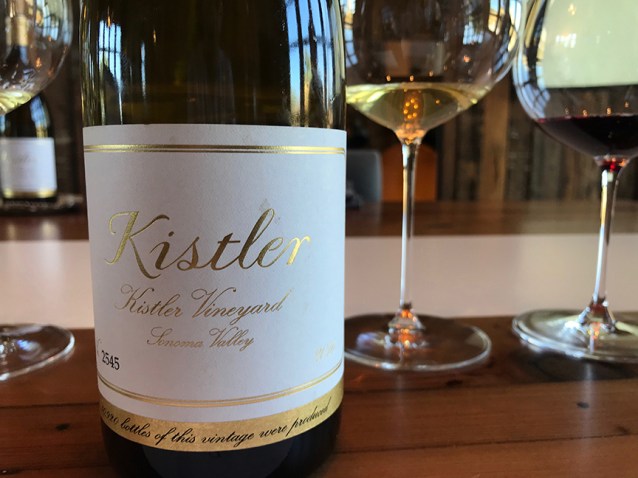
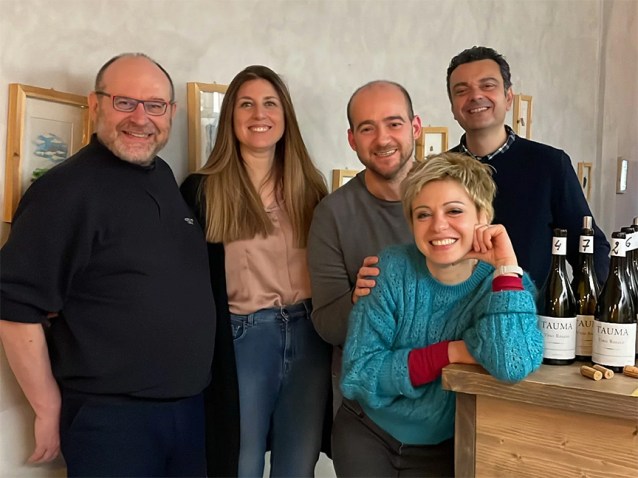 Above, far left: Sandro Sangiorgi, one of the authors of the recently published Vini Veri manifesto that squarely criticizes a new wave of natural producers who consider “technical ability an obstacle” to making their wines. A top wine writer and taster, Sangiorgi is widely considered one of Italy’s leading experts on and advocates for natural wine (image via
  This year as we prepare to celebrate the Passover, our family knows how fortunate we are to enjoy good health and security. With everything going on in the world today, we take time each and every day to tell each other that we love each other and to let each other know that we support one another.
 Georgia and Lila Jane have both been doing well in school. And we all enjoy their music.
 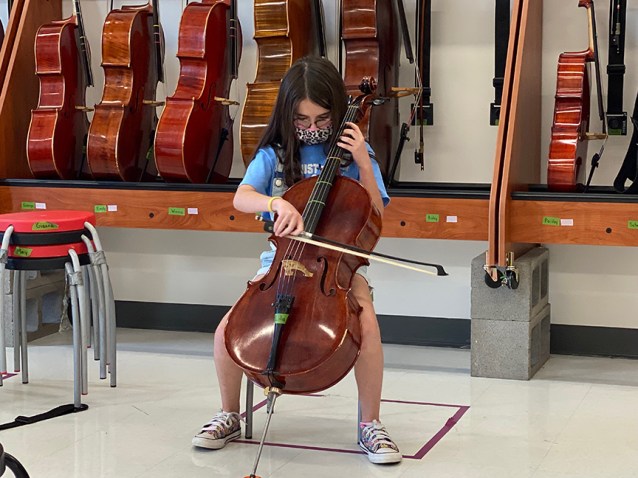 Georgia plays violin and piano and is in advanced choir at school. Lila Jane plays cello and piano and is in beginning choir.
  Tracie’s work is going really well (poo poo poo!). And now that the wine business is back in full swing, my work is also going well.
  We are much closer to our financial goals than we could have ever imagined in 2022. The light is appearing at the end of the tunnel, which is great.
  Tracie has done an amazing job and there’s not a day that goes by that I don’t remind her that she makes our lives whole.
 Do Bianchi
