A song our record company turned down finds a home. How my band Nous Non Plus thrived through music licensing.

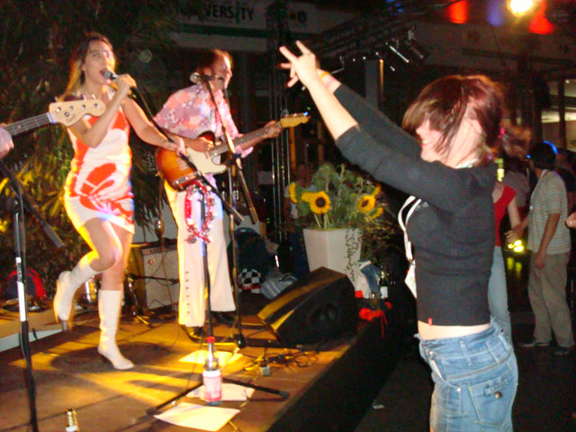
Late last week, I was pleasantly surprised to discover that two songs by my band Nous Non Plus had been used in the 2020 film “Sister of Bride,” starring Alicia Silverstone.

Of course, I was thrilled, as were my bandmates, that we placed a couple of tracks in a major flick.

But making the deal all the more sweet was the fact that one of the tracks, “C’est Vrai Bébé,” came from an album, “Le sexe e la politque,” that our record company rejected.

It took almost a decade but that song has finally found a home!

Making the deal even more sweet was the fact that I wrote that song for Georgia, our now 10-year-old, when she was still a baby.
Continue reading

Much needed rainfall raises hopes for a solid vintage in Italy. “The health of the grapes is excellent.”

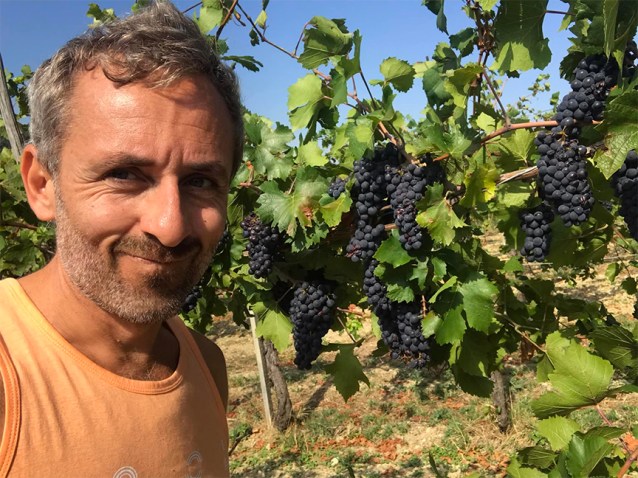
Above: winemaker Gianluca Cabrini of Tenuta Belvedere in Oltrepò Pavese shared this photo on his Facebook last week as he prepared to pick his Pinot Noir for the production of classic method sparkling wine. This harvest is “the most difficult, the most impossible,” he wrote.

“#sky #light #night #hope” wrote Chianti Classico winemaker and grape grower Francesco Ricasoli yesterday in a haiku-esque expression of relief after rains brought much needed water and lower temperatures to vineyards across central and northern Italy this week.

Check out this amazing shot he captured, just one of “thousands” of lightning bolts, he wrote.

As severe weather — “Europe’s Scorching Summer” — continues to affect Europeans across the continent and peninsula, drought and extreme heat have tempered growers’ optimism for the 2022 harvest in Italy.

In early August, Riccardo Cotarella, president of the Italian enological association Assoenologi, warned that the situation could be catastrophic if rain did not arrive this month.

“Climate change,” he wrote in a widely circulated statement, “is putting the entire farming industry to the test. As far as viticulture is concerned, we are witnessing a truly anomalous and extraordinary season. It resembles 2003 [one of the hottest on record at the time]. But the current drought is even more challenging and deeper. And it’s coming together with a dangerous element: the high temperatures. When combined with the drought, they create an environment that is highly unsuitable in terms of the vines bearing fruit as best as they can.”

Official estimates for the Italian grape have yet to be published, noted Maurizio Gily in his popular industry newsletter MilleVigne today. But this week’s rainfall and lower temperatures have raised hopes for a solid vintage.

“The rains,” he writes, “which came mostly in the form of storms, did not reach the deepest layers of the soil. But the vines benefitted nonetheless and ripening was suddenly accelerated in the end after a veraison that came early for most. The health of the grapes is excellent at this moment. Harvest of early-ripening grapes has begun in the south while they have started picking Chardonnay and Pinot Noir for sparkling wines in the north.”

The most important wine appellation in Dante’s time? No, it’s not Tuscany.

Above: Lake Iseo in Brescia province as seen from Mt. Orfano in the south of what is now the Franciacorta appellation. Its morainic “lean” soils, as they were described in the Middle Ages, contributed to its reign as a top zone for wine between the 14th and 16th centuries.

One of the most remarkable and compelling things about early Italian ampelography is how cutting-edge it appears today.

Attentive readers of 14th and 15th-century viticultural treatises will discover that what are called “biodynamic” farming practices today were standard operating procedures for grape growers in the Italian Middle Ages: cover crops and farming practices aligned with the lunar cycle were sine qua non elements of commercially viable vineyards. The only difference was that the humus didn’t need to be revived and restored through the purging of chemical based treatments.

But Medieval growers in Italy were also extremely knowledgeable about soil types, vineyard density, harvest timing, and, perhaps most significantly, pruning. Anyone with even a vague sense of how fine wine grapes are largely farmed today will immediately recognize the myriad parallels with contemporary knowledge and know-how.

Another striking element that emerges through close readings of these texts is that the Italians were extremely advanced with respect to their French counterparts. By all accounts, head-trained vineyards were the norm in southern France while Italians were already using sophisticated cordon and cane-pruned training systems (the latter is what we commonly call Guyot today).

Of course, the Italians had a huge advantage over their transalpine cousins: Mediterranean as opposed to Continental climate in the time before the fossil fuel transformation of the earth’s weather systems. And however far off climate change may have been on the horizon, the Italians were well aware that their warmer climate made them the viticultural leaders of the Middle Ages and Renaissance.

What will come as a surprise to contemporary readers is that neither Tuscany or Piedmont figure as top centers for wine production. Tuscany would become an elite region for wine as the Medici family’s power grew. But it was still far from dominant when Dante began writing the Comedìa. Piedmont was centuries away from becoming a top wine region.

And while Naples was the center of the fine wine world of the time thanks to its connection to the Greek wine trade, Brescia province (yes, Brescia!) was the top area for red wine and Romagna was the leader for white. The Marches were also considered a number-one producer. (Naples was renowned for what we now call orange or macerated white wines but much of that wine was imported from Greece, although vin greco — “Greek wine” — was also produced locally around the Castello di Somma on the lower slopes of Mt. Vesuvius.)

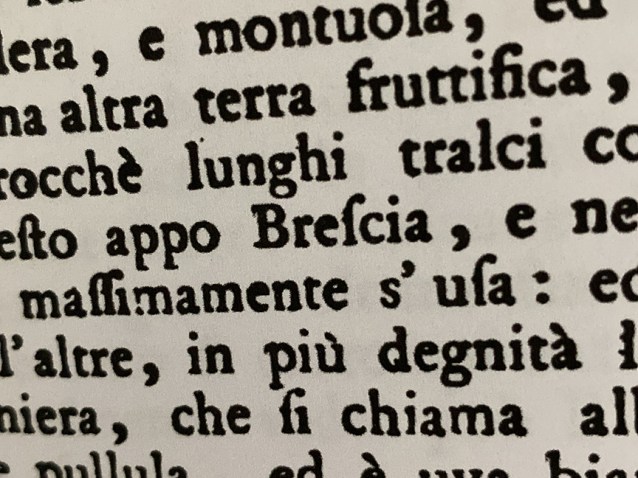
This observation is based on my own close reading of the first definitive work on ampelography by an Italian, Pietro de’ Crescenzi from Bologna, who died around 1320. He was an itinerant lawyer who traveled throughout the peninsula for his work. Written in Latin and based on his own experiences combined with his readings of the then newly rediscovered agricultural classics of the Roman era, his work was remarkable in part because it represents an ante litteram protohumanist achievement. It was widely popular in its day and when it was translated into Italian during the Renaissance a few centuries later, it became an instant best seller.

Many Italian philologists believe today that Boccaccio used Crescenzi’s work as a source and inspiration for his own descriptions of the natural world in the Decameron.

Crescenzi pointed to Brescia — Brixia in Latin — as the top producer of red wine in the time of Dante, who died around the same time that Crescenzi did (1321). But the uncanny thing about it is that Dante, in his book about the nascent Italian language, De vulgari eloquentia, points to the Brescians (more precisely, the Bergamask, but the linguistic and geographic connection is undisputed and undeniable) as the worst speakers of Italian.

Lucky in wine, unlucky in language… go figure!

Thanks for checking out today’s post. This is the kind of stuff that I really love to do. It means the world to me that I can share it with like-minded wine lovers and Italophiles.

Praying for rain as a hopeful harvest 2022 begins in Italy.

Grape harvest in the north of Italy began this week.

That’s a cluster of Pinot Noir at Ronco Calino in Franciacorta.

Sparkling winemakers are always the first to pick their fruit. Depending on the winemaker’s style, they need to obtain higher acidity and freshness in order to create the final product they envision.

A high-quality harvest is expected across Italy despite the ongoing drought and high temperatures.

In Franciacorta last month, growers requested and were granted authorization for emergency irrigation. Winemakers simply didn’t have enough water to obtain the desired fruit.

As Franciacorta consortium technical advisor Mario Falcetti explained in an interview, it’s important to remember that the scarcity of water has affected estates across the appellation to varying degrees. As he points out, the vegetative cycle, while impacted by the heat, was by all indicators a healthy one until this summer’s heat wave. Irrigation, he tells the interviewer, will ensure a good harvest.

While winemakers in southern Italy have had a relatively easier time in dealing with climate change, their counterparts in northern and central Italy have faced increasing challenges over the last decade.

In a June interview, prolific winemaker Andrea Lonardi told WineNews.it that “we are seeing things that we have never seen before. Until the 2000s, climate change had positive effects. There are some appellations that have been transformed [by climate change] in terms of quality. Today the situation has completely changed. And we are seeing certain regions that are facing great difficulties. It’s a worrisome situation.”

He has proposed creating a series of reservoirs in affected areas. Some trade observers are proposing new water conservation efforts while others believe that hybrid grape varieties are the key to safeguarding Italian viticulture.

Despite this year’s major challenges (namely drought and extreme eat), most growers in the north and central Italy were spared the wrath of spring freezes and extreme weather events. A healthy crop is expected across Italy.

And with about a month to go before growers began picking white grapes for still wines and reds to follow, they are still praying for rain…

Parzen family guide to La Jolla. Our favorite restaurants and places to visit.

The Parzen family just got back from our yearly summer trip to La Jolla, California to visit our family and friends there. It was an awesome trip.

The following are our favorite places to visit, updated based on our last stay there.

La Jolla is a lot more crowded than it used to be. And the traffic there has become challenging to say the least.

But as long as you don’t waste half of your day driving in and out of town, it’s still a fantastic place to vacation.

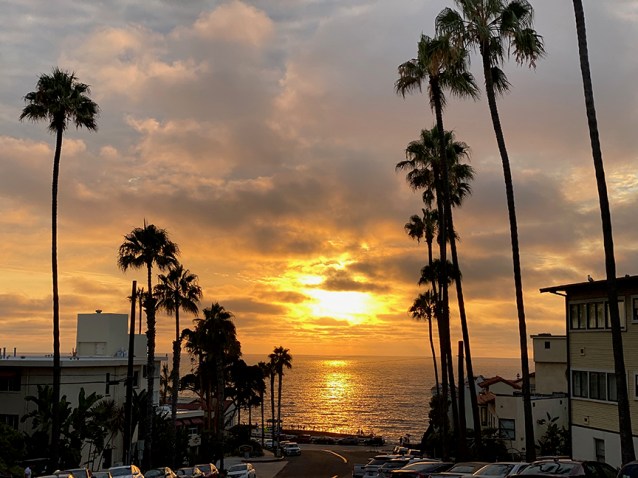
That’s the view walking down the hill toward the Children’s Pool in the photo above, one of the best places to watch the sunset. And you invariably find seals and sea lions on the beach there and on “seal rock” just a stone’s throw up the coast (literally a stone’s throw).

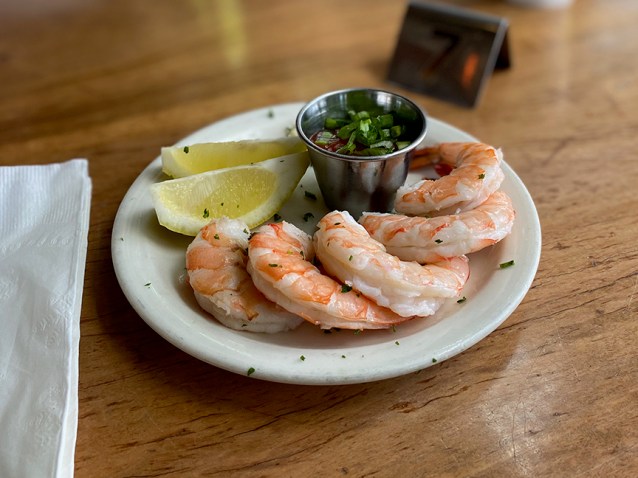
El Pescador Fish Market, a La Jolla institution since my childhood, remains our favorite seafood destination.
Continue reading

The Lila Jane birthday miracle. Happy birthday sweet girl!

Lila Jane, happy birthday! You are nine years old today! We love you so much and are so proud of you, sweet girl!

Last Saturday, we were packing for our yearly trip to San Diego to visit your grandmother there when your uncle called.

Your grandmother had come down with Covid. Even though she had all her shots, we were all really concerned about her.

And we were all disappointed about our cancelling our trip. We were looking forward to staying with her in La Jolla where she lives. And we were sad that we wouldn’t be able to celebrate your birthday on your favorite La Jolla beach with your California friends.

But yesterday, good news arrived! The doctor said that your grandma is getting better and she said that she’s starting to feel like herself again. Mommy and I changed our flights and now we’ll be leaving early next week for our trip. And all your friends are getting the bonfire and the s’mores ready for your birthday beach party!

It’s a birthday miracle!

Lila Jane, you bring so much joy into our lives.

Your cello, your piano, your grades at school… You are everything mommy and I could dream of.

Your humor, your creativity, your love for your doggies. We love how thoughtful and caring you are. And we love how you cherish your friends and the time you spend with them.

Lila Jane, you are the one and the only and I wrote you this song. I love you and am looking forward to celebrating your birthday today at home and next week on the beach! Happy birthday, sweet girl!

Professione wine blogger: two Italian wine bloggers that I follow (and that you should follow too).

When you Google “Riccardo Fabbio,” the first result is a video interview by an Italian YouTuber entitled “Professione wine blogger.”

It’s a hard-boiled title that evokes one of Michelangelo Antonioni’s 1970s films made for MGM: “Professione reporter,” starring Maria Schenider and Jack Nicholson (called “The Passenger” in English). It also brings to mind the hard-knocks detectives we used to read about in pulp fiction.

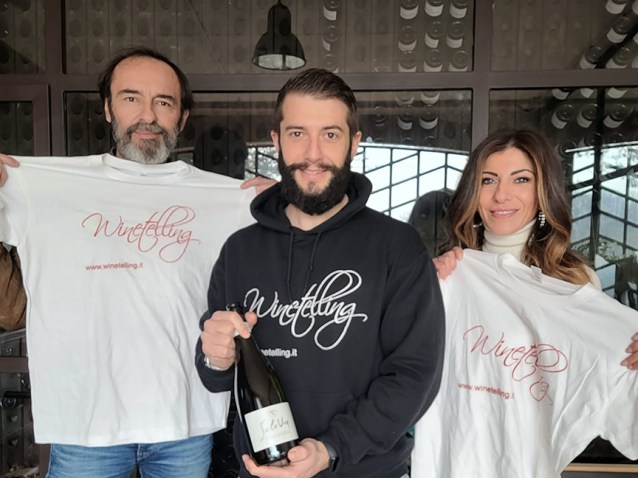
Wine Telling Riky, aka Riccardo Fabbio, got on my radar after he visited and profiled my friends in Franciacorta (that’s Arianna and Giovanni with Riky in the photo above, poached from Riky’s social media).

He gave me a call a few weeks back to chat about his work and career path.

Man, this dude has been everywhere! Or at least, he’s on his way to getting there.

I’ve been loving following his trip through Champagne. But I got even more wrapped up in his trip to Friuli.

Riccardo is a wine blogger and social media personage who’s giving it his 1,000 percent. He’s a young dude trying to carve out his space in the enoblogosphere and the wine trade. And he’s doing it with class and panache.

This is his life and livelihood: professione wine blogger.

Another Italian-focused wine blogger who’s in my feed is Kevin Day, author and editor of Opening a Bottle.

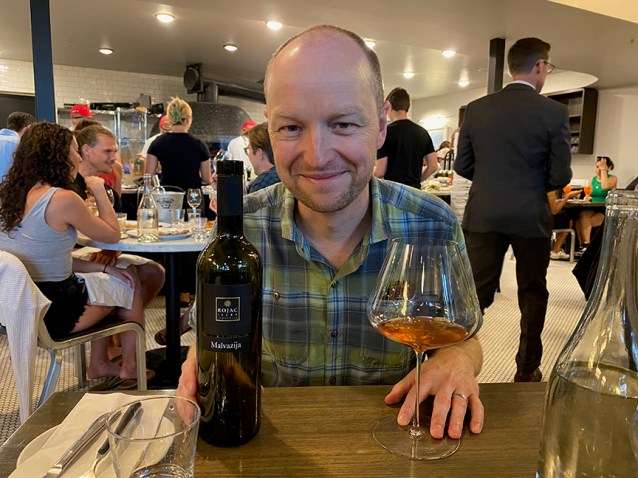
That’s Kevin above, in a photo taken recently over dinner at Pizzeria Locale in Boulder.

Kevin, whose blog Opening a Bottle continues to churn out thoughtfully produced feature stories with superb photography, represents a different paradigm in the wine blogging world.

Wine writing and photography is a second career for him. He has a solid writing day gig and a wonderful family to support.

But like Riky, he’s giving it his 1,000 percent.

Or better put, like Riky, he’s giving his curiosity his 1,000 percent.

And that’s what compels me to keep up with both of their feeds.

The best advice that anyone ever gave me about my doctorate was that it’s all about following your curiosity to complete fulfillment. No one ever gave me a job because I have a Ph.D. But I gave my brain a new muscle by taking those deepest of dives. (My thesis was devoted to Renaissance transcriptions of Medieval Italian poetry and how the new printing press medium changed the way readers perceived the prosody — meter and performative rhythm — of those texts. Someone once joked that he would love to read my work as long as it wasn’t about commas and semi-colons. In part, it was.)

There’s so much acrimony in the wine media world owed to one-uppersonship. A counterproductive attitude continues to prevail in that universe: if I’ve been there and done that, how could you possibly have something interesting to add to the conversation?

Let me put this another, more succinct way: there are so many assholes in the wine media world who have forgotten or who never knew that the whole point is the joy of curiosity. It’s not about keeping tabs on who doesn’t kiss your fucking ring.

My dissertation advisor, a truly towering intellectual, knows and continues to know more about Italian literature than I ever will. He watched me stumble over countless rookie, knuckle-headed mistakes as he gently and generously guided me through my path of discovery. It was one of the greatest gifts anyone has ever given me: recognizing my own joy of curiosity and appreciating its immense value.

I hope you’ll enjoy following Riky and Kevin as much as I do. You might even learn something new. I know I have.

Please consider giving to Unicef’s Ukraine child refugee fund. This link takes you straight to the donation page.


What keeps Italian winemakers up at night?

These days, it’s no surprise that Italian winemakers are kept up at night by nagging questions about energy costs, availability of raw materials and their rising prices, worker shortages, logistics, and the biggest challenge of all — international consumers and their changing habits during economic volatility and unpredictability.
Add to that blend the war in Ukraine, Putin’s weaponization of energy and food prices, the rise in Covid cases across Europe, Asia, and the U.S., record-high inflation, and Europeans’ growing uneasiness about the economy and their concerns about climate change… It’s not a pretty picture.

Last week, the editors at WineNews.it, the Montalcino-based wine industry digital magazine, asked leading Italian winemakers to share their concerns as some of the hottest summer temperatures on record are stoking fears of a diminished crop this fall.

The following are my excerpted translations of some of the more compelling comments. Check out the entire piece, worth reading in its entirety, here. (And hats off to the writers at WineNews, who consistently deliver great content about the Italian wine industry.)

Price increases “on the energy front as well as for raw materials, from glass to paper, have led to a hike in production costs, which were already extremely high,” said Caterina Dei of the Cantine Dei group in Tuscany. “We also need to keep in mind that we will be producing less with the next vintage. This means that margins are even tighter.”

“With cost increases,” said Stefano Capurso, president of the Dievole group in Tuscany, “it’s relatively normal that the costs on our price lists would also increase. But for certain wines, like mid-tier products, there is the risk that in many markets, those products will no longer be priced accordingly. As a result, they won’t end up in consumers’ shopping carts. In the U.S., for example, a Chianti Classico that used to cost $21 is now $25 on the shelf, if not more. There is the risk that American consumers will turn to alternative types of products.”

“Inflation that is running rampant, together with production costs and the growing prices for raw materials,” said Andreo Lonardi of the Bertani winery group, “these are the big issues in 2022. As a result, we are not only talking about increases on our price lists. We are also concerned with consumers’ buying power.”

The price of raw materials, noted Michele Bernetti of Umani Ronchi in the Marche, “is something that needs to be monitored. But there are other industries, like construction, where we are also seeing a slowdown in price growth. And the costs of certain equipment used in the vineyard are beginning to come down as well. Let’s hope that the bubble has peaked and that now we are getting back to normal.”

How Bob Trinchero unwittingly transformed the Italian wine industry when he released his first alcohol-removed wine.

When work travels first began taking me to Piedmont in the early 2000s, the topic of spinning cones was a hot-button issue in the region. At the time, old line winemakers like Bartolo Mascarello (“No barriques, no Berlusconi”) were decrying the modernization of Barolo and Barbaresco.

Some high-profile winemakers there had begun to abandon traditional vinification in favor of what many considered a “Californian” or more broadly “American” approach because certain wines had begun to emulate the California style that appealed to American wine lovers. New winemaking techniques included the then newly adopted use of French barriques for aging and — perhaps most importantly — the use of technology like spinning cones and reverse osmosis to restrain alcohol levels in wines that were picked overly ripe.

Many believed that some of Nebbiolo’s greatest interpreters had fallen under the sway of the newly emerged American wine media and the unbridled influence of a handful of American importers who believed that the Americanization of Piedmont wines would open up a lucrative demand for high-end Italian wines in the then rapidly growing U.S. premium wine market.

The importers’ bet paid off: by the early 2000s, modern-style wines farmed in Piedmont in the 1990s became all the rage on the high-end New York wine scene.

Over the course of researching an article on alcohol-removed wines for the Corriere Vinicolo, the voice of the Unione Italiana Vini (which represents more than 150,000 Italian growers, accounting for more than 85 percent of Italian wine exported abroad), an extraordinary 1993 Popular Mechanics feature story emerged: “Grapes without Wrath: A new machine allows vintners to take the alcohol out of real wine.”

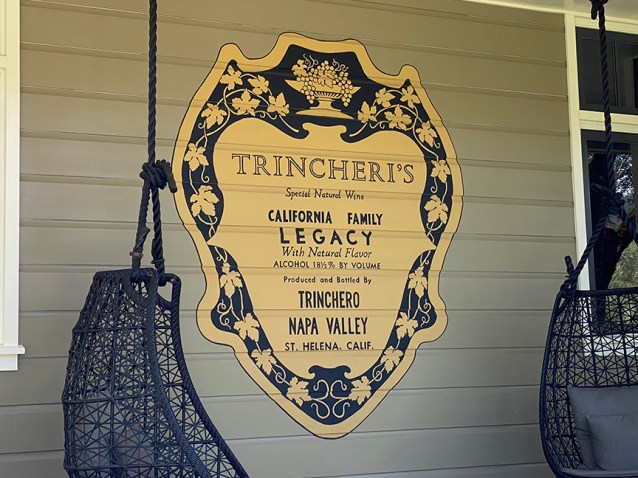
The author tells the “fascinating story” of how Bob Trinchero started using spinning cones, a technology first developed in Australia, to make “alcohol-removed” wines for the U.S. market. Little did he know at the time that 2021 would be the year that his Fre line, first released in the early 90s, would become the biggest selling zero alcohol wine in the country.

Nor could he imagine that the Californians and later the Italians would broadly employ spinning cones for different and highly innovative reasons.

The Californians wanted to reduce alcohol levels in their wines to avoid taxation.

As one winemaker put it in 2001, “if you’ve got a huge blend, a million cases of Chardonnay or something, it definitely pays to bring the alcohol down; you’re talking big money in taxes.”

The Piedmontese, on the other hand, used spinning cones to reduce alcohol in wines that were harvested overly ripe. As global warming began to elevate temperatures in the mid-1990s, certain growers, eager to make headway in the U.S. market with fruit-forward wines, would let fruit hang on the vine to achieve the intense fruit flavors and immediate approachability they wanted. But this delivered unusually high alcohol levels. To counter this, they would remove some of the excessive alcohol to bring the wines in line with consortium norms.

One disconcerting element that emerged from my research was that spinning cones were illegal in European viticulture until 2009 (!!!).

Anecdotally, I know of at least a handful Piedmontese wineries that were using spinning cones before the year the EU first allowed the technique. According to many trade observers who were active during that time, the use of spinning cones was widespread in Barolo and Barbaresco as early as the mid-1990s. I don’t have any hard data on that but just ask some of the trade members who working with those wines at the time.

Click here to read my story on alcohol-removed wines, their origins, and their growing popularity in the U.S. today. It’s part of an issue of the Corriere dedicated to “no-low” — zero and low-alcohol — wines across the western world. My contribution is devoted to the American market.

I couldn’t be more thrilled to have become a contributor for the masthead. Warm thanks to editor Fabio Ciarla for asking me to join his team of writers.

I also have to send out a big thanks to the PR team at Trinchero Family Estates. They did a fantastic job of getting me the info I needed. Despite what grouchy, flatulent old trolls say about wine publicists, they play a vital role in our industry and deserve our respect and thanks.

Thanks for checking out my Corriere piece. I think you’ll find the other articles on different international markets equally compelling. It’s incredible to consider the legacy of Bob Trinchero, a wine industry genius, and how it has shaped wines made on the other side of that misunderstanding otherwise known as the Atlantic Ocean.

Please consider giving to Unicef’s Ukraine child refugee fund. This link takes you straight to the donation page.

An avalanche in Italy shows how top Italian wine regions were formed. It also shows how they will be destroyed.

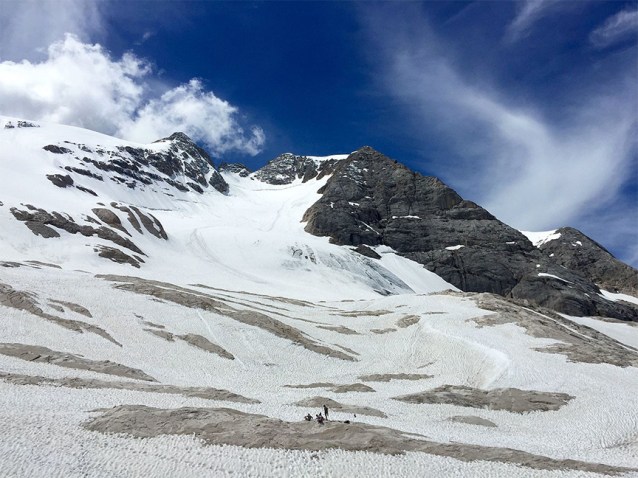
Above: the Marmolada glacier in Trento province before Sunday’s avalanche. Image via Wikipedia Creative Commons.
On Sunday, a melting glacier caused an avalanche in Italy’s Trento province. As of today, the remains of nine persons have been found. More hikers are still unaccounted for as the number of the dead climbs.

In reports published by mainstream media, local officials attribute the catastrophe to global warming. Some have predicted the entire glacier will melt within 50 years.

Many of Italy’s greatest northern wine appellations were formed by melting glaciers in the Eocene period more than 30 million years ago.

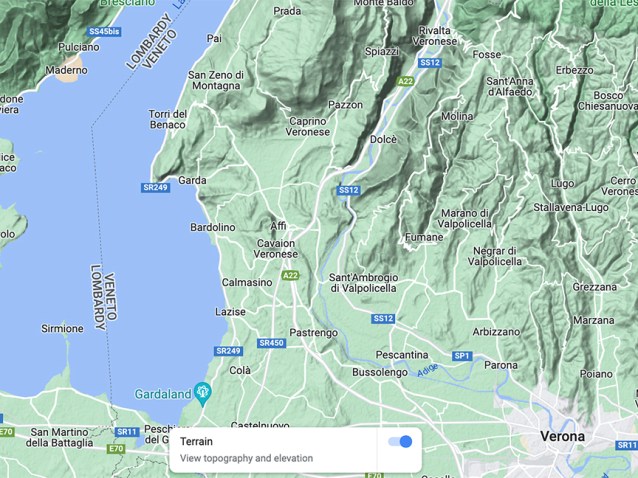
Lake Garda is a great example of this. In the topographic map below, to the right of the lake, you can see the “wrinkled” hills of Valpolicella that were also formed by melting ice during that period.

(Btw, the toponym Valpolicella doesn’t mean “the land of many cellars,” as many erroneously believe. In fact, the name first appeared in the twelfth century, in a decree by Frederic I of Swabia, aka Barbarossa or Red Beard, and by the sixteenth century was widely found in Latin inscriptions as vallis pulicellae, literally the valley of sand deposits, from the Latin pulla, a term used in classical Latin to denote to dark soil and then later to denote alluvial deposits.)

Lake Iseo is another classic example. And we could point to many other appellations that were shaped by similar geological events in prehistory.

The valleys of Trentino and south Tyrol, where some of Italy’s best Pinot Grigio and Pinot Noir are grown, were also formed by a melting glacier. Its alluvial soils are testament to the region’s geological history. Proseccoland and Valle d’Aosta also share this geological heritage.

Earlier today, the Times published a story entitled “Glacier Tragedy Shows Reach of Europe’s New Heat.”

In the piece, the reporter quotes Susanna Corti, he coordinator of the Global Change unit of Italy’s National Research Council.

“These kinds of events, they are getting more and more frequent,” she says, “and they will be more frequent with enhanced global warming.”

With this type of catastrophic event already happening upstream from wine country, how long will it take before extreme weather events literally wash the vineyards away?

After reading the initial reports of the avalanche, which happened in a part of Italy that I — like so many wine professionals of my generation — have visited repeatedly for work, it occurred to me that the vineyards my children will visit with me in coming years might not even be there by the time their putative children are grown.

Could it be that the same geological events that created so many important wine regions will be their undoing?