The old and rare wine conundrum: are the wines (and the prices) really worth it?

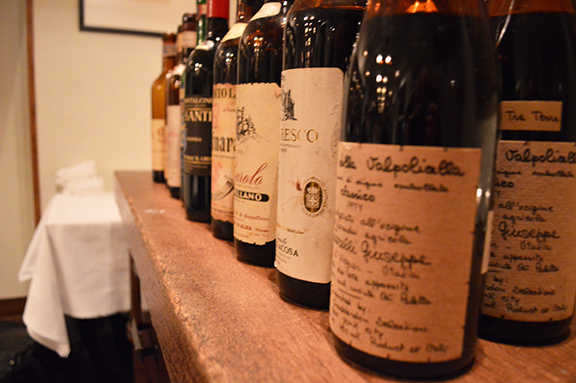
tre terre quintarelliAbove: the 1977 Recioto della Valpolicella Classico Vigneto di Tre Terre by Giuseppe Quintarelli (left) was the oldest wines and one of the most stunning I’d ever tasted from the estate. The fruit was vibrant and sexy and the wine very much alive and delicious. I tasted the wine and other “old and rare” Italians last week at a dinner hosted by Chambers Street Wines in Manhattan to honor wine writer Walter Speller.

“If you’re sitting on a bunch of wines from the 1980s,” said one of the leading Master Sommeliers in the country last year at a tasting of “old and rare” Burgundy, “you are going to be disappointed when you start to open them.”

A gentleman in his mid-60s and not exactly a new kid on the Master Sommelier block, he had just told the crowd of well-heeled collectors that he prefers to drink 2008 Burgundy over older and rarer vintages.

“Some of these [older] wines are still drinkable,” he told the surprised and somewhat shocked guests, “but they don’t have a lot of life in them.”

One of his colleagues, another Master Sommelier who was also presenting on the same panel, quickly moved to resolve the awkwardness.

“There are a lot of us here who love those wines,” he assured the group of 30 or so high-rolling wine lovers who had shelled out a pretty penny to attend the event. “It’s a matter of taste.”

His older colleague quickly backpedalled, making a joke. “If you’ve got any wines from the 80s that you want to get rid of,” he told the crowd, “send them my way!”
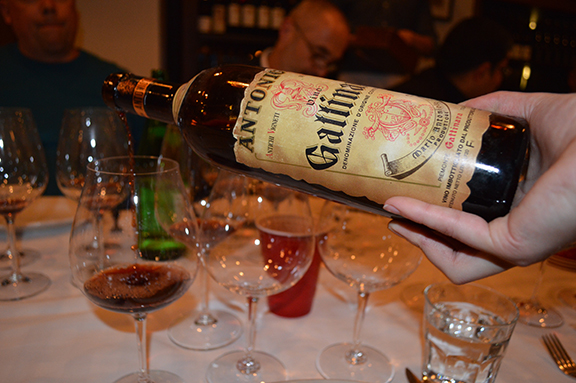
antoniolo gattinaraAbove: the 1964 Gattinara by Antoniolo was spectacular. Its fruit was rich and it had healthy acidity and tannin for a wine older than me. The year was especially good in Italy. I don’t have a photo of the bottle but the 1964 Cappellano Barolo we tasted was also phenomenal, lithe yet confident in the glass, a truly compelling wine.

The exchange was a harmless one, of course. After all, these are first-world problems.

But the anecdote underscores the tension between those who regularly seek out and pay handsomely for “old and rare” wines and those who think the wines are overrated.

In the King James Bible (first published in the early 17th-century), Isaiah 25:6 is translated as follows: “And in this mountain shall the Lord of hosts make unto all people a feast of fat things, a feast of wines on the lees, of fat things full of marrow, of wines on the lees well refined.”*
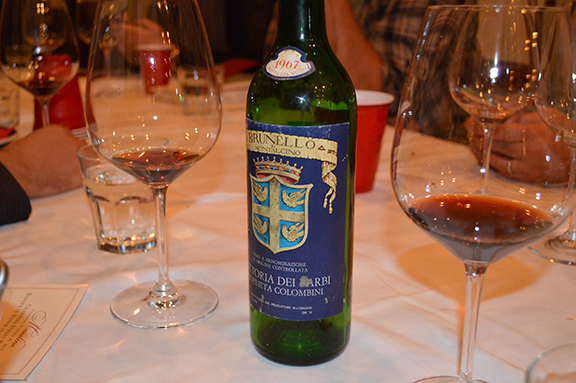
barbi brunello 1964Above: the 1967 vintage was a challenging harvest in Montalcino but the Fattoria dei Barbi Brunello poured the other night was impeccable. Light and bright in color, with the classic tones of old Sangiovese, the fruit in this wine was brilliant, the acidity confident. One of my favorites of the night (a wine made by my client Stefano Cinelli Colombini’s mother Francesca).

Both the primary text and the translation give us an indication of the way that old and rare wines have been perceived over the centuries (over millennia, really).

The “aura” of these wines, as Walter Benjamin might have put it, is (literally) awesome and powerful in the human psyche. The privileged among us are often ready to pay hefty sums to taste them.

Of course, the rest of us rarely get to taste wines like the ones poured at exclusive “old” Burgundy and “old” Italian events like the gathering where the Master Sommeliers wrestled or the dinner I attended last week in Manhattan honoring wine writer Walter Speller.

I am extremely fortunate to be invited occasionally to such summits. They are far above my pay grade (last week I was the guest of my friend Jamie Wolff, owner of Chambers Street Wines in New York City).

italian wine merchantsAbove: the 1968 Taurasi Riserva vineyard-designated Pian d’Angelo by Mastroberardino, third from left, was another highlight for me. Powerful fruit and gorgeous tannic made delicate over the years. It was really interesting to hear what Walter had to say about the Mastroberardino legacy. We and Campania winemakers owe so much to the Mastroberardino for their choice to cultivate native Campanian grape varieties after the Second World War.

“Pulling the corks” on these wines, as they say in the trade, is always a gamble. So many factors have to align for these wines to “show” their best. Even if the wine left the winery in impeccable conditions, they face so many hazards on their way to our tables and palates. Shipping, storage, and the test of time all shape the wine’s final performance. And when you consider that some of the wines I tasted the other night in Manhattan were 40 and nearly 50 years old, it’s only natural that not all old and rare wines will deliver what the prices promise.

The hosts of dinner the other night had to replace a few of the wines at the last minute after Maialino’s wine director Jeff Kellogg expertly opened them only to discover that they had turned. In the case of at least one of the wines, of the two bottles that arrived at the restaurant, one was good and the other not.

In my view, that’s the bottom line: if you can afford it, you have to consider the old and rare wine experience as a sort of wager.

The other night, not every wine rendered the pleasure that the label pledged. But of the nine lots poured, four were among the best wines I’ve ever tasted.

And man, that 1977 Quintarelli Recioto riserva, a wine harvested when I was 10 years old and raised over the course of the better part of my life, was earth-moving for me! Even its brother wine, the classic Recioto from the same year by Quintarelli, began to show beautifully as it opened up in the glass, only to be eclipsed by its sibling, an unrivaled champion among wines.

I’ll probably never get to taste either again. And such is my lot in life (excuse the pun).

The good news is that when we pass from this life to another, to G-d’s kingdom, the righteous among us will enjoy “a feast of wines on the lees, of fat things full of marrow, of wines on the lees well refined.”

* The Oxford Annotated Bible translates the same passage: “On this mountain, the Lord of hosts will make for all peoples a feast of rich food, a feast of well-aged wines, of rich food filled with marrow, of well-aged wines strained clear.”

Here’s how the Orthodox Jewish Bible translates the same: “And in Har Hazeh [i.e., Mt Tziyon] shall Hashem Tzva’os make unto kol HaAmim a fat mishteh (feast), a mishteh (feast) of finest, aged wines, of finest meats, of the best wines of finest vintage.”

Visit and taste at magical Venissa with me: Design and Wine Italy May 2016

venissa wine venice restaurant vineyardA city that rises up in the middle of the sea, with canals for streets, boats for cars, and ferries for busses.

It’s a city that was once and still is a capital of European art and intellectual thought.

In another era, at the height of its maritime power, it was also the European capital for prostitution, gambling, and drinking — the Las Vegas of its day. The condom was invented there, among other things.

It’s the city that gave us coffee culture. It’s the city that gave us cocktail culture.

It’s the city that gave us Marco Polo, Casanova, Tintoretto, Tiepolo, and Tiziano.

Hemingway loved to drink there. Eleonora Duse performed there.

Venice, the bride of the sea, the queen of the Adriatic.

It’s one of my favorite places in Italy and it’s one of the stops on the Design and Wine Italy 2016 tour, a trip that I’m leading together with my friends Adam and Toma (the Antiques Diva).

And on one of our three nights in Venice, we’ll be visiting Venissa, an “islander” winery and superb restaurant located on the tiny island of Mazzorbo, which sits to the north of Venice proper.

The Bisol family — the owners — will lead us through a tasting of the wine they make there before we sit down to a private dinner for our group.

It’s going to be one of the highlights of many. If we drink enough wine that night, I might just have to recite some poetry in Venetian dialect by Andrea Zanzotto, whose work inspired the name of this beautiful vineyard on the lagoon.

Click here for the complete itinerary and registration details.

Image via the Venissa Facebook.

Great food and wine spotted in Houston (who knew?): Public Services, Pastry War, Nam Giao, Helen, Camerata

THIS JUST IN: Tracie P’s Thanksgiving cookies went online a few minutes ago. Check them out here (Facebook).

From the department of “in case you’re worried that Tracie P and I are lacking in good wine and food”…

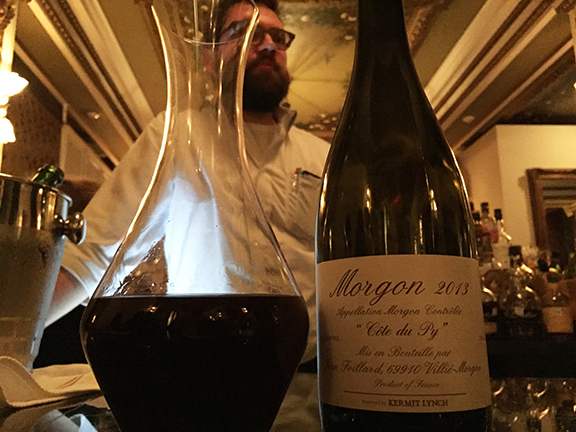
cote du py morgon lapierreSaturday night in Houston found me barside at the excellent Public Services where I enjoyed 2014 Donkey and Goat Claim Jumper rosé from Mourvèdre by-the-glass and a taste of the 2013 Beaujolais Morgon Côte du Py by Fouillard (the latter thanks to a dude named Chuck B. who happened to be sitting next to me).

That’s the amazing Justin Vann in the photo (above), author of the superb wine list there. His world-class and natural-friendly program features more than 30 “Sherry and Friends” by-the-glass and a tide of groovy wines, also by-the-glass (Saetti Lambrusco, anyone?).

The space is the renovated floor office of the historic and beautiful Cotton Exchange building (1885). Super cool place and super groovy wine list with snacks by Justin Yu of Oxheart.

I had moseyed over to Justin’s bar after a cocktail with friends at Pastry War, a Tequila-inspired high-concept cocktail bar, also excellent.

Both are part of an emerging strip of Main St. on the north side of downtown where there is an embarrassment of choice in hipster wine and food.

nam giao vietnamese restaurant houstonSunday morning, the family and I were at Nam Giao, a local favorite Vietnamese restaurant in Houston’s bustling Asia town.

We were there with food-minded friends — Austin restaurateur Steven Dilley of Bufalina fame and Caviar, Inc.’s VP Helen Springut — for an early lunch.

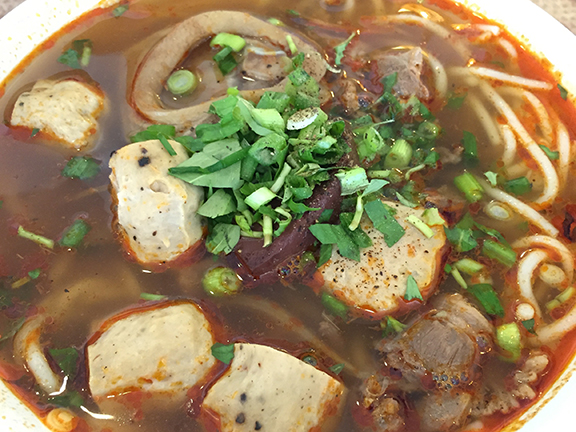
That’s the delicious beef soup (above). The place was kid-friendly and the service was great. All-in-all we spent $40 for our family of four with tax and tip (and we ordered way too much food). The bánh bèo chén were fantastic.

gift of dionysos greek wineSunday evening, cousins Joanne and Marty treated us to a belated-birthday dinner for Tracie P at Helen where we swooned over the 2014 Parparoussis Sideritis Gift of Dionysos. The wine wowed us with its gentle citrus, herbaceous, and mineral character and 12.5 per cent alcohol.

Owner and wine director Evan Turner has really hit it out of the park with his all-Greek list, which includes many of the now classic wines and wineries that we’ve seen emerge in the U.S. over the last five years but also many other wines that might be unfamiliar to some in the wine trade community.

greek octopusThe food was as thoughtful and pure as the wine list. I loved the raw purlane that garnished the octopus (above). It reminded me of my time in Crete.

I really dug this place and imho the list should be in the running for a Food & Wine “best new wine list” award (Helen’s only been open for three months as of the publication of this post).

There was so much good wine and food (and overeating) this weekend that I didn’t even get a chance to make it over to another favorite wine destination in Houston, Camerata, where owner and wine director David Keck has just launched a new Italian wine list and added a top expressions of Franciacorta.

Too much wine and too little time!

After all, weekends are really meant for my girls (below) and our outdoor activities (in case you missed this photo on social media, I just had to share it here).

Happy Monday, everyone! Have a great week!

kids soccer houston

Under his spell: Walter Speller, a prince among Italian wine writers

walter spellerIf you’ve ever attended a high-end wine dinner, you know that it’s rare for the speaker to command the guests’ undivided attention as the evening wears on.

Rare-wine-induced brio is often accompanied by a joyous din that can trump even the most celebrity of commentators.

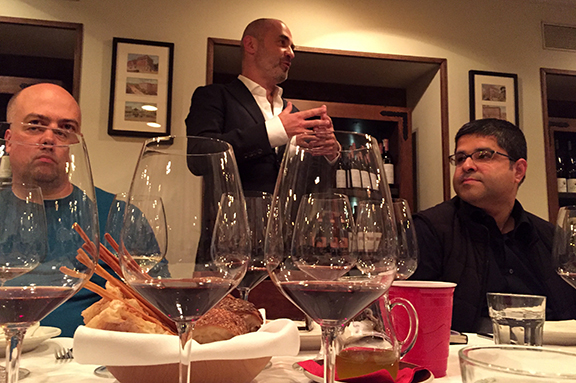
But such was not the case last night when Walter Speller (above, center) delivered three brilliant and concise talks, each before the service of three remarkable flights of wine that included 1964 Antoniolo and Cappellano, 1967 Barbi, 1968 Mastroberardino, and 1977 Quintarelli among others.

Thanks to his many years living in Italy writing about wine, and the intimate time he has spent with winemakers there in their cellars, Walter wields matchless acumen and authority on the wines of Italy. And he converses on them with unrivaled earnestness and probity.

I, like everyone else in attendance at the excellent Maialino in Gramercy, hung upon and insatiably relished his every word.

quintarelli emailThe occasion was a collation held in his honor by my good friend Jamie Wolff, owner of Chambers Street Wines.

Walter was in the city of five boroughs to celebrate the release of the fourth edition of the Oxford Companion to Wine, edited by Masters of Wine Jancis Robinson and Julia Harding.

I can’t wait to dive into Walter’s new entries on Italy. Not only because I know that I will devour them with gusto, but because, I, too, have fallen under his spell.

Notes on the wines to come next week. Buon weekend a tutti!

Wine stars fell over Manhattan last night

From the department of “some how, some way, I just get to keep tasting funky-assed wines like every single day”

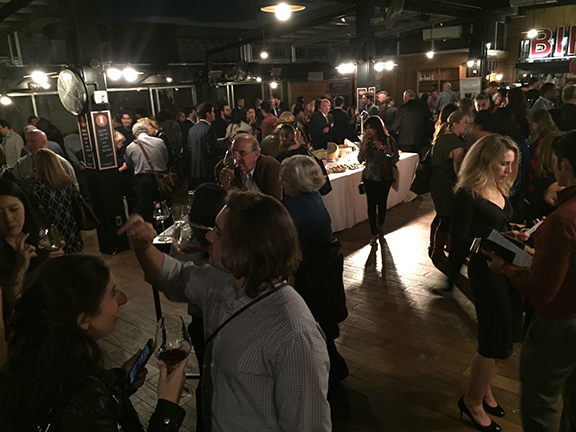
fornacina brunello rating parkerMan, the stars were out last night in Manhattan where the first lady of wine writing, Jancis Robinson, presented the new edition of her Oxford Companion to Wine and her Italian reviewer and this year’s winner Casato Prime Donne award for wine writing, Walter Speller, selected 20 Brunello di Montalcino wines for the occasion.

birreria eataly new yorkMy stars aligned and somehow I ended up with a ticket to the super glam event, which was held in the Birreria at Eataly.

They sure pack ’em in at Eataly. I was lucky to snag a spot at the seafood bar where I had a delicious glass of Monte Rossa Franciacorta and the crudo trio before braving the winding line to attend the sold-out event.

best lambrusco new york via emiliaI’m not one to kiss and tell but I ended up at dinner with a couple of my favorite wine writers at the lovely Via Emilia, where owner William, originally from Modena, has been serving an authentic Emilian cuisine since 1994.

He imports this Rota Lambrusco himself. Really swell and enjoyed by all at our table (a demanding crowd, I might add, when it comes to Italian wine!).

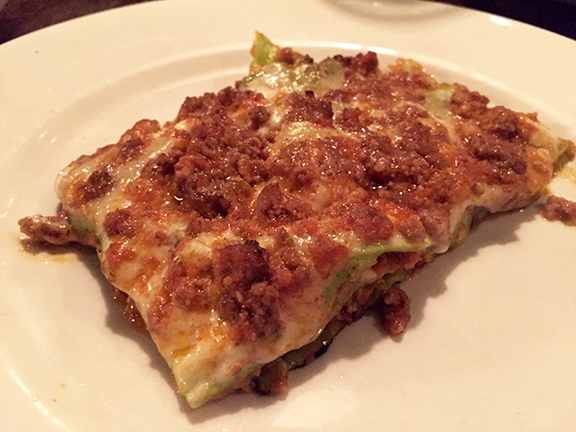
lasagne authentic recipe bologneseWilliam’s cooking was spot-on and I was impressed by the menu and the classic presentations and how well the salumi were sliced.

But it was his lasagne that really reminded me of some favorite meals in Emilia. Truly outstanding.

That’s all I have time for today as I head out for an all-day working meeting and then a wine dinner tonight.

Some how, some way…

Name that grape! An extraordinary online resource for Italian ampelography

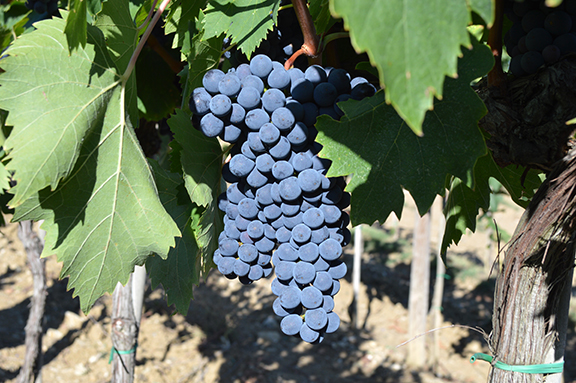
sangiovese grossoAbove: what grape is that? The Italian agriculture ministry’s online ampelographic catalog is a great resource for identifying grape varieties.

Posting on the fly this morning as I head out to NYC for work meetings and some incredible tastings tonight and tomorrow.

But I just had to share the link for the Italian agriculture ministry’s online ampelographic catalog, which I discovered yesterday researching my update of my Glossary of Italian Wine Terms.

I’m not sure how long the catalog has been available online and I haven’t had a chance to spend a lot of time poking around in there. But I’ve been impressed by its thoroughness and especially by the number of photos of bunches and leaves that it includes for each entry.

Check it out here.

Now it’s time to get my butt to the airport and on a plane. Wish me speed!

How do you translate “spargolo” into English? Italian wine term glossary updated

Please click here for the updated glossary (March 21, 2019).

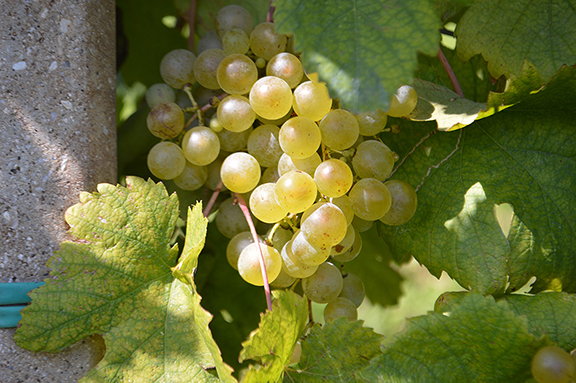
old vine proseccoAbove: note how the Glera bunch above is loosely clustered (spargolo in Italian). Photo taken in late August 2015 in the Monfumo vineyard of my client Bele Casel.

Today’s update of my Glossary of Italian Wine Terms includes a number of new entries (see below; complete glossary follows).

As I was working on the update, I spent some extra time on the entry for spargolo (loosely clustered).

Glera, the main grape used in Prosecco, has loosely clustered bunches. And I noted that in the English Wiki entry for Glera, grappolo spargolo is listed as one of the grape’s synonyms.

That sounded fishy to me. And after checking with multiple reference works of ampelography, I found no Italian resource that lists grappolo spargolo as an accepted ampelonym.

Luca Ferraro, my friend and client, who grows Glera for his family’s Bele Casel estate in Asolo, wrote me that Glera is sometimes locally called Prosecco spargolo. But he had never heard the name grappolo spargolo.

Unfortunately, many English-language bloggers have simply copied and pasted the erroneous information from the Wiki entry into their own posts and I discovered myriad instances where people list grappolo spargolo as a synonym.

One of the reasons why growers like Glera is that it has loosely clustered bunches, making it less susceptible to rot because moisture doesn’t accumulate as readily between the berries as it does with other grape varieties.

The bunch in the photo above comes from old-vine Glera and it’s a great example of a loosely clustered bunch.

I’m always looking for suggestions for new entries in the glossary and I’m constantly updating and tweaking my work. So if you have a correction or suggestion, please let me know in the comment section.

I hope readers find the glossary useful. Thanks for speaking Italian wine!

New entries:

capo a frutto fruit cane
cordone cordon
grappolo spargolo loosely clustered grape brunch
pedicello pedicel
peduncolo stem (peduncle)
rachide rachis
raspo stem
spargolo (grappolo spargolo) loosely clustered (grape bunch)
sperone spur
svinatura racking (devatting, drawing off)

Complete glossary (to date):

ITALIAN ENGLISH
a giropoggio east-west row orientation
a ritocchino north-south row orientation
acciaio [inossidabile] stainless-steel [vat/tank]
affinamento aging
alberello head-trained [vines]
allegagione fruit set
allevamento training
argilla clay
arresto di fermentazione stuck fermentation
assemblaggio blend
azoto nitrogen
barbatella grafted cutting
barrique barrique [small French oak cask]
bâtonnage stirring on the lees
biodinamica biodynamics/biodynamic
biologico organic
botte traditional large cask
bucce skins
Cabernet [Sauvignon] Cabernet Sauvignon
Cabernet Franc Cabernet Franc
calcare/calcareo limestone/calcareous [limestone-rich]
capo a frutto fruit cane
cappello sommerso submerged cap maceration
chioma canopy
cordone cordon
cordone speronato cordon-trained spur-pruned [vines]
cru vineyard designation/single vineyard
cuvée blend
délestage rack and return
deraspare/deraspatrice de-stemm/de-stemmer
diradamento pruning/thinning grapes/dropping fruit
diserbante termico weed torch/weed flamer
DOC DOC [designation of controlled origin]
DOCG DOCG [designation of controlled and guaranteed origin]
DOP PDO [Protected Designation of Origin]
doppio capovolto double-arched cane [training]
esca esca [alt.: black dead arm or black measles]
escursione termica [diurnal] temperature variation
fementazione arrestata stuck fermentation
femminella lateral shoot
flavescenza dorata grapevine yellows (flavescence dorée)
follatura punching down
galestro galestro [a marl- and limestone-rich subsoil unique to Tuscany]
giropoggio east-west row orientation
grappa grappa
grappolo cluster/bunch
grappolo spargolo loosely clustered grape brunch
Guyot Guyot
IGP PGI [Protected Geographical Indication]
IGT IGT [typical geographical indication]
leccio holm oak
lievito naturale native/ambient/indigenous/wild yeast
lievito selezionato cultured yeast
limo silt
macchia mediterranea Mediterranean maquis [shrubland]
maestrale (vento di maestrale) north-westerly wind
malolattica malolactic fermentation
marna/marne marl
millerandage millerandage [alt.: shot berrieshens and chicks, or pumpkins and peas]
monovitigno single-grape variety [wine]
mosto must
oidio oidium [powdery mildew]
pedicello pedicel
peduncolo stem (peduncle)
peronospora peronospora [downy mildew]
pied de cuve pied de cuve [native yeast starter]
pigiatura pressing
pirodiserbatore weed torch/weed flamer
pirodiserbo weed torching
portinnesto rootstock
quercia oak
rachide rachis
raspo stem
rimontaggio pumping over
ritocchino north-south row orientation
sabbia/sabbioso sand/sandy [sandy soil]
Sauvignon [Blanc] Sauvignon Blanc
scacchiatura disbudding
siccità/stress idrico hydric stress
sistema di allevamento training
sottosuolo subsoil
sovescio cover crop/green manure
spargolo (grappolo spargolo) loosely clustered (grape bunch)
sperone spur
spollonatura disbudding
stralciatura deshooting
stress idrico/siccità hydric stress
sulle bucce skin contact [macerated on the skins]
sulle fecce nobili lees aged [aged on its lees]
sur lie lees aged [aged on its lees]
svinatura racking (devatting, drawing off)
terreno/terreni soil
tignola della vite vine moth [Eupoecilia ambiguella]
tralcio shoot/cane
tramoggia hopper/feeder
tufo tufaceous subsoil [porous limestone]
vasca vat/tank
vento di maestrale north-westerly wind
vigna/vigne vine/vineyards
vigneto vineyard
vinaccia/vinacce pomace
vite vine
vitigno grape variety

Taste the pizza of the future and a fav natural wine with me #DesignWineTrip2016

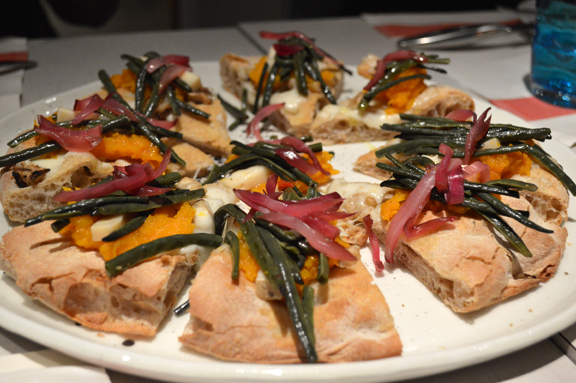
vegetable pizza recipeWhen my good friend, wine collector and entrepreneur Adam Japko asked me to help him create the wine component of his Wine & Design Italy 2016 tour earlier this year, he was a bit surprised when I suggested that we take the group out for pizza.

A number of the dinners on the trip are to be held at wineries or in famous “wine” restaurants along our route.

“But a pizzeria?” he chuckled. “Are you sure?”

That was before I explained to him that we would be experiencing the pizza of the future at the legendary Pizzeria i Tigli in San Bonifacio near Verona and pairing it with one of my favorite natural wines, Gambellara by Angiolino Maule’s Biancara estate.

Simone Padoan’s pizza (above) isn’t just special because of the creative and colorful toppings he uses (including crudo). The thing that takes his cooking into a new gastronomic sphere is his unchecked passion for native yeast and diehard devotion to wholesome ingredients. It’s possibly the most healthy pizza in the world and in my experience it’s one of the most delicious.

And what better wine to pair with it than Maule’s Gaganega (the primary grape used in sister appellations Gambellara and Soave)? After all, Angiolino Maule is one of the world’s greatest advocates for natural wine and chemical-free viticulture (he’s the founder of Vinnatur, arguably the most radical of the natural wine movement’s fairs).

It’s just one of the stops on our weeklong tour. Check out the complete itinerary and registration details here. It’s going to be a blast… and it’s sure to blow more than one mind.

An extraordinary white from Valpolicella by Fumanelli

best soave wineThe claim that Houston is enogastronomically challenged doesn’t seem to slow the tide of Italian winemakers who visit here every week.

It was actually Valpolicella winemaker Armando Fumanelli’s first visit to the Bayou City when he and I connected last Tuesday to taste through his wines.

Now, why would an Italian noble, real estate mogul, vintage race car collector and racer, and legacy winemaker visit a place like Texas?

Beats me…

Once he and I got past his sales pitch, it was fascinating to hear him talk about Valpolicella history and the way the appellation has been transformed and overcropped since the 1920s when the modern era of winemaking there began.

He talked at length about the Veneto’s unbridled entrepreneurial spirit (a tradition that stretches back to Renaissance Venice and the city’s maritime republic) and how it naturally spilled over into wine production.

One of the most interesting points he made was when he explained that Valpolicella was perhaps the first appellation in Italy where winemakers applied an assembly-line approach to the mass production of a previously artisanal product.

This shift in wine production paralleled Italy’s industrialization under fascism and the emergence of a demand for dry wines (my observation, not his).

In many ways, Valpolicella is a metaphor for Italy and the way that artisanal life and traditional agricultural values are struggling to survive there (my words, not his).

A great example of this was his Terso (above), an IGT blend of slightly dried (15-20 days) Garganega and Trebbiano Toscano (50/50 per cent). The latter grape had been grubbed up by most growers, he said, when they realized how lucrative Corvina (for Valpolicella and Amarone) could be. His family is one of the few to retain a significant number of hectares planted to this Trebbiano clone.

I was blown away by the depth and nuance of the wine and was wholly impressed by its value. WineSearcher.com reports an average price of $35 across the U.S.

Sadly, it’s not in Texas yet but this will most certainly be a Saturday-night wine at our house once it gets here.

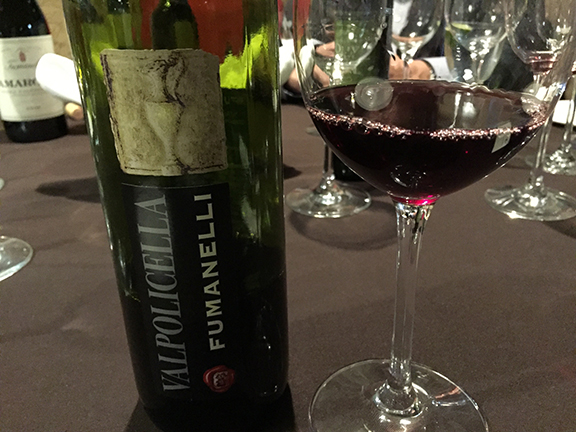
best valpolicellaOf the flight we tasted, I also really loved his entry-tier Valpolicella which lands here at under $20 (WineSearcher shows a national average retail price of $18).

At 12.5 per cent alcohol, this clean, fresh wine was true Valpolicella (above), maybe a little more polished than the ones I used to drink during my university days in Padua but delicious and classic.

Armando, you had me at “12.5.” This wine hits that sweet spot among our family’s Monday-Thursday night wines.

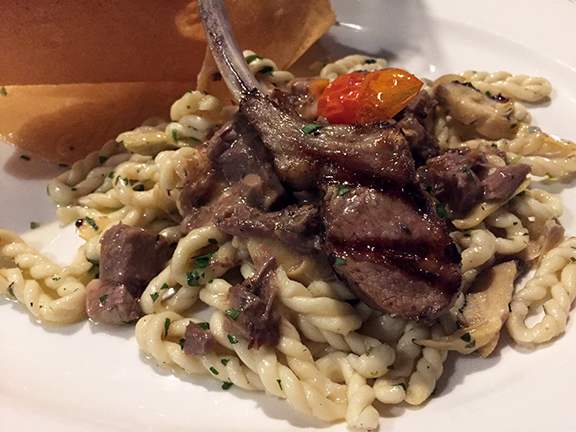
It was a brilliant pairing for a dish of lorghittas (below) with kid ragù and chop prepared by Efisio Farris at his Arcodoro, Houston’s Sardinian-restaurant and mainstay, where the tasting was held.

lorighittasThe pasta shape, Efisio told me, comes from the ring shape. In Sardinian, a loriga is a ring used to hitch cattle.

The pasta is made by hand by “a couple of old ladies” on the island, he said, and they are couriered regularly to him here in Houston. It’s a dried pasta that has a shelf life of roughly six months, he explained. They were phenomenal, really.

So in case you’re still worried about the challenge of eating and drinking well in Houston, you can rest easy.

Happy birthday Tracie P! I’m so glad you married me!

Listen up: Tracie P and I are going to be on today’s edition of Houston Matters (12 p.m. CST), a daily radio show produced by Houston Public Media FM 88.7. The show was inspired by my blog post, “You’re from Houston? I’m so sorry.”

happy birthday tracie pHappy birthday, Tracie P!

It seems like yesterday that you were still Tracie B and I was trying to figure out what I should do with my life.

When I moved to Texas in 2008 to be with you, so many of my friends thought I was crazy. But following my heart was the smartest thing I’ve ever done.

Over the arc of our time together, more than seven years now, we have built a life and family and I have watched and admired you as an expectant and then nurturing and loving mother.

When I asked you to marry me via a song (below) in 2009, I was deeply in love with you and excited for our bright future. But I couldn’t have imagined the immense joy that you would bring into all of our lives.

This morning at 5 a.m., when Georgia P (soon to be four years old) woke us by climbing into bed and snuggling up beside you, I couldn’t help but think about how our lives have changed since that wonderfully and wondrously fateful day when you wished me a happy birthday on my blog seven years ago.

Your beauty electrifies me, your brilliance dazzles me, your motherly love astounds me.

I love you endlessly and I am boundlessly proud to be your partner and husband.

Happy birthday, Tracie P! I’m so glad you married me!