Beppe Severgnini on terrorism #Collisioni16 #Barolo

beppe severgniniI didn’t get to catch all of Beppe Severgnini’s talk at the Collisioni festival in Barolo, Italy yesterday.

But I did manage to break away from a busy tasting schedule for a few minutes and hear him work a spellbound standing-room-only crowd.

“If we start to close our borders and ban immigrants,” he said, “then the terrorists will have won.”

I would have liked to hear more but a flight of Ligurian wines awaited me in the Barolo castle tasting room.

About to head out for another day of tasting at the festival and will report back soonest.

In the meantime, check out this interesting column by Severgnini on historical terrorism from late last year.

Buona domenica a tutti!

Vietti and the reification of Nebbiolo: “A dark day for Barolo.”

nebbiolo harvest 2015Above: Nebbiolo grapes in Cannubi, one of Barolo’s most famous crus.

“Here in the hills, people can’t stop talking about it,” wrote high-profile Italian wine blogger and Nebbiolo observer Alessandro Morichetti in a Facebook post today.

He was referring to Monday’s news that legacy Barolo estate Vietti had been sold to American entrepreneur Kyle Krause, owner of the “Kum and Go” convenience store chain.

It’s rumored that the cost was $60 million, an astounding figure for an appellation where many still remember the dire economic challenge faced by growers in the decades that followed the Second World War. As late as the 1960s, even as Italy’s post-war “economic miracle” began to take shape, many villages in Barolo and Barbaresco still didn’t have running water, for example.

In an excellent post today for the popular Italian wine blog Intravino, contributor and Langa native Francesco Oddenino remembers a remark by “last of the Mohicans” Barolo grower and winemaker Bartolo Mascarello.

Commenting the sale of a parcel in the famed Cannubi vineyard for an astronomical and at that time unimaginable sum, Mascarello reportedly said: “From this day forward, no young person in Barolo will have the means to acquire a piece of land in Barolo and begin to make wine. This is a dark day for Barolo.”

Yes, over the last decade or so, vineyard rows and even entire vineyard sites have changed hands for what some consider obscene amounts of money in Barolo and Barbaresco. But “until now,” writes Oddenino, “no other leading historic estate has ever been sold: The prices of land have reached levels never before seen but the best vineyards have always been purchased by historic wineries owned by Piedmontese producers.”

“This is perhaps another dark day for Barolo and the Langhe [hills],” he opines.

Krause has been trying to buy a historic estate in Langhe for some time now.

More than a year ago, I wrote this piece for WineSearcher about Roberto Conterno’s move to snatch up a historic Barolo farm that Krause desperately wanted to acquire.

He used “pre-emption rights,” otherwise known as “first right of refusal,” to block the American.

Tracie P and I will be heading to Barolo tomorrow for the Collisioni music and wine festival. I’m sure that there will be much talk of the sale and what it means for the future of the appellation.

I’ll report back all the news that’s fit to blog about.

And in meantime, I’ll try to figure out how to explain to Italians what “Kum and Go” means and its cultural (and pop-cultural) implications.

Zago seafood and wine bar in Udine province: RUN don’t walk

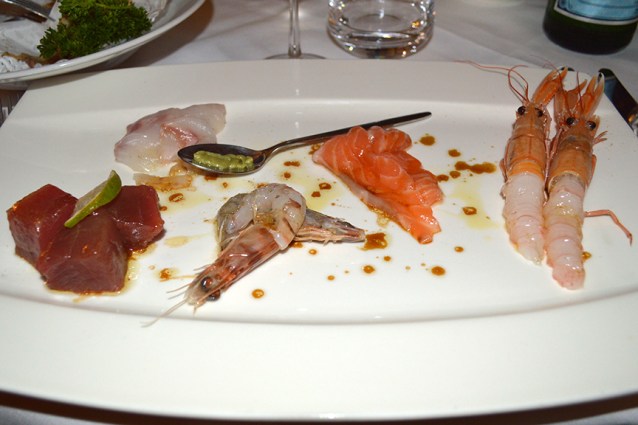
zago best seafood restaurant friuliIt felt like I was back in my university days in Italy except that the food and wine were a lot better.

From discussions of Noam Chomsky and Pier Paolo Pasolini to Balkan rock songs strummed late into the night on a nylon-string guitar, I had the most amazing time last night in Udine with my friend of many years Marco Fantinel, his SO Sonia, and their friends.

After I rolled into the Spilimbergo area late yesterday afternoon, Marco and I tasted at the winery (Ribolla Gialla and Refosco were highlights among many other great wines).

We then headed out to meet the gang at the newish restaurant Zago by Grado chef Luigi Zago in Laipacco hamlet (Tricesimo township, Udine province). Fantastic seafood destination and wine bar. I highly recommend it. We did fritto misto, crudo (above), and whole fish (turbot).

Marco, what a great night! Thank you, dude. It was awesome to connect like that. Sonia has the most amazing voice!

Posting in a hurry this morning from a very muggy Udine as I head out to my next appointment. Thanks for being here. More to come…

Wild blackberries, Milanese cutlet sandwiches, and a hike in Franciacorta’s peatlands make for a fine Sunday afternoon

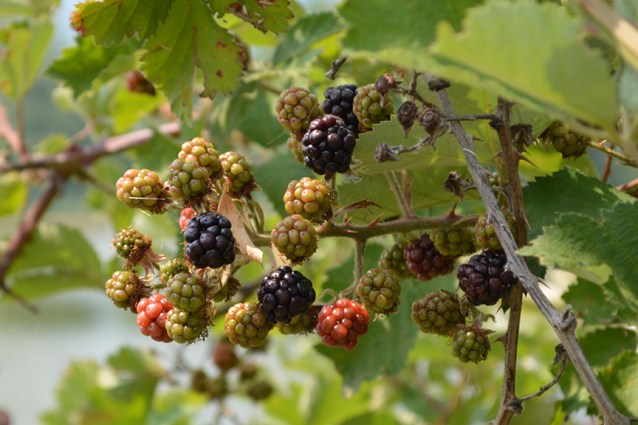
wild blackberriesI photographed these wild blackberries as I hiked through Franciacorta’s peatlands this afternoon after lunch.

What an amazing, gorgeous visit! Super hot today but the marshland trails were wonderful.

peat franciacorta italyWith highs in the 90s, today probably wasn’t the best day for hiking in a swamp. A beautiful swamp. But a swamp nonetheless.

But on a cooler day, I can’t recommend it enough. Here’s a post on my visit and hike that I wrote for the Franciacorta Real Story blog when I got back to my hotel in Brescia. (Yes, the Franciacorta consortium actually pays me to do this stuff; sweet gig!)

It’s really worth checking out… and really interesting to learn that peat was once a major source of fuel here (in the 1700s).

cotoletta milanese recipeOf course, no visit to Franciacorta was going to happen without a stop at Vittorio Fusari’s Dispensa Pani e Vini, one of my favorite restaurants in the world.

An Italian artisanal beer and Vittorio’s cotoletta alla milanese sandwich, served with a schmear of puréed potatoes… my goodness, that was awesome.

Some say that the restaurant just isn’t the same since Vittorio went off to cook in Milan. But I say hogwash.

A perfect Sunday afternoon in Franciacorta, if you ask me.

Check out the peatlands here. Really cool stuff.

Buona domenica a tutti!

Thoughts and prayers for America…

On a day like today, we can only look within ourselves, our hearts and minds, and reflect on how we can make our country and this world a better place for all.

The Parzen family is praying for all those affected by the wave of violence that continues to plague our nation.

G-d bless the victims of this week’s tragic events and their families and G-d bless America.

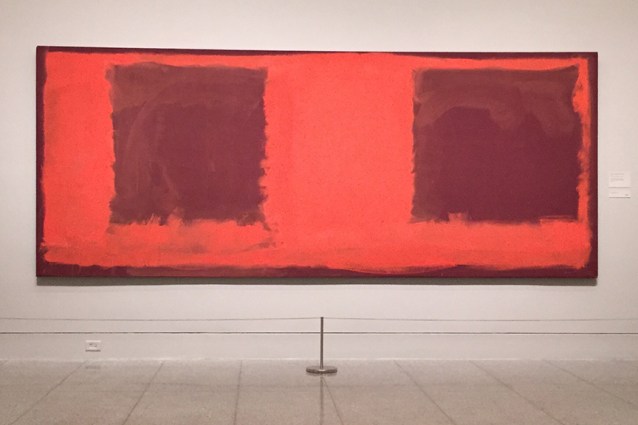
rothko houston

Alfonso Cevola responds to a post (and breaks our hearts)

alfonso cevola glazersAbove: Italian wine blogger Alfonso Cevola in a happier time in our now defunct friendship, which dates back to 2007. Here’s a profile of Alfonso I wrote for the Houston Press after he won the Vinitaly International Prize in 2013.

In the spirit of fair and balanced wine blogging, I’d like to share a note from leading Italian wine blogger Alfonso Cevola in response to my June 27 post, “Freedom’s just another word for shitty wine: Houston defiant in the face of corporate distributors.”

Your post last week, claimed three falsehoods:
1) The two large distributors do not control 99% of the market
2) As for heavy taxation on wholesale wine sales –Texas is #43 (along with California) in state wine taxation among the 50 states.
3) RE:The main issue is that it is illegal in Texas to use an outside fulfillment warehouse or delivery trucks – Outside fulfillment is legal as long as the fulfillment company ( and the trucks they are using) have proper TABC permits. And yes, small distributors can (and do) pool deliveries in Texas.

Alfonso is the Italian Wine Director for Glazer’s, previously one of the two biggest wine distributors in Texas. Now, with the completion of the Southern-Glazer’s “mega deal” merger, the company is part of “the U.S. market’s largest wine and spirits distributor by far, distributing more than 150 million cases of wine and spirits annually, employing more than 20,000 people and operating in 44 states plus the District of Columbia, the Caribbean, and Canada. Total revenues are at more than $15 billion” (Shanken News Daily, June 30, 2016).

I don’t entirely agree with Alfonso’s assessment but felt it was important to share it here. I have also updated my June 27 post with an errata corrige.

Continue reading

Tony Vallone, an American master and an American original

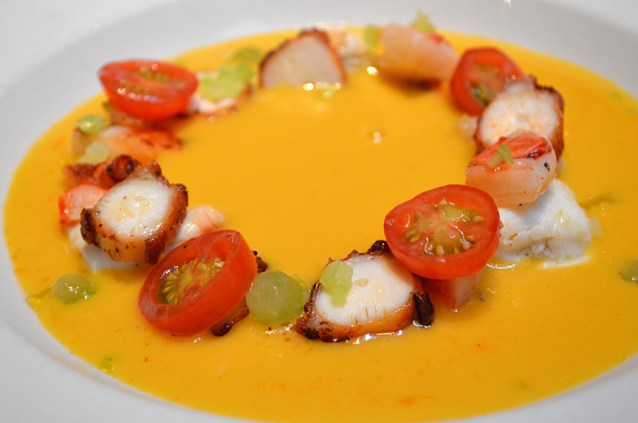
seafood gazpacho recipeAbove: I snapped this image of a seafood gazpacho a few weeks ago at Tony’s, where I meet with Tony Vallone and photograph his food nearly every week. One of the best things about moving to Texas and starting a life and a family here has been getting to work with him. I love it and cherish his friendship.

Week before last, Houston’s paper of record, the Houston Chronicle, profiled my good friend and client Tony Vallone (above, center) for its “History of Houston” series.

Since I moved to Texas, Tracie and I have shared some unforgettable meals at his restaurant, Tony’s, which he first opened in 1965 long before America’s food and wine renaissance took shape.

I wish I could share the whole article here but it’s behind a subscription wall. The following is a snippet.

Part of Vallone’s genius was to make Houstonians feel that the world was at their feet at a time when the city was increasingly staking its claim on a national and international stage. Nothing was too much trouble, from the freshest Dover sole to hulking knobs of white truffle, or the glistening Beluga caviar that Cullen oil heir Baron Ricky di Portanova would, by special request, theatrically toss into a plate of pasta for his table mates.

Another facet of Vallone’s genius was to make his restaurant fun. Sure, he required male guests to wear tie and jacket. But Vallone would cater to favored guests in all sorts of charmingly goofy ways. When developer Harold Farb requested chicken-fried steak, no problem. Did oilman John Mecom crave chili? Vallone made it for him, and the proletarian dish eventually achieved cult status on Fridays.

Read the rest of the article here (I believe it’s still available to non-subscribers).

In today’s world of gossipy food writing, where news of hirings and firings and openings and closings and an unabated hunger for clicks often seem to trump the coverage of the food itself, we sometimes forget that that the food arts are driven by genuine knowledge, passion, and creativity.

Thanks to my work and friendship with Tony, I get to watch his artistry up close (at our weekly kibitz, as we like to call our meetings). I wish that everyone could share my bird’s-eye view and hear him as he holds court on the finer points of Italian regional cookery, the differences in grades of caviar and truffles, recipes for French sauces and Americana classics… His energy and excitement are so great that his chef, his general manager, and I can barely keep up with his pace. For all the things that I get to taste and learn, our chats and tastings (where I also photograph his food) are one of the things I most look forward to.

He’s an American master and an American original. Yes, he’s cooked for every president from Johnson onward. Yes, you regularly see international celebrities at his restaurant. Yes, oil moguls spend outrageous sums there nightly as they dig deep into Tony’s wine cellar. But for Tony, it’s all about the science and art of cooking.

If you are a foodie and live in Houston or visit here, his cuisine is not to be missed.

For the month of July, Tony is doing a $59 tasting menu that includes wine pairings. It’s a great deal and a great way to experience Tony’s magic. I highly recommend it to you.

$100 bbq for three people? Yes, it happened in Austin, Texas

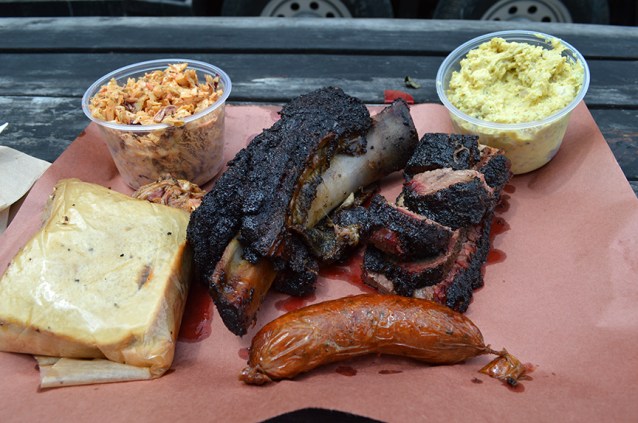
best barbecue austinYes, people, it’s true: that’s $100 worth of Texas bbq right there in that photo.

3/4 lbs. brisket
1 beef rib
1 sausage
1 pulled pork sandwich
1 handful of pulled pork on the side
1/2 pint of coleslaw
1/2 pint of potato salad
6 bottles of water
1 Coke
3 people

My bromance Giovanni has been staying with us this week and on Tuesday I took him to Austin for some honky-tonking and a visit to one of my clients there.

Yesterday, we arrived early at La Barbecue — currently, Austin’s hippest destination for ‘cue — where we waited in line for an hour to get our food.

It was delicious. Definitely up there with some of the best bbq I’ve ever had. The smoke ring on the brisket was impeccable. The tenderness and flavor of the pork peerless and beyond reproach. The potato salad divinely classic and classically divine.

But $100 for three people? In my view, that’s an Oedipal reversal of what bbq is supposed to be about.

But then again, when you hear people talk about how they used to pay $6.99 for first-growth Bordeaux in the 1970s, you can’t help but see the parallels in the ways that the market (and marketing) can drive our perceptions of value.

To put it into perspective, uncle Marty treated Giovanni and me to lunch at Brisket House in Houston on Monday. It’s one of the best smokers imho in our city. Our bill for a similar amount of food was around $50 and our wait was 15 minutes.

As we drove back to Houston, I remembered how Snow’s in Lexington, Texas was all the rage back when I first moved to the state in 2008. It’s the first bbq destination (at least that I remember) where people bragged about lining up early in the morning to get their food before it ran out. Today, there are a handful (if not more) of similarly popular smokers spread out across Austin and Houston.

What’s the world coming to? I’m not sure but I know it’s delicious (and expensive).