
 One of the great pleasures of returning to my old stomping grounds in New York City has been reconnecting with my old boss and friend, Nicola Marzovilla, legacy restaurateur and now Chianti Classico grape grower.
But an even greater delight has been that of meeting and spending time with his extraordinary winemaker, the indomitable Serena Gusmeri.
She’s from Brescia, another connection we share. Before working with Nicola at his Vecchie Terre di Montefili estate in Panzano, she had never made a red wine in her life. But now she’s one of the hottest enologists in Tuscany, with astronomic scores from the opinion-making mastheads.
As Nicola likes to say, “I used to hate the critics but now I love them!” (When Nicola met Tracie for the first time many years ago, he told her that she needed to get glasses, just to put this in context.)
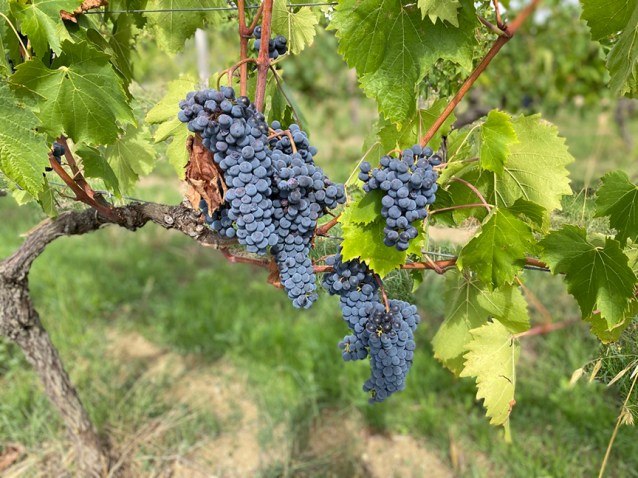 I visited Serena and the historic Montefili estate in September of last year, just a few days before the Sangiovese harvest was to begin there. I was blown away by the farm, the highest in Panzano. The village is Italy’s first organic biome: every farmer in the commune now farms there organically.
The property hadn’t been abandoned when Nicola took it over a decade ago. But let’s just say that it hadn’t been “updated.”
Today, Serena works closely with a leading biodynamic consultant to align her farming practices with the soils’ biodiversity. In other words, they survey the flora and soils’ nitrogen levels etc. to understand how best to grow the grapes.
The results have been spectacular.
 Last week when I was in town, my client and I dined at Nicola’s new and impossible-to-get-in Manhattan restaurant, Nonna Dora’s Pasta Bar, where he opened his most coveted expression of Sangiovese for us, the 2018 Vigna Vecchia — 100 percent Sangiovese made from vines that are more than 40 years old, raised in galestro and alberese-rich soils. Remember the post I did a few weeks ago, “Chianti 101: galestro and alberese”? The images came from my September visit to the farm.
This wine, still very young in its evolution, is rich in body and texture, with vibrant acidity that keeps its heft in balance. The flavors tend toward the darker fruits and the savory character that you find in the greatest of Sangiovese.
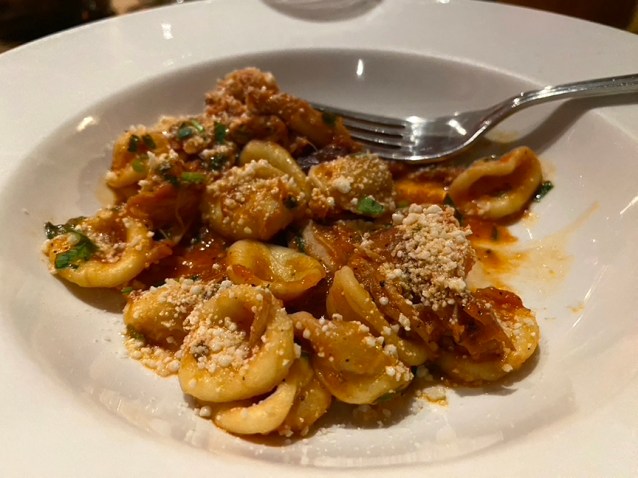
We paired it with Nicola’s mom Dora’s orecchiette with rabbit ragù.
Believe me when I say it: it was great to be back in the city.
Thank you again, Nicola! And great to see the old I Trulli crew!
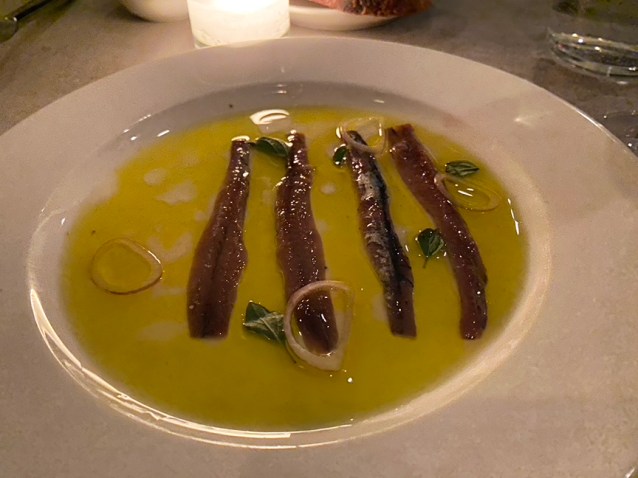 One of the most exciting stops last week during my time in New York with my client Michele Marsiaj, owner of the Amistà winery in Nizza, was at
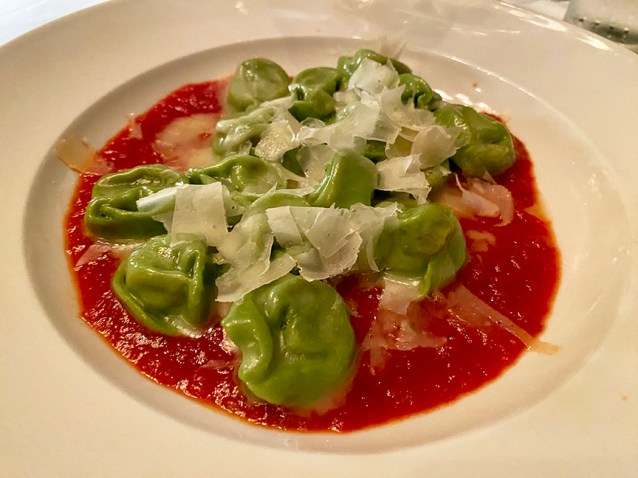
 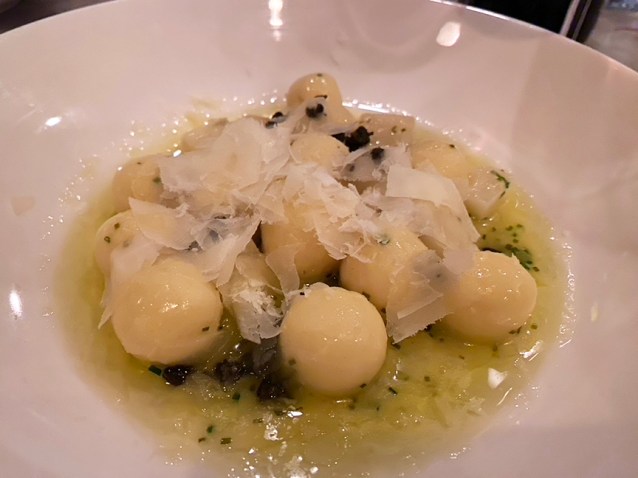 Those are the wonderfully ethereal “Parsian” gnocchi, which were hard not to inhale. Another over-the-top winner dish that we all thoroughly enjoyed.
 We were floored by how good it was.
 Even after all these years, I still hadn’t ever made it to Aldo Sohm’s super wine bar in midtown Manhattan. But that lacuna was rectified when I convened there last night with my client and his crew.
 It were as if Aldo Sohm, arguably the top sommelier in New York and undeniably one of the leading wine professionals in the country, had imparted his grace and knowledge to his team through osmosis (not reverse osmosis, I may add for the the wine-hip crowd).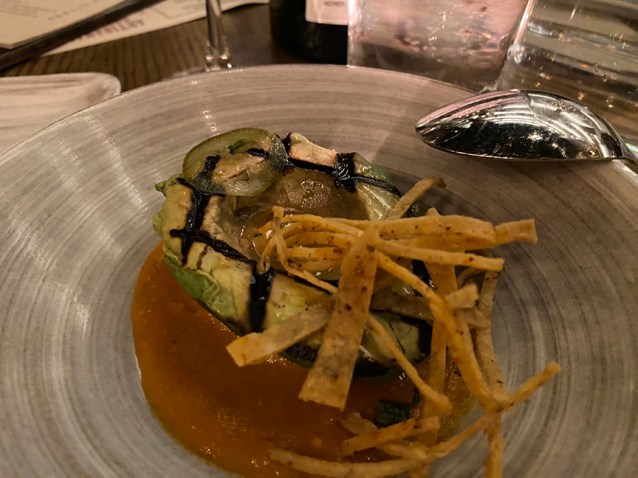
 Above: a shot taken while waiting for stop light in Rome in September 2022.
  One of the things I love the most about my teaching gig at the
  Above: developed by the Italy-America Chamber of Commerce in Houston, the Taste of Italy trade fair and festival, the largest in the U.S. devoted exclusively to Italian food and wine, now has “chapters” in Dallas and Vancouver.
 Man, what a week last week! Four planes in four days!
 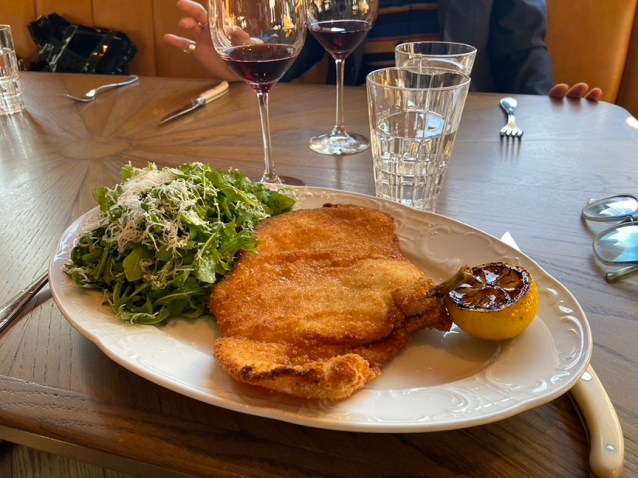 Friday found me at the swank and beautiful surf and turf Carne Mare at South Street Seaport in Manhattan where I joyfully dug into the chicken cutlet alla milanese. Again, not traditional but utterly delicious. I really enjoyed and highly recommend this place.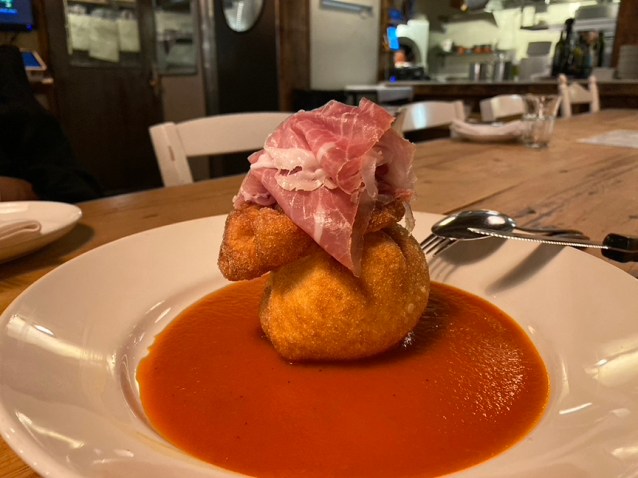
 With the annual wine trade fairs around the corner, wineries across Italy are gearing up by refreshing their “tech sheets” or “fact sheets” — the scheda tecnica in Italian.
 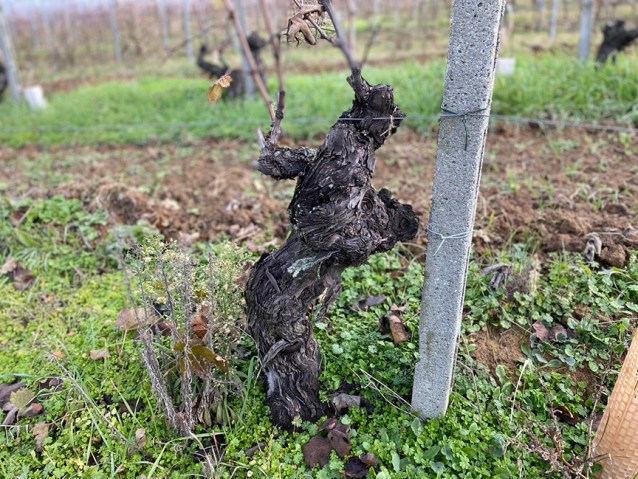 In December of last year, the wine route took me back to Piedmont where I visited vineyards in the heart of the Nizza DOCG.
 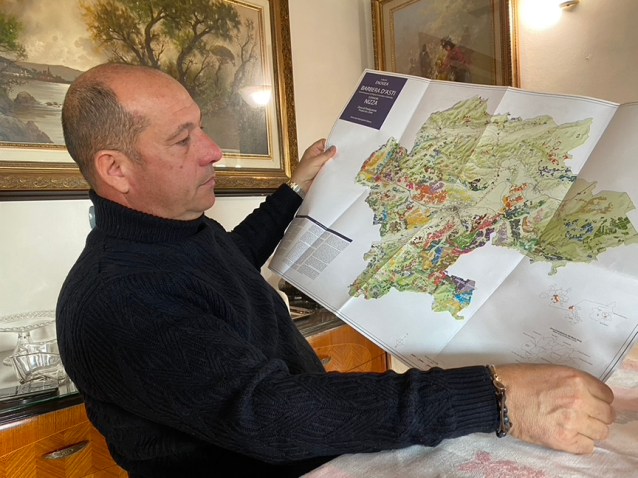 One of the things that set this subzone of Barbera d’Asti apart is the fact that the soils there are identical to the soils found in La Morra, the largest commune for the production of Barolo. The little known Bricco di Nizza, a ridge that runs from the town of Nizza Monferrato to the west toward the village of Moasca, has the same ancient marl (limestone and clay) and clay subsoils that have helped to make Barolo so famous.
 Luckily for me, I arrived not long after the vineyards had been tilled. And the subsoils were easy to spot.
  Note the deep brick color in the first photo and the grey-whitish hue of the second.
  I had first heard of a new Nizza DOCG estate called
  Do Bianchi