
Any day now…

What an incredible year 2011 has been for us!
Our first anniversary, our pregnancy (any day now, folks!), and some of the most memorable meals of our lives. Here’s one of the “bests” in what I can say has truly been the best year of my life…
*****
With our good friend Riccardo Zanotto, posted January 31.
in the land of Prosecco… just up the hill from Rolle…
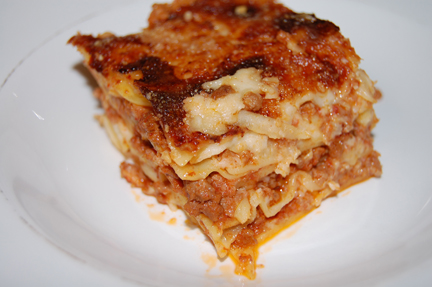
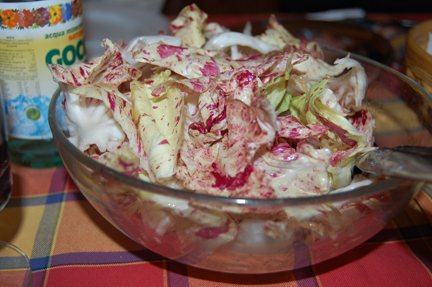
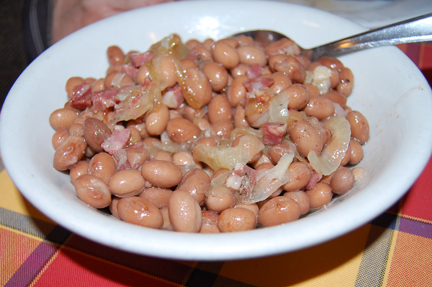
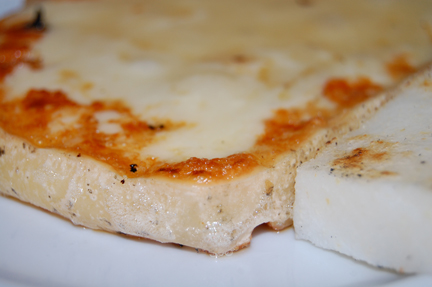
Osteria al Cacciatore… “dove fanno da mangiare come la zia…”
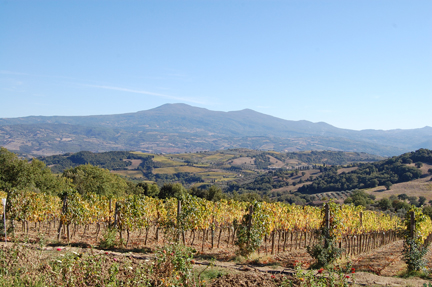
There are times when my ability as a photographer fails me. My October visit to the Brunelli farmhouse was one of those times.
I simply cannot express how beautiful the family’s farm is.
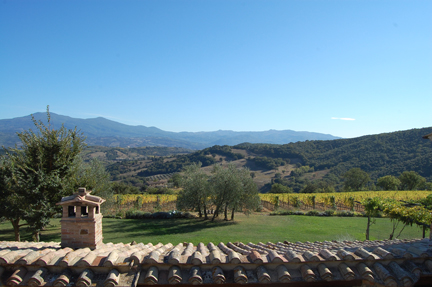
The Brunelli estate is situated in the center of the appellation, along the road that leads to Barbi: heading north from Sant’Angelo in Colle, you turn right and head east about halfway between Sant’Angelo and Montalcino.
And when they arrive at Laura Brunelli’s home, her visitors are rewarded with what I think is one of the most spectacular views in one of the most photogenic landscapes of Italy.
As your eye scans the horizon, looking south-southeast toward Mt. Amiata, there are few signs of modernity. It is Tuscany as it probably looked 50 years ago.
As Tracie P once wrote on her blog, if I were a grape, I would want to grow here.
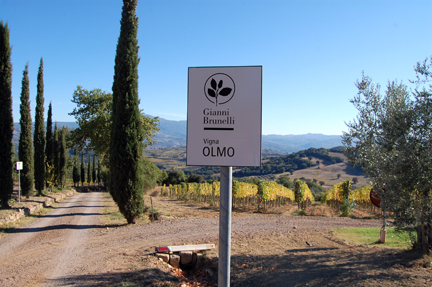
The Vigna Olmo is Brunelli’s top growing site: its gentle slope faces south and is ideal for the cultivation of thin-skinned Sangiovese Grosso. Standing atop the vineyard, you can feel a gentle breeze from the valley below. It’s simply magical.
The entire estate is biodynamically farmed and even the Brunelli house was constructed using organic precepts — bioedilizia as it is called in Italian, Baubiologie in German or building biology.
The beloved, visionary Gianni Brunelli left our world just over three years ago (see this beautiful tribute by Avvinare). But he lives through the estate that he and Laura built together. I never met Gianni but I could feel his presence that day.
Laura and I tasted three wines together. Here are my notes.
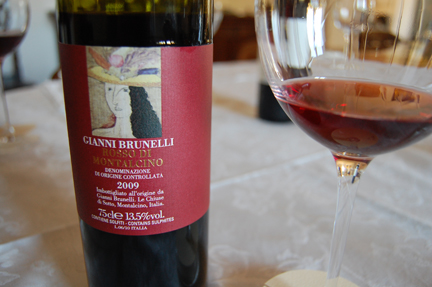
2009 Rosso di Montalcino
Brunelli’s signature acidity and bright, bright red fruit. More savory in the mouth. Alcohol very well integrated. This wine is sourced from the estate’s Oliva and Chiuse vineyards, said Laura.
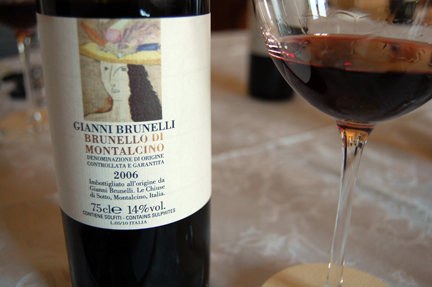
2006 Brunello di Montalcino (classic)
Elegantissimo nose! Meaty in the mouth but so bright and elegant! This wine is sourced from Chiuse, Olmo, and Rada.

2004 Brunello di Montalcino Riserva
YES! Acidity! Fruit! Savory and very tannic. Fantastic! One of the best wines I’ve tasted on this trip. Sourced mostly from Olmo with some fruit from Oliva.
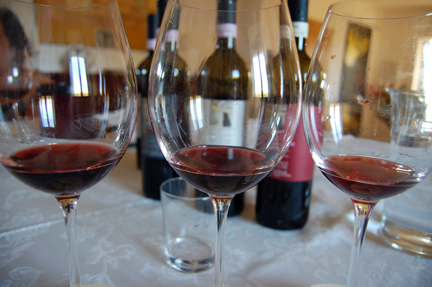
Of all the great wine made in Montalcino, Brunelli’s wines are among my all-time favorites. They always have been. They’re pure, they’re focused, they’re clean but meaty and savory. They’re delicious. They’re like a favorite song: they make me feel high…
And the family’s farm is one of the most magical places on earth.
Thank you, Laura, for our visit. And thank you for these exquisite wines.
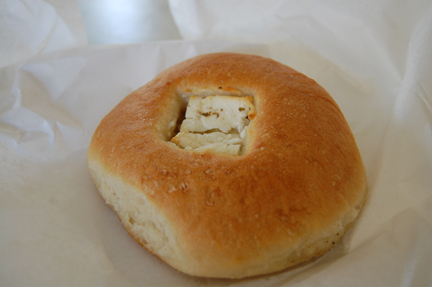
Una faccia, una razza… One face, one race… The Greeks love that Italian saying (which refers to the two nations’s shared Mediterranean kinship).
Some people call me a Zelig: I have one of those faces and no matter what Mediterranean country I visit, I generally fit in. And such was the case when I visited Greece in June for the Boutari blog.
But when we visited the small and wonderful village of Goumenissa in Northern Greece, the villagers could pick me out as a foreigner from a mile away.
And they couldn’t understand why an American, with a camera, was so fascinated by their town.
My money was no good there: when I photographed the fish monger, he prepared a package of fish for me; at the bakery, the baker wouldn’t let me pay for her breads…
Sometimes, when life becomes to hectic and I feel overwhelmed by the rhythms of modern living, I think about and long for Goumenissa, mon amour…
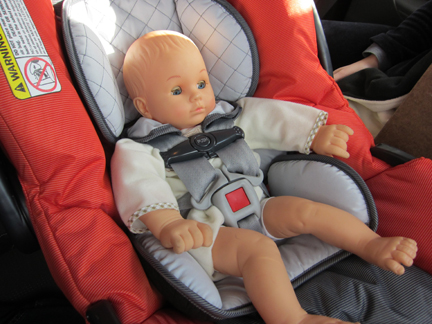
I’d like to think of myself as a pretty bright guy… capable and a quick study… When I took Baby P’s new car seat to be inspected, however, I learned that the folks at Austin Safe Kids could sure teach me a thing or two (my mistake, btw, for the record, was that I read and studied the manual for the car seat but I neglected to read and study the manual for my car).
We used a website called SeatCheck.org to find car seat inspection services and instruction in our area (it covers the entire U.S. btw). And I’m sure glad that we did: I learned that only 1 in 5 car seats in the U.S. are installed correctly. I’m happy to report that our car seats are now among the 1s.
The service is free (and you can donate on the spot) and the ladies who inspected my vehicle and schooled me were super nice.
I highly recommend them…

Above: the architects of Italian unification (1861). To the far left, Count Camillo Cavour, Italy’s first prime minister, a winemaker (Piedmont). To the far right, Baron Betting Ricasoli, Italy’s second prime minister, a winemaker (Tuscany). In the center, unified Italy’s first king, Vittorio Emanuele II, a winemaker (Piedmont). Ricasoli’s estate Brolio and Vittorio Emanuele’s Fontanafredda still produce wine today.
One the top wine professionals in Texas chided me yesterday on the Twitter. “Many other iconic Brunell(i?) are available” in Texas, he wrote. There’s “no great market demand” for Biondi Santi here, he Tweeted.
He was commenting on my post yesterday for the Houston Press (Absurdity of Texas Wine Shipping Law Reaches New Heights) and the heated dialog that followed on the Twitter. There was so much discussion that my editor at the paper asked me to write another, follow-up post today, which I playfully called Me and the TABC.
He had asked me to offer a few examples of iconic Italian wines that are not available in Texas (and I had been bemoaning the fact that I have to resort to unauthorized channels to obtain certain wines that I just cannot live without).
I responded with Biondi Santi and Castell’in Villa (the latter was also the subject of the post at the paper).
He responded nonchalantly, as if to say, well, if there’s no demand for those wines here in Texas, what does it matter?
Well, folks I’m here to tell you that in fact, it does matter.
It’s one thing to assume that if a wine isn’t available in Texas, it must not be “important.” And it’s another thing to take into account the fact that Italians consider Biondi Santi to be the greatest producer of Brunello di Montalcino, an icon, a benchmark, a historic domaine that reshaped the appellation. The same holds for Castell’in Villa in Chianti Classico. Or Bartolo Mascarello and Giuseppe Mascarello in Barolo. Or Emidio Pepe and Valentini in Abruzzo. Or Venica and Ronchi di Cialla in Friuli. I could go on and on: none of those wines are available in Texas.
But what’s worse is the fact that I cannot legally obtain them from an out-of-state retailer while in Texas (even though they’re readily available in the U.S.).
Of course, I travel to Italy 3 to 4 times a year, New York City 2 a year, and Los Angeles once a month: I can find and taste these wines whenever I want.
But young wine professionals in our state do not have access to these historic, not to mention delicious, wines.
My Texan colleagues and fellow wine educators can continue to base their course curricula on the Wine Spectator Top 100 list and the wines that score high with its editors and create “market demand”: Casanova di Neri is available here in Texas as is La Spinetta.
But a generation of young wine professionals in Texas will grow up without knowing the wines that the Italians consider to be the greatest expressions of their land, their history, and their (viti)culture.
It’s time for me to get off of my soap box. Thanks for reading… and thanks for loving Italian wine as much as I do…
Here’s a link to a post I wrote a few years ago: Why Italians are offended by our ratings and rankings. You might be surprised by some of the wine professionals who weighed in in the comment section.
I’m just trying to keep Texas (and the world) safe for Italian wine…
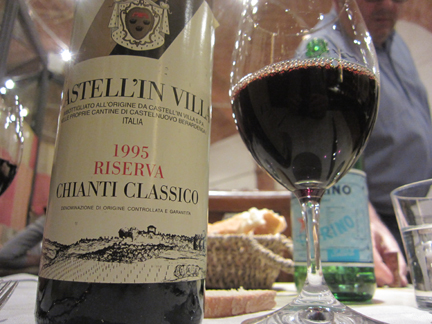
Above: My good friend Francesco treated me to a bottle of 1995 Chianti Classico by Castell’in Villa at the Enoteca I Terzi in Siena when I visited in October.
Castell’in Villa is one of my favorite producers of Chianti Classico. It’s actually one of my all-time favorite Italian producers: traditional-style, pure Sangiovese, grown in galestro-rich stony soils at excellent elevation and with superb exposure, and raised in large cask. The wines are remarkably affordable (I recently bought some of their entry-tier 2007 for under $25) and the winery continues to draw from what must be an astonishing cellar, offering importers library releases that stretch back to the 1970s (I’ve tasted back to 1979).
The only problem is that you can’t get the wines in Texas.
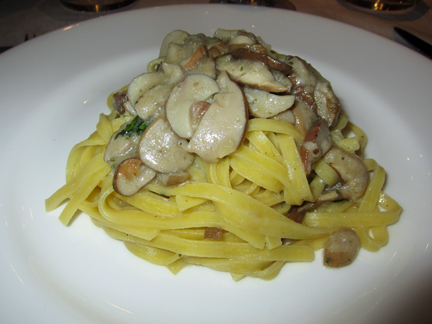
Above: We paired the 95 with housemade tagliatelle tossed with funghi porcini that night in Siena.
Well, actually, there’s another problem: the wine is readily available in the U.S. but Texas won’t allow out-of-state retailers to ship the wine here. It’s against the law. Unless, of course, you set up shop as a winery in Texas — even if you don’t make wine. Yes, a winery that doesn’t make wine…
I’ve already pissed off a lot of folks today with my post over at the Houston Press, “Absurdity of Texas Wine Shipping Law Reaches New Heights”, about Friday’s news that the Texas alcohol authority has granted a winery license to Wine.Com, eve though — in the TABC’s own words — Wine.com doesn’t produce wine. With the license, Wine.com will now be able to ship wine to retail customers within Texas.
I knew this issue would press some of Tom Wark’s buttons: he’s spent the last few years campaigning against the anachronistic, obsolete, gerrymandering laws that regulate retail shipping of wine in our country. I sent the link to Tom this afternoon and he responded immediately:
What’s really interesting is that Wine.com set up a physical presence in Texas and got the wine producers license in stead of a retailers license. You know why? Because a few years ago, when SWRA was suing texas for discriminating against out of state retailers, the TX legislature passed a law that limited Texas retailers to only shipping wine into the county where the physical retail outlet was located. However, a Texas “WINERY” can ship ship throughout Texas.
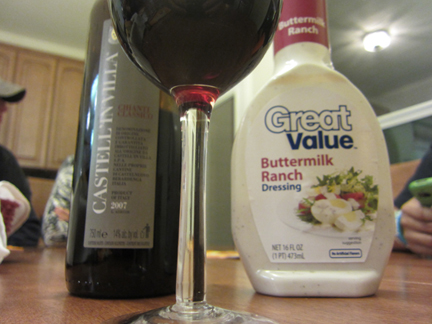
Above: A San Francisco-based retailer shipped me the wine regardless of the TABC restriction. It’s a great value and one of my favorite wines.
For the record, I side with many of my colleagues in the trade when it comes to the three-tier system in the U.S. I believe, like them, that the three-tier system helps to keep costs down and it protects the consumer by making it difficult for importers and distributor to monopolize brands.
But what the hell, yo????!!!! Ain’t America a free country? As a U.S. citizen, shouldn’t I have the right to purchase a bottle of wine from a retailer in San Francisco or New York and have them ship it to me?
Most retailers ignore the TABC restrictions anyway. And I have a secret for you: the rich folks in Texas? They spend so much money at the high-end retailers in New York and Northern California that the sellers will always find a way to get them their high-cost wine.
Me? I just want my under $25 bottle of Chianti Classico by Castell’in Villa! And by golly, it went great with a bottle of ranch dressing from Walmart! So there!

Just had to share this photo I snapped of Tracie P last week. Isn’t she lovely? :)
The day after Thanksgiving, we recycled her scalloped potatoes as a spuntino for out-of-town guests who came over for a visit…
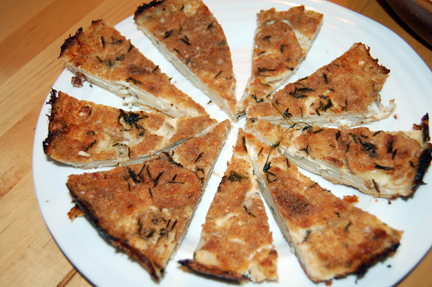
Did I mention that the girl can cook? ;)
A little bubbly helped to wash it down…

I always love the focus and precision of Jacquesson… one of our favorite houses (among those that we can afford!)…
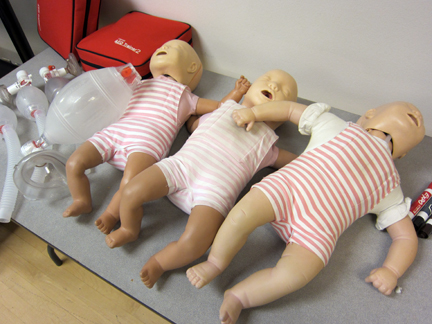
Vita servare is the motto of the Austin-Travis County EMS department. Vita means life in Latin and servare means to make safe, save, keep unharmed, preserve, guard, keep, protect, deliver, rescue (isn’t Latin awesome?).
Yesterday I completed my Pediatric and Adult CPR training at their main office.

I was the only layperson in the class: all the other participants were professional health care providers who were obtaining or renewing their certification (nurses, paramedics, etc.).
After 3 hours of performing CPR on manikins, man, I was exhausted! G-d bless all the folks who do this for living. We’re lucky to have them…
My heart filled with emotion and my blood with adrenaline when I held the infant manikin in my arms for the first time. I hope I never have to perform CPR on Baby P but I’m glad that I’m ready.
We’re just a few weeks away from our due date at this point. The discomfort is not easy to deal with but we’re hanging in there. I’m doing my best to make Tracie P as comfortable as possible. And, every day, I love her all the more for carrying our little one… My Italian friends call her la piccola Parzen…
And, btw, I passed! :)
I highly recommend the class. Here’s the info.

Buona domenica, yall…
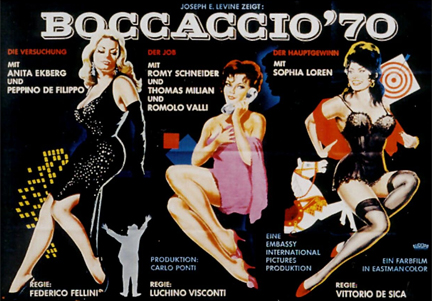
An allusion to Boccaccio in my post today for the Houston Press (on water and wine) was irresistible: citing the third novella, eighth day of the Decameron, I used a mention of wine in his description of Bengodi (the land of plenty) as an illustration of how water was commonly blended into wine in the middle ages. In the text, he describes a Vernaccia so good that no water was added to it.
Here’s the text in English (and here it is in Italian):
The fact that he points out that never a drop of water was found in the wine is an indication that wine to which water wasn’t added was considered superior in quality.
There are so many wonderful mentions of wine in the Decamaron: ahimè, if I didn’t have to make a living, I could collate them into a neat little book with a critical apparatus (a little philological speak there for you).
In the meantime, any excuse to revisit Boccaccio is a good one!
The tale is one of my favorites and is a great (and funny) read: English and Italian.
Buona lettura e buon weekend yall!
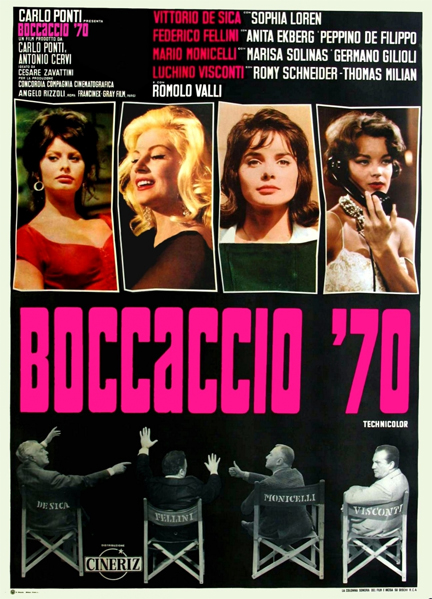
 Do Bianchi