My favorite restaurant in Naples? You’ll find it at the gates of hell! Yes, literally, the gates of hell.

This let me crave, since near your grove the road
To hell lies open, and the dark abode
Which Acheron surrounds, th’ innavigable flood;
Conduct me thro’ the regions void of light,
And lead me longing to my father’s sight.
For him, a thousand dangers I have sought,
And, rushing where the thickest Grecians fought,
Safe on my back the sacred burthen brought.

Virgil, Aeneid, Book 6

That’s Aeneas, the founder of Rome, speaking to the Sybil at the gates of the underworld along the banks of Lake Avernus in Pozzuoli (Naples), above.

Those familiar with the Western Canon will immediately recognize the scene: book six of Aeneas’ story is one of the most powerful works of ancient literature, emulated and imitated by generations of European writers, including Dante, who modeled his own journey through hell on that of the Roman hero.

Can you imagine my utter thrill when I realized my favorite restaurant in Naples is just a three-minute walk from the site of Aeneas’ descent? I practically fainted I was so excited!

Thanks to friends in the wine trade, I discovered the magical Akademia Cucina in the hamlet of Lucrino, a village in Pozzuoli.

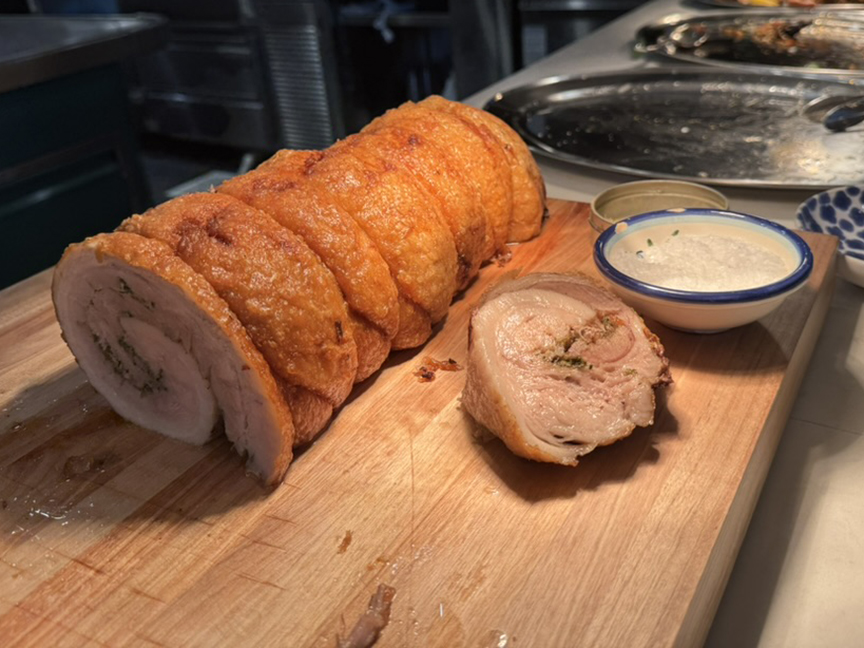
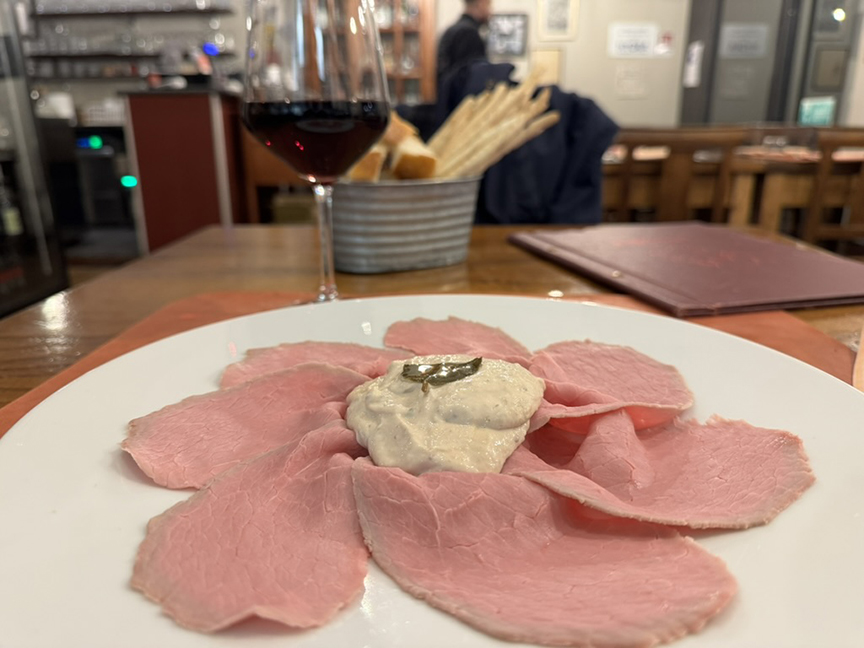
This was, hands down, the best dining experience of my 2024. Man, this place has it all: location, vibe, ridiculously good seafood, great wine list, and the perfect tone for a hedonistic community that likes to dine on the late side. I LOVED this place.

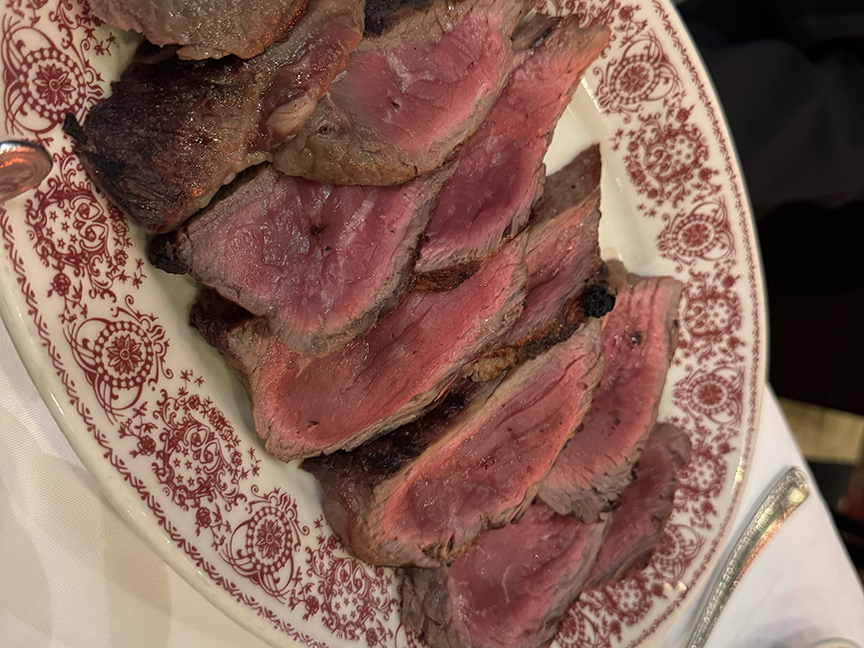
Here are some photos of what I ate and where I swam.

And wow, the nearby hotel where my buddies suggested I stay, Albergo delle Rose, was just my speed in terms of pricing and convenience.

There’s an urban light rail train that stops in Lucrino: a 45-minute ride to Naples proper (perfect) and connections to all kinds of little towns and gorgeous sea views; wonderful beach access across the road; a ferry from nearby Pozzuoli takes you to Ischia. It was a dream for me.

But the oneiric quality of my sojourn was mostly shaped by this locus, this “place” where Aeneas first made landfall and the Greeks first colonized southern Italy. History and literature came to life before me. It was a wonderful experience that I highly recommend for your summer tour.

Not just tariffs: the sinking dollar is threatening a broad swath of the wine industry.

Anecdotally, I’m hearing that many E.U. producers are choosing to skip major wine events in the U.S. this year.

A medium-sized importer in the U.S. recently sent me the following note:

    The next big threat is the weakening of the dollar vs. the Euro by 13% since January. If it keeps going this way for another six months at the speed it has been devaluing, then it won’t be the tariffs that put us out of business but the weak dollar. When I started importing in 2009 it was $1.53 to €1 and it has been $1.10 or lower for many years now. If it goes back up to even $1.35, I am going to have to significantly raise all of my prices and sales will slowly be strangled.

When you consider that the wine industry was already facing menacing headwinds before the tariffs and the sinking dollar, it becomes clear that the current crisis is existential for many operators. With no end to the tariffs in sight and growing economic uncertainty, the U.S. wine community is going to look starkly different by the end of this year.

In related news, the U.S. Wine Trade Alliance is soliciting comments on how tariffs and the value of the dollar are affecting small businesses:

    We need your immediate feedback on how the current trade environment is affecting your business. As the 10% tariff on imported wines continues, and with the real possibility of escalations to 20% or more in the coming months, your voice is critical in helping us convey the stakes to policymakers.

    Please take a moment to respond to the following questions:

    How is the current 10% tariff impacting your business?
    (Consider effects on hiring, investment, expansion plans, sales volumes, pricing, customer relationships, etc.)

    If the 10% tariff remains in place long term, what will the ongoing impact be on your operations?
    (Feel free to include the currency devaluation.)

    In 2.5 months, if EU–U.S. trade negotiations go poorly and tariffs rise to 20% or more, how would your business be affected?
    (We’re especially interested in how this would impact your viability, supplier relationships, and workforce.)

    Responses can be e-mailed to ESarnor@akingump.com. You may copy me as well. We are compiling member input to share with trade officials and congressional staff in the coming days. If you are able, a response on company letter head would be helpful.

    Please send responses by Monday, April 28th. Your feedback is essential to making the case that these tariffs are doing more harm than good to American businesses like yours.

Music and wine: Houston 4/27 (music), Austin 4/28, New Orleans 4/29, Charleston 5/1, Los Angeles 5/7.

Tariffs, schmariffs, it is the season again…

Please join me this Sunday 4/27 as we rock out Emmit’s Place in southwest Houston where we live. We’ll be doing open mic for kids and adults from 2-4; at 4 local middle schooler jazz outfit Rhytmix will perform (children of some of the top musicians in Houston, some of whom have been known to sit it!); and then at 5 my band, The Bio Dynamic Band featuring Katie White, will do a set.

This is a family-friendly event with comfort food and mocktails, adult beverages for the grownups… something for everyone.

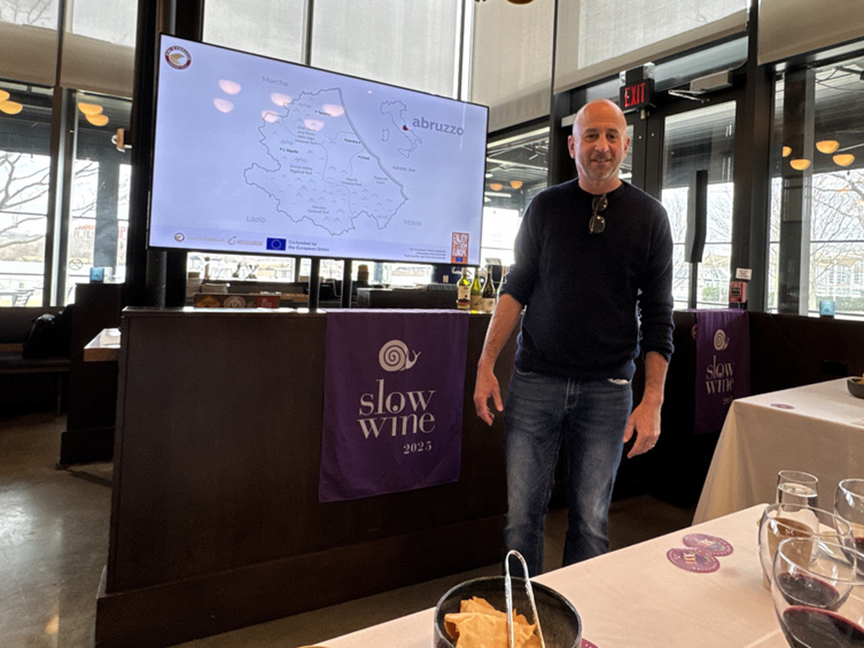
Then on Monday 4/28, I’ll be presenting an Abruzzo seminar, tasting, and lunch in Austin. Click here for details and registration.

On Tuesday 4/29, I’ll be presenting an Abruzzo lunch at The Tell Me Bar in New Orleans, my old friend Cory’s super cool wine bar. I am so geeked about this. It’s free to trade. Please message me to RSVP. So geeked for this!

On Thursday 5/1, I’ll be presenting another Abruzzo seminar, tasting, and lunch in Charleston. Click here for details and registration.

Finally, on Wednesday 5/7, I’m heading back to DTLA for a wine dinner at Rossoblu, my old stomping grounds. I love these events and we run a retail pop-up for guests who would like to purchase the wines after tasting them. Click here for details and registration.

Thank you for the support and solidarity. People in our industry are struggling, with many just hanging on a thread. Please check out this excellent article on the trade blog Seven Fifty: leading importers of family-grown wines from Europe are teetering on an existential tightrope. As one importer said, “we live six months to a year ahead — that’s our present. So the complete lack of ability to plan is crushing us.”

Better get used to drinking Arneis from Napa and grating “Parmesan” from Wisconsin. Nothing wrong with those products. But that’s what we are looking at six months down the road at this point. #ItalianWineStrong #thankyouforyoursupport

Happy Pesach, happy Easter! The holidays’ allegories of displacement and suffering seem very real this season…

Happy sixth day of Peseach/Passover (yes, it’s ongoing) and happy Easter this Sunday!

One of the things that strikes me about this year’s Passover-Easter season is that the holidays’ allegories of displacement and suffering seem very real this year.

A month ago, I met Kevin, a young man in his 20s. He lives in Houston with his blind mother and has a work visa that allows them — legally — to stay in the U.S.

A few days before I met him, he had been arrested in an immigration raid. Despite his 100 percent legal status, he was put behind bars and was slated for deportation.

Immigration courts don’t work like civil and criminal courts, I learned. For Kevin to be released and (rightly) fight his deportation, he had to pay bail. In the case of immigration courts, the entire amount — not a percentage — needs to be paid upfront.

An immigrant aid group was able to raise the money within the 48-hour time limit. Had they not, he would have been swept up into the byzantine U.S. immigration system and ultimately sent back to his home country. Thank G-d he is still here today to provide for his mother’s care.

On the occasion when I met him and his mother (at an organizing meeting), all the volunteers and immigrants present were asked to share what their “super power” would be if they had one. When it came to his mother, she said: I wish I could help all people who need it.

People — yes, people, human beings! — in our country are living the same nightmare of our ancestors in ancient Egypt. What were the Hebrews of that time if not migrant workers?

And how not to view Kevin as a Christ-like figure? He was so innocent, his intentions so pure: he just wants to provide a good life for his mother and himself. Christ had three days to rise from the dead. Kevin had just 48 hours to raise literally life-saving money.

This Passover and Easter season, we are forgetting politics and remembering that we are all human — all too human.

Happy Passover, happy Easter. G-d bless America. G-d bless Kevin and his family. G-d bless us all.

Spoiler alert: your grandfather didn’t know how to make wine. Wine speak needs a new voice. I think I found it.

Above: a natural wine dog at a natural winery in January.

The day after I posted about the new wave of wine education and perception (“I have seen the future of wine education and Their name is Luca”), I received the following press release (translation mine):

    “The ‘Wine of Memory’ is a wine from the heart. It melds together the values of connection and true hospitality,” says [the winemaker]. “I made it the way wine used to be made, the way my grandfather and father made it. They were faithful to the ancient farming traditions of the area… It’s a symbolic wine that seeks to evoke the values of a time in an era which seems to have few values available, a time when we struggle to give even something small to others.”

Only “111” bottles were produced, according to the release.

The timing was uncanny: I had just watched this brilliant reel by one of the leading voices of the new wine speak. I have translated Luca’s Socratic dialog below. It’s a conversation between “NATURAL” and “ITALIAN.”

NATURAL: I make wine the way that my grandfather used to make it.

ITALIAN: Spoiler alert: your grandfather didn’t know how to make wine.

NATURAL: He revived old vines that had been abandoned, a rare local variety that was practically extinct.

ITALIAN: It was Chardonnay.

NATURAL: He makes just a tiny amount.

ITALIAN: He signed up for a course on home winemaking and he uses grapes from Lidl [a supermarket chain].

NATURAL: He’s amazing. Just think, he still goes into the vineyard with bare feet.

ITALIAN: He smells kinda like shit.

NATURAL: It’s a partnership between these three grape growers who just love each other. They’re usually Umbrian.

ITALIAN: There was some bulk wine left over so we just threw it all together. And now it will ferment a second time… forever… forever… forever…

NATURAL: He only makes orange, ancestral wine. They are macerated for at least six months.

ITALIAN: Worst case scenario, you’ll use it to dress your salad. I really love salad.

Do you really want to drink a “symbolic wine”? Much too say but no space permitting. Stay tuned.

I have seen the future of wine education and Their name is Luca.

One of the most compelling data points I’ve heard all year is that alcohol sales in the U.S., including fine wine, have continued to grow at a steady rate since 2015.

Despite all the claims to the contrary, people in the U.S. have been increasing their wine consumption consistently over the last ten years.

I first heard this when a top Texas buyer and a leading Texas chef told a group of Italian food and wine producers that they are both seeing this 10-year trend in their Excel sheets.

The week after our Taste of Italy trade fair in Houston, where the buyer and chef spoke, the Times published the following graft that shows that, yes, even though there have been peaks and valleys, the growth is steady.

Screenshot via NYTimes.com.

In the light of the above, why are European wineries having so much trouble connecting with U.S. consumers (beyond all the current tariff madness)?

In my view, the disconnect is the fact that we are still talking about wine as if it were 2001. More than two decades after the advent of wine blogging, the advent of wine-focused social media, “natural” wine, and the whole “innovating while respecting tradition” movement, isn’t time to drop the suggested serving temperatures and food pairings from the tech sheets? I cite those two banal examples because they reflect anachronistic traces of how we perceive and market wine. Haven’t we moved past the “white with fish, red with meat” era? “Goest great with roast meat and aged cheeses…,” in case you happen to have those dishes handy.

As my own work is pivoting to the new era of wine culture in the U.S., I’ve been thinking a lot of the above.

And I have many thoughts to share about one of the most exciting wine communicators in a long while. His name is Luca and he lives on the second floor (Gen Xers, you know what I’m talking about).

Seriously, I met this dude in Brescia thanks to my friend Giovanni (of Franciacorta fame) and I was blown away by his approach.

Check out his Instagram here. Stay tuned for more inspirations…

Taste: Abruzzo and I go on the road later this month. And that’s not all…

From the department of “tariffs, schmariffs… the show must go on!”

It’s that time of year again and I’m super geeked to hit the open road: Abruzzo and I are going on tour the last week of April.

Monday, April 28
Austin
Il Brutto
click here to register

Tuesday, April 29
New Orleans
SECRET LOCATION
email me to register

Thursday, May 1
Charleston
TBD
stay tuned for details

I’m especially psyched for New Orleans where I have a special venue lined up (stay tuned for the reveal).

Giving a huge shout-out and sending warm thanks to my hardworking and fast-driving colleagues Gloria Paris, executor of the Charming Taste of Europe campaign, and Davide Acerra, communications director for the Abruzzo wine growers association. This project wouldn’t have been possible without their devotion, dedication, and professionalism.

Please join us as we taste through the south! Really excited for this trip.

In other news…

This morning’s WineBusiness.com e-blast delivered the news of a small distributor in Texas closing because of tariff pressure. It’s worth hearing what he has to say (it’s a clip from the local TV news). Small and mid-sized distributors were already disadvantaged by the three-tier love in my state. I imagine that states like Texas (Oklahoma, Louisiana, and Arkansas, stay strong!) are going to see the earliest instances of operators like him being forced to close.

One can only imagine what the U.S. wine scene is going to look like by the end of this year. Will enough of the small folks be able to hunker through and make it to the other side?

Better get used to drinking Zonin instead of Biancara.

But, hey, tariffs, schmariffs! Stay strong Italian wine! #ItalianWineStrong

In other, other news…

Stay tuned for more music and tastings/seminars:

April 25: Sweet Bordeaux in Houston
April 27: Open mic and 80s jams with my band in Houston
May 7: Puglia wine dinner at Rossoblu in Los Angeles

And if all goes well, we’ll be going back out on the road with Abruzzo in June.

Thanks for the support and solidarity!

VIDEO: my tariffs interview with Sapori del Piemonte (in Italian).

“It was an emotional interview,” wrote my longtime friend and colleague Filippo Larganà (above), editor of the widely read Sapori del Piemonte blog.

My heartfelt thanks goes out to him for letting me appear on his vlog series about Vinitaly, our industry’s biggest annual fair, which closes today in Verona.

At nearly every meeting during the fair, the first question from my Italian colleagues was “what’s going to happen with the tariffs???!!!”

I’m no expert on economics but I was happy to share my reading of the moment. Please see the video below (in Italian).

Thank you, Filippo!

I have lots to tell about my time on the ground in Italy this week. I’m on my way back stateside right now but I hope to get a solid post up tomorrow. Thanks for being here and thanks for supporting Italian wine. #ItalianWineStrong

Tariffs send shock waves through Italian wine community on both sides of the Atlantic.

Above: a rack of Italian wine in a retail shop in Tulsa, Oklahoma.

First the good news:

The new across-the-board 20 percent tariffs aimed at the E.U. are lower than once expected and nowhere near the 200 percent the U.S. had initially threatened. As one high-profile Italian wine grower said yesterday evening in an interview with a national daily, “it could have been worse.”

More good news:

The new tariffs allow exceptions for products “on the water,” in other words, on a U.S.-bound container ship. Importers of E.U. products have up until midnight the evening before the deadlines to get their products out of the block. Many importers were fearful that they would be slapped with the tax for products already en route.

Not great news:

The big story in the Italian papers this morning isn’t about wine (although last night, the initial freakout focus was wine). It’s about Parmigiano Reggiano exports to the U.S. which were already being taxed at 15 percent. Parmigiano Reggiano producers are now facing a 35 percent tariff on their wheels. I guess we better get used to grating “Parmesan” from Wisconsin.

The hard truth:

Italy exports more wine, worth roughly $2 billion, to the U.S. than any other E.U. country.

The opening paragraph of the lead story in the Times, “A Stunned World Reckons with Economic Fallout from Trump’s Tariffs,” really put it into perspective:

“Laptop computers from Taiwan, wine from Italy, frozen shrimp from India, Nike sneakers from Vietnam, and Irish butter. These products are found in homes across the United States.”

The above quote gives you a sense of how much Italian wine relies on the U.S. market for sales. By most accounts, roughly a quarter of all Italian wine production heads to our shores. Of all the major E.U. producers of wine, Italy is without question the most vulnerable and exposed in the trade war.

Vinitaly, our industry’s annual four-day trade fair, begins on Sunday. I’m heading to Italy tonight to attend. And I’ll be reporting on my conversations with Italian wine producers and U.S. wine importers. There’s going to be a lot of pain, a lot of sacrifice. But we will get through this. #ItalianWineStrong!

A great evening in Tulsa helped me forget wine trade troubles.

Giving a warm shout-out this morning to Vintage Wine Bar in Tulsa and the 30 wine professionals who came out to taste with Emma Baudry from the Union des Vins Doux de Bordeaux (part of the Charming Taste of Europe Campaign).

Tulsa and its wine community have enchanted me since I first came to Oklahoma for wine in 2020 (just two weeks before the closures began). Before Houston took that title in the 1970s, the city was the world’s oil capital. The pre-Reagan era brought wealth and people to this midwest outpost, once a major hub along Route 66.

Today, Tulsa’s restaurant scene is hopping and the wine culture is cosmopolitan. It reminds me of Austin when I first moved there in 2008 to be with Tracie. Like the Texans back then, people here know great wine and they are thirsty to expand the city’s wine cred.

Thank you to the wonderful staff at Vintage Wine Bar (man, the 2015 Turley Zinfandel Mead Ranch was outstanding!). And thank you to all the great folks in Tulsa who came out for the event. It was wonderful to see every seat taken! Thank you!

And, wow, as we tasted through sweet wines from Bordeaux, for a fleeting moment, I could forget about the looming news that tomorrow will bring for our industry.

Today, on the eve of Vinitaly, the Italian wine world’s main event in Verona, we are all holding our collective breath waiting for an update.

Importers with “wine on the water” are praying that their wines will be exempt from the taxes. For some, it could be ruinous if they are not excluded from the tariffs.

All are quietly hoping that their home or focus countries might be spared.

The entire supply chain is bracing for rough waters ahead, regardless of the final figure.

The one thing we all know for certain is that the uncertainty has been unbearable for our industry.

Tomorrow will tell. And as the saying goes, “tonight, there’s nothing left to do but dance.”