A prayer for peace in the Middle East.

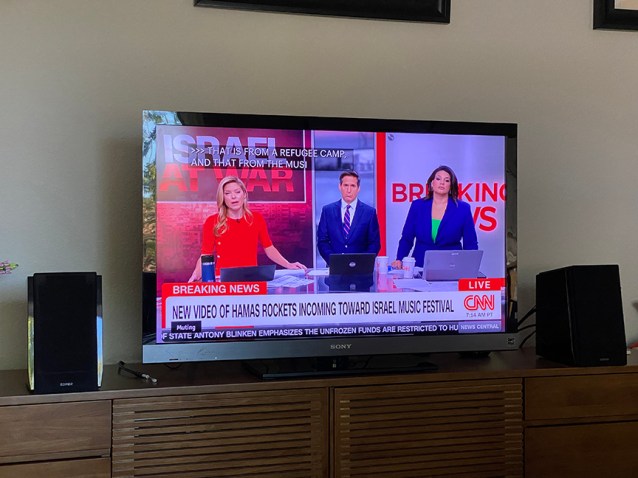
Like households of American Jews across our country, we have been glued to our television over the weekend as we watched the new, horrific war between Hamas and Israel unfold.

Our girls, ages 10 and 11, are too young to understand the historical events that led the world to this moment. But they know that they are connected to Israel through their father’s family. They know that we have deep ties to this — what must seem to them — mythical land so far, far away.

“Thousands of Americans have loved ones in Israel. I’m one of them.” That was the title of Jennifer Rubin’s opinion piece for the Washington Post this morning.

For so many families in the U.S., there is a cousin on a kibbutz, a retired uncle in a coastal community, a child at university, friends from Hebrew school days who work in the tech sector…

May G-d bless them and keep them safe. May G-d protect all human life there and everywhere. And may we all say a prayer for peace for all — all — our sisters and brothers in the Middle East and beyond.

Finally made it to the legendary Michael’s on Naples. What an awesome restaurant!

For years, San Diego and Long Beach wine friends have been raving to me about Michael’s on Naples, the top destination — by all accounts — for fine wine lovers there.

Last night, I finally made it there and wow, what an awesome restaurant and wine program!

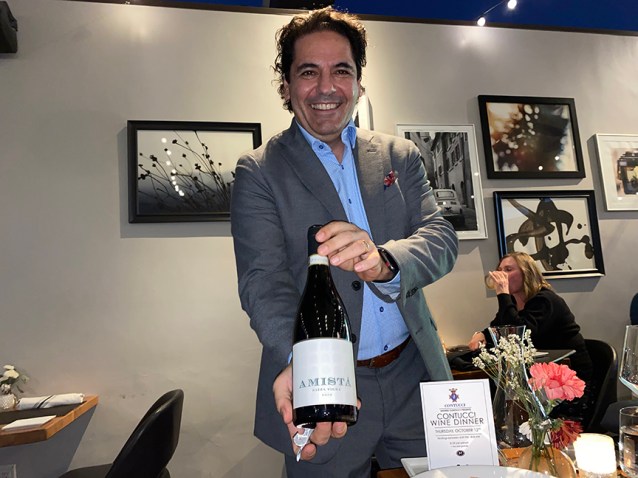
That’s wine director and general manager Massimo Aronne, above.

His list includes a solid offering of California (folks here, as elsewhere in the state, like to drink domestic, after all). The prices were so reasonable that I was tempted to do a bottle of Kistler, one of my guilty pleasures.

But I was with Italians and we were going all Italian last night. And Massimo’s Italian program is one of the best in the country in my experience.

There’s plenty of top Tuscany and Piedmont for you to dive into. But the thing that blew me away was the breadth of “Italian wine people” wine.

A bottle of aged Lugana by Montonale, anyone? It’s one of my favorite Italian wines of all time and Massimo had it on his list at an obscenely low price.

We ended up drinking a bottle of Derthona by Borgogno, also extremely reasonably priced (not far off from retail actually).

The food was Italo-California. The salumi were expertly sliced. The texture and flavor of the lasagne sheets reminded me of my Emilia days, although the creative fillings brought me back to the state of my upbringing (I grew up in San Diego).

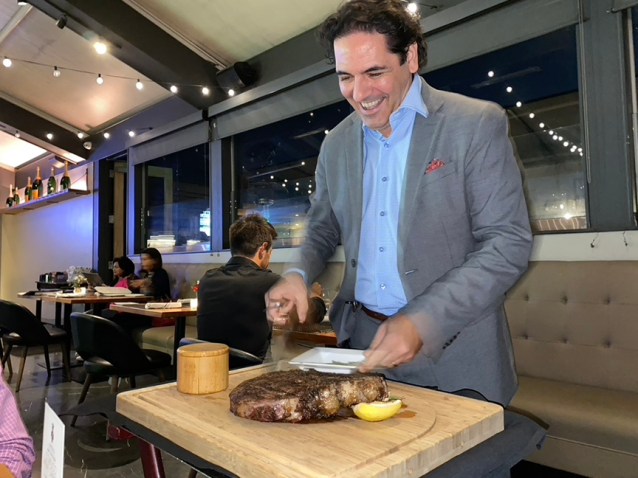
The pork chop and ribeye were so flavorful that they had all of us swooning.

I really loved this place and can’t recommend it enough.

And of course, I’m super proud of the fact that Massimo is working with Amistà, the Nizza winery that I rep in the U.S. I love the wines and the people who make them and it’s so awesome to see people like Massimo who have the depth of knowledge in Italian wine to appreciate it.

What a great night! And thank you to Massimo and everyone who took such great care of us. Special thanks to Paolo Cressi of Ethica Wines who set it all up.

Taste Burgundy with me in Boulder this month, Piedmont in Houston, and Nizza in Hong Kong (wtf? yes, Hong Kong!).

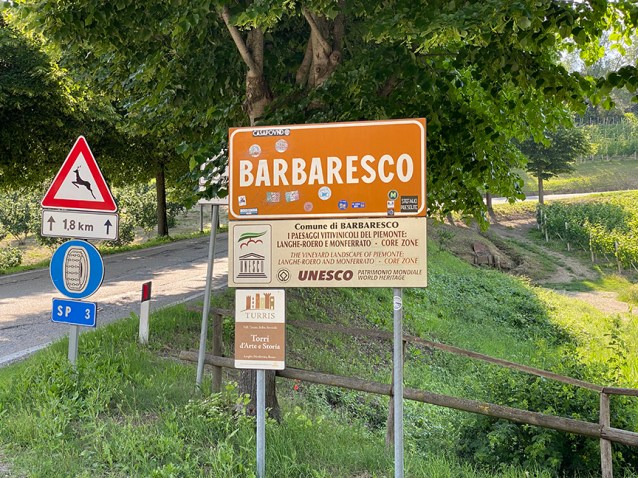
On Monday, October 30, I’ll be leading a spectacular Piedmont tasting at the Vinello Wine Club in Houston. We’ll be pouring cru Barolo and Barbaresco among other wines.

October is going to be one hell of a wine month for me!

For folks in West Texas, I’ll be speaking at Taste of Italy El Paso next Thursday (October 12).

And then I’ll be heading to Boulder, Colorado for the Boulder Burgundy Festival (Friday-Sunday, October 20-22). I’ve been the event’s official blogger and media consultant for more than a decade. And this year, the organizers have asked me to be part of a panel on “Rethinking the Négociant.” There are still spots available for the Frasca marquee dinner (not many places left though), the Sunday morning seminar (where I’ll be presenting the panel), and the Grand Tasting (a great event where you can taste a ton of extremely high end wines). See the links to reserve.

Back in Houston, I’ll be leading the second event in the Vinello Wine Club series (Monday, October 30). The theme is “Piedmont Collectibles” (something I know a little about) and we’ll be pouring cru Barolo and Barbaresco among other great wines. Houston folks, please come out for this: The last one was fantastic and it’s a great deal for five wines for $45 per person (tax included). Thanks in advance for the support with this project. It’s a really special one for me and the last get together was truly magical.

And then on Halloween, I head to Hong Kong to pour for my client Amistà, producer of Nizza, at the JamesSuckling.com Great Wines of Italy event (Friday, November 3). I love the owner of the winery, Michele Marsiaj, and I love the wines. It’s been fantastic for me to get to interact with winemaker Luca D’Attoma (I’ll be connecting with Luca in November when I’m in Italy to teach at Slow Food U.).

And don’t forget Taste of Italy at Eataly in Dallas on November 10.

There’s even more, including some Abruzzo dinners I’ll be doing on the coasts later this year, and a couple of educational trips to Abruzzo. But I’m out of breath at this point!

Thanks to everyone who has supported me over the years. It’s great to be enjoying such a wonderful chapter in my career in wine. Thank you. I couldn’t have done it without your solidarity. Now wish me luck and most of all — wish me speed!

Hybrid grapes make their Italian debut with the 2023 harvest.

During a September 2022 visit to the Anselmi winery in Soave, there was a worker burning weeds in the small parking lot across the street. He had a small blow torch and a canister of propane on his back.

As grower and winemaker Roberto Anselmi accompanied his guest to his Suzuki four-wheeler, which was parked in said lot, he explained that they were experimenting with weed burning because they want to avoid the use of any pesticides or other synthetic products.

Anselmi’s quasi-religious fervor in eliminating chemicals from the world was echoed this month in a press release issued by the family: for the first time ever, they wrote, they will be making wines using disease-resistant hybrid grapes that they have been experimenting with for more than two years.

But the reason they offer might not be what the naked eye expects.

The severe weather events brought on by climate change have made grape growing and winemaking increasingly challenging for Europeans. And there has been much chatter in recent years about how disease-resistant hybrids are one of the paths forward.

But as Anselmi points out, severe weather — prolonged heatwaves and drought, extreme rainfall and hail, etc. — has also caused grape farmers to rely increasingly on synthetic fungicides to protect their vines from disease.

Viticulture represents only three percent of Europe’s total agricultural production, he notes. But roughly 65 percent of fungicides used in European agriculture is employed by winemakers.

Disease-resistant hybrid varieties could reduce that number significantly, he believes.

Although not certified organic, Anselmi has practiced and proselytized chemical-free farming for decades. It’s a major part of his family’s approach to high-quality winemaking.

But as they underline in their statement, they are convinced that disease-resistant hybrid grape varieties are going to be a key element in combating Italy’s growing soil pollution.

The 2023 vintage of their iconic San Vincenzo is being made with three hybrids: Aromera, Riesling Resistente (“Resistant Riesling”), and Souvignier Gris.

I can’t wait to taste it.

Disclosure: the Anselmi statement came across my desk thanks to my client Ethica Wines.

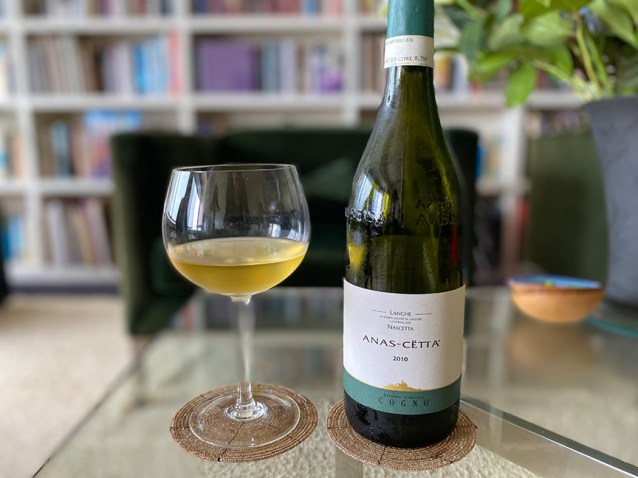
Valter Fissore’s 2010 Cogno Anas-Cëtta (Nascetta) was astounding.

Back in 2010, when wine blogging was trending like Taylor Swift, an Alba-based media company asked me to lead a group of writers to Piedmont. The occasion was “Barbera Meeting,” an early iteration of the big Barbera tasting and dinner they do each year in Nizza.

Barbera was the focus but the firm also organized some visits to other clients of theirs. One of those was Cogno in Barolo.

I’ve always liked Valter Fissore’s wines a lot (2005 Barolo Ravera anyone?). But the star of the tasting that day was a nine-year-old 2001 Anas-Cëtta (Nascetta). We were all really impressed with how beautifully this wine had aged.

So, when I got back to the States, I bought a case of the 2010 and put it in my cellar in San Diego. Over the years, we drank and enjoyed the wines immensely. But I saved one bottle for longer-term aging.

Last weekend, when Tra, the girls, and I were in La Jolla for my mom’s 90th birthday celebration, she and I opened the last bottle from our cellar after everyone went to bed.

It was astounding! It had a little bit of funk when first opened, but then it immediately blew off as the wine started showing tireless and extremely fresh white and stone fruit, with just a slight note of nuttiness and delicate oxidation (barely any). We were simply floored by this wine.

A pretty good investment for $25, no?

Chapeau bas, Valter! I’m so glad you turned us on to this extraordinary wine.

Support Do Bianchi by drinking great Nizza and Chianti Classico. Fall retail offering. Thanks for your support!

One of the ways that I keep the lights on here at Do Bianchi is through my retail and wholesale wines program in California.

It’s something that I started many years ago, took a break from, and then relaunched last year.

For this year’s (first) fall offering, I’m featuring two extremely compelling wines that I’ve been working with this year.

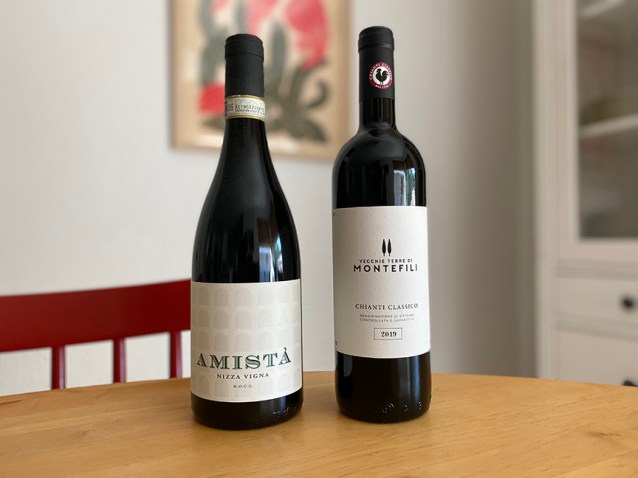
Starting late last year, I started consulting with a newish/oldish winery in Piedmont, Amistà, producer of Nizza — 100 percent Barbera from the most coveted subzone for the variety.

The winemaker is Luca D’Attoma, one of Italy’s top enologists and a passionate advocate for organic and biodynamic farming.

The farm is owned by my client and great friend Michele Marsiaj. He’s spared no expense in officially converting the farm to organic (certification will come next year although the vineyards have been farmed using organic practices literally for decades; biodynamic certification is on the horizon as well).

This is Luca’s first wine in Piedmont and he’s shooting for the stars. The 2019 Amistà Nizza is his first release for the winery and while I’m confident that it will age gracefully for the next 20 years or so, it’s drinking super beautifully right now, with elegant red and black fruit notes, wonderful freshness, and impressive depth and complexity.

I really love this wine and the people who make it. I’m pleased to be offering it this week at a competitive price.

The second wine is the 2019 Chianti Classico by Vecchie Terre di Montefili in Panzano in Chianti.

A lot of you will remember that I featured the 2018 last year.

This is another wine that I’ve been really excited about. It’s organically and biodynamically farmed by a young woman, Serena Gusmeri, who’s been making waves with the reviews she’s been getting from the top mastheads.

This is 100 percent Sangiovese from the highest altitude farm in Chianti Classico’s unique “biodistrict,” one of Italy’s first entirely organic communes. It’s still young, with a richness buoyed by the wine’s nuanced black fruit flavors and mouth watering acidity.

The soils are all alberese limestone and galestro clay, the classics of Chianti Classico. It’s a very special property and one of the new old school wines that we’ve been loving on our table.

Both wines are available with a 10 percent discount if purchased as part of mixed six pack and with a 15 percent discount with a solid six pack.

I also have all kinds of fun wines — Prosecco, whites, rosé, and other reds. I even have a few bottles of wonderful Champagne. Just let me know what you need and I’ll put together a proposal for you.

Prices below include tax (but not shipping/handling).

Available only in California. Wines will ship early next week. For San Diego residents, I can deliver the Amistà Nizza in the original wooden case (super cool) for solid six pack orders.

Thanks so much for your support and please just let me know what you need and I’ll do my best to make it happen.

These are great wines and I’m super stoked to share them with you.

Amistà 2019 Nizza $58
Vecchie Terre di Montefili 2019 Chianti Classic $33

Please email me at jparzen [at] gmail [dot] com and I’ll send you a proposal right away.

Please stop calling Barbaresco “normale”! Please!

Most Italian-focused wine professionals in the U.S. face a sticky linguistic challenge: how to distinguish between the classic expression of an appellation and a vineyard-designated or riserva category.
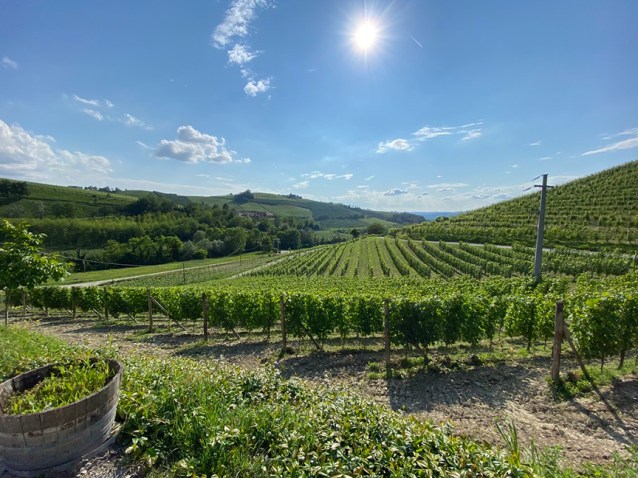
And it’s not an issue confined solely to purely anglophone wine pros. Italian speakers often get tripped up by the tongue-tying conundrum.

For many, the knee-jerk reaction in such cases is to call the classic wine normale or normal.

Here’s how the Oxford English Dictionary defines normal:

“Constituting or conforming to a type or standard; regular, usual, typical; ordinary, conventional.”

I’m using Barbaresco as an example but this problem stretches across a broad swath of wines where single-vineyard and riserva designations are commonly used.

The moment you call the wine “normal,” it’s as if you are saying that it’s “ordinary” or “conventional.” Think of how many classic wines for which this couldn’t be farther from the truth!

And depending on who you talk to, many Nebbiolo growers, for example, will tell you that classic, blended expressions of their wines are often the ones they hold to be most representative of their appellations. It’s only in recent memory that single-vineyard and riserva designations have proliferated. This trend, in my view, is more driven by the market than the production.

There are also plenty of winemakers who decide not to use a designation, even though they could. Should those wines be penalized because their producers chose not to give them a fancy label?

My recommendation and my practice is to call non-vineyard and non-riserva designate wines “classic.”

And let’s not even talk about the people who call the classic expressions “regular.”

Wine isn’t gasoline, is it?

Shanah tovah! Happy new year! This year we celebrate grandma’s 90th birthday. A blessing.

Please consider giving to Unicef relief efforts in Libya. Click here for more ways to give.

Shanah tovah, everyone! Happy new year!
May your new year be filled with light, joy, and good health!

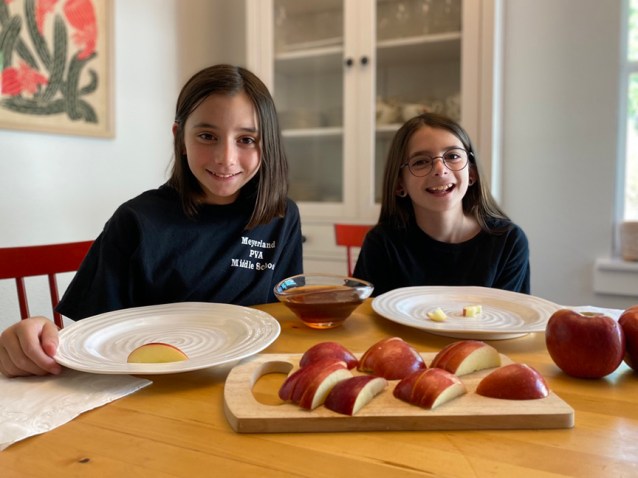
Every year for the holiday, we eat apples and honey to remember life’s sweetness.

This year we have something special to celebrate: grandma (my mother Judy) is turning 90 next week. We’ll be flying out to San Diego to spend the weekend with her. And she’s asked me to organize a wine tasting for her and her friends. We’re all looking forward to it.

Georgia (above, left), age 11 going on 12, started middle school at the end of last month. She’s enjoying playing violin in the orchestra and her creative writing elective.

Lila Jane (right), just turned 10 and starting 5th grade, is now a “big kid” at her elementary school. She’s one of the top cello players in her class and says she wants to be a music teacher.

Poo, poo, poo… we have a lot to be thankful for. Too many blessings to count.

Every year before the High Holidays, I turn to the excellent writers at Chabad.org for inspiration for the year ahead.

Here’s the passage that I can’t stop thinking about:

Our Sages tell us that when we emulate G‑d to provide new life to others with generosity and love, this paves the way for the awesome gift of Rosh Hashanah, the gift of new life, that G‑d lovingly grants every one of us.

Happy new year.

Do scores still matter 15 years after “Parkerization”?

It seems like another world, doesn’t it?

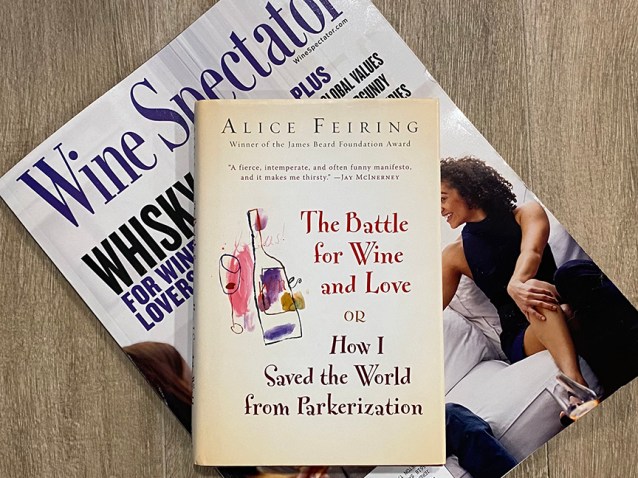
The iPhone had only been existence for a year, Facebook was just beginning to take off, the financial crisis was in full swing, and Alice Feiring released her controversial book, The Battle for Wine and Love or how I Saved the World from Parkerization.

The year was 2008 and a bold new wine culture was emerging in the U.S. By that point, 30 years had passed — yes, three decades! — since Robert Parker introduced the world to his 100-point scoring system in 1978.

Wine Spectator adopted the 100-point system in 1985, some seven years after it was first employed by Parker. (The score-less masthead had been launched two years prior to Parker’s Wine Advocate, in 1976.)

But it took nearly a quarter of a century before Alice’s shot that was heard around the world.

It’s incredible to think how many years passed before anyone really seemed to care about wines scores — except for consumers and the winemakers themselves.

But by the end of the first decade of this century, “Parkerization” had become public enemy number one for the newly emerging hipster wine crowd.

At Slow Food University where I teach wine communications in the grad program, the students look up with glazed-over eyes when I do an overview of how scores affect wine sales and production. Most of them haven’t even heard of Parker or Spectator — no joke.

On the one side, detractors argue that scores reify wine through a purely subjective exercise.

On the other side, supporters contend that scores have made European wine more accessible to a generation of Americans. President Chirac didn’t make Parker a Chevalier of the Legion of Honor for nothing.

Today, retailers and collectors across the U.S. rely on scores. In Asia, by all accounts, scores are a key element in how wine is marketed.

There’s more than some validity to the argument that historically scores have helped to raise the status of wine as a luxury product across a wide demographic, global swath. To that point, aligning oneself with those against scores is also a means for promoting a wine.

Future generations may not care about them, but they continue to drive the industry in intuitive and counter-intuitive ways.

Congratulations to my client and above all friend Michele Marsiaj and his winemaker Luca D’Attoma on the 95 point score their Amistà Nizza Riserva has received from James Suckling. It’s the first Nizza, they believe, to be awarded such a high rating. Now, that’s something, isn’t it?

Southern and central Italian harvest impacted by extreme and unpredictable weather.

Above: picking dates came about two weeks later than they did in 2022 according to WineNews.it. “Harvest has finally begun,” wrote the Stanig winery (Friuli) on its social media today. “The challenges of climate uncertainty in recent months have made us focus even more of our energy and attention on the work that needs to be done.” Image via the Stanig Facebook.

In a series of posts this week, one of the leading Italian-language resources for wine industry news, WineNews.it, reports that central and some parts of southern Italy will experience a drop of 20-40 percent in production owed to widespread outbreaks of peronospora (downy mildew), severe hail events, and a prolonged heat wave with record temperatures.

In the north, there will be a slight drop in production: -2 percent in Piedmont and -4.5 percent in Emilia-Romagna. In Veneto there will be an increase of 5 percent and in Lombardy 15 percent.

But as you head south, the numbers start to drop: -20 percent in Tuscany and Latium; -25 percent in the Marches; -30 percent in Sicily and Puglia; and -40 percent in Abruzzo.

In Tuscany, Chianti Classico has been severely impacted, the authors of the posts report. According to the presidents of the Chianti and Chianti Classico consortia, there will be areas with significant drops (up to 40 percent) while others will experience a much smaller decrease, if any.

Earlier this year, the Brunello consortium predicted a 5 percent drop. But its president hasn’t spoken publicly about the crop forecast since late July. Some observers believe this estimate to be overly optimistic.

Even with widespread issues and challenges caused by climate change, including record high temperatures this summer, Italy should see just a 12 percent drop in its overall production.

See the WineNews.it posts here and here.