Amorotti shoots for the natural wine stars, a young/old Abruzzo estate on the rise.

I cannot share any of the photos I took at the Amorotti winery in the picturesque village of Loreto Aprutino, which lies roughly 30 minutes by car inland from the Adriatic coast in Abruzzo.

That’s because legacy grape grower and winemaker Gaetano Carboni wants to isolate the unique community of bacteria and yeast that populate his ancient cellar. Visits are extremely limited (I was honored to be received) in part because he doesn’t want to upset the balance of microorganisms that have allowed him to ferment spontaneously in the space since his first commercially released vintage in 2017.

Why are photos not allowed? He let me take them but asked me not to publish them. Gaetano, I discovered, is the nicest person and extremely polite and proper. But he is afraid that too much exposure will ultimately bring too many visitors and threaten the delicate biome he has captured.

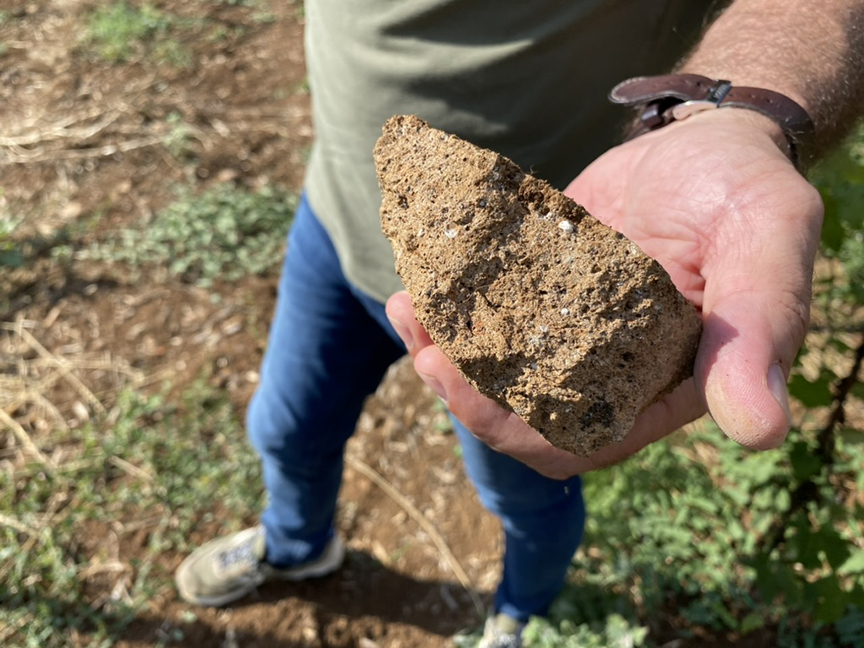
What I can show you is the above photo of the Gran Sasso massif, snapped in the village of Cappelle sul Tavo, about halfway along the windy road that leads to Loreto Aprutino from the seaside.

As you drive up to the hamlet, you realize that you are surrounded by seemingly endless olive groves. The olive oil raised there is considered by many to be among the best in the world.

But when you get there and look back on the sea, which you can see clearly from the hilltop village, you can literally taste the dolce aere, the delicate breeze that kisses the groves and the patchwork of vineyards interspersed among them. Then you look to the west to the massif and you notice how it protects the hamlet like a sleeping giant.

It’s then that you realize what a unique and special growing zone this is.

Loreto Aprutino is home to some of Abruzzo’s most famous and oldest wineries: Valentini, Ciavolich, Torre dei Beati, just to name a few.

Gaetano’s family can trace their history back to the Renaissance, just like those above. But it’s only been in recent years that he has begun making wine from vines that were once reserved solely for family consumption. His family, like the Valentini, for example, are among the region’s most important producers of olive oil.

The wines are excellent, the story compelling. I highly recommend them. And when you do visit one evening before dinner on a chilling winter night, look out for the cats that rule the streets of this magical village.

A fantastic Italian Merlot tasted while on a secret mission.

Owing to the sensitive nature of the weekend’s top secret mission, details of where we dined cannot be revealed.

I did however want to share my joy in drinking a bottle of mostly Merlot from Lis Neris in Friuli. I’ve known and followed the winery for years and have loved the wines.

When I saw a 2016 Merlot-Cabernet Sauvignon blend for a reasonable price, I snagged it and man, was I rewarded with freshness, rich but buoyant fruit, hallmark Merlot flavors, and a great pairing for a perfectly aged prime New York strip topped with Roquefort.

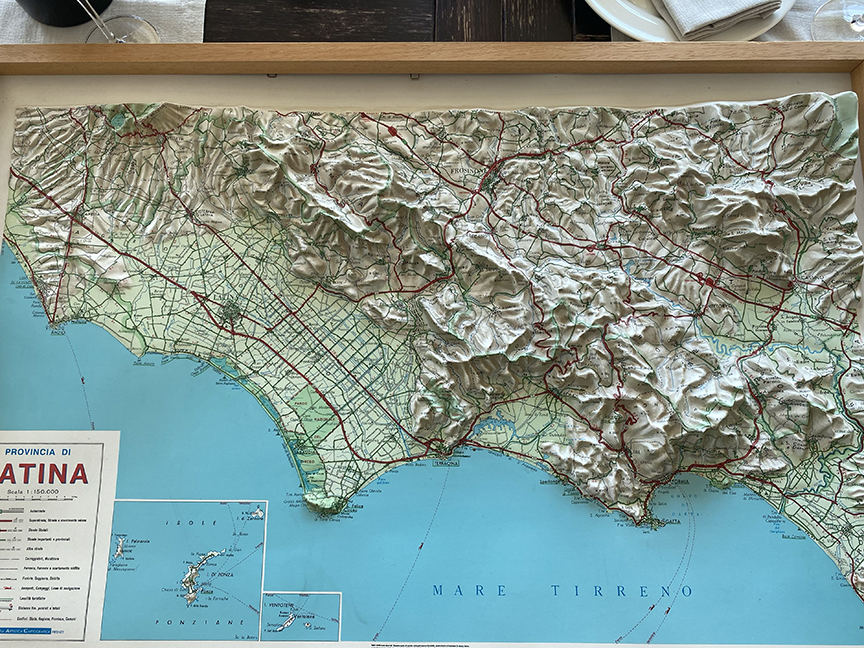
As much as we all (wrongly) dissed Merlot from Tuscany and Umbria in the 2000s (me included), I never stopped drinking Merlot from Friuli (and from Veneto) where diluvial and limestone soils deliver some of the best Italian expressions of the grape variety (the other place where I’ve had great Merlot is the volcanic-rich soils of Latium).

At eight years from harvest, the Lis Neris was at its peak of fruit and earthiness. What a great wine! And what a great value!

Oh, and the secret mission, you ask? It was a success!

Rock out with me Sunday, 2/16, at Emmit’s Place in Meyerland (Houston)! Our first gig in the neighborhood! Please come out and support local music and local businesses.

I’m super psyched to announce my band BioDynamic’s first gig at Emmit’s Place, a local and historic hub for music in the Meyerland area where we live. Nearly every musician I’ve met in Houston talks about this place and its wonderful owner Susan — a HUGE supporter of local music and our community.

We will be playing mostly 80s and 70s covers from 3-5pm. Another neighborhood band — of 11 and 12-year olds — will be opening for us. They are smoking good!

BioDynamic is Katie White on vocals, Richard Cholakian on drums, Lucky Garcia on bass, and me on guitar.

Please come out and enjoy a beverage and support local music! We are working on food options as well. Hope to see you then! Thanks for the support.

Here’s the Facebook event link for those who would like to share.

The Italian wine world mourns the loss of one of its brightest lights, Giampaolo Gravina, 58.

Social media and the internet overflow with heartfelt tributes to Italian philosopher, critic, educator, and wine writer Giampaolo Gravina, who died today.

According to numerous posts by both mainstream and wine-focused media, Giampaolo, 58, passed away in Friuli where he was attending a wine event. A sudden and unexpected health crisis was the cause according to posts on social media.

The red thread that pulses through all of the remembrances is Giampaolo’s gentle yet immensely powerful way of writing and talking about wine. I believe many of my colleagues would agree that his unique approach to wine and wine criticism was a reflection of his personality — brilliant, erudite, wise, reserved, precise, judicious, and beautifully human.

As noted Florentine sommelier and wine writer Andrea Gori put it in a social media post, “Giampaolo, you were the exception.”

Author of numerous books on wine, including well-received tomes on Burgundy and the Italian new wave, he was also a longtime wine critic for L’Espresso, the high-profile news weekly. He also contributed to academic journals with scholarly essays on aesthetics, the focus of his studies at the University of Rome. These included his musings on wine tasting as a cultural and intellectual experience and enterprise.

Giampaolo was also my colleague: we were both professors in the graduate program at the Slow Food University of Gastronomic Sciences in Pollenzo, Piedmont.

I knew and tasted with him many times over the years. He would often tease me that I was his one friend from Texas who wasn’t interested in sports or the Houston Rockets — passions of his.

Please head over to social media to see the tide of posts about his unending warmth and humanity. The world is a dimmer place today without him.

Sit tibi terra levis Ioannes Paule.

Screenshot: Intravino.

Franco D’Eusanio, grower, winemaker, polymath, Abruzzo pioneer.

Few in the U.S. know Abruzzo grower and winemaker Franco D’Eusanio (above) and his wines (Chiusa Grande). But in his native Abruzzo, his life and work are the stuff of legend.

He comes from a family of viticultural pioneers in Abruzzo. His father ran one of Italy’s most important wine grape nurseries and singlehanded helped the region to modernize its training methods.

Franco’s own work consulting with Abruzzo wineries has also reshaped grape growing practices in the region. But it is arguably his steadfast belief in organic viticulture and his vision for Abruzzo growers that will define his legacy as one of the region’s all-time greats.

I had tasted some of Franco’s wines over the summer during a dinner and tasting at the winery. But I had yet to spend time with him walking his vineyards and talking about viticulture.

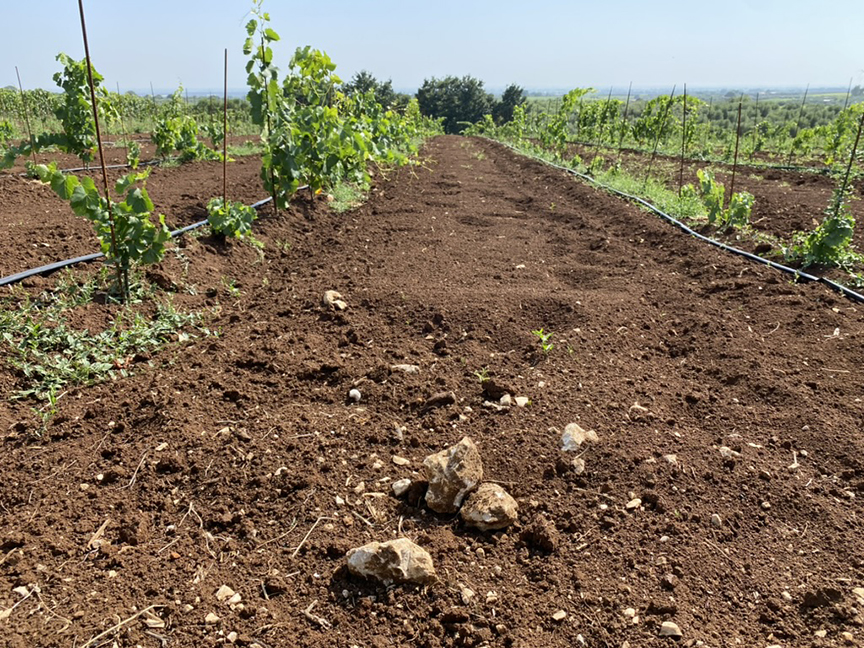
He surprised me (and frankly blew my mind) when he started talking about unusual training methods he’s experimented in his quest to lower — yes, lower — acidity in the must. Tilling methods of his clay- and marl-rich soils is another key element, he explained, in his mission to create balance in his wines.

During my previous visit, I swooned over his stone-fermented Trebbiano “In petra” (vinified using a stone palmento, to borrow the Sicilian term). On this occasion, he poured me a macerated Trebbiano that I also loved and a grape I had never tasted: Maiolica, a rediscovered local variety, which delivered a light-colored but gently tannic and delicious red. It’s just another example of how he’s pushing the limits of Abruzzo viticulture.

After our tasting, I asked Franco what he studied at university. He started out with pure physics (!!!) but easily drifted toward agronomy and the family business.

I loved how an overarching vision forms his approach to growing and vinification. Producing wines with a perfect balance of acidity and phenolics is what guides him in every decision he makes.

I also loved his Abruzzo sheepdogs. Those are wounds from wolf bites on his head (below)! What a brave and loving dog. I didn’t think he was going to let me leave the property! He wanted to shepherd me!

The wines have some availability in the U.S. I highly recommend them.

Best Moscato d’Asti? Find it at Elio Perrone. (Or “Why wine blogging for no apparent reason gives me joy.”)

Something extraordinary happened on my recent trip to Italy: I found myself immensely enjoying the act of wine blogging for no apparent reason.

A few colleagues and I had a day off and so we spent it not focusing on work but just visiting wineries we love already or have yet to explore.

I tasted the wines of but had never physically visited with Stefano Perrone of Elio Perrone in the tiny village of Castiglione Tinella (“castle of the barrel” is a facile but apt translation) where a preponderance of limestone soils make it a top zone for Moscato d’Asti DOCG.

Stefano’s Moscato d’Asti is simply one of the best wines I’ve ever tasted from the DOCG. It had the signature freshness of a great Moscato d’Asti but it also had an electricity to its rich fruit, buoyed no doubt by the acidity that Castilgione Tinella’s famous subsoils express in the wines.

Moscato d’Asti is all about a balance between the intense sweetness of the natural (not refined!) sugar of the grape berry and its acidity.

There are some other great Moscato d’Asti wines out there but man, this one is unforgettable, the kind of wine you’d drink throughout a meal. Can you imagine this wine with Texas BBQ?

I also really loved Stefano’s blend of Chardonnay and Moscato (just about 10 percent), “Gi,” a wine that, again, was buoyed by the soils there.

And for the record, Stefano is also known locally for his Barbera, also excellent.

But the thing I loved the most about visiting Stefano was how his aesthetic, beyond the wines, permeated his entire “habitat.” From the works of art that adorned the walls and the labels to the pseudo-brutalist style of the cellar to his low-key style of working and living.

It was a reminder of why I — we! — started wine blogging in the first place: wines were a means to experience richly populated worlds otherwise impenetrable for mutton-headed city dwellers in search of a meaningful connection between land, mind, and soul.

Thank you, Stefano, for an unexpected and much enjoyed treat. Thank you.

Happy anniversary Tracie P! I love you!

Tracie P, it’s been 15 years since we got married and 17 years since we first started dating. Happy anniversary!

I still get a flutter in my heart with every time you write me “I miss you” and “I love you.” I really do. I still can’t believe that someone as beautiful as you could love someone like me. But it’s true and I am grateful every day — poo, poo, poo! — for your love and our life together.

Do you remember these lyrics I wrote for you, nearly 10 years ago now:

Fast forward to a time, a couple years from now
And then rewind to find the reason
In the where and what and how
The woman brought the very best out of you
When she said I do

It’s so true: you have made me a whole soul again and your love has given me the strength and courage to be the person I have always wanted to be.

It’s been 13 years since Georgia was born, 11 since Lila Jane came into this world.

Watch her hold the babies
When the thunder makes them cry
Hear her tell them that she loves them
And you’ll wonder why it took so long
To get here from that day in 1975
Doesn’t it feel good to be alive?

Tonight we’ll celebrate by going out to dinner at a new, chic Mexican restaurant in our city.

We won’t be budgeting like we used to when we ate at all those down-and-dirty Tex Mex places in Austin when we were first dating.

But the thrill of going out together has only grown brighter in my heart. It truly has. Thank you for giving me the absolute best years of my life.

Happy anniversary, piccinina. I love you and I can’t wait to stare into your eyes tonight as we celebrate.

Trump viewed from Italy.

During my early years as a student in Italy in the late 1980s, it wasn’t uncommon for my classmates to invite me to their family’s home for Sunday lunch. Their parents and sometimes their grandparents would join us, eager to ask me questions about the U.S. and tell me about their lives.

Whenever the elders would talk about wartime in Italy, their stories would paint themselves before me like a Neo-Realist film.

Nearly 30 years have passed since then and none of the grandparents are around anymore.

Many of them suffered greatly during the war and nearly everyone lost a loved one, even those progenitors who were card-carrying members of the Fascist party.

Over the course of my travels, I’ve met plenty of right-leaning folks in Italy who are not ideologically opposed to Trumpism. I’ve probably met more who find his policies repugnant. (Their preponderance may be due to the fact that I tend to hang-out with lefties.)

But for all Italians, the images of roundups and raids evoke memories of the rastrellamenti (from rastrello, a rake) conducted by the Fascists and later by the Nazis in their country from 1922-1945.

Few survivors remain today but their children still carry with them the generational trauma endured by their forebears.

One of my best friends in Italy comes from a family that hid Jews in the cellar of their winery during the war (there was a concentration camp nearby). There is a government plaque displayed at the winery entrance honoring their family’s courage. She, obviously, wasn’t yet born. Her uncle, also born after the war, has spoken often of the ways Jews were treated there during Fascism and the subsequent German occupation.

Traveling to Italy for the first time since the election, I discovered that even my most conservative friends are bewildered and nonplussed by the first two weeks of the new administration. They still can’t even seem to wrap their minds around why or how Trump was re-elected.

I can only imagine what their grandparents would say.

Celebrate MLK Day with us in Orange, Texas.

Tracie, the girls, and I invite you to celebrate Martin Luther King Day with us in Orange, Texas.

On Monday morning, we will be marching in the historic MLK Day parade. See details here.

MLK Day is always an inspiration for our family: to stand up for what is right and to be better community members.

But over the years, I’ve found that the Orange march is something special and extremely compelling. Please join us! It’s just an hour and a half drive from Houston.

Following the march, Tracie and I will be heading over to the site of the neo-Confederate memorial at the intersection of I-10 and MLK Dr. where we hold our annual protest. (Yes, the Sons of Confederate Veterans, those cowardly assholes, built their “memorial of the [breaking] wind” on one of the city’s main arteries.)

Those who join us will also see the MLK billboard that we raise each year, overlooking the neo-Confederate totem.

It’s not an event for kids. But it is an occasion that reminds the Sons of neo-Confederate Bitches that conspicuous displays of hateful and hurtful iconography is no longer acceptable — even in MAGA America.

Please join us and I believe you will find the experience to be as powerful as we do.

See details here.

We hope to see you and we wish you a meaningful and purposeful MLK Day!

DM me for more info.

I’d never tasted an Aglianicone until late last year. I liked it a lot.

One of the great things about studying Italian viticulture is the field’s endless mosaic of terroirs, traditions, and hyper-local grape varieties. It’s encyclopedic in breadth!

I had never tasted an Aglianicone until late last year while visiting and working with old friends in New York.

Taking a glance at Ian D’Agata’s remarkably long entry for Aglianicone in his Native Grapes of Italy, I toppled down through the rabbit warren of putative mistaken identities. There is so much debate swirling around the origins and genetic makeup of this variety that there are only known unknowns.

At one point the writer and ampelographer throws up his hands, smugly writing that “the fun never stops when identifying Italian grapes.”

What I can tell you is that the De Conciliis Aglianicone was delicious, surprising me with its buoyant fruit and hints of earthiness, not as tannic as you would expect an Aglianico to be (De Conciliis makes some of the best Aglianico imho).

I liked it a lot and from what I’ve read, some are looking at Aglianicone because of its natural resistance to vine disease — highly important in changing climate times.

Sommeliers are going to have fun with this one.