Prosecco DOCG named UNESCO World Heritage Site

Above: a photograph taken in the hills of Prosecco di Conegliano e Valdobbiadene during the 2018 harvest (via the Villa Sandi Facebook).

In a tweet posted early Sunday morning (EST), UNESCO (the United Nations Educational, Scientific and Cultural Organization) announced that the hills of Prosecco di Conegliano e Valdobbiadene have been officially “inscribed on” the World Heritage list, a coveted designation that adds the Prosecco DOCG appellation to an exclusive club of sites recognized for their cultural uniqueness, beauty, and significance.

The following statement appeared yesterday on the UNESCO website:

    Le Colline del Prosecco di Conegliano e Valdobbiadene (Italy) โ€” Located in north-eastern Italy, the site includes part of the vinegrowing landscape of the Prosecco wine production area. The landscape is characterized by “hogback” hills, ciglioni โ€“ small plots of vines on narrow grassy terraces โ€“ forests, small villages and farmland. For centuries, this rugged terrain has been shaped and adapted by man. Since the 17th century, the use of ciglioni has created a particular chequerboard landscape consisting of rows of vines parallel and vertical to the slopes. In the 19th century, the bellussera technique of training the vines contributed to the aesthetic characteristics of the landscape.

With 55 sites included in the list as of 2019, Italy has more designations than any other country in the world (see the complete list on the Italian Wikipedia here). Other sites include the archeological excavation at Pompei in Campania and the viticultural landscape of Langhe-Roero and Monferrato in Piedmont.

The hills of Prosecco di Conegliano e Valdobbiadene were considered but not included in the list during last year’s meeting of the UNESCO World Heritage Site Committee. They are now the eighth site to receive the designation in Italy’s Veneto region.
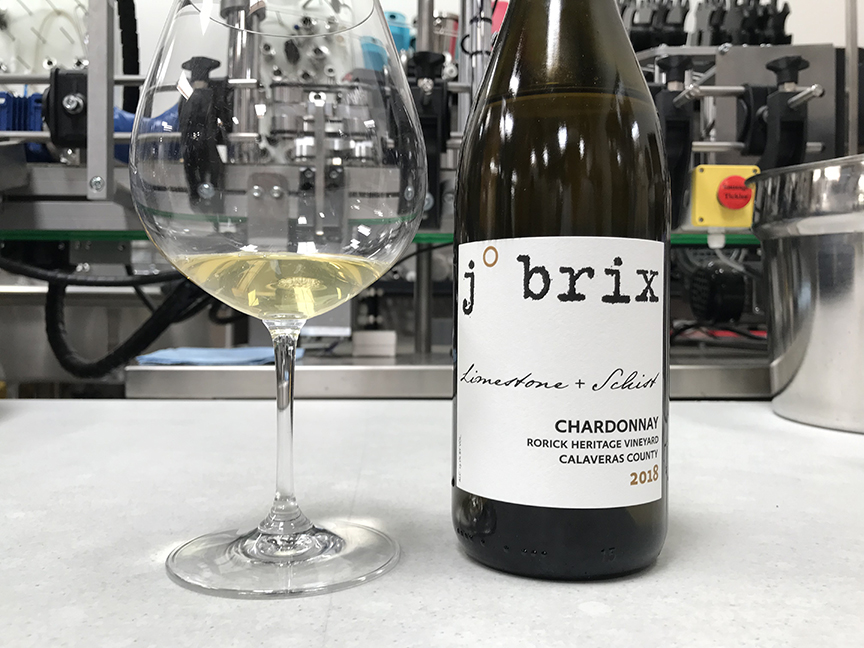
J. Brix Chardonnay from Santa Barbara Calaveras County blew me away and other great wines (and guitars)

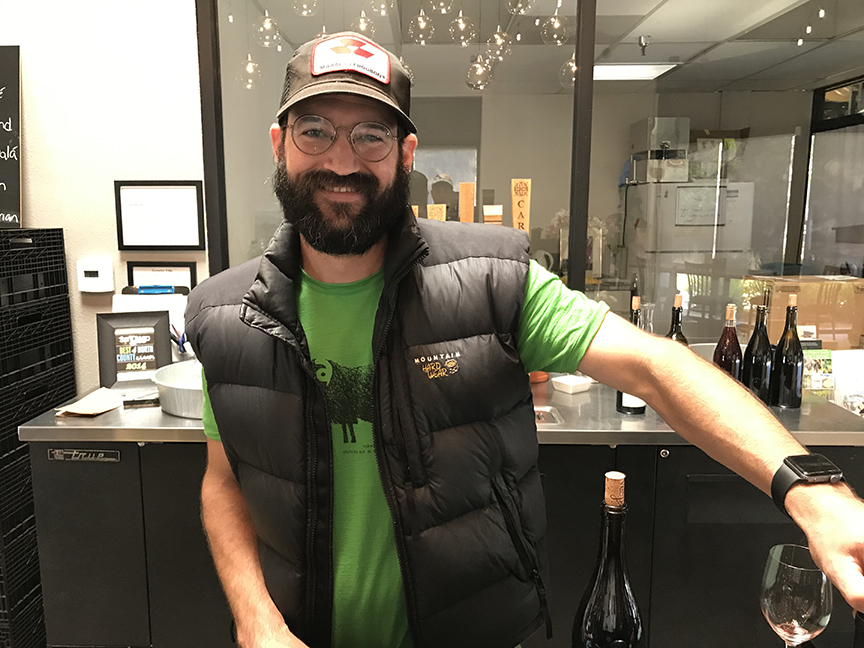
That’s Chris Broomell above, co-owner Vesper Vineyards in north county San Diego, one of the most compelling winemakers working in the state imho.

Writing on the fly I am this long holiday weekend in San Diego where I’ve been tasting with winemakers like Chris for the Slow Wine Guide 2020 (and playing some guitar).

I’m always impressed by the way he talks about his wines and the nascent revolution in San Diego viticulture. The fruit has always been here, he points out. But the hegemonic winemaking style never reflected โ€”ย never translated โ€”ย the quality that San Diego can produce.

But the wine I can’t stop thinking about is the J. Brix Santa Barbara Calaveras County Chardonnay I tasted this week.

I had tasted Emily and Jody Towe’s wines on many occasions over the years and have always enjoyed them immensely (I had them on my list at the now defunct Sotto in Los Angeles where I ran the wine program for nearly eight years).

But this wine really takes it over the top in terms of the depth and nuance. It opens with primary Chardonnay flavors (tropical fruit and banana) but then unfolds its layers-upon-layers of savory herbs, minerality, and ripe and dried stone fruit.

I can’t wait to taste Tracie on this wine. She is going to flip out (I’m planning smuggle a couple of bottles back to Texas where they are still illegal).

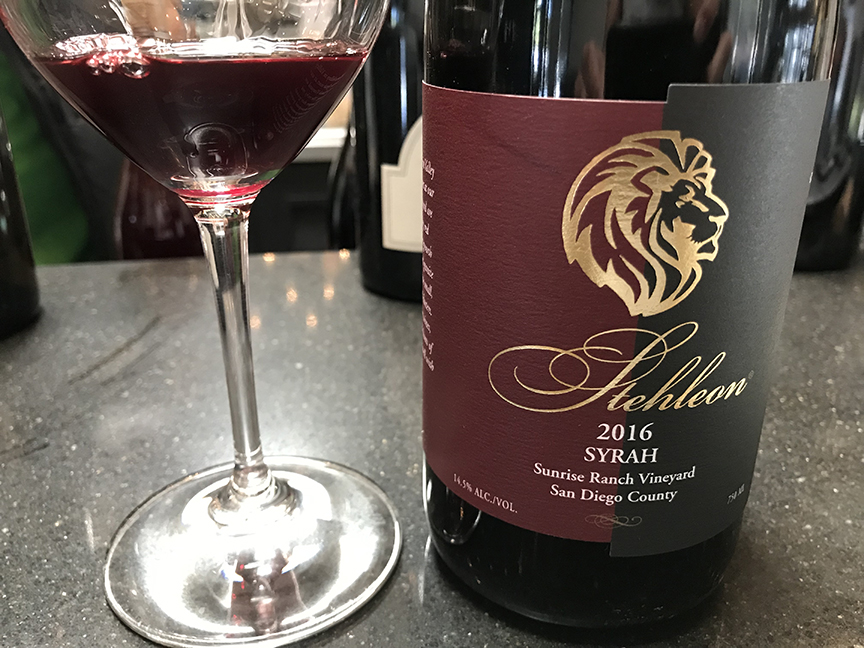
Another wine that surprised me with its depth was this Syrah by Chris’ wife and partner Alysha Stehly, another winemaker to watch imho. I’ll be visiting and tasting with her tomorrow before I head back to Houston.

I’ve only been here a few days but have tasted some truly spectacular wines โ€”ย all of which land with affordable pricing btw.

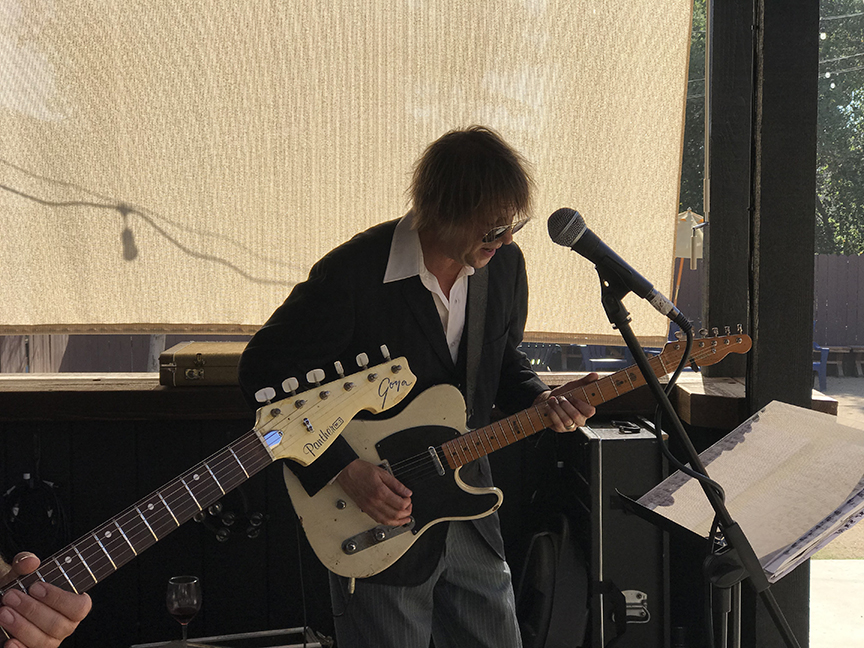
But the biggest treat of my sojourn was getting to sit in with the magical Dave Gleason (below).

He’s a true virtuoso of the Telecaster. I’m nowhere in his league but he generously lets me sit in with his band when I’m in town.

We played blues and country yesterday out at the Grand Ole BBQ Flinn Springs in El Cajon (where, btw, the Texas-style brisket was completely legit, melt-in-your-mouth liquid delicious).

Dave is a Doug Sahm of our generation, a musical polymath and one of the sweetest people you could ever meet.

Tonight I’ll be playing the whole evening with one of his bands, the Born Fighters, at Beaumont’s in La Jolla (where I grew up). All the stars from the La Jolla music scene are coming out for this one.

If you’re in town, we’ll take the stage around 9 and play until midnight or so. Beaumont’s is pretty rowdy and things can get a little out of hand there. So come ready to rock!

The wine world’s culture wars have left millennials behind

Above: students in the Master’s in Wine Culture and Master’s in Food Culture at the Slow Food University of Gastronomic Sciences in Piedmont, Italy.

More than any other, three posts captured and commanded the attention of wine trade members, observers, and enthusiasts this month.

Master of Wine Jancis Robinson’s “Naturally Divisive” on “natural vs. conventional” wine culture for the Financial Times (republished and available to all on her tasting note portal); Cathy Huyghe’s interview with natural wine advocate Alice Feiring, “Alice Feiring on Satire and Misogyny in the Wine Industry,” a response and reaction to a predictably misogynic parody of Alice’s work; and New York Times wine columnist Eric Asimov’s “Itโ€™s Time to Rethink Wine Criticism” on the dismal state of winespeak today.

At the center of each of these pieces, one character looms ominous above all others: Robert Parker, Jr., the twentieth-century creator and disseminator of the hegemonic 100-point-scale score and tasting note model for wine criticism.

Jancis is the only one who doesn’t mention him by name but he’s in there. A genie in a bottle, he arrives via a pair of top-rated Bordeaux wines from the 1982 harvest โ€”ย the same “near-mythical” vintage, as Jancis calls it, that launched his name, brand, and career as America’s most famous wine writer.

“His influence grew in the mid-1980s,” writes Eric for the Times, “particularly with his unconditional, flamboyant praise for the 1982 Bordeaux vintage…”

Parker more than any other writer, perhaps unjustly so, represents the realm of what has been inaptly called “conventional wine.” It’s a category that exists only inasmuch as it is the polar and polarizing opposite of “natural wine.”

“A very significant proportion of the wine establishment,” writes Jancis, “roll their eyes at the very mention of natural wine. On the other hand, there is no shortage of converts to natural wine who… will not sully their or their customers’ palates with wine they do not consider natural. They have a tendency to lecture the world on the iniquities of conventional wine.”

The terms of that dialectic were forged once and for all in 2008 when Alice published her now landmark book, The Battle for Wine and Love: or How I Saved the World from Parkerization (Harcourt).
Continue reading

Alba has a new progressive wine bar (FINALLY!): Petricore…

petrichor, n.

A pleasant, distinctive smell frequently accompanying the first rain after a long period of warm, dry weather in certain regions. Also: an oily liquid mixture of organic compounds which collects in the ground and is believed to be responsible for this smell.

From the Oxford English Dictionary (online edition).

It’s been a long time coming but I’m happy to share the news that Alba โ€”ย one of the world’s greatest wine capitals โ€”ย finally has a progressive wine bar. FINALLY!

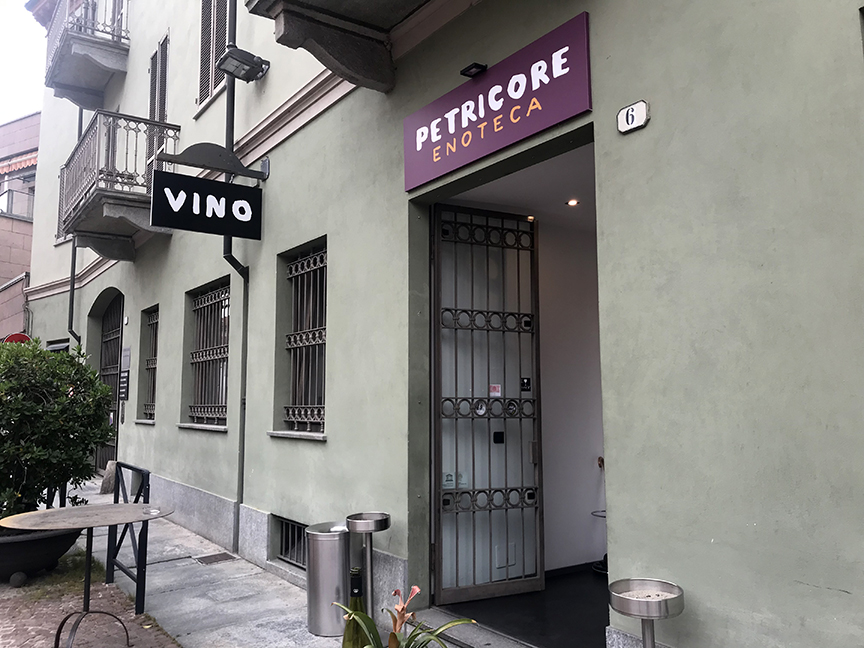
The joint is called Petricore Enoteca (as in petrichor).

It’s run by a lovely couple of wine professionals, Rebecca Ruatasio and Carmine Pessolani, whom I had the distinct pleasure to meet and taste with the other night.

The town of Alba liesย smack-dab in the heart of Barolo and Barbaresco country and it receives a tide of wine lovers and tradesfolk each year.

But as surprising as it may be, itย isn’t exactly the most welcoming destintation in Italy when it comes to people looking to connect with the more playful, experimental, and funky side of wine life.

A friend treated me there to a reclassified bottle of white Burgundy the other night. Think of that! Hipster Chardonnay in Alba! If I hadn’t tasted it myself, I still wouldn’t believe it.

Humans cannot live by Nebbiolo alone. And from what I’ve heard through the grapevines, Petricore has been a warmly welcomed addition to the Langa and Roero wine scene.

I can’t recommend it enough.

Just four more days of teaching at the Slow Food University of Gastronomic Sciences in Bra. On Monday, my last night, Natale Baricchi and I will be playing a couple of acoustic sets at L’Alfieri here in town. Come on by!

Old(est) school dining in Piedmont? Ostu di Djun… look no further!

Last night found me, guitar in hand, at the Ostu di Djun in the hilltop village of Castagnito in the heart of Roero country (on the west bank of the Tanaro river, which divides southern Nebbiololand).

Some believe its Piedmontese name comically ironic: Ostu di Djun means literally osteria di digiuno or fasting tavern. But it’s hard to tell. Nothing can be taken for granted in this crazy, enchanted, and enchanting restaurant.

What’s for certain is the food is all old(est) school, all the way.

When my friend Natale and I sat down for dinner last night, the owner Luciano asked us if we wouldn’t mind sharing our table with two other dudes. One turned out to be the legacy owner, the son, of one of Piedmont’s hottest Michelin-style restaurants (I won’t reveal the name so as not to humblebrag).

He and his buddy told me that they eat there at least three times a month and whenever they can.

For our first course, we all shared family-style tajarin with ragรน and agnolotti, the classic ravioli from Piedmont. And for our second course, they ordered heart and sweetbreads. Me and Natale ordered liver.

All three of them remarked that they like the food there so much because it reminds them of what they’re grandparents used to feed them when mom and dad were at work each day.

I can already hear Tracie P rolling her eyes and hoping that I was able to drink natural wine last night.

No, we drank classic Pelaverga and then Barbaresco, strictly from magnum, the only bottle format that Luciano serves.

(All is good, Tra… well, kinda… but it was worth it!)

It was a wild and raucous night that culminated in a rollicking set of covers performed by me, Natale, and the resident piano player Giorgio.

I regret that between the banter and the Bacchanal, I didn’t have much a chance to photograph the food in the dimly-lit room, which brimmed with Italians and foreigners.

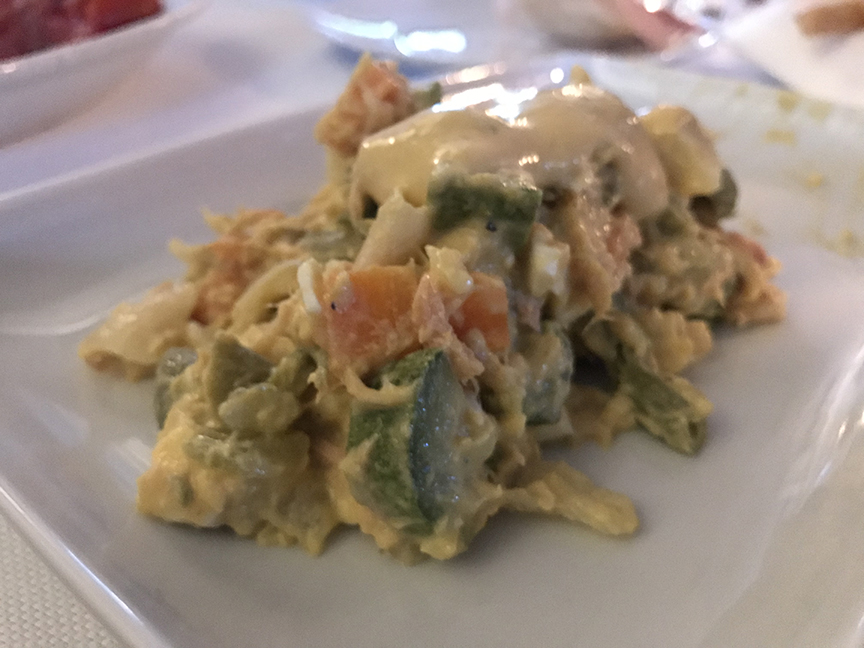
That’s the raw beef they serve when you arrive (above, top) and the Piedmontese standby insalata russa (second photo). Both were utterly delicious. So were the pastas and the offal.

Old(est) school, all the way.

Luciano says he wants me and Natale back to do another set soon. I’d be back in a heartbeat if I weren’t so busy teaching and keeping up with work back home in America.

It was one of those magical nights that only seem to happen in Italy… Haven’t had one of those in a while and man, it felt pretty friggin’ good.

Ostu di Djun has no website, it seems.

But you can find it on the Google here.

Slarina, the next Piedmont grape you’ve never heard of, is coming to a town near you…

No one knows for certain where the name Slarina comes from but Torino university researchers believe it might come from the Piedmontese word sinrรฉna and related Italian cenerina, a reference to the bloom that commonly appears on this red grape’s skin (ceneri means ashes in Italian, hence the association with bloom, the powdery deposit sometimes found on the berries).

I finally had the chance to taste a couple of bottlings of Slarina when I visited my friends at the lovely Cascina Iuli in Montaldo di Cerrina in Piedmont’s Alessandria province over the weekend.

One was from a nearby farm where the owners have only recently begun growing and vinifying the grape. The other was from my hosts’ estate, where grower Fabrizio Iuli, known for his deft hand at lo-input winemaking, has already produced a handful of vintages from this erstwhile forgotten Piedmont variety.

Italian agriculture officials probably removed Slarina from the registry of authorized varieties during the country’s post-war viticultural renaissance because of its inconsistent productivity,ย a fate shared by countless highly localized grapes like this.

Because it was illegal to grow, it was all but abandoned by farmers in Monferrato where Fabrizio was born and lives with his family. Thanks to the work of University of Torino’s department of agriculture, it’s been redeemed from oblivion.

Like many of his progressive sisters-and-brothers-in-arms, Fabrizio is keenly interested in reviving its fortunes โ€”ย a homage to an underexploited but rich heritage.

The slightly underripe red fruit and berry flavors in the brightly colored wines were by no means overwhelmed by their surprisingly tannic character. They were particularly delicious and well paired with juicy red steak our hosts served that night.

Young American wine professionals are always excited to learn about grapes like Slarina,
a variety plucked from the boundless treasure box of Italy’s evanished vines and winemaking traditions. There’s no doubt in my mind that it will be well received in my home country. There was even talk of Fabrizio’s planned visit to the states to present a micro-vertical tasting of the three vintages he’s produced.

Slarina, the next Piedmont grape you’ve never heard of, may be coming to a town near you soon.

The color of Dolcetto…

Posting on the fly this Friday afternoon from Bra in Piedmont where I’ve been teaching this week for the Master’s program at the Slow Food University of Gastronomic Sciences.

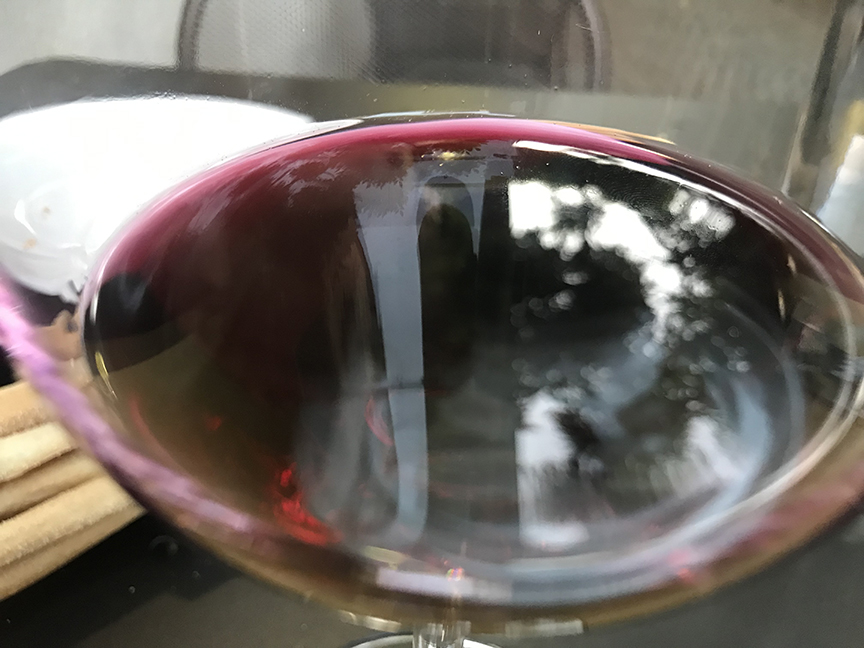
So little to tell and so much time… but I just had to share the above photo that I snapped the other night when I got here: that’s Chionetti 2017 Dolcetto di Dogliani in my glass, one of the greatest expressions of the appellation and one of my faves.

See that purple rim on the wine? That’s CLASSIC Dolcetto by one of its greatest OG masters. 100 percent DELICIOUS.

And of course, what would a proper dinner in Piedmont be without cheese and cognร  (below)?

I have some killer winery visits scheduled for tonight at tomorrow (one of the perks of the teaching gig is simply being here in wine country). Gotta run. Thanks for being here. Buon weekend a tutti.

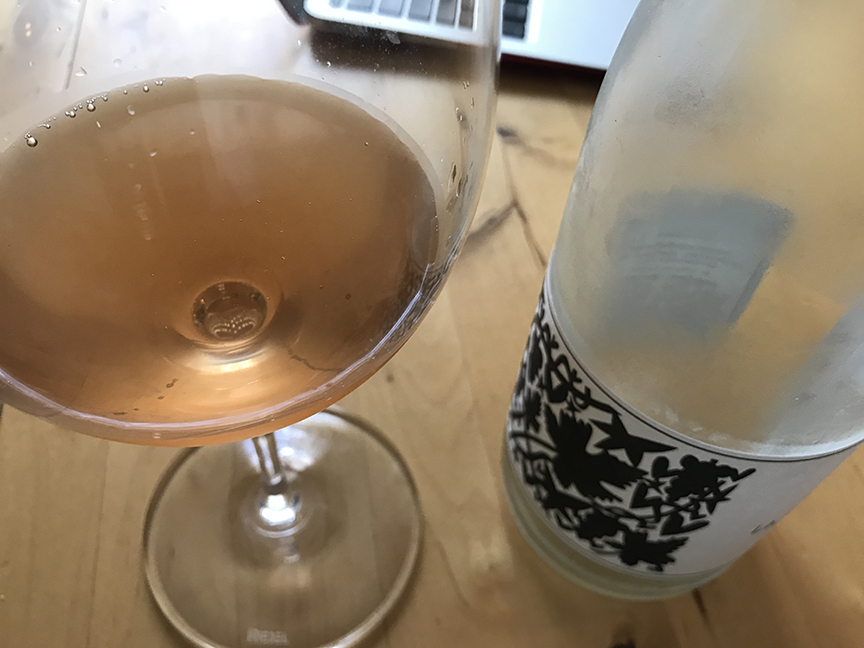
Color, nose, mouth, finish? Please add joy to your descriptors: Clarine Farm Rosรฉ Alors!

From the department of “school’s out for summer”…

“No, the wine doesn’t taste better in Italy! It tastes just the same as in America.”

That’s what a longtime Italian restaurateur in New York used to moan when his guests would claim that the opposite was true.

Was it because the Italians (and French) saved the good wine for themselves and sent only the crap wine to America? (Believe it or not, a lot of folks still think that.)

Was it because the best wines simply don’t travel well? (There’s actually some truth to that, especially when it comes to natural wines.)

No, he insisted vehemently.

In his view, it was because you are more relaxed when on vacation. You sleep better and you eat better. And so everything tastes better.

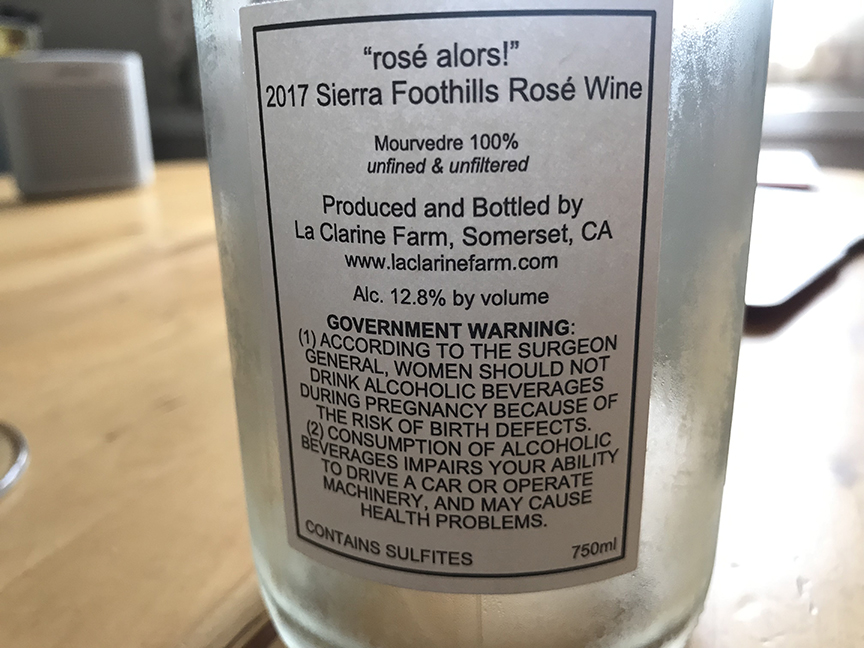
When Tracie and I opened the 2017 Rosรฉ Alors! by La Clarine Farm on Saturday night, his nugget of wisdom popped to mind.

Beyond the purely technical and the aesthetic, can true greatness in wine lie in its ability to spark a beloved memory, evoke a cherished sensation, or create welcomed harmony out of the workaday?

Many wine purists wouldn’t consider my friend Hank Beckmeyer’s La Clarine Farm wines to be great in a technical sense. They are good and they are correct, they might say, free of the often overlooked flaws that you find in low-input, low-intervention wines like his.

But you’d be hard-pressed to find a wine that can inspire so much joy. And please trust me when I say: greatness therein lies.

As the Parzen mรจre, pรจre et filles munched on grilled steak, grill-charred corn-on-the-cob and sweet zucchine rounds, wilted spinach dressed with California olive oil, and a favorite brand of Abruzzo spaghetti dressed with olive oil and kosher salt, the parents loved his Rosรฉ Alors! (from Mourvรจdre) so much that they saved the last glass for a libation โ€” a true libatio, a glass to offer in sacrifice to the gods. The wine was that great: we couldn’t bear to drink the last glass. I know that sounds impossible and ridiculous but neither wanted to deprive her/his lover the last sip. It’s still sitting in a Bordeaux glass in fridge on Monday morning!

It was an early June evening and we were all a little sun-burned and puckered out from a day of birthday and end-of-school pool parties.

And the wine was pure joy, just like a summer’s eve in the countryside โ€” Italian, French, Californian, or Texan. Greater than any other wine could have been in that moment.

Thanks again, Hank, for all the joy you’ve brought into our lives over the years. Saturday night, Tracie and I remembered, so fondly, tasting your wines for the first time at chez Alice in NYC more than a decade ago, on our way back from our first trip to Europe together.

Shitting good. That’s what I love about natural wine.

From the department of “good morning, Sunshine!”…

Many, many moons ago, a doctoral candidate in Italian accompanied a group of visiting professors to a favorite Chinese restaurant in downtown Los Angeles. He was the only American in the group of eight or so scholars who had come from Italy to attend a conference.

When they all took their places at the round table, with a lazy Susan at its center, beer and tea were promptly ordered. But before the food order was placed, something remarkable happened.

A professor from Bologna, an older gentleman, asked whether or not wine would be served. When he learned that the establishment didn’t have any wine, he stood up and declared plaintively: “If there is no wine to be had, I cannot eat here.”

“What are you saying?” cried the chair of the Italian department, who had organized the gathering.

“If there’s no wine,” the professor from Bolgona explained matter-of-factly, “I prefer not to dine. I don’t eat unless I can have wine with my meal. Otherwise, I don’t digest well.”

The chair turned to the doctoral candidate and asked him to find a bottle of wine โ€” as soon as humanly possible.

Those were the days before the Google (yes, it was that long ago). But somehow, the future Ph.D. tracked down a bottle of Pinot Grigio.

And all was right again.

Those were also the days before “natural wine.” And the wine proffered was hardly what the enohipsters of today would find remotely acceptable. But it was wine. And that it was wine was all that mattered.

That episode springs to mind often these days, although the name of the professor from Bologna is long forgotten.

For many young Americans who travel to Italy for the first time, the fact that Italians consider wine to be a vital metabolic component is often a revelation.

That notion was on my mind last night as I enjoyed a bottle of the reasonably priced I Pentri 2014 Fiano last night at Light Years, Houston’s most radical natural wine bar.

The oxidation and slightly cooked character on this wine would have been called out as a flaw by many wine purists. But its ripe white fruit and rich minerality on the mouth were delicious nonetheless. I enjoyed it thoroughly.

Even though there’s no agreed-on definition of what natural wine is or isn’t, many would call this a natural wine: it’s organically farmed, it’s spontaneously fermented using wild yeast, and its low-intervention winemaking style makes it a compelling, even if technically flawed, expression of place.

But none of that mattered last night.

What matters to me most about wine isย how it makes you feel the next day. And in my experience, the natural wines are the ones that make me feel best.

Let it suffice to say that all was right again this morning.

Have a great weekend, everyone. Drink some natural wine. You and your colon will thank me.


Her first Kistler (was delicious)…

Update: niece Emilee should be able to come home from the hospital today. She has a long road to recovery ahead of her. But we’re just glad that she’s going to get there. Thanks for all the wishes. They really mean a lot to our family.

In the late 1990s and throughout the early 2000s, when American enohipsters were vociferously shunning “California Chard” and “Napa Valley Cab,” there were standouts among their objets of derision.

One of those was Kistler Chardonnay. Even for those who had never tasted it, it represented the apotheosis of the “oaky buttery Chard” that had become their rallying cry.

I’m sorry to say that I was one of them. But I’m happy to report that I’ve seen the light in the meantime.

Last week, Tracie and I opened a bottle of 2016 Kistler Chardonnay Sonoma Mountain that had been graciously and generously given to us by our good friend Paolo โ€”ย an unabashed lover of California Chardonnay.

Knowing that he loved the category, I had bought a couple of my favorite expressions of California Chardonnay to share with him while he was here in Houston visiting and working. He returned the favor with the above bottle after he heard me mention that Tra had never tasted Kistler before (that’s the kind of wonderful friend that he is).

This wine is still very early in its evolution. The notes of oak in the nose and mouth, however elegant, aren’t yet entirely integrated into the wine. But on the palate, the lithe wine’s mouthwatering fruit and savory character โ€”ย stone fruit, dried and ripe, with hints of wild herbs โ€”ย were already brilliant and rich. It was one of the best wines we’ve drunk at home this year and we both loved it. My only lament is that it could have used some more bottle age before we cracked it open.

If there’s one thing I’ve learned after more than 20 years working in and writing about wine, it’s that it takes years and years of tasting (and tasting different styles) to develop your “palate,” as they call it.

It also takes equally long to dispel and dispense with your prejudices and preconceptions.

Kistler, I’m sorry I doubted you. And I’m so glad I’ve come around. My wife’s first Kistler was delicious!