
 Wishing you a happy holiday from Houston, Texas!
Category Archives: de vino
EU officially recognizes Vermouth di Torino designation
 According to a report published the Italian national daily La Repubblica, the European Union has recognized “Vermouth di Torino” as an official EU designation.
The announcement of the new designation came last week as the recently formed Consorzio del Vermouth di Torino (the consortium of Vermouth di Torino producers) was holding a festival in Turin (Torino) celebrating the legacy of aromatized wines there.
While the designation had already been approved by the Italian ministry of agriculture in 2017, it has taken two years for the Italian government’s counterparts in Brussels to take this historic and important step.
With the newly approved EU designation, Vermouth di Torino now joins a growing list of countries that have received or requested protected status for aromatized wines. According to the European Commission, these include Nürnberger Glühwein, Thüringer Glühwein, Samoborski bermet, and Vino Naranja del Condado de Huelva.
Click here to continue reading my post today for the Antica Casa Scarpa blog.
If you can’t be with the Pinot Grigio you love, love the Pinot Grigio you’re with (Thanksgiving recommendations 2019)
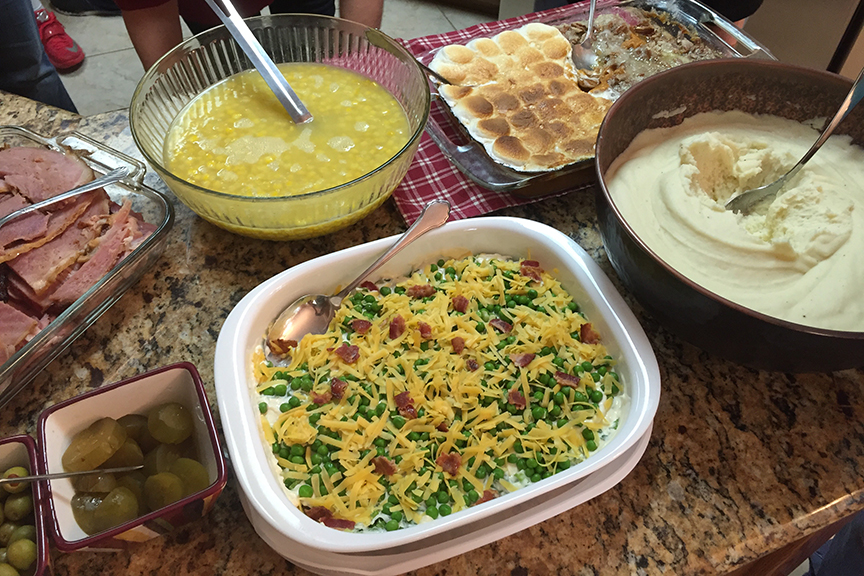 It’s remarkable to think about how and how much Americans’ perceptions of wine have changed in the last 20 years or so. A generation ago, wine at the Thanksgiving table was mostly an afterthought, if that, even for the privileged among us.
Today we live in an America where “wine is the new golf.” Knowing, appreciating, and consuming fine wine has become part of our social fabric. Professionals (you know, the lawyers and doctors and such) are expected to possess an ever elusive “wine knowledge,” a loosely defined and always liquid (excuse the pun) canon of winespeak and consumption. And even for those who don’t belong to the managerial class, wine has become more accessible and enjoyable (for all the discussion of natural wine and its epistemological implications, we often overlook the fact that it has made wine palatable to a new generation of ready enthusiasts).
That’s not a bad thing. The wine renaissance that has taken shape over the last two decades has manifested itself with many positive ramifications — in production, representation, and consumption.
The new wave of technically superior wines, paired with the heightened interest in wine writing and wine education, has created a truly golden age for wine lovers. And the moneymakers have taken note and followed suit: from the crusty old big shippers to a newly minted army of small importers and distributors, more good wine is making its way coast-to-coast and across the American south and heartland.
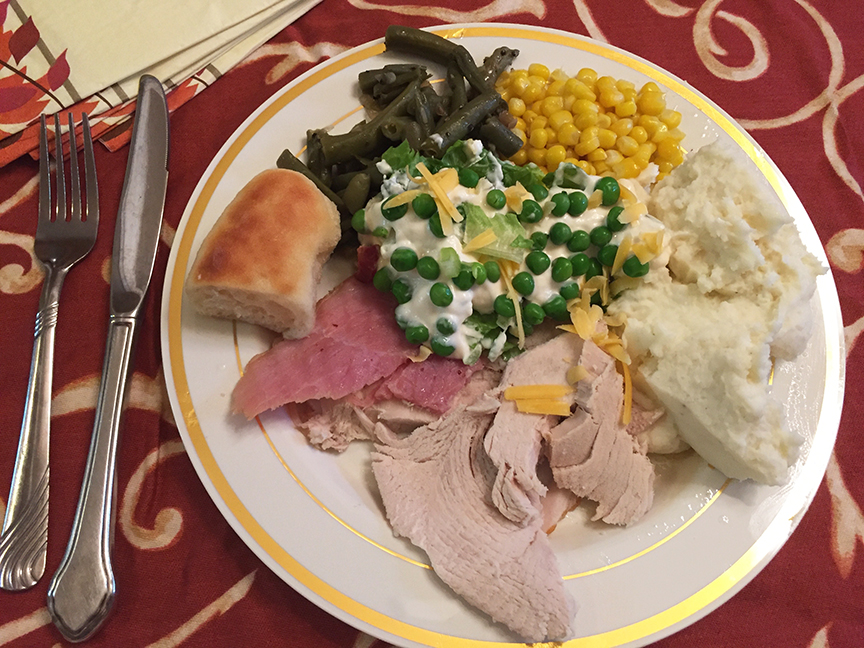 The downside of all of this is that our self-imposed enological expectations and pressures often blind us to wine’s true purpose and role in human experience. After all, wine (at least in my view) serves to enhance nutrition, pleasure, and spiritual enlightenment.
(Spiritual enlightenment, you ask? Anyone familiar with wine’s diegetic — not digestive — role in Judeo-Christian tradition is surely aware of its divine association. And those who know the works of American philosopher William James should also recognize how wine — and thoughtful inebriation — can open the mind, so to speak, to a greater state of consciousness.)
And that brings us to the question at hand: even with open minds, the best and the brightest among us seem to be nonplussed by that Holy Grail of wine pairings, the Thanksgiving Feast.
The diversity of the foods and flavors, the congregation of the wine friendly and the wine adverse, the burden of supplying wine to a large and unwieldy group of people who all have wildly different expectations and desires… All of these elements come together to form a puzzle that has no solution, a riddle of the Sphinx for which not even the smartest and most knowing women and men have an answer.
Sadly, the overwhelming pressures and ideals of the new wine culture have prompted us to overthink the perfect pairing.
Perfect pairings are almost never fully predictable. Yes, you can use tradition and experience as a guide. But they only come together thanks to an unforeseeable combination of factors. Opening a bottle of wine and matching it with food always represents a gamble, a wager, a rolling of the enological dice. A glass of Carricante paired with a chilled seafood salad only makes for a prefect pairing when all the elements are right: the wine, the food, and the mood of the people at the table.
And so this year, I would like to propose the following Thanksgiving Feast wine pairing: if you can’t be with the Pinot Grigio you love, love the Pinot Grigio you’re with.
Don’t fret or fluster over the optimal pairing. Don’t spend too much but make sure there’s plenty to drink. Open your favorites but make sure that they’s something for everyone (include a “Chard,” a “Cab,” and a sparkling Moscato for sure). And most important of all, eat and drink and be merry this holiday season.
That’s the secret to enjoying a great Thanksgiving with family, friends, and all the ones you love.
There’s a rose in a fisted glove
And the eagle flies with the dove.
Happy holidays, yall.
Catastrophic flooding in Venice, “highest tide in 50 years.” Live video via La Repubblica.
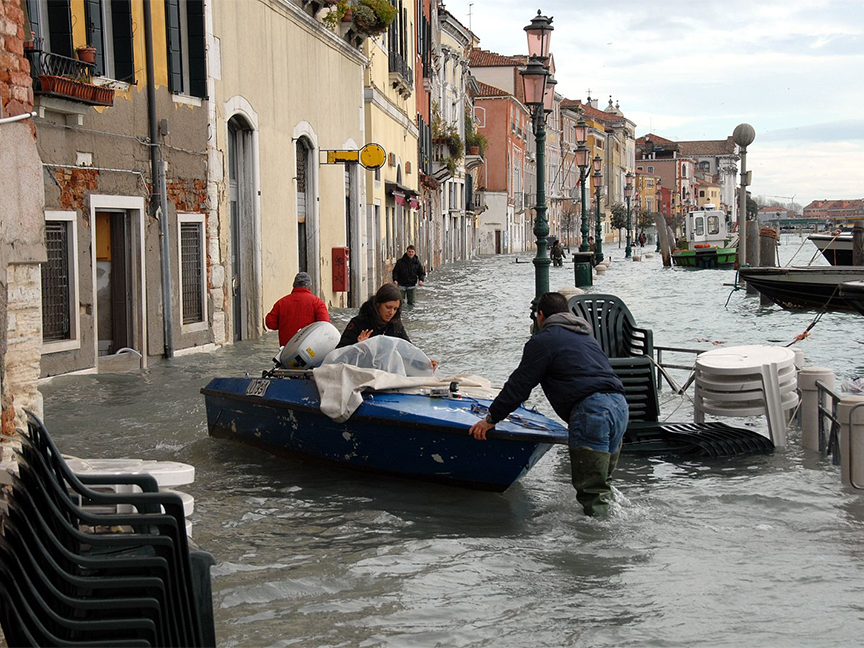 “Venice Floods Because of Highest Tide in 50 Years,” according to a report published two hours ago by the New York Times. “The mayor called for a state of emergency and the closing of all schools after the Italian city was submerged under ‘acqua alta,’ an exceptionally high tide.”
See the live video from national daily La Repubblica embedded below.
Venice and its lagoon are a designated UNESCO heritage site. It’s also a living, breathing city where people go to work and study and parents send their kids to school every day.
It’s heartbreaking to see what’s happening there.
See also coverage on the La Repubblica website (in Italian but the images tell a thousand stories).
Top image via Wikipedia Creative Commons (2008).
Premox (premature oxidation) in white Burgundy: could modernity be the culprit?
 Earlier this month, I had the immense fortune to attend a seminar with Jean-Marc Roulot of Domaine Roulot, legendary producer of Mersault. The event was part of the 2019 Boulder Burgundy Festival (I’ve been the gathering’s blogger for the last six years).
Everyone in attendance at the standing-room-only tasting was rapt with Jean-Marc’s earnestness and transparency in talking about his wines, including the challenges he’s faced in his 30 years at the winery.
But most impressive was his forthrightness when the sticky subject of premature oxidation — “premox” as it’s known in trade parlance — was raised. After all, many of the attendees were top Burgundy collectors who have been deeply disappointed with the cellaring potential of their investment.
“I have discovered that a large number of bottles of white Burgundies from the ’90s suffer from a phenomenon known as premature oxidation,” wrote leading sommelier and author Raj Parr in a dire “Warning on White Burgundies” in 2007 (Wine Spectator). “Simply put, these wines show various stages of advanced oxidation, and this state is not what would normally be expected given their relatively young age.”
(See also this in-depth essay published by World of Fine Wine in 2014.)
 Although many believe that a high-quality cork shortage (owed to high demand) might be the culprit, no one really knows what has caused premature oxidation in white Burgundy.
Jean-Marc attributes the trend, he said, to a combination of factors, including, possibly, the scarcity of good cork.
But he believes, he said, that the problem is due to a new wave of consulting enologists in the 1990s who encouraged winemakers to press and vinify the wines too swiftly. The focus was on maintaining the freshness and aromatic character of the wines in a decade when fruit was arriving in the cellar riper than in previous years thanks to climate change (we know now).
After some of his wines suffered from premox, he told the tasters, he decided to reserve roughly 10 percent of his grape must and let it oxidize slightly before vinifying. He’s found, he said, that by letting some of the must gently oxidize, premature oxidation of the wines seems to have been avoided.
In a sense, it’s possible that it was modernity itself to blame. Coming away from the tasting and talk, I couldn’t help but think to myself, it wasn’t broke until they tried to fix it.
Jean-Marc’s wines are extraordinary, although expensive and extremely hard to find in North America. I’d only ever had the opportunity to enjoy them in France, in the occasional overlooked bistro, when my band was touring there. Many consider him one of the greatest producers of white wine in the world today. And many American winemakers try to emulate his style by using what has come to be known as the “Roulot Method” (although he claimed adamantly not to have invented it). What a great experience to get to taste with him! Drink his wines if you can!
Taste cru Barbera d’Asti, Barolo, and Barbaresco from Scarpa tomorrow night with me in Houston
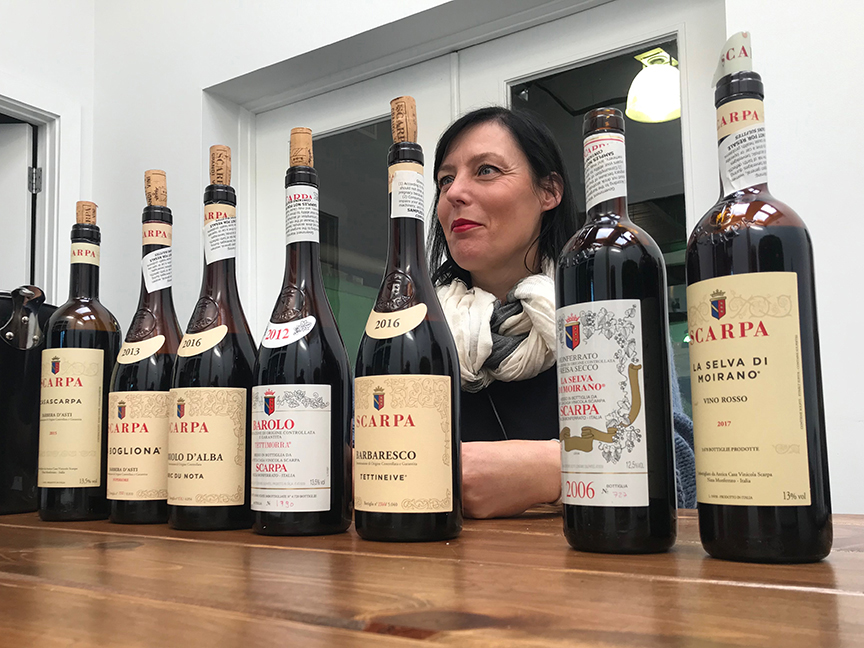 Riikka Sukula (above) and I will be pouring the following wines from Scarpa tomorrow night at Vinology in Houston starting at 7 p.m.:
Monferrato Freisa Secco La Selva di Moirano 2006
Nebbiolo d’Alba Bric du Nota 2016
Barbaresco Tettineive 2015
Barolo Tettimora 2013
Barbera d’Asti La Bogliona 2008
Everyone is welcome but please send me a note (email below) so that I can get an exact head count.
This is going to be a super fun tasting. Looking forward to sharing these amazing wines with you!
@ Vinology
Thursday, November 7
7:00 p.m.
RSVP @ jparzen@gmail.com
2314 Bissonnet St.
(832) 849-1687
Google map
Italian wine is my signora but Burgundy is my mistress: notes from day 1 at the Boulder Burgundy Festival
 Last night found me at the 9th annual Boulder Burgundy Festival in Colorado where I’ve worked as the event’s official blogger for the last six years.
Even though it’s not my first rodeo (as we say in Texas), the thrill of getting to taste these spectacular wines, especially the “old and rare” wines at the festival’s kick-off event each year, has never worn off.
The flight for last night’s sold-out tasting of 30+ wines was selected by Master Sommelier Jay Fletcher from the Somm Foundation Cellar. There were wines stretching back to the 1930s and a number of show-stopping wines from the 1970s.
But my personal highlights were the 1985 Mongeard-Mugneret Grands-Échezeaux (above) and the 1996 Michel Bonnefond Ruchottes-Chambertin (below).
The 1993 Domaine René Engel Grands-Échezeaux (above), from a challenging vintage, wasn’t bad either, a truly rare wine in part because the estate no longer exists.
When you taste wines like these, it’s easy to understand why wines from Burgundy are so coveted by collectors. They were all vibrant and teeming of life, with nuanced aromas and flavors that lingered on the palate. The 85 Grands-Échezeaux was especially compelling.
What an incredible tasting!
I am so grateful to my long-time friend Brett Zimmerman for making me part of this gathering and experience. He’s been so generous to me. And I’ve been so glad to get to know many of the collectors who attend the festival each year and share their wines at the event’s marquee tasting, the Paulée Inspired Lunch.
This year’s featured producer is Jean-Marc Roulot and I’m really looking forward to his seminar on Sunday.
It’s all a bit of a dream for me. I spend most of my year tasting and working with Italian wines. But every fall, I take a break to come up here for these remarkable, truly extraordinary tastings.
Italian wine is my signora (and how I make my living). But Burgundy is my mistress.

The world of wine mourns the loss of Giorgio Grai, renowned enologist who shaped a generation of Italian winemakers
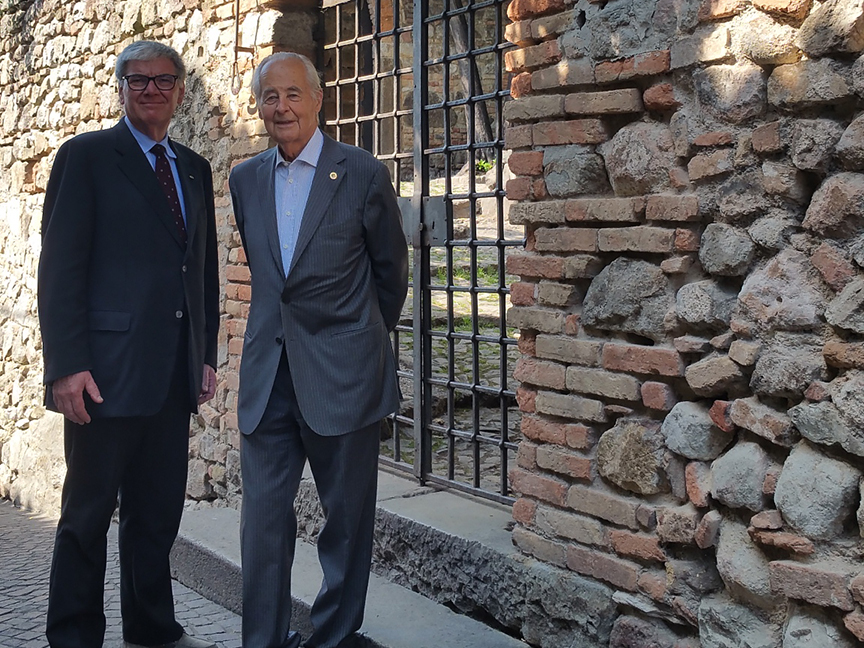 Above: Giorgio Grai (right) with his close friend, winemaker Francesco Bonfio, in Arquà (Padua province) in 2017. Although his work was known to few American wine lovers, he shaped a generation of Italian winemakers whose labels traveled across the Atlantic.
Race car driver and “father of modern winemaking in Italy,” as many called him, Giorgio Grai has died in Bolzano, Italy this week at the age of 89.
According to the one-off personal business card he carried in his wallet, he was a “doctor of everything, knight of good taste, and engineer in the art of getting by.”
While his life and career were seemingly culled from a Hollywood movie (as a young man he spent a decade racing for Lamborghini), he will be remembered above all for his winemaking and his mentoring of a generation of Italian winemakers.
Born in 1930 and raised in German-speaking Italy, he liked to call himself an “Italian among Germans and a German among Italians.” His father had been forced to change their last name from Krainz following World War I. Although he spent his latter years in Friuli, he always considered Bolzano his home, he said.
He was renowned for his stunning Pinot Blanc and Pinot Noir — the latter, a variety he called his favorite and the most difficult to vinify. But he also left his mark on the Italian wine world through his consulting with estates that stretched from the Austrian border to Puglia.
To make a great wine, he told an interviewer in 2013, “particular attention needs to be paid to what goes into a wine — from the outset. Nature is perfect. But it has been compromised by humankind’s impudence. There are organic wines that have been made correctly according to a given protocol. But if they were born in vineyards that lie adjacent to a freeway, then they’ll be full of lead. That’s not okay.”
I had the great opportunity to meet and taste with Giorgio on a number of occasions. He was a true cosmopolitan, a polyglot and polymath.
But beyond the many extraordinary wines of his that I had the fortune to taste (including unforgettable bottlings of Pinot Blanc from the 1980s), the thing I will remember most about him is how a legion of young Italian winemakers and enologists have spoken of him as a maestro and teacher.
Francesco Bonfio, winemaker and president of the Italian Association of Professional Wine Retailers, shared the following remembrance of Giorgio.
- Giorgio was an extraordinarily talented enologist, an extremely gifted technical taster, and a highly cultured gastronome. His passing leaves an irreplaceable void in the world of Italian and international wine.
- Of the many memories of him, this one stands out: in 1983 he met André Tchelistcheff and had him taste his 1961 Alto Adige Pinot Bianco (Sud Tiroler Weissburgunder). After tasting the wine, the Russian winemaker, creator of fine wine in California, knelt before him.
- His technical experience allowed to combine scientific rigor with genius. His humanist culture made it possible for him to judge the quality of a wine or a dish not just in terms of its aroma and flavor but also in terms of its harmony, balance, refinement, and elegance.
- Like all persons of “character,” he was a character with a sometimes challenging personality. He never shied from sharing his opinion, even in the face of supposed authority. He never hesitated to point out someone’s flaws, whether a chef’s or a winemaker’s. Acclaimed, beloved, hated, revered, often talked about, at times hard to bear, an unending source of envy — and he enjoyed it all. Going against the tide was his whim but it also veiled his intellectual openness and his multi-faceted ability to approach any problem from all perspectives.
- He never arrived on time. And sometimes he didn’t show up at all. He had an unrelenting, insatiable curiosity. In the same breath, he could speak of biotechnology, the elements of taste, car racing, and Bolzano. He was a Mittel-European who spoke fluent English, French, German, and Italian. Those who knew will always be proud of having enjoyed the privilege. And they will honor him by continuing to follow his teachings.
- Those who knew him have lost much with his passing. In the world of enogastronomy, if you don’t know who Giorgio Grai is, you’re clearly missing something. But not being able to know him is a shortcoming for which there is no remedy.
Sit tibi terra levis Georgi. You will be sorely missed.
3 Master Sommeliers, a top Barolo producer, and an erstwhile Francescana chef? Man, Houston’s wine and food scene really sucks (NOT!)
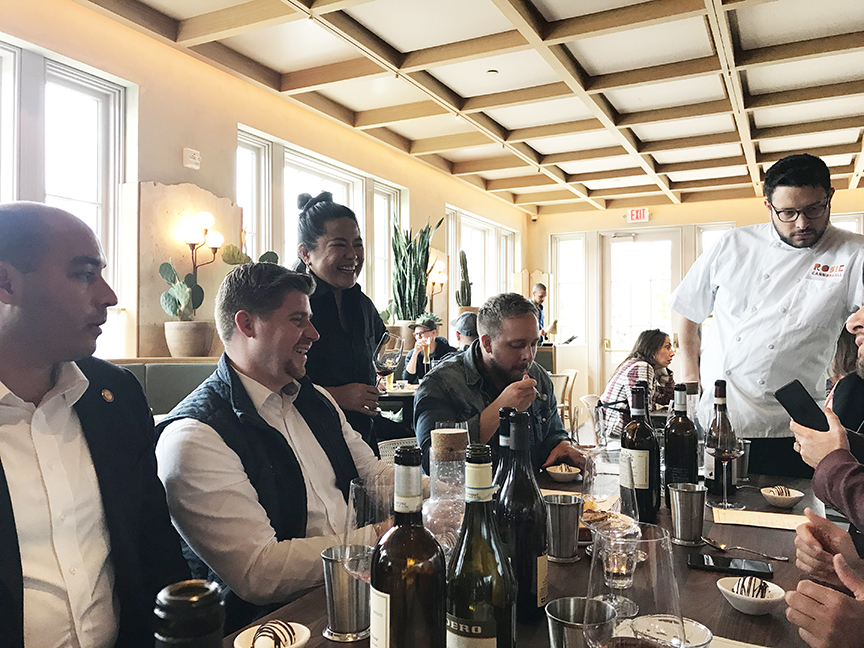 Last Friday I was massively enjoying an epic flight of Oddero Barolo, Barbaresco, and Barbera d’Asti at one of my adoptive city’s hippest new restaurants, and it occurred to me: Houston is a real backwater, ain’t it?
I mean when you’re seated with three Master Sommeliers, including two that run one of the most highly acclaimed steakhouse lists in the country, and being fed by an erstwhile Francescana chef, you just really wish you were among the lucky few who get invited to media lunches with globally renowned publicists and leading Italian wine writers and experts.
But hey, not everyone can have all the fun, can they?
 From left in the photo above, that’s Steven McDonald MS, Jack Mason MS, June Rodil MS, advanced sommelier Brandon Kerne (another badass), and chef Felipe Riccio, who not so long ago returned from a few years working in Massimo Bottura’s Osteria Francescana kitchen in Modena (Felipe’s story about making chilaquiles for Bottura is amazing, btw, but that’ll have to wait for another day, another blog post).
There was actually another Master Sommelier on the premises but he was otherwise occupied and too busy pouring wine to rich folk to stop by our table.
Also in attendance were Jane-Paige d’Huyvetter (likewise a badass), wine director at the super swank River Oaks Country Club; Weston “Piedmont Guy” Hoard (Oddero’s importer); and Ian McCaffery and Nathan Smith (Piedmont Guy’s distributor in Texas).
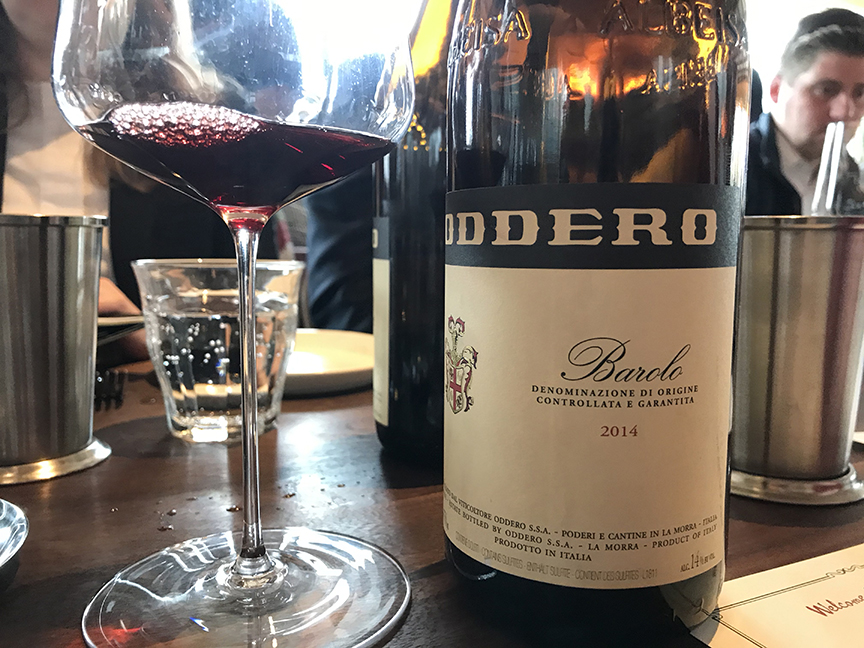
 It was really interesting to hear Pietro Oddero talk about his family’s philosophy and approach to their classic Barolo (thank you, Americans, for not saying “normale” Barolo, an egregious misnomer for Barolo or any top appellation for that matter).
Americans are so single-vineyard focused (my impression not Pietro’s) that they often miss the point: the classic Barolo cuvée, blended from an estate’s top vineyards and rows, is the purest expression of the appellation and vintage. The single-vineyard designates are great (and I collect a lot of them). But they reflect a micro, highly localized expression of the appellation and vintage. They can be great and I love drinking and collecting them. But it’s always the classic wines, in Barolo and Barbaresco, that I find most compelling.
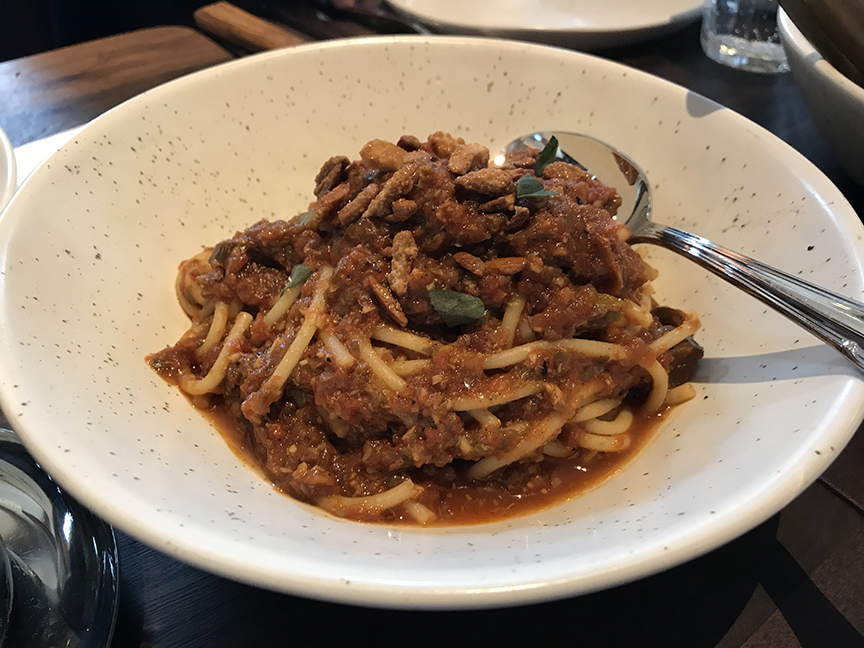
That’s Felipe’s housemade spaghetti tossed in caponata above. Utterly delicious.
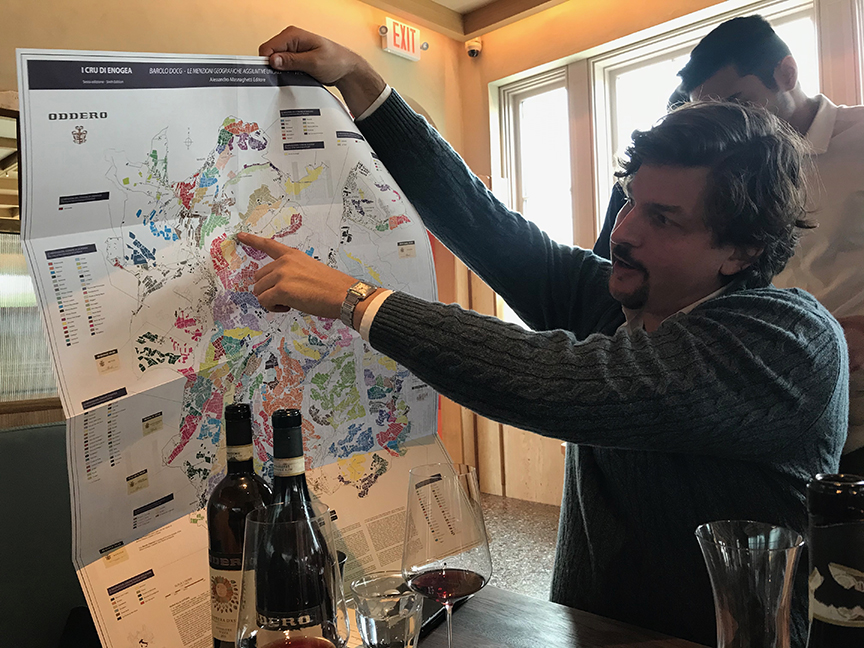 A propos single-vineyard designates, the Piedmont Guy (above) and Pietro discussed Oddero’s recent acquisition in the Monvigliero cru in Verduno township.
The 2015 Oddero crus — Rocche di Castiglione and Villero — were still very tight in the glass. Excellent, with the immense promise you expect from a house like this, but not forthcoming with their fruit.
My favorites of the flight were the 2014 and 2015 classic Barolo and the 2016 Barbaresco Gallina, which was showing beautifully, really ready to drink.
When Tracie and I decided to move from Austin to Houston six years ago, it was to be closer to family, hers and mine, and the support we need with small kids in the house. But our adoptive city was already starting to emerge as a food and wine “capital of the South,” as one glitzy magazine called it a few years ago.
Over the arc of time that we’ve lived and thrived here, Houston’s become a true epicenter of the American food and wine renaissance.
Just considering the amount of sheer talent and experience seated around the table with me on Friday, not to mention the caliber of the wines we enjoyed and the fact that a winery principal was there with us, it’s hard to argue that Houston isn’t one of the country’s top enogastronomic destinations. The food and wine speak for themselves… Don’t believe me? Come visit and the first bottle of Barolo is on me!
Cuando sea hora de irse, no lo dudes. When it’s time to go, don’t hesitate. #californiawildfires
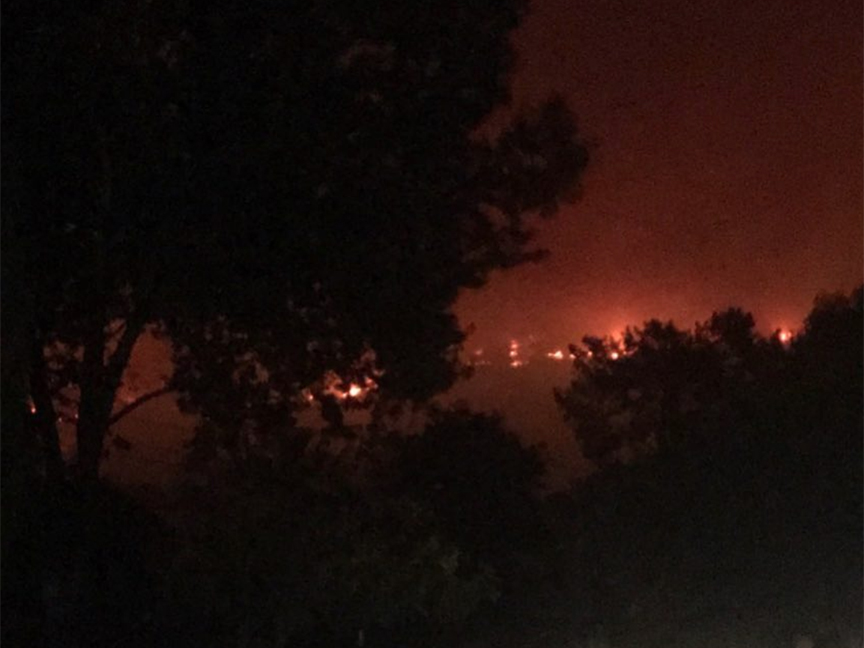 Tracie and I sending our thoughts and prayers to all our California friends and colleagues who have been affected by the current wild fires in my home state.
As I read this morning on the Sonoma Sheriff Twitter, “Cuando sea hora de irse, no lo dudes. When it’s time to go, don’t hesitate.”
The photo above was taken by a good friend in Napa in 2017 during the Tubbs Fire, “the most destructive in California history.”
Parts of Napa have been evacuated and badly damaged over the last week in the Kincade Fire.
I used to live in a neighborhood in the San Fernando Valley that was evacuated last week in the Tick Fire.
And this morning, we woke up to read in the Los Angeles Times about what is being called the Getty Fire. It’s burning just across the 405 freeway, a stone’s throw from my alma mater UCLA.
Across social media, a number of people have been posting their — how else to say it? — bewildered terror.
We all grew up with the occasional however deadly and destructive wild fire. But they are simply more frequent, bigger, and more deadly and destructive than ever before.
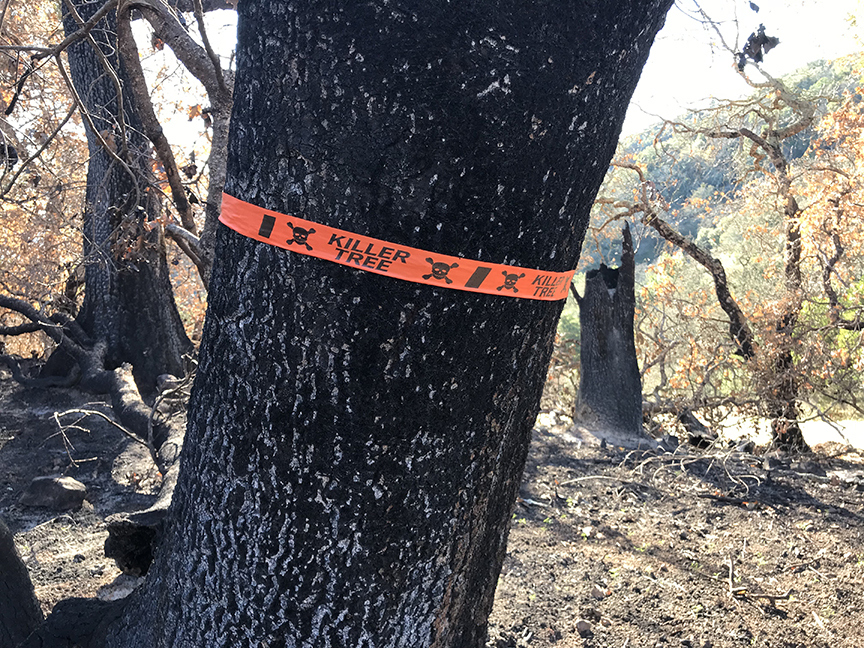
I took the photo below when I visited northern California wine country in late 2017, after the fires had been put out.
Please stay safe, everyone! I’ll follow up with aid resources here on the blog.
 Do Bianchi
