How Etna counters preconceived notions about fine wine.

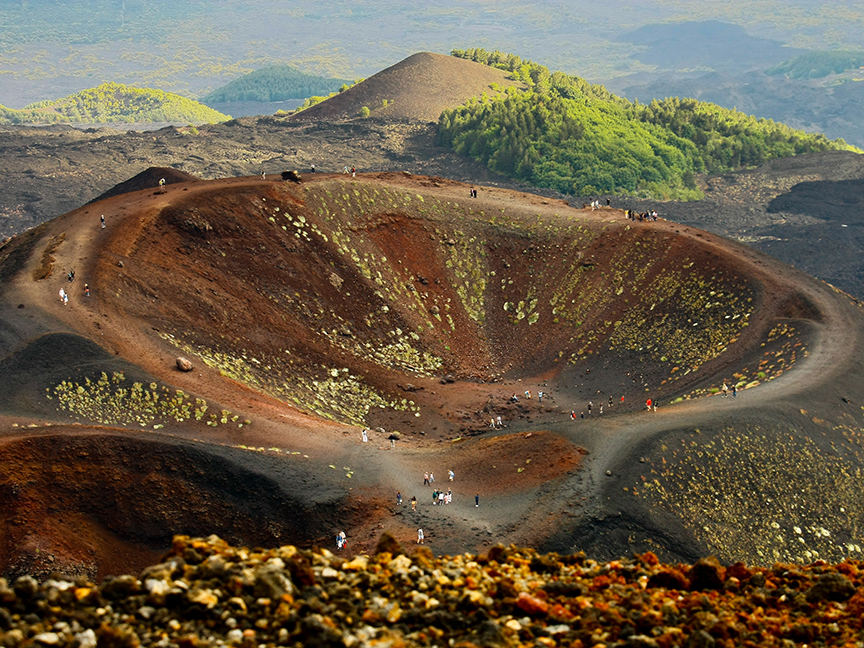
Above: Mt. Etna, an active volcano. Note the spontaneous vegetation around the crater (image via Adobe Stock).

“Last week’s eruptions were really spectacular,” said Etna grape grower Roberto Muccifuori yesterday. “But what people don’t realize that they were just a handful of the many eruptions that happen each year.”

The recent seismic events, he noted, got a lot of attention because they were particularly dramatic. (Disclosure: I was interviewing him for his importer, one of my clients. See the post and interview here, including his notes on the 2021 vintage. Roberto works for the Terrazze dell’Etna winery there.)

“The immediate impact of the eruptions is that it scatters ashes” across the appellation, he explained. And that makes the soil remarkably fertile because “the ashes distribute abundant nutrients in the soils ”

The resulting fecundity helps to keep the vines healthy, he told me.

“There aren’t studies to back this up,” he said, “but most believe that the excellent health of the plants helps to prevent vine disease.”

As a result, growers don’t need to use fungicides as liberally as their counterparts in other appellations.

His observations brought to mind something that the noted Italian consultant Maurizio Gily once told me about his experience on Etna.

“The earth is so fertile there that it is teeming with vegetation,” he said as he remarked on how atypical that was for a fine wine appellation.

As I was chatting with Roberto yesterday, it occurred to me: most of the great appellations of the world are known for their nutrient-poor soil. In a time before the current international renaissance in fine wine, growers generally and historically planted grapes in places where other crops can’t easily be grown. When vines are nutrient- and water-challenged, they attain more vigor and produce richer-tasting fruit.

The Piedmont usage of the word bricco is a great example of this. Today, many wine professionals know the term as site-specific designation reserved for top wines. It actually means crag, in other words “a steep or precipitous rugged rock” (Oxford English Dictionary). In literature from that era, Piedmontese writers refer to bricchi (pl.) as barren, depressing hilltops where nothing can be grown. A far cry from the delicious Bric dël Fiasc we drink thanks to Paolo Scavino today!

Similarly, if you talk to the older folks in Proseccoland, they’ll tell you that before the Prosecco boom of the 1980s, Glera grapes were planted only where the soils were too nutrient-challenged to grow other crops. Today, Prosecco is one of the richest appellations in the world. But back in the 1960s, as Italy was experiencing its first post-war boom, people fled the region because of the agriculturally hostile landscape. Cartizze didn’t become a “cru” designation for Prosecco because its soils are magical. It became a top spot for growing Prosecco because you can’t grow anything else there.

Soldera (first) and Gaja (later) famously planted their Montalcino vineyards, to cite another example, in one of the most nutrient-poor areas of the appellation. The families who were already farming grapes there knew full well that other crops weren’t viable on their land.

Etna counters this model by virtue of the fact that its soils are incredibly fertile, something that Maurizio Gily was alluding to in his observations from his time on the ground there. We have all tasted astounding wines from Etna, with incredible depth, complexity, and nuance.

Frank Cornelissen once told me that the reason why he planted on Etna was because he couldn’t find anywhere else in Europe where the soils hadn’t been compromised by chemically based commercial farming. But could it be that the wines of Etna are so compelling in part because they challenge our preconceived notions of where the world’s greatest fine wines can be raised?
Help feed hungry winter weather-affected Houstonians: give to the Houston Food Bank.

A number of friends from across the U.S. and Italy have written asking us how they can help us during the ongoing extreme weather, electric grid failure, and now water shortage in Houston.

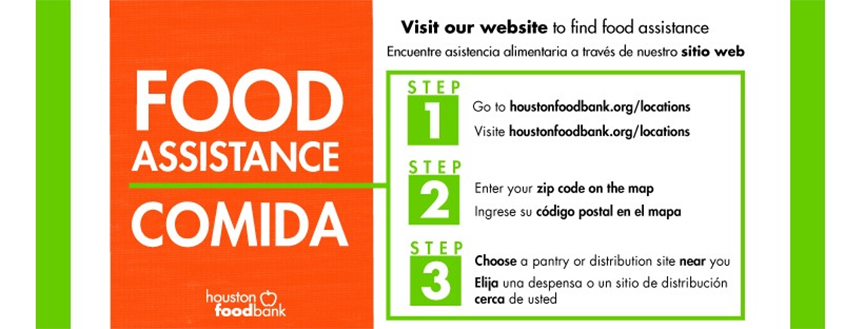
My recommendation is to give to the Houston Food Bank. I’ve done a lot of events with them over the years and they do an amazing job. Right now, people simply don’t have enough food to eat: between the electric and cold temperature crises this week, people haven’t been able to get out of their freezing homes to shop for food and now we are facing food shortages because of shipping challenges (it’s an accumulation of things, including icy weather, gas shortages, and electric outages).

Here’s a New York Times list of resources for helping to feed people across Texas, Oklahoma, and Louisiana.

The Houston Food Bank will get food and water into people’s hands right away (they were open again as of yesterday, at least according to social media posts).

Tracie, the girls, and I have had power for the last two days and our water pressure is just starting to come back. And we’re praying for no busted pipes but so far so good. We could all use a hot shower but we managed to make through. Not everyone has been so fortunate.

Thanks for all the notes, wishes, thoughts, and prayers. Our children, ages seven and nine, have now lived through Hurricane Harvey, Tropical Storm Imelda, the global coronavirus pandemic, and now a human-made crisis.

Governor Abbott, you can blame this on windmills, you can blame it on Democrats, but there’s no doubt about this: it happened on your watch, man. People across Texas have died because of your administration’s ineptitude, negligence, and sheer callousness (spurred and cheered on by a Republican-dominated state government). Why is it that the buck never stops with you? I love living in Texas, I love being a Texan, I love raising our children in Texas. We deserve better from our elected officials.

Parzen family update from Houston: power, heat, and phones finally back. We are cold but okay.

Parzen family update: we have been without power, heat, phones, or water for the last 24 hours. Temperatures were in the 10s last night. Power, cell. service, and heat just came back on about an hour ago. No water yet. Last night was brutal but we all slept together in the girls room (with the dogs and every last blanket in the house). Not sure how long we’ll have power today but we have it for the moment (people are getting power back only to lose it again, at least that’s what we’re seeing on social media). NEIGHBORS: we have water and food and heat for anyone who needs or wants to warm up while we still have power. Thanks to everyone for all the messages, thoughts, and wishes. Texas needs the prayers! And thanks to everyone who is waiting on emails and work from me. I’ll be in touch soonest. Hoping everyone is safe, healthy, and warm. And big shouts-out to the girls who been real troopers throughout their umpteenth natural disaster. 

The Pope’s vino: Vatican will produce estate-grown wine. Vineyards to be planted this spring.

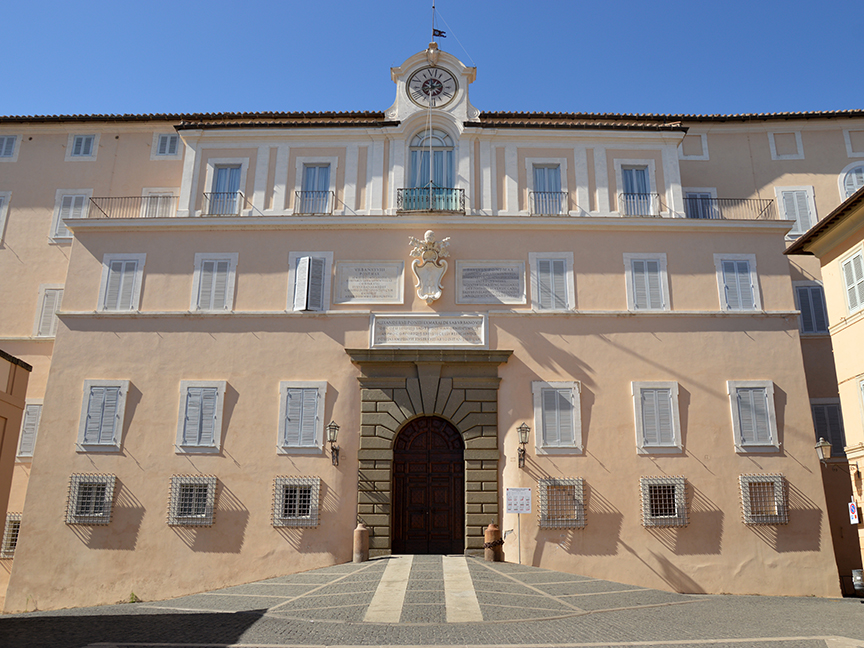
Above: the Apostolic Palace of Castel Gandolfo in Castel Gandolfo township outside of Rome (image via Adobe Stock).

According to a post published Friday by the Italian wine industry news portal WineNews.it, the Vatican will plant two hectares to vine this spring on its Castel Gandolfo estate outside Rome, the Pope’s official summer residence.

Although the grape varieties remain unknown, the project will be overseen by top Italian enologist Riccardo Cotarella, one of Italy’s most prolific winemakers and one of the country’s earliest “flying winemakers.”

This is the first time that the Vatican will grow grapes on one of its estates for the production of its own wine, write the authors of the report. The wine won’t be available for sale, they note, but it will be used for sacramental purposes and will be given as gifts.

Let’s be honest about the 2017 vintage in northern Italy: a breathtakingly candid dispatch from a Barolo icon.

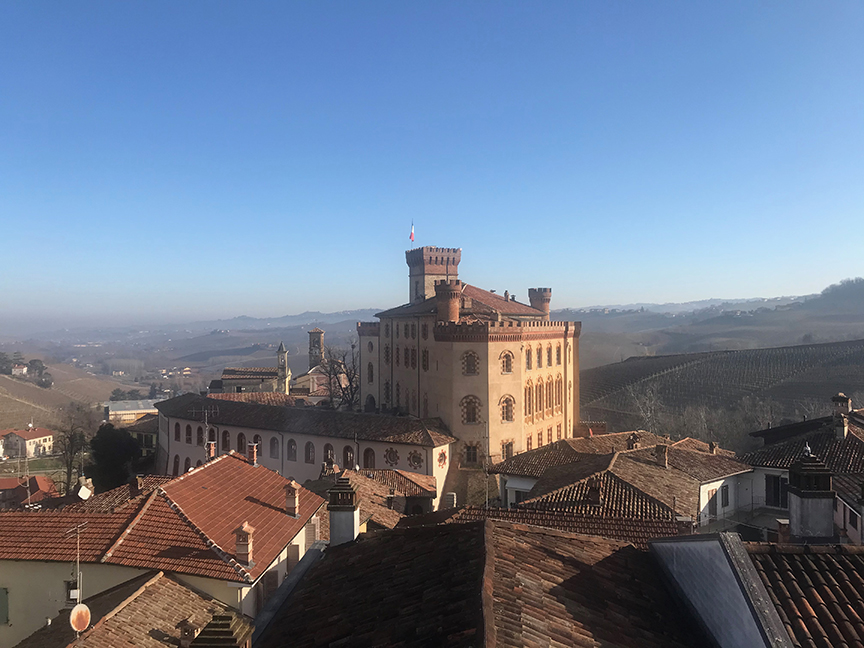
Above: Barolo Castle, photo taken January 17, 2020, on my last trip to Italy before the pandemic shut down global travel.

In an era when truth and fact seem to have become relative terms, it was remarkable to read the breathtakingly candid assessment of the 2017 vintage in Barolo circulated last week by legacy grower and winemaker Alberto Cordero, the current generation of the historic Cordero di Montezemolo winery in La Morra (disclosure: I contribute to his importer’s blog).

An “intense frost… hit not only Piedmont but practically all of Europe,” in April of that year, he wrote, “causing extensive damage in every wine-growing area from Tuscany upwards [northward]. One of the largest and most devastating frosts ever recorded.”

He includes in his a report a photograph showing one of the affected vineyards on his family’s historic estate.

In its entire history, he writes, his family had never seen “damage so huge from spring frosts.”

His notes hardly jibe with the notes issued by the Barolo, Barbaresco, Alba, Langhe, and Dogliani consortium.

“The 2017 vintage growing year will be remembered,” wrote the authors of the report, “for its hot climate, and in particular sparse rainfall.”

There was “some frost damage,” they added, “though in the Langhe only the bottoms of the valleys and cooler slopes were affected.”

Alternate facts?

Italian wine trade observers generally concur that the 2017 vintage represents a climatic anomaly, even for a decade when climate change delivered a string of extraordinarily extreme weather events.

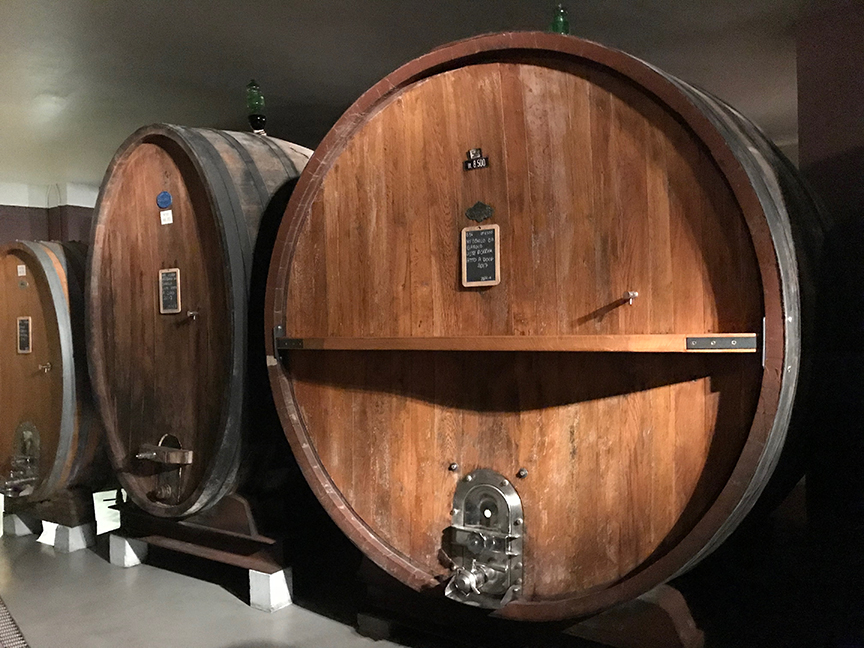
Above: 2017 Barolo in cask at the Cordero di Montezemolo winery.

“2017 – Hail, Frost & Heat…,” wrote Antonio Galloni on Vinous: “Whereas 2016 was an extraordinarily benign year, pretty much anything that could happen did happen in 2017.”

The editors of Jancis Robinson’s site have called the vintage “fairly dismal.”

“The 2017 vintage for Piedmont was difficult, to say the least,” wrote the editors of WineSearcher.com.

In November 2017, shortly after harvest had been completed, one of the consortium’s most prominent and politically active members wrote that the Piedmontese hadn’t seen such an extreme frost in half a century (I don’t want to name the winemaker, whose report still appears on their blog, for the sake of not pitting them against the growers and bottlers assocation).

Many years ago, I had the remarkable opportunity to ask one of Piedmont most celebrated growers about their impressions of Langhe vintages stretching back to the 1950s (again, for the sake of comity, I don’t want to name names).

They talked about how market concerns have often compromised vintage assessments. This was especially true, they said, in the 1970s and 80s, before the time of global warming, when Piedmont vignaioli were lucky to have one great vintage per decade, let alone a string of good if not exceptional harvests (a trend that began in the 1990s).

It wasn’t so long ago that a celebrated Langhe cooperative created a stir when it reclassified its 2006 cru-designate wines. The vintage was called “promising” at the time. But the release of the wines coincided with the peak of the financial crisis. The episode, controversial in some quarters, was the inverse of what typically happens: the bottler talked down the vintage because they wanted to justify the decrease in price.

Traditionally, February is the month when Italian wine pundits begin publishing their vintage notes for the year’s releases. And we should start seeing the 2017s from Langhe in the U.S. by May or so.

Some of the wines will be good, others very good, and some even exceptional. These days, it’s rare that a winery releases wines it doesn’t like (and given the technology available to those who choose to use it, it’s challenging to make bad wine).

In the case of the Langhe 2017 releases, there will just be less wine. As a famous Tuscan grower once noted, there are no bad vintages; there are just vintages when we make less wine.

It’s inspiring to read the brutally honest words of a grower like Alberto. Maybe it’s because he has a longer-term perspective that allows him to see this anomalous vintage as just one piece in a much larger puzzle.

Or maybe it’s because he knows that honesty is a key element in authenticity. This is especially true at a time when nearly everything in the world’s “constitution of knowledge” has come into question.

I applaud Alberto (who’s a really nice and extremely thoughtful guy, btw) for the candor and the earnestness. His report kind of reminds me of a “rare menu that tells the truth.” Please pass the orange beef.

As Italy lifts dine-in restrictions, restaurant owners (and winemakers) see glimmer of hope.

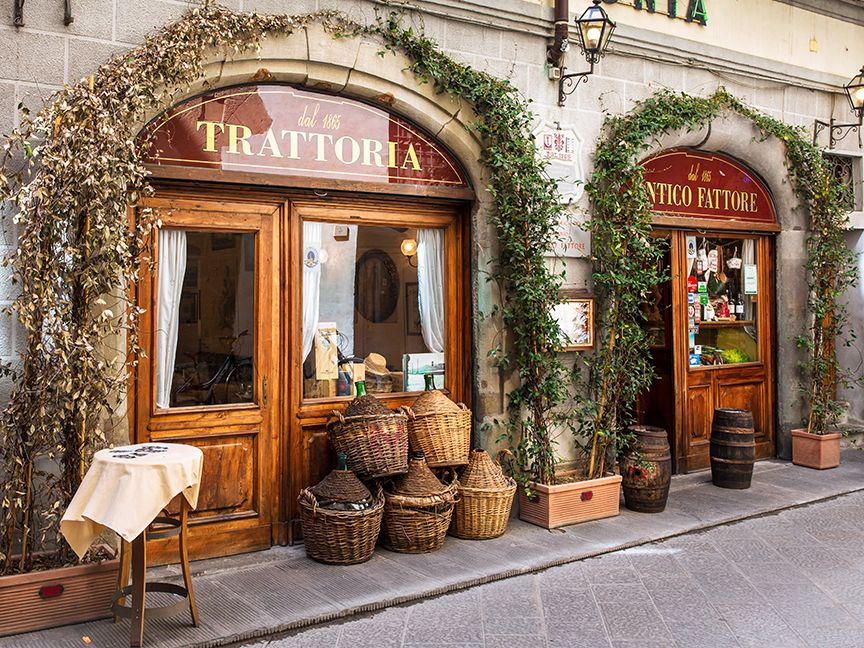
Above: a classic Italian trattoria in Florence (image via Adobe Stock).

“Let me call you later,” wrote an Italian winemaker in a text message around 1:30 p.m. Italian time today. “I’m eating lunch in a restaurant for the first time since dining rooms were closed three months ago.”

In all but five Italian regions, restaurants were allowed to open again today, Monday, February 1. In some cases, like Lombardy in Northern Italy where said winemaker lives, dine-in service has been prohibited (intermittently depending on the city and/or province) for the last there months and beyond. And take-away service was only allowed until 6 p.m.

Restaurateurs and café owners will still be required to close their dining rooms at 6 p.m. nightly, although they will be able to continue take-away until 10 p.m. and home delivery service is allowed 24 hours a day where available.

The re-openings are welcome news to restaurant owners, winemakers and grape growers, and brewers alike. Especially in the case of small-scale wineries, independent regional restaurants are a primary outlet for sales. The lifting of restrictions will undoubtedly lead to a much-needed boost in orders. Restrictions on tasting rooms and independent wine shops, some of which are still in place, have also slowed recovery for winemakers.

With most of Italy now under “yellow zone” restrictions,

– customers can consume food and beverages inside from 5 a.m. until 6 p.m.;
– take-away food and beverages may be sold from 5 a.m. until 6 p.m.;
– restaurants may still fulfill take-away orders from 6 p.m. until 10 p.m.;
– but beverage take-away from cafés (without restaurant service) and wine shops is prohibited after 6 p.m;
– delivery service is allowed 24 hours a day.

“I walked into the restaurant,” said the winemaker, who was seated in a dining room together with the family of his business partner, “and I told them to make me whatever they wanted. Anything. I just wanted to sit down and enjoy my meal without thinking about anything else.”

“Crisis in the dark”: Italian government collapse exacerbates wine industry challenges.

Above: Palazzo Montecitorio in Rome, seat of the Italian Chamber of Deputies (counterpart to the U.S. House of Representatives). Image via Adobe Stock.

Although it wasn’t entirely unexpected, Italian prime minister Giuseppe Conte’s announcement yesterday that he would resign set into motion what the Italian media have called a grave “crisis in the dark” (a reference to the political turmoil of the 1970s when the country faced a complete economic meltdown).

The collapse of the Italian government comes as the country faces cascading health and economic challenges.

(See the links above for the New York Times coverage.)

For Italian winemakers, many of whom are relying on domestic sales to keep their businesses afloat as exports have dropped precipitously, the political infighting couldn’t come at a worse moment. With nearly all of the country under lockdown, Italian restaurants and wine shops are required to shutter their doors at 6 p.m. every evening. As a result, major supermarket chains and other national retail outlets, which are allowed remain open in the evening, are seeing a boost in sales. But because the chain retailers source their wines primarily from larger wineries, this shift leaves smaller estates, who depend on boutique shops and independent restaurants, without a means to sell their products.

Earlier this month, Andrea Terraneo, president of the Italian association of wineshop owners (Vinarius), sent an open letter to prime minister Conte and his health and economic ministers asking him to amend the restrictions crippling the independent wine retailer industry. The “discriminatory” 6 p.m. cut-off, he wrote, has led to a 30 percent drop in sales in a sector already decimated by the pandemic fallout.

The restrictions add to the woes of a hospitality industry already besieged by the pandemic.

For small-scale growers, the government collapse only exacerbates the economic pain felt across the nation. Tasting room closures and restrictions had already shut off one of their main sales channels. And now, with the government on hold, there is little hope that the restrictions will be lifted in the near future.

If Conte or one of his rivals (namely, the self-described “Machiavellian” Matteo Renzi), are unable to form a new coalition, it’s possible a technical government will be installed to oversee the country’s current covid response and the management of forthcoming financial aid from the European Union — another crucial element in the wine industry’s recovery. Although unlikely, snap elections would take months to be implemented.

How virtual wine dinners saved our restaurant in Houston.

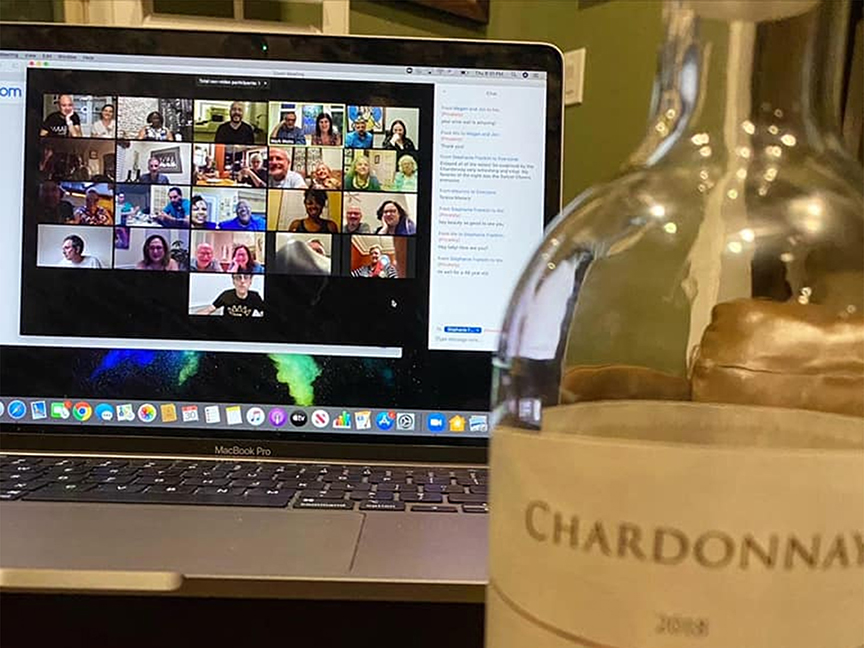
Image by the Corkscrew Concierge, a regular attendee at Roma’s virtual wine dinners.

Like many independent concept restaurants across the U.S., the barely four-year-old Roma in Houston was eager to shift to virtual events as soon as the shutdowns began to be enforced across Texas in the early days of the growing pandemic.

At the time, prospects for the restaurant’s survival were dim. As for tens of thousands of American restaurateurs (and for hundreds of thousands across the world), business had ground to a halt. Regulars, mostly middle-aged professionals, were reluctant even to order take-out in those early days of the health crisis. And for a “neighborhood,” “date night,” and “special occasion” restaurant like Roma, the world of plastic containers and utensils was as distant as Mars. The expression curbside available, now a workaday locution in the American restaurant lexicon, was as exotic as H.G. Wells’ “Martian herbs and trees.”

When the owner was approached by an energetic supplier/sales rep (a salesperson for a locally based importer and distributor), he gladly accepted her offer to organize a virtual wine dinner and tasting. Her idea — as brilliant as it was simple — was to have a winery representative in Italy on the other line, as it were, while the guests tasted through a three-bottle flight of wine paired with regional dishes. Yes, it would be 2:30 in the morning for the estate ambassador, but the sacrifice of a little sleep was well compensated by the potential sales and brand building — especially considering how business had declined precipitously in the early days of the new normal.

The initial virtual gatherings were unsurprisingly (at least in retrospect) clumsy. Zoom links that didn’t work. Guests who didn’t know how to mute their microphones and the subsequent TMI intimacy. Seafood dishes that were cold and rubbery by the time the guests opened their containers at home.

But the turning point came when the featured guest, the enologist son of a legacy Italian winemaker, began to insult the restaurateur over the pairings — in Italian. It didn’t occur to the dim-witted nimrod (excuse the pleonasm, merited in this case) that one of the guests, who happened to work as the restaurant’s media manager, was fluent in Italian.

The disconnect issue was only compounded when another microcephalic brand ambassador joked to the guests that the proprietary name of one of the estate’s wines could be loosely translated as “end of the world.” Appropriate, he quipped, for the times (despite the fact that he was employed by the estate, he didn’t realize the name was actually a reference to the nec plus ultra of Homer’s Odyssey).

And that’s when it dawned on Roma’s owner: the dinner’s “content” was being driven by the supplier rep and the brand ambassadors on the other side of the Atlantic; and the brand ambassadors, often export directors with poor English skills, were treating the events as if they were “supplier meetings,” as they are called in the trade, educational affairs where the brand ambassadors share insights with sales reps from regional distributors.

It was mid-July and the restaurant was still struggling, literally teetering on the brink of failure, when the owner made a radical shift: he would only host virtual wine events, he decided, with “principals” from the wineries, the winemaker or an immediate family member, and the featured guests had to speak English well. He also brought on a moderator, a wine professional with experience in public-facing wine education and public speaking, a veteran events organizer.

And that was what turned out to be the key: instead of letting commercial interests shape the events, his team would choose the wines, the pairings, and — most importantly — the winemakers who would represent the wines. The idea was to deliver a media “product” that was as entertaining and engaging as it was delicious.

He also made sure to keep the cost moderate. By negotiating aggressively with the distributors, whom he approached as opposed to them reaching out to him, he made sure the price per person remained palatable. What he found was that distributors were so keen to “move boxes,” as they say in the trade, that there was ample flexibility in pricing, “sampling,” and other strategies to offset the wine cost.

Almost as if by magic, the attendance at the dinners grew rapidly from 10-20 guests to 40, 50, and 60. By the fall even though the events were held on a weekly basis, he was regularly fielding 70-80 diners every Thursday evening. By the time the restaurant hosted its last event of 2020, it counted 90+ guests including some of the city’s leading wine mavens.

The secret, says the owner, is that he gives the guests what they want and not what the distributors want. And dulcis in fundo, the distributor reps aren’t complaining (anymore) either.

I’ll be joined by three other leading Italian-focused food and wine professionals a week from Friday as we discuss the mechanics of running a successful virtual tasting event for a webinar hosted by the Italy-America Chamber of Commerce South Central. See this link for registration details. All are welcome.

At home highlight wines 2020: California, French, Italian.

Beyond Eric Asimov’s excellent Times column “The Pour,” some of the paper’s most compelling wine writing has been delivered recently via the Gray Lady’s “Wealth Matters” rubric.

“Stuck at Home, People Are Splurging on Wine and Spirits” (December 18, 2020) by Paul Sullivan informed us that in 2020

    Sales of wines, for instance, dipped in the first quarter, before the pandemic. But they are now selling at a brisk rate, making up for the slower months… And sales of premium wines during the post-pandemic period have grown more than other categories.

The trend has been driven, at least in part, by the fact that

    [people are] not traveling and not going out to dinner. Instead, they’re looking to buy something that will make yet another dinner at home more interesting. And because they’re not paying the markups that bars and restaurants usually charge, they can afford higher quality bottles.

Not only do these (partly anecdotal) observations align with what wine sales agents from across the country have been telling me (one rep told me that his company’s retail program grew so significantly that it bested its 2019 sales last year), but they also dovetail with our personal experience: because we stopped going out to dinner (completely in our case), we were able to spend more on our retail consumption.

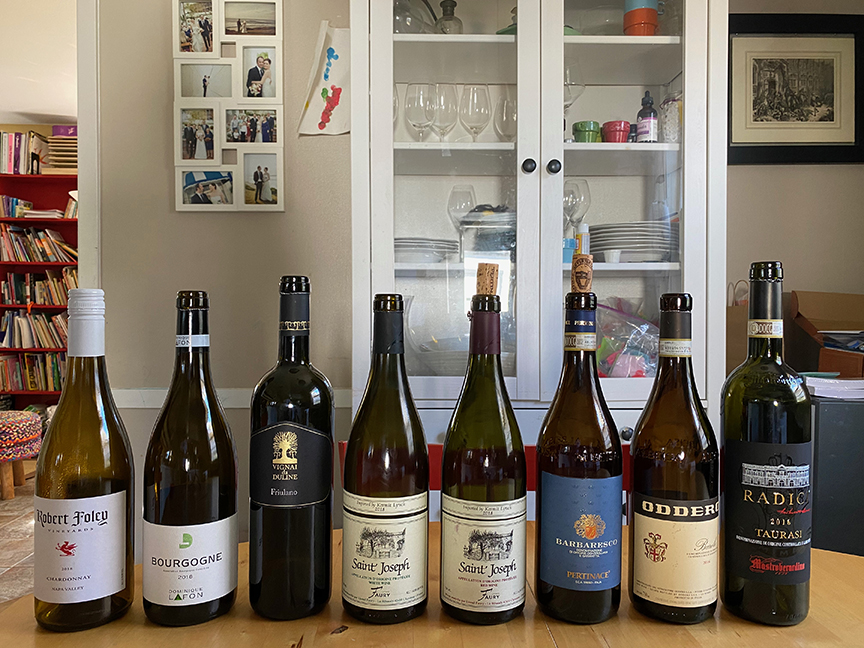
Here are some of the wines that we enjoyed in 2020 “despite,” as Weird Al put it, “things.”

Robert Foley 2018 Chardonnay

Yes, we loved this Napa Valley Chardonnay. The fruit was classically new world bright but balanced by vibrant acidity and wonderful freshness. I’d never had anything white from Foley but the reasonable pricing for this mid-level Chardonnay kept bringing me back.

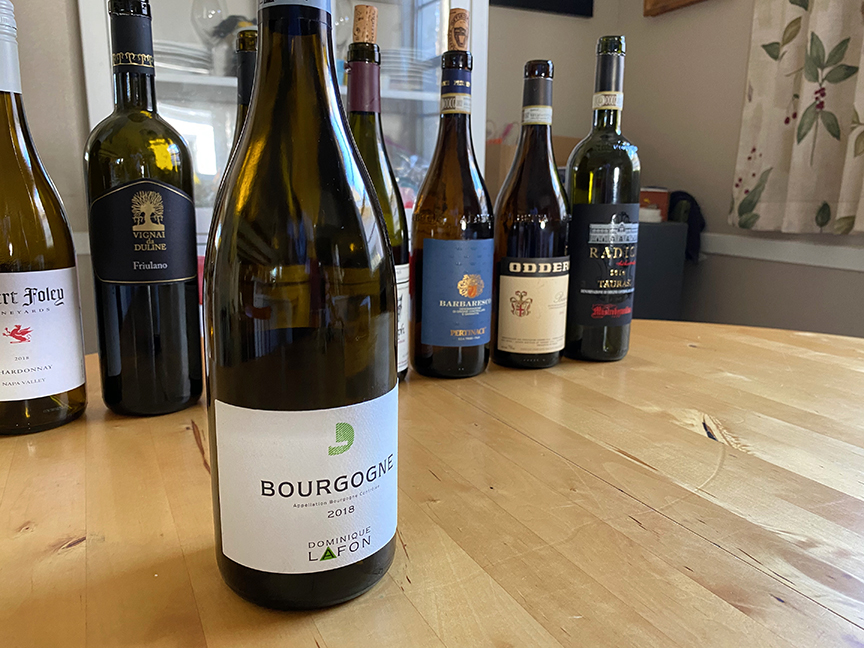
Dominque Lafon 2018 Bourgogne Blanc

I was curious about this “second label” by Dominique Lafon after reading up on him in the course of my work for the Boulder Burgundy Festival where he was the virtually featured winemaker this year. It’s not cheap but this wine was spectacular, a great value for those who want to dip their toes into Burgundian greatness. One of my favorite wines of the year.

Vignai da Duline 2018 Friulano

Classic, focused, elegant, and genuine. Vignai da Duline is one of those estates that all the cool kids — from the classicists to the enohipsters — in Italy love. And with good reason. We’d never had the monovarietal Friulano and both Tracie and I were blown away by the depth and beauty of this stunning wine. Highly recommended and another great value for a premium wine.

Faury 2018 Saint Joseph Blanc and Rouge

I was drawn to this producer because of the rarity of white wine from Saint Joseph. Both of these wines, each under $40, were nothing short of spectacular. Kermit Lynch has always had a knack for sourcing under-appreciated wines that land at reasonable prices and both of these wines delivered 1,000 percent.

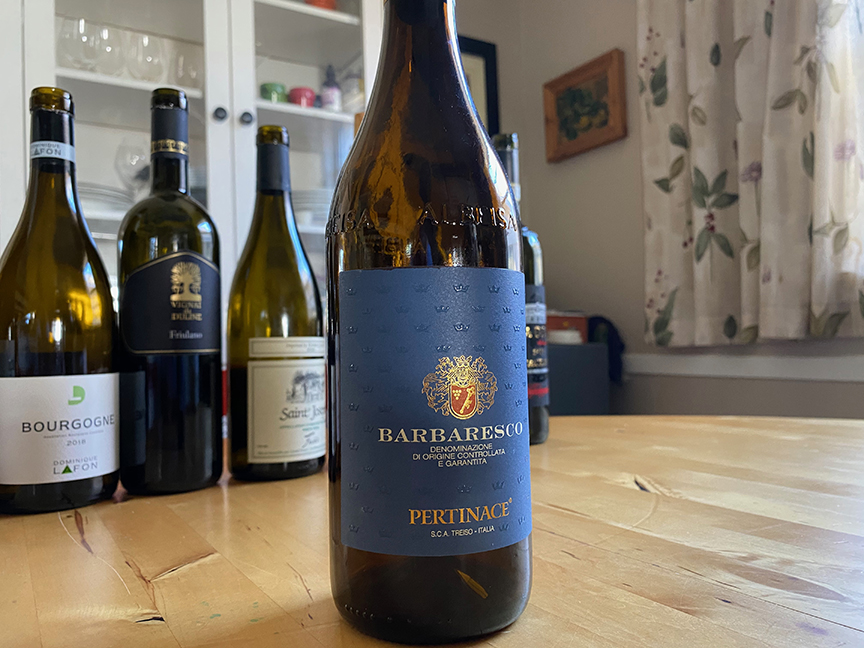
Pertinace 2016 Barbaresco

Pound for pound, Pertinace is the greatest value in Barbaresco today imho. After I tasted this wine for a virtual wine dinner I led, I bought a case and we drank it for all of our holidays. What a wine and what a value! This is one of those wines that I’ll remember for the rest of my days. No joke. I have my suspicions as to why this cooperative is not more popular in the U.S. and that’s fine with me. My recommendation: run don’t walk.

Oddero 2016 Barolo

I’ve followed Oddero for more than 15 years now and I’m always blown away by the wines’ consistency over time. A perennial classic that always lands with reasonable pricing. I believe that’s because the Oddero family has always remained true to their original vision: old school, traditional winemaking with immense focus and elegance. We opened this with Pietro for a virtual wine tasting I led and it was magical to share the experience with other like-minded tasters.

Mastroberardino 2016 Taurasi Radici

Another magical experience, tasted with Piero Mastroberardino for a virtual wine tasting I led. I have such a deep connection to this wine: back when I first started tasting and collecting, it was one of the few wines I could afford to lay down (anyone else remember the extraordinary 1995 vintage for this wine?). Tasting with Piero is always such a compelling experience and this wine was extraordinary the night we shared it virtually with the host restaurant’s guests. What a wine! And what a fantastic value, another one I’ll be cellaring from the year of the pandemic.

Happy new year, everyone. I hope this finds you and loved ones all healthy and safe. Thanks for being here and thanks for all your support in 2020. Looking forward to brighter times and more great wine in 2021.