Amarone: controversial appellation expansion overshadows 2011 debut tasting

hillside vineyard valpolicella amaroneAbove: a view from a hillside vineyard looking out on to the valley floor in Valpolicella (image courtesy the Venturini winery). In a general assembly in May 2013, Valpolicella Consortium members approved a change in appellation regulations that would allow Amarone producers to blend hillside and valley floor fruit in the wines. Some prominent producers and growers groups have vehemently opposed the change.

Members of the Valpolicella Consortium gathered at the Palazzo della Gran Guardia in Piazza Brà in Verona over the weekend to present the 2011 vintage of Amarone (click the link for the list of presenting wineries).

But as top buyers (some from as far away as the U.S.) and leading Italian wine writers and bloggers tasted the soon-to-be released wines, a shadow of controversy hung over the event.

In May 2013, the Consortium proposed a change in appellation regulations that would allow winemakers to supplement hillside-grown fruit with valley floor-grown fruit for the production of Amarone.

The proposed change was ratified in a May 2013 consortium member vote. But it has yet to be approved by the Italian agricultural ministry’s committee on wine. A number of prominent producers and growers associations, including the Federation of Independent Grape Growers (FIVI) and the Amarone Families group, have vehemently and vociferously opposed it.

The as-of-yet unchanged appellation regulations state that grapes grown in “fresh soils on the plains or valley floor must be excluded” from Amarone production (article 4, section 2).

The Consortium had proposed deleting this wording, calling it an obsolete “discrepancy” and a “typo” in an official statement.

While the proposed change would not technically expand the production area, it would allow producers to use inferior quality grapes for the production of the wine — the appellation’s flagship.

“The problem with the valley floor was evident in 2014 because of the heavy rains,” wrote Ilenia Pasetto of the Venturini winery in a recent email exchange. “Valley floor vineyards suffered greatly and the fruit was heavily damaged. At the same time, thanks to the varied shape of hillside vineyards, the rainfall flowed down from the hills toward the valley. Because the water didn’t stagnate and because the hillside vineyards are more ventilated, quality was good even though they produced a smaller amount of grapes than usual. The warm, sunny weather started at the end of August continued through September and it helped to dry the bunches and prepare them for [the Amarone] drying [process].”

Some trade observers have speculated that the Consortium’s move was inspired by the impressive growth in Amarone sales in recent decades.

According to a report published in 2013, the number of bottles of Amarone increased from 2,480,000 to 8,570,000 between 1998 and 2008.

Roughly 90 percent of the wine produced are sold outside Italy, according to the Consortium, mostly in northern Europe, the U.S., and Canada.

In a phone call today, a Valpolicella Consortium representative said it’s unclear when the proposed change will be reviewed by Italian government officials.
Le Logge, a perennial best restaurant in Tuscany, a great white from De Batté, and jazz in Siena

mackarel ceviche recipeLooking back on some of the great meals of 2014 that haven’t yet found there way into my feed, the one that really resonates and reverberates in my mind was a late fall supper at Osteria Le Logge, Laura Brunelli’s amazing restaurant in the heart of Siena’s historic center.

It’s a wonderful place to visit for classic Tuscan cookery (ribollita, fiorentina, etc.).

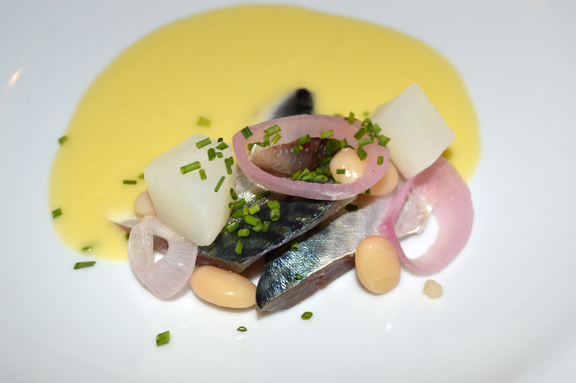
But the main attraction, at least for me, is Chef Nico Atrigna’s creative cuisine. That’s his mackerel “ceviche,” above.

Chef Nico has cooked so many of my “best” meals in Italy over the last few years. And my visit in early November 2014 didn’t disappoint.

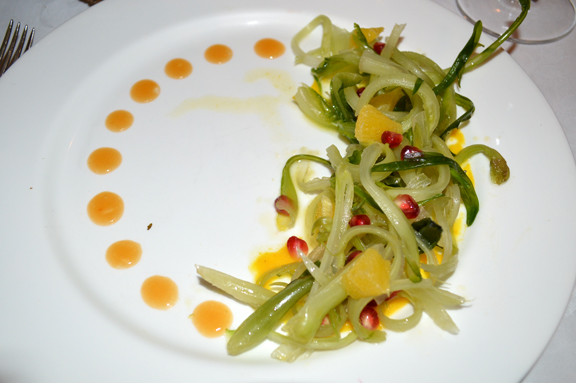
puntarelle roman recipe bestHis dishes are never overly complex. He culls from the mediterranean bounty of materiae primae and masterfully accentuates their aromas and flavors.

This puntarelle salad, above, with citrus was a wonderful study in sweetness, acidity, and astringency.

best lobster pasta recipeBut the plat de résistance was the spaghetti aglio, olio e peperoncino with spiny lobster.

I can’t imagine a more humble dish more nobly executed. It was one of the best things I ate all year last.

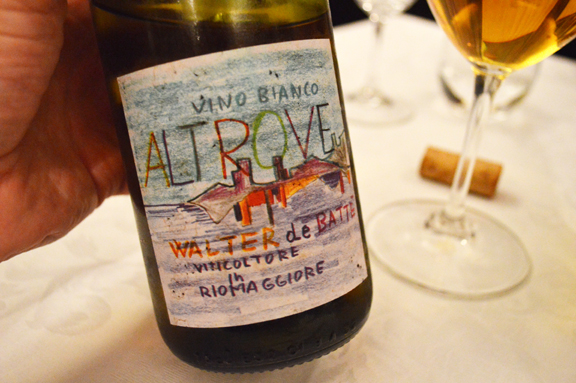
de batte altroveMirco, Le Logge’s wine director, recommended the 2009 Altrove by revered Ligurian winemaker Walter De Batté.

According to an interview I found on the AIS (Italian Sommelier Association) Liguria site, it’s a blend of “Bosco, Vermentino, Rossese bianco, and Marsanne,” but “primarily Roussanne,” in Walter’s words, a grape that the nineteenth-century Italian ampelographer “Gallesio had identified as ‘Nizzardo.'”

The word altrove means elsewhere in Italian. I loved Walter’s post-modern explanation for the wine’s name, which can be found on the back label.

“In the Mediterranean,” he writes, “infinite elsewheres are hidden in every where.”

Notes of thyme played against this macerated wine’s rich minerality and breadth of stone fruit flavors. An extraordinary wine (at a great price).

Mirco, who knows my palate well after all these years, never misses a beat (ask for him when choosing your wine at Le Logge).

best music club sienaDulcis in fundo (Latinists among us will get the paronomasia), Laura has finally opened her subterranean music venue and wine bar called “Un Tubo” (Italophones will get the irony).

The night I was there, a classic rock cover band was seriously rocking out the house.

But from what I glean on the club’s website, jazz is the genre best represented there.

Anyone who’s ever spent any time in Siena knows that the dining and nightlife options there are next to nihil.

Laura has done an amazing and single-handed job of changing that. Beyond the extraordinary daytime sight-seeing there, the trip to Siena is worth it just to eat at her restaurant and drink a glass (or two) of Franciacorta at her super fun music joint.

Taste Franciacorta with me this Wednesday in Houston (FREE)

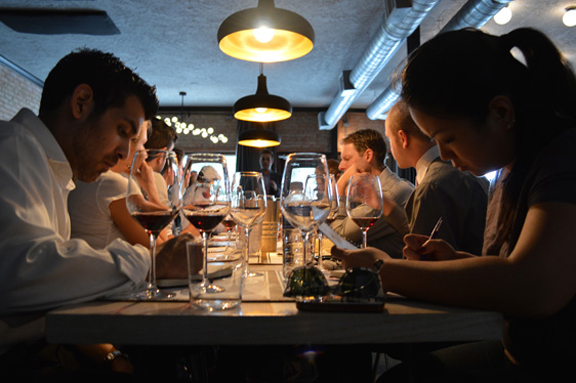
houston somelier associationAbove: the Houston Sommelier Association is one of the coolest and most friendly wine “study groups” in the country. The mood is always convivial but serious and everyone, even laypersons, are always welcomed with open arms.

Please come out and taste with me: I will be leading a Franciacorta tasting this Wednesday at the weekly meeting of the Houston Sommelier Association.

Here are the details:

Franciacorta “Real Story” Tasting
Wednesday, February 4
10:30 a.m.
Camerata
1830 Westheimer
Houston, TX 77098
(713) 522-8466

It looks like we will have wines from each of the five six Franciacorta wineries currently available in Texas.

And we will also have a number of wines that are not sold in Texas.

It should be a super fun event and if you are in town, please join us.

The event is free: polishing a few glasses at the end of the tasting is the price of admission.

Wine snubbiness and snobbiness, ENOUGH! Marlowe, how low can you go?

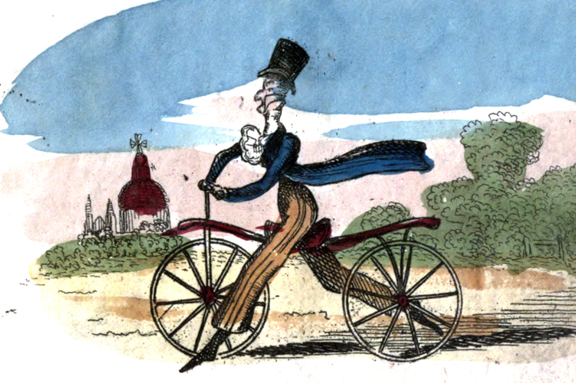
The dandy's perambulations : embellished with sixteen caricature engravings (1821)While I was in New York last week, someone from the wine trade was so rude to me — on the floor of a hopping Manhattan restaurant no less — that my dining companions were left speechless by his ill manner.

And so I wrote and recorded a song about it (click, listen, watch, and grab below; for those who don’t know me through music or who didn’t attend my high school, my nickname is “the Jar”).

Snubbiness and snobbi[sh]ness have been since the advent of the modern era. As industrialization reshaped Europe and a new governing “management” class emerged, wine became an emblem and ornament of the haves and the other-halves and their supposed superiority.

In recent decades, in Europe and perhaps to even a greater extent here in America, wine culture has become increasingly demotic. Not only has wine become more accessible and more appreciated by a broader and more diverse group of people, it has also found its way into workaday parlance (that’s why the word demotic is so apropos here).

Despite the wider, however commerce-driven, reach and embrace of wine, a new form of elitism has emerged over the last ten years or so. And sadly, this new snobbiness and snubbiness has also spilled over into the world of wine writing and wine media.

Some have even exploited this newfound aloofness as a marketing tool — and in the name of a faux proletarianism no less!

Who can forget the bully and internet troll who endlessly harassed and berated wine bloggers and social media users who didn’t kow-tow to his party line? His disingenuous, cliquish tactics were a savvy form of marketing: he used snubbery and snobbery as a means to build visibility for his brand.

In the wake of the episode last week, I was inspired to write the song (a “love letter” to the high and mighty among us) and to write this post: it’s time to stand up to bullies and assholes.

After all, hospitality is at the heart of our trade. We live in the post-multi-cultural era, where diversity, pluralism, and inclusion are the bywords of social interaction.

Have you ever been to the famous Subida restaurant in Friuli a stone’s throw from the Slovenian border? As soon as you enter the restaurant, the owner offers you a slice of prosciutto and a glass of wine. It’s an expression of a centuries-old tradition of restauration (in both the etymological and literal sense of the word).

And even when petty competitiveness trumps collegiality (as it did the other night on the floor of a bustling Manhattan restaurant), wine professionals need to remember that the driving force of the trade is the will to embrace our fellows — just as Josko Sirk of La Subida teaches us. If that’s not the reason that you’re in the trade, then you are in the wrong business.

If you’d like to join me for asshole-free tasting next week, I will be pouring what I believe is the largest selection of Franciacorta wines ever presented in the U.S. at the weekly meeting of the Houston Sommelier Association. All are welcome and the price of admission is polishing a few glasses at the end of the tasting.

Grab the mp3 here.


They came for the pizza and stayed for the Champagne: a Houstonian on top of the world in Manhattan

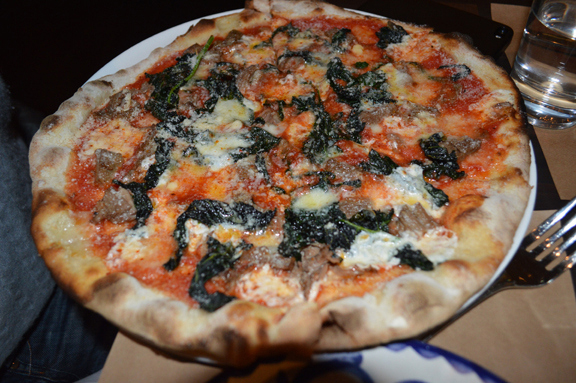
roman style pizza recipeThe pizza at Marta in Manhattan last week was awesome: authentic Roman-style, with perfectly seasoned and fired crust and classic and creative toppings (the Carbonara with potatoes was the biggest hit at our table).

But the thing that impressed me the most was the wonderful wine list and wine director Jack Mason’s grace, ease, and affability on the floor.

To my mind, he is the apotheosis of the modern sommelier: an extremely informed, highly able educator and immensely gracious host.

I first met Jack a few years ago when he was just starting out as a sommelier at Pappas Bros. Steakhouse in Houston. Today, he and his aggressively priced short list of wines from Champagne are at the center of the wine universe.

I phoned him earlier this week and interviewed him for the Houston Press.

He is the nicest guy. And let me tell you, folks, we need more wine pros like him.

Check out my post here. Thanks for reading!

Is Charlie Bird the best restaurant in the U.S.? It’s my current favorite…

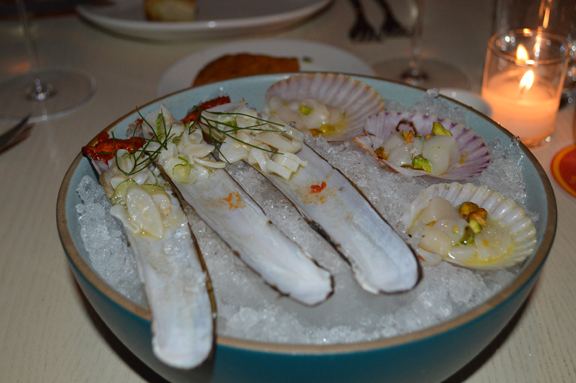
razor clam recipeThe meal at Charlie Bird in lower Manhattan was so good the other night that I felt like I was cheating on my wife by eating there without her.

Yes, yes, I know. It’s ridiculous to talk about “the best restaurant” anywhere. I’m a devout anti-listiclist but my experience at Charlie Bird was so thrilling that I’m just going to go ahead and blurt it out like a schoolboy: it’s my favorite restaurant in the country right now.

That’s the crudo we were served, above, razor clams and bay scallops (I wrote up nearly all the dishes over on the Cantele USA blog; the dinner was the culmination of a week in NYC with my super good friend and client Paolo Cantele, who treated me to this extravagant repast).

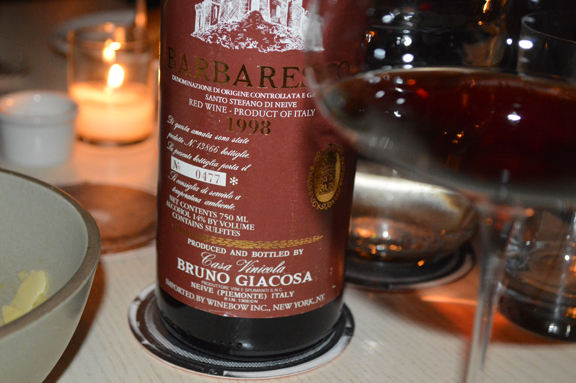
barbaresco santo stefano giacosaYes, it’s true: the bottle of 1998 Giacosa Barbaresco Santo Stefano didn’t hurt.

Man, what a wonderful vintage of this wine to drink right now! I’m sure it has many years ahead of it but it was an extremely thoughtful (and generous) selection by Paolo, for its elegance, grace, and drinkability. Perhaps more than any other producer, Giacosa’s wines capture the “unbearable lightness,” the ineffable balance of power and litheness that make Barbaresco such a unique expression of Italian viticulture.

Between 1999 and 1998, the former is arguably the better vintage. But this wine drank at what might be the peak of its performance. Simply stunning wine.

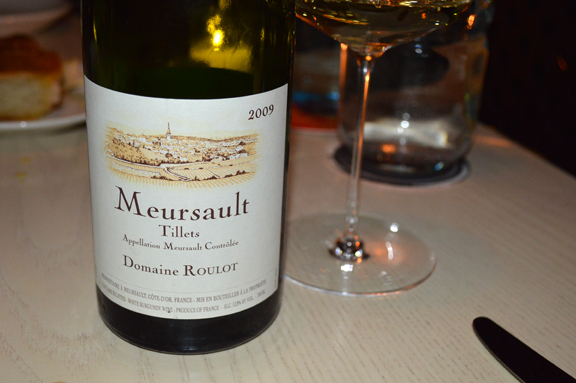
roulot tillets mersaultLike nineteenth-century amanuenses, Robert Bohr and Grant Reynolds transcribe their reserve list by hand. How cool is that? Very, in my book.

And every wine on their handlist can be ordered by the half bottle (they pour the rest of the wine by-the-glass on the same night).

I recently hung out with Robert and Grant and they are both such down-to-earth, genuinely nice guys (despite the flurry of media attention they’ve received in recent years).

It’s not hard to understand why everyone in the wine trade wants to eat at their spectacular restaurant (apologies for the superlatives but I just really, really loved this place).

Paolo, thanks again for this truly unforgettable experience. We had a great week together in New York and this was a real treat.

Grant, thanks so much for taking such great care of us and the fantastic wines you shared. The Roulot was so spot-on and a breathless pleasure for me. Your restaurant and wine list are super cool.

On the food: Charlie Bird’s menu is confident without arrogance; it is self-aware without cockiness. That may sound like a weird thing to say about a gourmet experience. But how many dishes are served in Manhattan every night with a side of affectation? Too many to count… Check out my write-up of the food on Paolo’s U.S. blog here.

Taste Franciacorta with me Feb. 4 in Houston and a note on the Montalcino scandal

houston somelier associationAbove: the Houston Sommelier Association is one of the coolest and most friendly wine “study groups” in the country. The mood is always convivial but serious and everyone, even laypersons, are always welcomed with open arms.

First the good news…

I’m thrilled to share the news that I will be leading a Franciacorta tasting week after next at the weekly meeting of the Houston Sommelier Association.

Here are the details:

Franciacorta “Real Story” Tasting
Wednesday, February 4
10:30 a.m.
Camerata
1830 Westheimer
Houston, TX 77098
(713) 522-8466

It looks like we will have wines from each of the five Franciacorta wineries currently available in Texas.

And we will also have a number of wines that are not sold in Texas.

It should be a super fun event and if you are in town, please join us.

It’s part of a bigger project that I will tell you about in a few weeks. But for the time being, I’m very excited about getting to share one of my favorite appellations and an Italian wine that I feel deeply connected to.

Please join if you can/want: everyone is welcome at the Houston Sommelier Association gatherings and it’s a very friendly environment where camaraderie is the order of the day. I’m thrilled that they agreed to let me taste with them.

And now for the awful news from Montalcino…

To say the least, I was as dismayed to hear the news from Montalcino this week.

I didn’t attend the Benvenuto Brunello tasting here in New York City (where I’m working this week). But there’s no doubt that the lurid details arriving from Montalcino cast a long shadow over the gathering.

My connection to Montalcino stretches back more than 25 years and I know a lot people there, including some of the people who have been allegedly implicated in this mess. A lot of people have been messaging me from Italy and here in the U.S. I only know as much as what has been said in the Italian media.

In another and now distant chapter of my life, my family was involved in a local, “small-town” scandal that received international attention.

It was all very ugly and it was one of the toughest times in my life (I was eleven years old when it all unraveled).

As I’ve read the Italian media reports from Montalcino, I’ve thought a lot about those years of our lives.

It’s hard to “avert our eyes” when we see things like this in the feed. But it’s important to remember that — no matter what truth emerges — the people affected by this are real people.

Montalcino is a strange place, at once one of the world’s most beautiful and one of its most lonely.

Today, my heart is with my friends there…

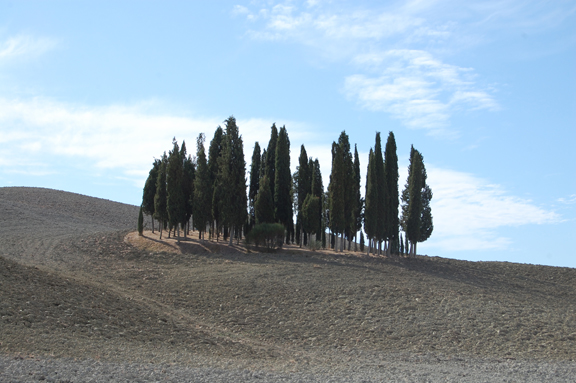
tuscan cypress trees montalcino

A great night at Marta Who was that strange man humping me last night at Marta?

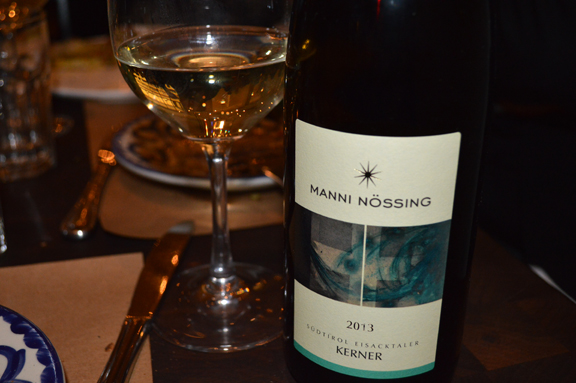
nossing kerner marta new york wine listAbove: German-speaking Italians are the “it” wines right now in NYC. I loved this Manni Nössing Kerner that Jack Mason poured last night at super sexy Marta.

Holy cow! It was a who’s who of the international wine scene at Marta last night, where Paolo and I had a 9 p.m. reservation.

I finally got a chance to chat with Elisa Scavino from legacy Nebbiolo producer Paolo Scavino. She was staying at Nomad, not too far from Marta, and she had stopped in for dinner for one at the bar. I was so glad to meet her and she was super nice and fun to talk to.

And at the table next to ours? Yes, you guessed it , the hardest working man in the wine podcast business, the inimitable Levi Dalton, once hailed as the Philip Marlowe of the wine world by an obscure wine blogger.
Continue reading

Nüsserhof Blatterle was such a wonderful surprise at Il Buco Alimentari e Vineria

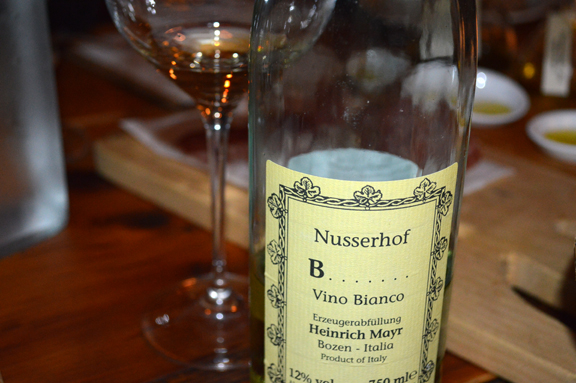
nusserhof BlatterleWhen we sat down for dinner last night at Il Buco Alimentari e Vineria in lower Manhattan, there was no debate over which white wine to start off with: the Nüsserhof B[latterle], made from the rare Blatterle grape in German-speaking South Tyrol.

Honestly, I’d never heard of the variety before and was entirely geeked to try it. I loved its low alcohol (at around 12 percent), freshness, and its easy-going spearmint note on the nose. It was a fantastic wine to go with the charcuterie, pickled beets, and lettuces that came out first from the kitchen.

Italian wine is a never-ending mosaic of grape varieties, styles, tastes, peoples, and places. And this wine was just the umpteenth reason that it never gets boring.

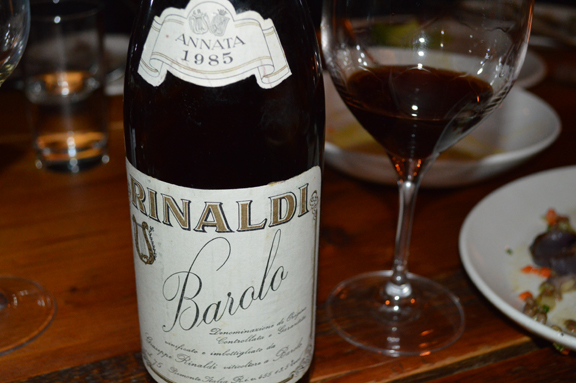
1985 rinaldi tasting notesFor our second bottle, my friend Jamie Wolff, founder and owner of Chambers St. Wines, the current “best wine shop in the world” (vis-à-vis JancisRobinson.com), generously treated us to a stunning 1985 Barolo by Giuseppe Rinaldi (corkage).

Man, this bottle sang in the glass! It had an ethereal balance of savory earth and fruit flavors and although it was still muscular and deliciously chewy in body, its ineffable litheness — a hallmark of the greatest expression of Barolo imho — prevailed in the mouth.

Jamie had double-decanted the wine earlier in the day and its vibrancy left everyone at the table speechless and very happy.

It was so wonderful to see my good friend, Il Buco’s resident wizard, Roberto Paris, who mentored and encouraged me so early on in my career. He is such a lovely man and we couldn’t help but re-stoke the memories of the late nineties and very early aughts before tragedy silenced irony in Manhattan for a time.

All in all, it was a great way to become re-acclimated to my old stomping grounds.

Please stay tuned… More enogastronomic adventures await me in my near future here in NYC…

Sangiovese research breakthrough

best sangiovese tuscany montalcinoAt Bush on my way to NYC today.

But wanted to share a small breakthrough I made in my ongoing Sangiovese research last week.

It’s well known that Baron Bettino Ricasoli grubbed up his vineyards and replanted his Brolio estate (mostly) to Sangiovese in the second half of the nineteenth century.

His decision to embrace and champion Sangiovese as Tuscany’s primary grape variety became a blueprint for the generations of growers and winemakers who followed.

But I’ve been challenged to find ampelographers who describe Tuscan viticulture and the grapes planted there in the decades that followed his move.

Last week, searching and scrolling through Google books, I stumbled across a wonderful survey of Tuscan farming published in 1882 in Florence (Paggi), Tuscan Agriculture: on the state of farming and farmers by Carlo Massimiliano Mazzini.

“It would take too long to list all the grape varieties cultivated in Tuscany,” writes Mazzini. “Their extremely high number represents the principal defect of local viticulture because it prevents [winemakers] from standardizing the types of wine produced there.”

“But in recent years, notable progress has taken shape. In all of the new plantings, the following prized and dependable varieties have come to prevail: Sangioveto, Canaiolo, Mammolo, Trebbiano, and Malvasia. The first three are red, the other two white.”

I posted my notes, along with my original translation of Baron Ricasoli’s famous letter to Cesare Studiati, over at my client La Porta di Vertine’s blog last week.

I hope you find my small discovery as exciting as I did.

Like I said, I’m heading to NYC today for a week of meetings, eating, and drinking. See you on the other side…