8 wine blogs Italian wine professionals need to know @UniSG

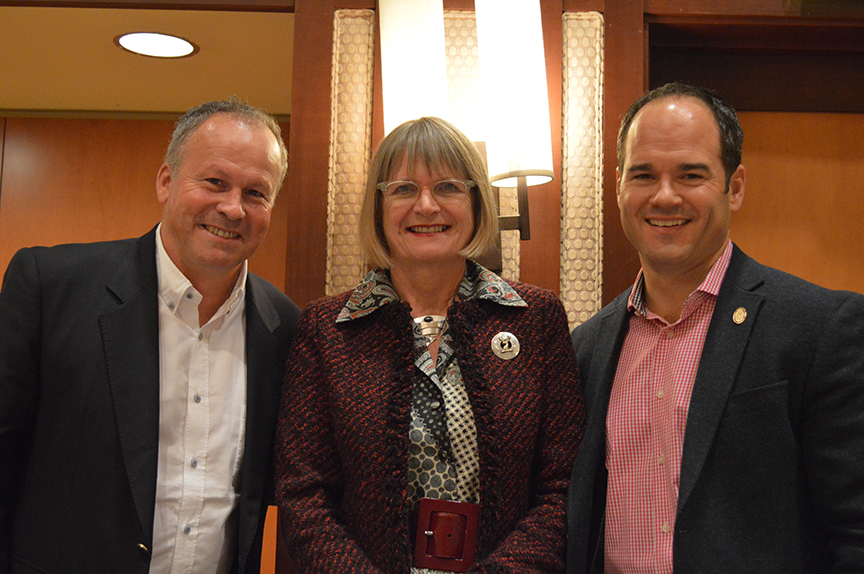
jancis-robinsonAbove: I caught up with Jancis Robinson (center) this fall at the Boulder Burgundy Festival, where I serve as the event’s official blogger. Some people call her “the world’s greatest wine writer.” She is. But I call her the world’s coolest wine blogger. She is super nice (and so delightfully funny as well). And hers is one of the 8 essential wine blogs Italian wine professionals need to know. That’s winemaker Étienne de Montille on the left, Master Sommelier and festival founder Brett Zimmerman on the right.

Among the English-language wine blogs that we discussed at length in our seminars last month at the University of Gastronomic Sciences in Piedmont (for the Master’s in Italian Wine Culture), there were two that I didn’t include in a post yesterday on eight wine blogs that Italian wine professionals need to know: one was Elaine Brown’s Hawk Wakawaka Wine Reviews and the other was the Jordan Winery Blog by Lisa Mattson.

I didn’t include them because neither focuses on or publishes regular content devoted to Italian wine. But both merit the attention of anyone working in the fine wine trade today.

Elaine’s, because of the way she has pushed the envelope and expanded the horizons of wine blogging. Over the arc of her career as a wine-focused writer, she has created a sui generis form of enoscripture, blending the personal, the political, and the vinous in a stream and feed of often spectacular and compelling quasi-real-time memoir (can you tell I am a fan and a friend?).

Lisa’s, because, perhaps to a greater extent than any other, she has elevated the benchmark for what social media can do in terms of promoting awareness and visibility of a wine and winery brand. In the days that ran up to the U.S. presidential election, as my students and I met for our seminars, we watched Lisa lambaste the now president elect like the fat Christmas turkey he is. It was a bold and audacious move for a California winery brand (and I agree with and share the sentiment wholly). But beyond (our shared) political or ideological leanings, it revealed an authenticity and a deeply personalized approach to marketing that Lisa has mastered despite and thanks to an impressive technical apparatus that she has realized. Brava, Lisa!

Of course, we also discussed Alder Yarrow’s pioneering blog, Vinography. He was one of the early trailblazers of America’s new wave of wine writing (I remember when Lettie Teague made him the first wine blogger to speak at Aspen).

Tom Wark’s excellent Fermentation was another we looked at in Piedmont. Another one of the great pioneers of the new wave and another benchmark for what can be achieved in terms of activism and marketing in the wine trade.

And last and least, we gave honorable mention to the venerated Italian wine critic and broadcaster Levi Dalton, that beloved denizen of the New York wine scene, a Donald Trump among wine dilettanti (remember the song I wrote for him last year?).

Here are the eight that I profiled for UniSG this week: not an exhaustive muster roll but a hand list and a good place to start (not finish) for Italian wine professionals.

Click here to learn more about UniSG’s Master’s in Italian Wine Culture Program.

Op-ed: Prosecco growers are not “exterminators” as some in the media have portrayed us

prosecco-grape-bunchUnnoticed by America’s wine-focused media, a recent episode of the popular RAI-produced news show “Report” entitled “Prosecco Village” portrayed Prosecco growers and bottlers as greedy entrepreneurs who have exploited the wine’s popularity at the expense of residents of the Veneto and Friuli-Venezia Giulia. Aggressive spraying of vineyards, claim the show’s producers, have led to higher levels of cancer and other illnesses among people who live there. “Report” is known for its controversial and often sensationlistic coverage. (Its show devoted to “cancer-causing” wood-fired ovens in artisanal pizzerias in Naples was a recent example of its over-the-top approach to Italy’s food industry.) The episode created quite a stir in the Italian wine world, with many pundits and artisanal winemakers defending the Prosecco growers. For Italian readers, in case you missed it, see this post by my friend and colleague Alessandro Morichetti for Intravino. Today, I translated the following op-ed by my client (and friend) Luca Ferraro, a certified organic grower in the Asolo Prosecco DOCG and one of the winemakers I admire most for his honesty and earnestness.

Have you noticed? Recently, it seems that giving Prosecco a bad name has become an international trend. Everyone needs to spend at least five minutes of her/his time explaining the reasons behind the phenomenon of the most widely sold Italian sparkling wine in the world. And if possible, they have to give the story a negative spin. It seems that our planet is suddenly full of brilliant people who want to become presidents and directors of grape grower consortiums. The attacks arrive from every corner: Sensationalist TV programs, environmentalists, winemakers from other appellations, each with their own score to settle.

Prosecco is on an express train. People like it. Everyone can appreciate it. It’s easy to understand. It can be served for nearly every occasion. Excuse the expression but a lot of people are pissed off that such a simple wine has claimed such a large slice of the market.

Today, I’d like to address the “environmentalist branch.” But first I’d like you note the following figures.

The three Prosecco DOCG townships:

Asolo – roughly 1,000 hectares planted to vine
Conegliano-Valdobbiadene – roughly 8,000 hectares planted to vine

Prosecco DOC, which includes Treviso province and Friuli-Venezia Giulia – roughly 25,000 hectares planted to vine

Despite the wide area where Prosecco is produced in its various expressions, critics have focused on the hills of Conegliano and Valdobbiadene. In those townships, the density of vineyard plantings is certainly higher. But it’s this very characteristic that has made the landscape there so compelling. Over the course of the decades since the Second World War, wise and able farmers have shaped its beauty like they were new Canovas, lovers of their appellation and the places where they make their homes.

The beauty of these places has prompted a growing number of people to settle there. They come seeking the peaceful and enchanting countryside and they want to be in contact with nature.

But this can lead to problems when the townships allow people to build homes among the vines, often refurbishing old barns. They don’t stop to consider that these same persons can decide, from one day to the next, that you, a grape grower, who has always lived there, can no longer spray your vineyards because it might bother them.

I’m certainly not here to claim that there haven’t been problems when farming and humans live together. There are still problems today. But journalists often decide to foment fear by claiming that our area is a sure-fire source of tumors and other grave illnesses. They claim that our vines cause landslides and flashfloods. They present grape growers as if they were exterminators. And when they do so not to engage in earnest and well-documented journalism but merely in order to raise their number of shares and clicks, I need to share my two cents.

Local government officials in Treviso have created a roundtable to understand the problems in Prosecco today. I’ve been fortunate enough to participate in the gatherings as a member of FIVI, the Italian Federation of Independent Grape Growers. Other participants include town mayors, consortiums, environmentalists, citizens, and other professionals.

We have spoken to researchers who study disease data and they tell us that the incidence of tumors is lower than in the rest of the Veneto region and it aligns with national levels. We have spoken to Italian Forest and Wildlife Rangers who inform us that that the number of forest fires is lower because there is less fallow land. We have discovered that it’s thanks to grape growers who manage “green” areas that there are fewer landslides and flashfloods, catastrophes that are caused by blight and overdevelopment.

Nobody ever talks about the efforts by the consortiums to study and create protocols that limit the use of chemicals to treat vine disease.

Nobody ever talks about how farmers are constantly trying to follow the consortiums’ recommendations and guidelines in order to better manage the vines. Over the last 15 years, the use of chemicals in the vineyards has consistently decreased.

Nobody ever talks about how there is a new generation of grape growers, with attitudes very different than 40 years ago. They work together to study, to research, and to tackles problems in the vineyards with the best possible results in every given vintage.

Nobody talks about the townships’ aggressive regulation of our work, something that we must rightly adhere to.

Nobody talks about how the water table in the Veneto region has a bill of health that puts it far under the threshold for risk. That’s because the Veneto region has one of the most aggressive protocols in Italy for the collection of data, the number of sites monitored, and the number of substance monitored.

And all of this was in place long before the TV cameras arrived.

We can always improve in our work and in our lives. And it’s our duty to work together to make the hills of the Prosecco DOCG a beautiful and healthy place.

It’s party of what we do for a living. Can you think of a quality producer of wines who isn’t interested in making her/his workplace healthy and beautiful to behold? How could we grape growers deface our true master in our lives and our work?

One thing that we often forget to say, as if it were an insignificant thing, is that grape growers are the first and foremost to “live” their appellation. We were born here and we live here. And this is our home.

Luca Ferraro
grape grower, winemaker
Asolo Prosecco DOCG

The Do Bianchi Holiday Six-Pack is here. Thanks for your support and happy holidays!

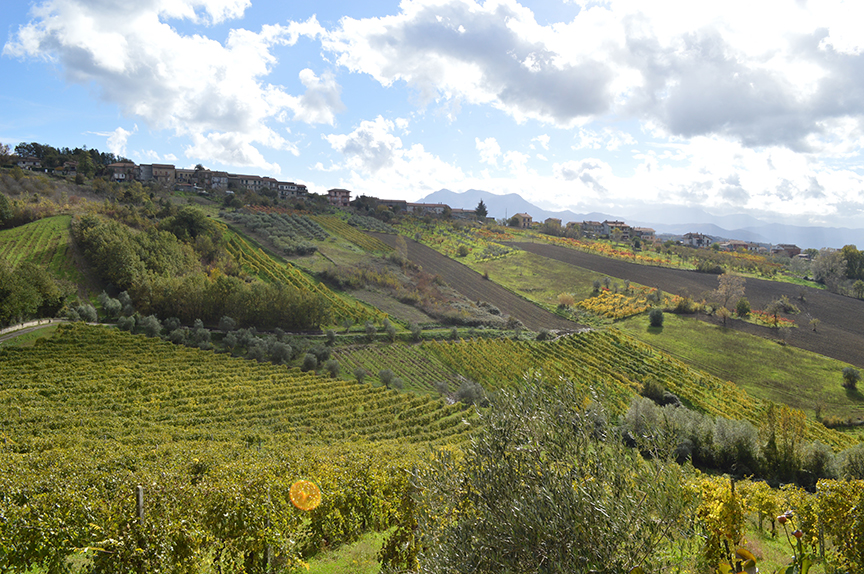
irpinia-wine-country-campania-grecoThe land of Irpinia (Campania, southern Italy, near Naples) is as wild as it is delicious.

Please place your order before Wednesday at noon PST.
Order simply by emailing me here.

The Do Bianchi Christmas 2016 Six-Pack
a flight of six dinner party wines
perfect for a part of 6-8 guests

Bele Casel NV Prosecco Colfòndo
Struzziero 2015 Fiano d’Avellino
Agriverde 2015 Cerasuolo di Abruzzo
Nanfro 2014 Frappato
Ballarin 2011 Barolo
Alice Bel Colle 2015 Moscato d’Asti

$130 per six-pack
plus CA sales tax, shipping, and handling

10% discount applied if you buy two or more.

It’s been a busy year for me traveling to Italy (9 trips this year!) and traveling across the country leading Franciacorta wine tastings for wine professionals, writers, and consumers.

One of my biggest revelations was my first trip to Irpinia (in Campania), which I made in early November of this year. Until I actually headed up the mountains from Naples and visit Taurasi and Avellino, I really didn’t understand how “heroic” these wines are. I knew they were great. And we’ve been serving wonderful Taurasi, Greco di Tufo, and Fiano d’Avellino at Sotto (the restaurant in LA where I co-author the wine list) since it opened more than five years ago. But when I traveled there and discovered what a desolate yet beautiful place it is, I realized that I really hadn’t wrapped my mind around how special they are. Aside from an old-school restaurant or two, a handful of pizzerias, and maybe one or two “destination” restaurants, there really isn’t much up in those volcanic mountains beyond wine and grape growing. It’s an extremely depressed part of Italy where relief from the financial crisis is still far off on the horizon. It’s also one of the most “extremely” beautiful parts of Italy I’ve ever visited: in part because it is so underdeveloped. We’ve all drunk these wines in super hip restaurants in NYC and LA and some of us have even drunk them in Naples. But to go see where they are raised and to meet some of the people who make them was as inspirational as it was eye-opening. If you’ve ever read Pasolini’s essay about life in Naples, you’ve had a taste — just a taste, mind you — of how these places are so unique in the panorama of Italian viticulture today and over the millennia.

The 2016 Christmas six-pack includes the 2015 Fiano d’Avellino from Struzziero, a hard-scrabble winemaker who makes extraordinary wines imho.

The other big jaw-dropper in this flight is the 2011 Barolo by Ballarin, one of those under-the-radar producers that I discovered last year. I tasted with the winemaker in July in Barolo village and was so impressed by his wines that I had hoped to offer his Anascetta in this flight. But sadly, it was sold out. Ballarin’s Barolo is old-school, all the way, the way I like it. (As my buddy at Chambers St. Wines like to say, I like big botti! In other words, big, ahem, barrels.).

Like all my offerings, this one is flight up like a dinner party. Serve in the order I recommend and you will move up in body until you get to the biggest and boldest of the wines, the Barolo. Then the Moscato is a dulcis in fundo wine to serve at the end with fresh fruit (ideally). It will serve 6-8 people depending on the crowd. And of course, all of the wines are great on their own as well. Just remember to always serve with food in accordance with the Italian culinary maxim: no wine without food, no food without wine.

Thanks so much for your support and happy holidays!

Bele Casel NV Prosecco Colfòndo (Proseccoland)

Old-school Prosecco the way the nonno made it except for cleaner and more focused. Serve “clear” by decanting the sediment (by storing upright in your fridge overnight) or serve cloudy (the way we do it) by gently inverting the bottle before you pour.

Struzziero 2015 Fiano d’Avellino (Irpinia, Campania)

See my notes about. I LOVE the fresh, fruit-driven nose on this wine.

Agriverde 2015 Cerasuolo di Abruzzo (Abruzzo)

Bright and fresh and pink. Salty with good fruit.

Nanfro 2014 Frappato (Sicily)

This is one of those electric wines, with really vibrant fruit on the nose and in the mouth. It’s definitely a “wow” wine.

Ballarin 2011 Barolo (Piedmont)

See my notes above. This wine can also be cellared with great results and makes for an awesome gift.

Alice Bel Colle 2015 Moscato d’Asti (Piedmont)

Serve with fresh fruit at the end of a meal or serve with brunch (this is around 7 percent alcohol so it’s a perfect breakfast wine or Christmas morning wine).

10 Thanksgiving Wines for the Trump Era @HoustonPress

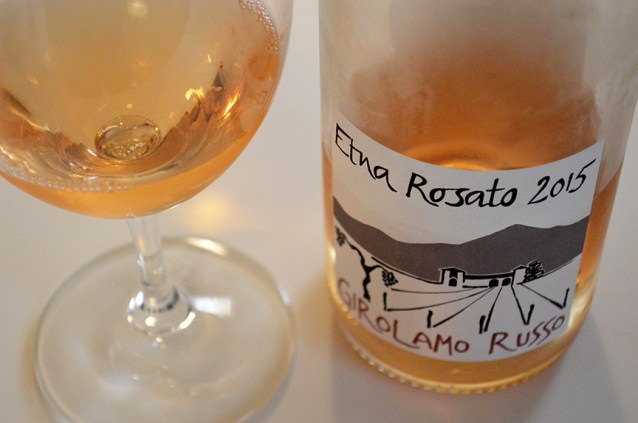
girolamo-russo-rosatoLike most red-white-and-blue-blooded Americans, you are probably dreading your first Trump-era Thanksgiving.

The once beloved American holiday, when everyone used to come together to celebrate the blessings shared by all Americans, has now been downgraded to a mandatory gathering where we eat a bunch of bland, fatty food and try not to grimace as uncle X or aunt Y or cousin Z serves up some wholly unpalatable moralizing chit-chat (Democratic, Republican, Marxist, Trumpist, or otherwise). Some of us will grin and bear it, pretending that things are actually great when obviously, as our new president has made abundantly clear, America needs to be made great again. Or we’ll gloat about how millions of families are about to be torn apart as masses of people are to be deported and how humane civic discourse is no longer considered laudatory among our politicians or citizens.

Either way, we are all going to need wine. After all, Bacchus’ favorite beverage is an excellent elixir when it comes to drowning out the Trumpist din, no matter what side of the aisle you walk on.

If you are a non-white American like me (I recently learned that Jews are not considered “whites” by many among the legions of Trump’s supporters) or even if you are a white American (lucky you!), you are probably going to need help with your selection. Yes, even I — a formerly white liberal who writes regularly about wine — need help with my purchases at Thanksgiving when economy is essential in terms of price ceiling and when a democratic spirit is needed to appease the wide spectrum of palates who will attend our flaming-red southeast Texas holiday celebration on the Louisiana border. (It’s funny, really, to think how varied palates can be among white people even though they are the same color on the outside!)

Click here to read my 10 picks for Thanksgiving this year over at the Houston Press.

Blogger on campus: Wine Writing and Wine Blogging 101, day 1

students-italian-wineWhat a thrill for me to lead my first seminar on the UniSG campus this morning!

My first seminar in the Master’s in Italian Wine Culture program seemed to fly by as the students and I discussed the power of social media in marketing wine; the subjective and self-referential nature of wine writing and wine blogging; and pioneering wine blogs and taste-makers who have shaped the enoblogosphere as we know it today.

Topics ranged from Gertrude Stein and her Autobiography of Alice B. Toklas (the ultimate self-referential novel) to Roland Barthes and the notion of [wine] Writing Degree Zero (and so much more in between).

And as an experiment and exercise, we also tasted two wines, a white and a red, first blind and then with the labels revealed. As we reviewed our notes, we discussed how wine writing can span the sensorial and the cultural and how most wine writing lands somewhere in the middle of that spectrum.

We also looked at three different descriptions of the same wine: the winery’s fact sheet; a score and tasting note; and a highly lyrical tasting note. Again, here, we looked at how wine writing can fall anywhere in between the purely technical to the nearly idiolectal (the most extreme form of self-referential wine writing).

It was a great morning, spent in the company of highly talented, motivated, and simpatico people.

After class, we all headed together to the campus cafeteria were the culinary theme of the day was Indian cuisine. And after lunch and coffee, we all gathered outside in the sunshine where the students asked me questions about life in Texas and America and shared their own impressions from their travels there (even in Texas, where one student told me he had the best steak he had ever tasted!).

One thing that is super cool about the Master’s in Italian Wine Culture program is that the group (11 students) is very close and shares all of their lunchtime meals together. Honestly, I’ve never seen a class of graduate students who were so in-tune with each other (usually it’s the opposite). The camaraderie and solidarity were as refreshing as they were inspiring.

A great first day on campus and looking forward to tomorrow’s seminar!

Click here to learn more about the Master’s in Italian Wine Culture program at the University of Gastronomic Sciences in Pollenzo.

campus-life-italy

Wine blogging degree zero: a preview of my seminars this week @UniSG

Click here to learn more about the Master’s in Italian Wine Culture program at UniSG where I begin teaching this week.

And please follow along here on the blog where I’ll be posting about my experience on campus. Thanks for being here…

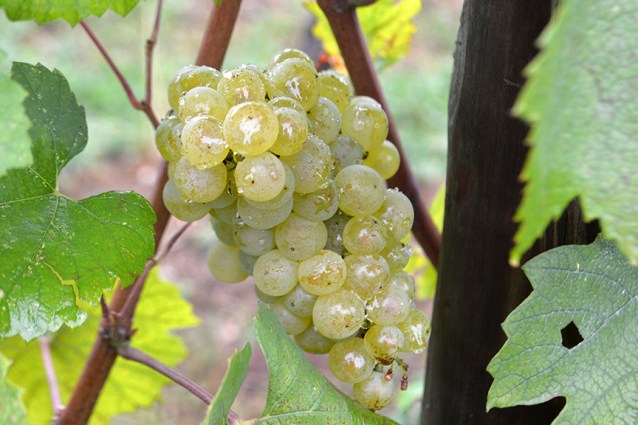
wine-writing-wine-blogging-differenceAbove: Taking a photograph of grapes (like these Chardonnay grapes) is a form of enography or wine writing. Some would argue it’s one of the purest forms because it simply captures a fleeting moment in the grape vine’s (and the wine’s) growing cycle.
One of the greatest works of critical theory to emerge from the 20th-century was Roland Barthes’ Writing Degree Zero. It’s a nuanced critique of social realism and the role that literature plays in the expression thereof. It was one of the first works among many that would follow where the “text” was considered distinctly from the author of the text.

Nietzsche said that G-d is dead.

Barthes said (in much more subtle and profound tones than I will go into here) that the author is dead.

Woody Allen said that Marx is dead… and I don’t feel so good myself.

Joking aside (although the joke is more pertinent here than I think many will realize or appreciate), Barthes probably couldn’t have ever imagined that there would be such a thing as wine blogging, although he surely would have seen it as an expression of bourgeoisie culture. With Writing Degree Zero, he did however give us an important for dissecting and getting to the bottom of the anatomy of a wine blog post.

In Writing Degree Zero, he considers (and am I largely paraphrasing here) writing on a spectrum.

Borrowing liberally from this book, with my own liberal adaptation of his model, we can establish two “poles” of wine writing.

On the one side, let’s say to the left for sake of argument (but not sake of political connotation), you have pure technical wine writing. In other words, writing where clarity and succinctness are key. Instructions on how to build a model airplane would fall on the left side of the spectrum, to give you an example. When it comes to wine writing, a wine fact sheet (a “tech sheet” or technical description of the wine) would similarly fall on the left.

On the very far right hand side of the spectrum, you will find poetical language and even incomprehensible language (in the case of the latter, that would be language that can be defined as an idiolect, a language that only one person speaks). Here, an abstract, hermetic poem by a 20th-century poet is right at home with a lyrical description of a wine (Samantha Dugan’s blog, “Samantha Sans Dosage” is a great example of a wine blog that leans heavily in this direction).

technical description of wine — lyrical description of wine

Nearly every wine blog post will fall somewhere in between these two extremes and in more cases than not, the discourse will lean more toward one pole than the other.

Historically, Robert Parker, Jr. and his 100-point scoring system for the wines he reviews represents one of the most extreme expressions of left-leaning wine writing on Barthes’ spectrum. An extreme example of right-leaning wine writing is represented by Alice Feiring and her highly personal narrative style.

One of the over-arching themes we will be covering in our seminars on wine writing and blogging and how it has evolved in the modern era. The greatest wine writing (I believe) benefits from the tension between those two poles. And the spectrum also gives a guide in understanding how wine writing, in part because of its highly subjective nature, rarely delivers absolute truth.

Ampelographers like José Vouillamoz and Attilio Scienza can argue over the accuracy of their entries for Italian grape varieties. But even in the case of this descriptive form of wine writing, the answers — the accuracy — is often gray as opposed to black and white.

Lyrical writers like Samantha Dugan and Alice Feiring probably don’t argue at all. But is it possible that their writing delivers a clarity and a shade of truth that can only be rendered by their lyrical and narrative styles?

Let’s discuss…

Op-ed: Alfonso Cevola criticizes the “Instagram generation” of wine buyers. A Houston sommelier responds.

Today’s op-ed is by Thomas Moësse (below), Houston-based sommelier and wine director at Divino, where he runs one of the top Italian-focused wine lists in the state.

thomas-moesse-moe%cc%88sse-wine-houstonRecently, I read Alfonso Cevola’s blog post “The Endangered Wine List in the New Millennium” and spat out my morning tablet of Adderall.

[Editor’s note: in his post, Cevola writes that he doesn’t want “to be dazzled (or blinded) by the wizardry of young somms on the Adderall of ambition.”]

I hold Alfonso in the highest esteem and value his perspective on the constantly shifting and ever-exciting terrain of Italian Wine.

However, in this post Mr. Cevola voiced a series of complaints about the state of the wine list in our market and not without a telltale note of salinity.

He appears to draw a line in the sand. This line seems to exist ideologically between classics and upstarts and sociologically between industry veterans and young wine buyers (referred to as “the Instagram generation”). Mr. Cevola purports to be on the side of the consumer. But I feel differently.

First he mentions a lack of recognizable (“revered” and “essential”) selections on these wine lists. If buyers are foregoing the classics on their lists, maybe it is because they are advocates for their guest first and foremost — both are being left behind by exponential pricing increases and the corresponding unattainability of those vins de garde.

Furthermore, I can speak personally to a trend that I have seen among consumers of wine in restaurants like ours.

Long gone are the comments like “what kind of Italian restaurant doesn’t have Tignanello?” More commonly we encounter questions like “what will go best with our food?” Today’s consumer is not scanning a wine list for producers they recognize so much as they want some help with a discovery. Our job as wine service professionals is part curation and consultation. We ask questions first. We pair the wine with the guest and we form a relationship of trust.

If compiling a selection of essential wines is our only purpose, then why do we work so hard? Why do we travel to wine fairs, visit wineries with eight hectares of singular beauty to better communicate our passion? Is our passion relevant at all? If it’s as easy as he suggests, then maybe Mr. Cevola could write our lists for us (a service that his employer Southern-Glazer’s is more than willing to perform).

Simply put, we are living in the golden era of wine. More growers are producing great wine rather than merely selling their grapes. Their approach is a custodial one. The reverence for vineyard and the avoidance of manipulation constitute a revolution in how we think about wine. These are not just trends, and dwindling are the days of unscrupulous, large-production wines merely sold by the caché of their label.

It takes work to assess the bounty of wines available to us through large distributors and small direct import companies as well as an obligation to our guests to do that research, trust our instincts (not Instagram) and choose vibrant, sound wines for every imaginable consumer that might walk through our door.

That work is fueled by passion, not Adderall.

Thomas Moësse
Divino
Houston

Norcia 6.6 earthquake this morning: here’s a way to donate to relief efforts

italy-earthquakeOur thoughts and prayers go out to our sisters and brothers in central Italy this morning: a 6.6 magnitude earthquake struck Norcia (Umbria) shortly before 8 a.m. today (local time).
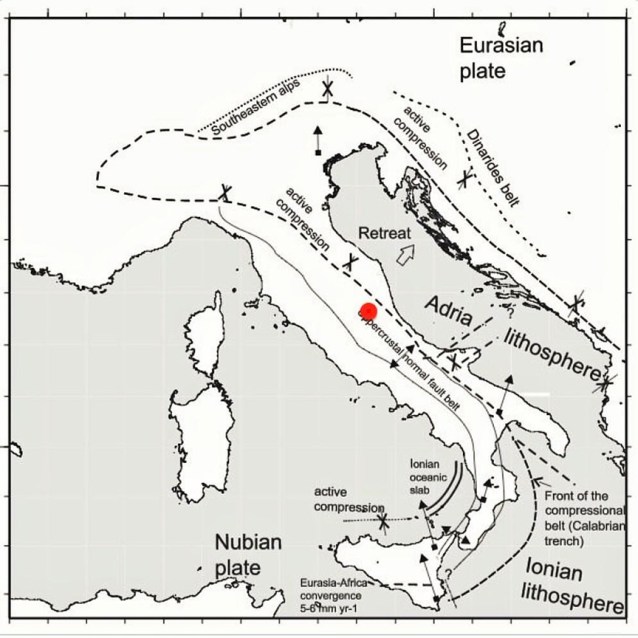
Luckily, most of the affected areas had already been evacuated in the wake of the 6.2 earthquake that virtually destroyed Amatrice and claimed nearly 300 lives in August of this year. Although some serious injuries and widespread damage to historic buildings have been reported, there have been no deaths as of yet.

After the August quake, the Italy-America Chamber of Commerce Texas set up a PayPal account to accept donations for relief and recovery efforts. The campaign is still active and you can donate by clicking here (the Chamber has been a client of mine since February of this year).

My friend Monica Larner, a wine writer living in Rome, wrote the following on her Facebook this morning and shared the image below:

I’m trying to understand the recent seismic activity that has us all on edge here in Central Italy. The earthquakes are the result of plate compression- one plate is pushed under another. That explains why the land near the epicenters had actually fallen by 20 centimeters since the two strong quakes last Wednesday. I’ve copied this passage from the USGS website (www.earthquake.usgs.gov): “Geologically, the Apennines is largely an accretionary wedge formed as a consequence of subduction. This region is tectonically and geologically complex, involving both subduction of the Adria micro-plate beneath Eurasia and the Apennines from east to west, continental collision between the Eurasia and Nubia (Africa) plates building the Alpine mountain belt further to the north and the opening of the Tyrrhenian basin to the west.”

why-are-there-earthquakes-in-central-italyI’m heading back to Italy tomorrow and will be driving through central Italy on my way to Naples later this week. I’ll report back if I learn anything new about the situation on the ground there.

Like Monica, I grew up in southern California where seismic activity is common. I was living in Los Angeles when the 1994 Northridge quake struck. It scared the living daylights out of all of us. But I’ve never heard of so many major quakes in such a short period of time.

This morning, Tracie and I have our Italian sisters and brothers in our thoughts and prayers.

You can donate to relief efforts here.

Spectacular pizza at Bufalina in Austin and revisiting the first Nebbiolo I ever tasted

best-pizza-austin-texasHow could I not share the photo of the pizza (above) that I devoured joyfully last night at Bufalina in Austin.
My friend Steven Dilley, owner and founder of the concept (which now has two locations in Austin), continues to serve some of the best pizza I’ve ever had and the cured anchovies on this marinara really took it over the top.

And the pie paired exquisitely with a bottle of Abbatucci’s Rouge Frais Impérial from Steven’s ever-natural-minded list.

My date with the pie came on the heels of tasting with Cinzia Travaglini at another Austin restaurant where she was hosting a wine dinner.

Revisiting her wines, I realized that the first time I ever tasted Nebbiolo, it was from Travaglini. Long (very long) before the Italian wine renaissance began to emerge in the late 1990s in the U.S., her family’s wines were already widely available. I remember seeing them in gourmet food shops on the Sunset Strip when I was a grad student at U.C.L.A. And I remember tasting them with my private Italian language students when they treated me to dinner in their homes.

Her 2008 Tre Vigne was still very young and rich in the glass. She talked about how the 08 is going to be a top vintage for the winery and how the wines will age for even up to 30 years. A fantastic wine but it was the 2010 Riserva (below) that really blew me away with its focus and its lithe character and its nuanced layers of red and berry fruit. What a wonderful wine… and what a thrill to get to taste it with her after all these years (she was super nice).

Thanks for being here, everyone, and have a great weekend. I hope you’re drinking something lovely. Buon weekend…

travaglini-nebbiolo-gattinara

Mazel tov, Christine Veys! Sotto’s NEW wine director…

This just in: I’ll be leading the last tasting of my Franciacorta Real Story campaign on Monday, November 14 in Atlanta at a super cool wine shop there, Le Caveau. Please join me! Click here for details.

christine-veys-wine-sotto-los-angelesAbove: like me, Sotto’s new wine director Christine Veys attended U.C.L.A. She was featured this summer in U.C.L.A. Magazine. Click here to check out the profile.

I’m about to board a flight from LAX to Houston after leading a super fun wine tasting last night at Sotto where I’ve consulted on the wine list for more than 5 years now.

Not only did we present our new by-the-glass program (“Piedmont: anything but Barolo and Barbaresco”) but we also introduced the restaurant’s new wine director, my good friend and colleague Christine Veys (above).

Christine started as a server when the restaurant first opened (it seems so long ago now!) and it was clear from the beginning that she had a true gift for tasting and describing wine.

A few years ago, she became the wine program manager and she and I have collaborated on the list since that time with great results.

It was high time that she be given the title of wine director: even though I’ve been consulting and doing wine education and some writing and research for the restaurant, she’s been running the list for quite a while and she has really shaped the program into something special (both in terms of sales and personality).

I’m staying on as a consultant with the restaurant and Christine and I will be co-authoring the new list for the group’s newest project, Rossoblu, which is slated to open later this year in downtown LA. We are SUPER excited about that.

Congratulations, Christine! Mazel tov! I knew from the first time we tasted together that you were destined to become a top wine professional. I love working with you and couldn’t have a better partner in crime.

Now it’s time to get my butt back to Texas… Thanks to everyone who came out to taste with me last night and thanks again to Paolo Cantele for tagging along on my crazy adventures between Burgundy in Boulder and Piedmont in LA! Wish me speed!