Above: Robert Weil Rheingau Riesling Spätlese 2002 and Fritz Haag Riesling Auslese Brauneberger Juffer-Sonnenuhr 2002.
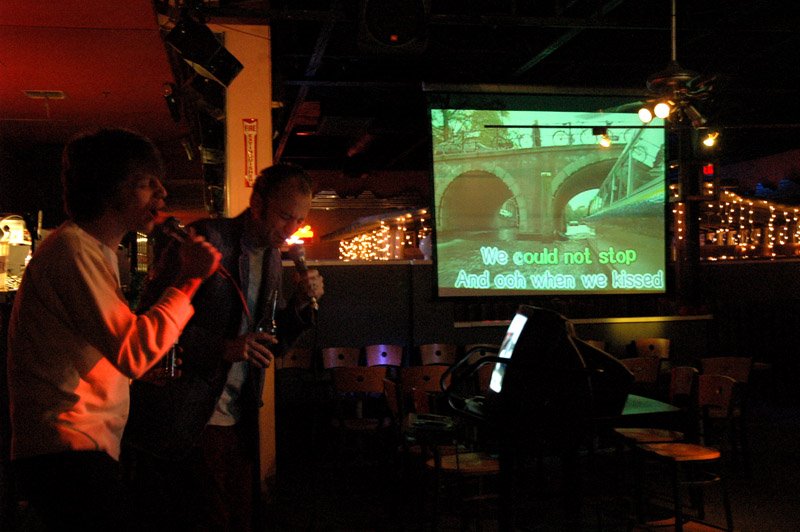
Last night Nous Non Plus performed in Las Vegas, where, between loading in our gear and playing the gig, we took time out for a round of Karaoke and some excellent German Rieslings accompanied by fantastic (although very spicy) Thai food.
This bizarre restaurant was highly recommended by my friend Steve Samson, ex-executive chef at Valentino. The Lotus of Siam occupies a modest space in a strip-mall, otherwise devoted to 99-cent stores and Karaoke bars. By the time we sat down (after a few rounds of Karaoke awaiting our table), there were Low Riders in the parking lot, partying and showing off their hydraulics.
When the waiter brought us the book, I was completely blown away: there must have been more than 300 lots, including 1995 Margaux ($450). The list was dominated however by German Riesling. Although I have some experience with Alsace, I must confess that I know next to nothing about German wines. The waitstaff was not much help in choosing the wines, so I based the selection on what the restaurant’s cellar master seemed to prefer (he had verticals of both producers).
The first wine was a Spätlese or "late harvest" from the Rheingau, the second a Auslese or "later harvest" (i.e., a superior wine in the German appellation system) from Juffer-Sonnenuhr (vineyard site) in Brauneberger (appellation) in the Mosel.
As we dined on a series of dishes that included super spicy ground pork, sausages made from pork testicles, stewed pork, each accompanied by lettuce and julienned carrots and sliced cucumbers and tomatoes, these sweet wines stood up well to the intense flavors of the cuisine. While the first wine did not show a great deal of character, the second opened up nicely, revealing fruit at first but minerality and structure as it came to room temperature. German Rieslings are famous for their longevity and the character they develop with the passing of the years. I could only wonder out loud how these wines would show if given proper time to age. They did pair beautifully with the food.
Addendum – Upon reading this post, Nous Non Plus drummer Greg Wawro (below, far right) told me that he felt the foods were so spicy that they overpowered any balance in the wines. In retrospect, I have to agree: the sweetness of the wine paired well with the intense flavors but the spice overwhelmed our palates. Greg is right to note that the tasting conditions were far from ideal. Nonetheless, it was a stimulating if not balanced experience: as the Romans used to say, when in Vegas…
The show that night was well-attended, even though we didn’t go on until 1 a.m. Between watching our good friends Hello Stranger and the end-of-night beers and goodbyes (it was the last night of a three-night run), we barely made it back to our hotel by sunrise. The joke of the evening was "what transpireth in Vegas, remaineth in Vegas." But this experience was definitely worth bringing home (see pic below).

From left: Dan Crane, Jeremy Parzen, Ryan Williams, and Greg Wawro. Menswear by Imp of the Perverse. Photo by Emily Welsch, who also attended.