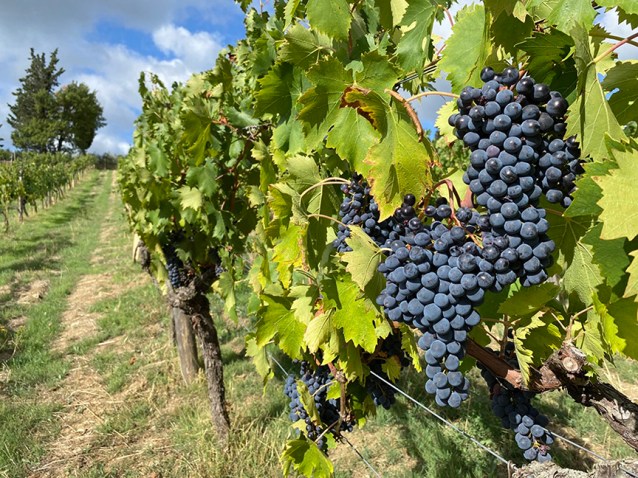
Glorious Sangiovese! Taste Chianti Consorzio with me, Wednesday, May 17, in Houston.

Miami, Los Angeles… Houston.

It seems like just yesterday that you wouldn’t see those three toponyms paired together in the greater Italian wine world.

Only a few short years ago, the only hitching post that anyone knew in Texas was the capital. Yes, that’s Austin, the Groover’s Paradise, where the music flows and the guacamole and beer are still cheap.

But today, it’s Houston, my adoptive city, where all the European winemakers want to pour and sell their wines.

I couldn’t be more thrilled that the Chianti Consortium is coming back to my big small home town on Wednesday, May 17.

Please join me at 11:30 at the swank Hotel ZaZa for a seminar and walk-around tasting. Here’s the link to register.

I’ve done a tasting for them before. One of the most amazing and wonderful things about these events is the oohs and aahs that emanate from the tasters when they realize how much glorious Sangiovese is out there.

I hope you can join us! Thanks for the solidarity and support.

Robert Camuto’s wonderful profile of Darrell Corti for Wine Spectator, in case you missed it.

More than any others, two people have been the inspiration for my career: my dissertation advisor Luigi Ballerini and Darrell Corti.

While Luigi gave me the academic skills and rigor to fulfill my scholarly curiosity, Darrell showed me how that passion for inquiry could be balanced with making a living in the food and wine world.

Every time I’ve had the opportunity to interact with Darrell, it’s been nothing less than a wholly exhilarating gastronomic and intellectual experience.

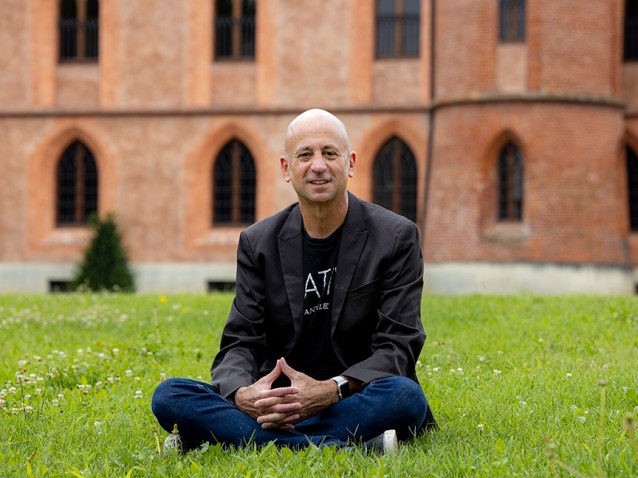
That’s Darrell last year when he came to speak at the Taste of Italy trade fair in Houston.

In case you missed it, be sure to check out Robert Camuto’s profile of Darrell for Wine Spectator, “The Wizard of All,” published earlier this week and free to all.

Have a great weekend! Thanks for being here.

A winery outside Rome quietly nurtures the legacy of one of Italy’s natural wine pioneers.

New Yorkers of a certain age will remember the moment that the “Prince’s wines” came to town.

It was an auspicious moment for Italian wine.

The Italian wine renaissance in full swing by that point. But few Italian wines could command the prices that these new arrivals could. Even more impressive was the fact that these were white wines with considerable age on them: Sémillon and Malvasia from the 1970s and 80s.

Eric Asimov, writing for the Times, noted that at least one of the wines he tasted in situ seemed “impossibly young.” That’s how fresh and vibrant they were. He compared another to white Burgundy.

By all accounts (both anecdotal and authoritative), Alberico Boncompagni Ludovisi, prince of Venosa, was a pioneer of organic farming and spontaneous fermentation in Italy. He was perhaps the first Italian grower who purposefully made “natural” wines, however ante litteram.

Today, that legacy is quietly and brilliantly nurtured by his nephew Alessandrojacopo Boncompagni Ludovisi at Fiorano, his uncle’s farm outside Rome.

What only a handful of New Yorkers, current and lapsed, will remember is that in an era before the new wave of Italian wine, Fiorano was also renowned and perhaps even more famous for its red wines made from Cabernet Sauvignon and Merlot grown in Lazio’s volcanic soils.

On day 3 of my Vinitaly, the current prince received me for a tasting of the new vintages of his wines.

This is Italian Cabernet Sauvignon in one of its greatest expressions imho. The wine was fresh and lithe in the glass with elegant notes of tar and earth balanced by restrained but deliciously present red and slightly underripe red and black fruits.

These wines don’t evoke Bordeaux, however facile the analogy would be. Instead, they are extremely Italian, or should I say Latian, in their nature.

If any allusion can be made, they call to mind the great Spring Mountain District Cabernet Sauvignon made by its more judicious purveyors.

My favorite story to tell about the prince came about when he and I presented a flight of older wines from his cellar at a dinner in Los Angeles many years ago now. He had flown in especially for our event. When I asked what he planned to do with his free time in the city, he told me he was heading to the Getty to view a portrait of one of his ancestors — a pope. For us it’s history. For him, it’s like looking at an old family album.

Check out the wines. They are fantastic.

Miami, mon amour, you made this polyglot feel right at home. What a great Italian food and wine city!

Anyone who speaks more than one language will tell you the same thing.

Every time you encounter another bilingual interlocutor, a small but usually polite dance begins: which speaker has a better command of which language will determine what language you will use to converse.

Especially for young second language learners, it’s always a point of pride when the conversant allows the dialog to continue in a “destination” language.

Here’s what was revealed to me on my trip to Miami last week: Spanish, Italian, Portuguese, English, Neapolitan, Venetian… It doesn’t matter to Miamians as long as you like great food and wine!

Miami is a genuine linguistic paradise where no one seems to care where you came from or what language you speak. Restaurant and wine professionals are constantly switching between the many tongues spoken there.

As weird as this sounds, it made me feel like I was linguistically free. And I loved the whole vibe.

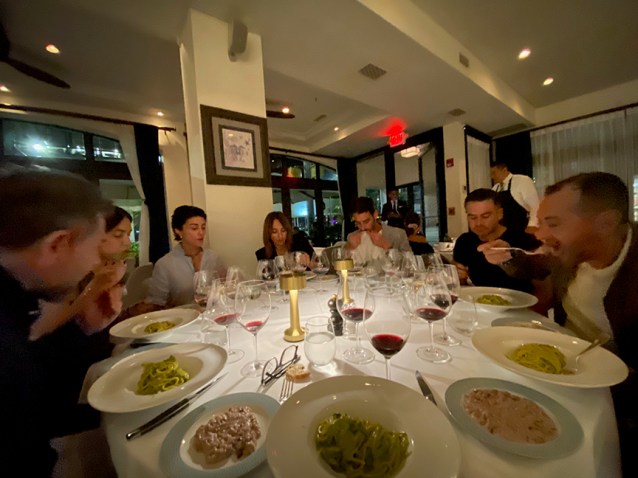
My last night in the city, my ride withs took me to eat at the swank and wonderful Portosole in Coral Gables where the food was fantastic and the banter was a medley of English, Italian, and Spanish with some Neapolitan thrown in for good measure.

Have to give a shoutout to sommelier Alfredo who share his last bottle of Ca’ del Bosco 2013 Dosaggio Zero with us. What a wine!

I also have to give a shoutout to Graziano’s Market in Coral Gables where we hosted a supplier meeting earlier in the day. This place is like a dream come true for me: a Cuban-focused menu in a casual, self-serve setting with a broad offering of Italian wines — from Borgogno to Emidio Pepe. Nebbiolo and croquetas de jamón? I’m in!

I also LOVED Macchialina in South Beach. Great pastas and a wine list with broad strokes that make bold statements.

Mosaico in Key Biscayne served me a super vitello tonnato.

And one last place not to miss was River Oyster Bar. Get the ceviche.

There are so many other places I didn’t get to check out. But I’m supposed to be headed back next month.

I can’t wait. Non vedo l’ora. No aguanto las ganas…

Taste 13 of Valpolicella’s most iconic wines with me, Wednesday, May 3, in Houston.

What a thrill for me to be asked to present a tasting of 13 of Valpolicella’s most iconic wineries in Houston!

The “Famiglie Storiche” association (Historic Families of Amarone) tasting will be held at the Hotel ZaZa Museum District on Wednesday, May 3, at 11 a.m.

Here’s the flight (wow!): Allegrini, Begali, Brigaldara, Guerrieri Rizzardi, Masi, Musella, Speri, Tedeschi, Tenuta Sant’Antonio, Tommasi, Torre D’Orti, Venturini, and Zenato.

Click here to register.

My relationship with Valpolicella dates back to my early university years in Italy when we would drink the wines in the many wonderful old-line taverns that dotted the Padua cityscape in the late 1980s. My Italian “identity” is deeply tied to the Veneto region where Valpolicella is a “local” wine. My spoken Italian, any Italian will tell you, has a strong Veneto inflection. My tastes were shaped by those first tastes.

Getting to lead a guided tasting of these wines is a dream come true. It feels like it’s all come full circle, as they say.

I hope you can join me. Thanks for the support and solidarity. And after all, do I really have to drag you out to taste wines like these? No, I didn’t think so!

I’ll also be presenting an awesome flight of Chianti on Wednesday, May 17, again at the Hotel ZaZa, at 11:30 a.m. More on that event later. In the meantime, here’s the link to register. Thank you for the support!

Happy Italian Liberation Day! Long live a united, free, and anti-fascist Italy!

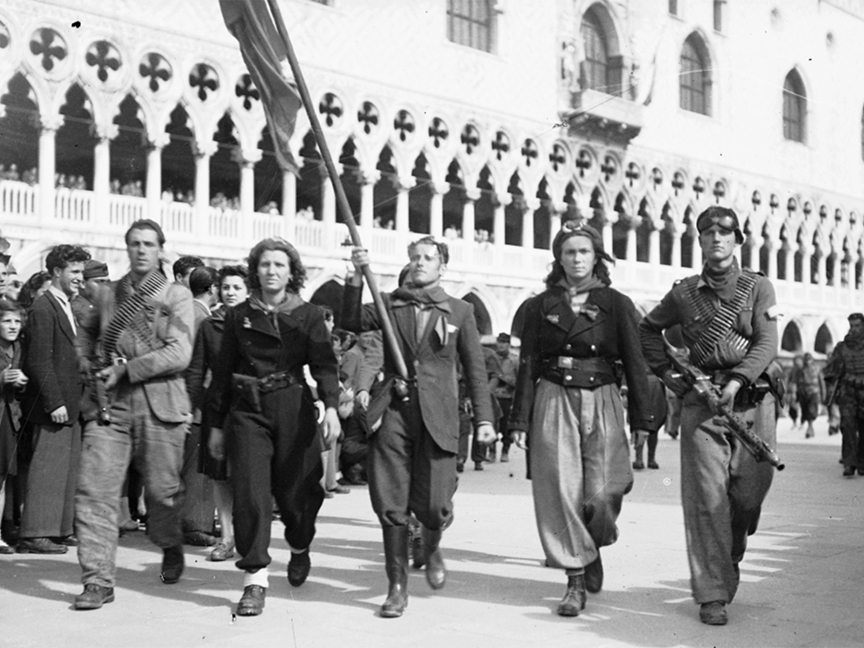
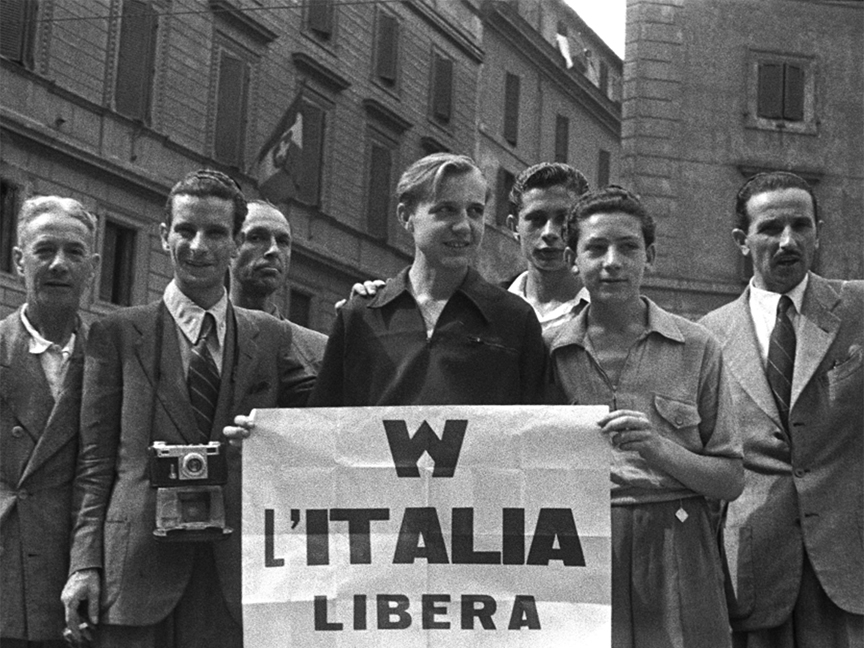
Above: Italian resistance fighters in Piazza San Marco, Venice in 1945 (images via the Archivio Luce).

Today is Italian Liberation Day: Festa della Liberazione, April 25. Established in 1946, it commemorates the end of Nazi and Fascist rule in Italy.

It’s a national holiday in Italy and most Italians took yesterday and today off from work (an Italian ponte or bridge, as it’s called, a long weekend).

This morning, a colleague and friend from Italy sent me the following message.

“Buon 25 aprile,” he wrote. “Viva l’Italia, libera e antifascista 🇮🇹”

“Happy Liberation Day. Long live Italy [and may it remain] free and anti-fascist.”

Check out this slide show by the Archivio Luce. It features images from Italy after Mussolini’s fall.

Happy Italian Liberation Day! Long live Italy and may it remain free and anti-fascist!

Bravo Wine Spectator!

It’s incredible to think how different the wine world when Wine Spectator was launched in 1976, the year of the Bicentennial, in San Diego. When east coast publisher Marvin Shanken purchased the masthead just a few years later, Jimmy Carter was still president.

By the mid- and late-2000s, Wine Spectator (and Robert Parker’s Wine Advocate, founded in 1978) represented the “establishment” in wine writing. Those were also the years of the early enoblogosphere when the magazine, three decades after its founding, became a favorite punching bag for the new wave of Italian-facing enohipsters.

A handful of editors are giving high scores to Italian wines made in an international style from international grape varieties while they’re giving mediocre ratings to traditional-style wines from native grapes. That was the prevailing wisdom among media and social media reactionaries. Those same editors are favoring overly “oaked” and overly “extracted” wines with muscular alcohol and overly bold and sometimes concocted fruit-forwardness. These wines and the editors’ interests do not reflect local and regional viticultural heritage.

Although the claims were often hyperbolic and acerbic, a nugget of truth lay therein.

But what many of us missed at the time (myself included) was that Wine Spectator was turning a whole new American generation on to Italian wine. More significantly, it was deciphering, “translating” a wine world that would have otherwise been impenetrable for anglophones. Remember: this was the era before Pigato and Frappato were on anyone’s radars, let alone by-the-glass at your favorite Hollywood pizzeria.

I would even go as far as to argue that the editors’ focus on Italian Cabernet Sauvignon, Merlot, and later Chardonnay and Syrah ended up having a significantly propaedeutic impact. Before anyone in America could wrap their mind around a Nebbiolo, it made perfect sense to entice my countrypeople with grapes they already knew and loved.

Looking back on it all now, I recognize that many of us wouldn’t have careers in Italian wine if a few forward-looking writers at Wine Spectator hadn’t decided to expand their coverage of Italy during those years.

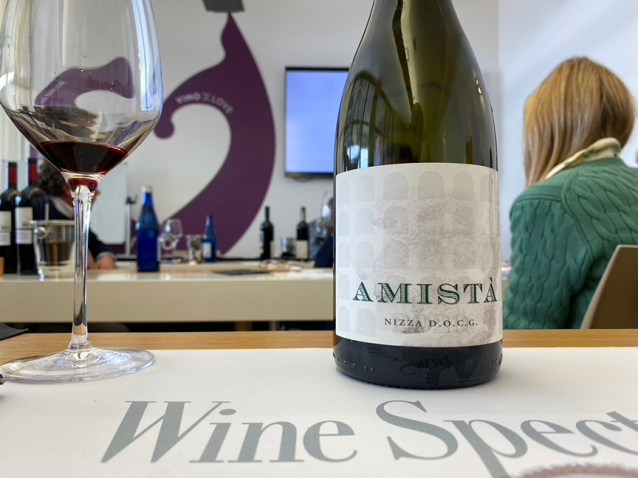
On the second day of my Vinitaly (our annual trade fair in Verona), I had the immense fortune to attend a small seminar led by Bruce Sanderson, senior editor for Italy. He had invited the top producers of the new Nizza DOCG to bring their wines for an informal gathering.

“I’m here to learn more about Nizza,” Bruce told the group. “I want you to teach me.”

It was a remarkable event and a dream flight of the appellation’s best wines (I was there with my client Amistà).

Bruce and his colleague Alison Napjus, also a senior editor for Italy, have been doing these “meet, greet, and taste” sessions since 2011, Bruce told me. It’s just one of the ways that he and his colleagues engage directly with Italian producers.

“We want them to get to know us, too,” he said.

Bravo Wine Spectator! Thank you for everything you have done and continue to do for the world of Italian wine. You’ve taken wine writing from an ivory tower and brought it down to earth where those growers raise those grapes. The community of wine professionals — on both sides of the Atlantic — is only the better for it.

Zero sulfur Sangiovese from the most unlikely place. Killer Trebbiano and Cerasuolo from Abruzzo. Vinitaly day 1 highlights.

Days at Vinitaly, the annual Italian wine trade fair in Verona, can be so packed with meetings, impromptu and planned, that you don’t get the opportunity to taste all the wines you had hoped.
My Vinitaly was a short one, just two days. And my first day was eaten up by an important seminar (more on that next week). But a few compelling wines made it into my glass nonetheless.

Stefano Cinelli Colombini, one of the most intellectual winemakers I know, has been a great friend and on-and-off client over the years. He’s a conventional winemaker through and through. But ever inspired by the young winemakers in his country and beyond, he continues to experiment with new and sometimes controversial techniques.

He was geeked to taste me on his new Senza Sulfiti, a zero-sulfur Sangiovese. It was the last category of wine you would expect to find at the stand of this pillar of Montalcino viticulture.

The wine was vibrant and varietally expressive in its aromas and flavors with the classic tasting profile of world-class Sangiovese (no surprise there). 100 percent delicious and extremely approachable. But the curious thing, as Stefano pointed out, was how bright the color was, the result of zero sulfur added, he noted, a surprise to him.

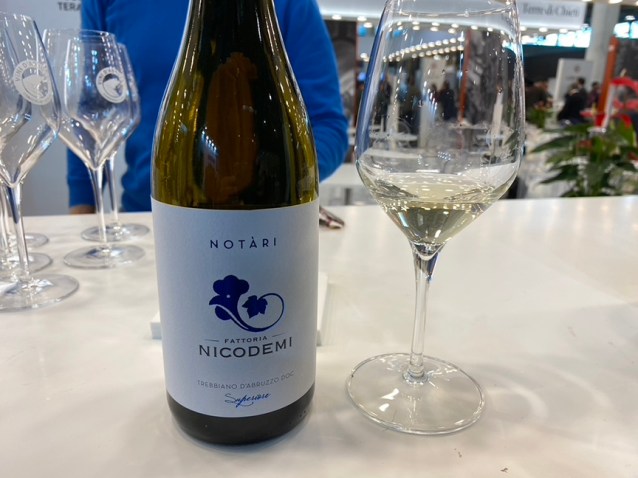
My pervagations also led me to the Abruzzo pavilion where Elena Nicodemi of the Nicodemi farm in Colline Teramane poured me her super Trebbiano d’Abruzzo.
We often and erroneously think only of red wine, maybe even rosé wine, when we cast our gaze toward this undiscovered and undervalued region along the Adriatic coast, where ancient tectonic faults and other geological events have delivered ideal soil types for the production of long-lived, nuanced wines.

Elena’s wines are no exception to the many great whites growers are making in region.

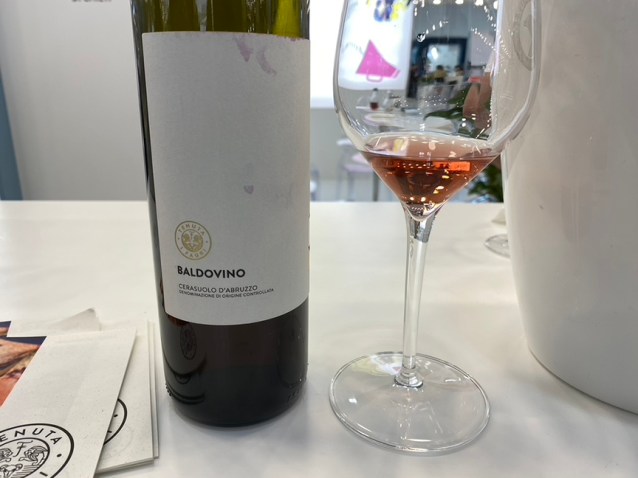
Valentina Di Camillo of the Tenuta I Fauri has become a friend thanks to our shared interest in classical music. She is an accomplished and superbly talented concert pianist. She’s also an extraordinary winemaker.
Her Cerasuolo Baldovino is literally making me salivate as I write this!

There is so much great wine in Abruzzo for all of us to discover. The good news is that we are moving past the tired and crusty salespeople who have historically marketed Abruzzo as a producer of inexpensive red wine for by-the-glass programs in braindead restaurants.

So many great wines and so little time. My only regret is that I was only able to spend two days at the fair. Thanks for being here and stay tuned for more. Have a great weekend! It’s a long weekend in Italy because of the April 25 holiday, so enjoy!

The best thing I ate on my last trip to Italy and an old flame rekindled.

Favorite restaurants are always a long-term commitment, kind of like a romantic relationship. Sometime the rapport is fiery and passion-driven. Sometimes the flame is diminished by the patina of time. But when you really love a restaurant, the rewards of your undying devotion can really pay off.

That’s what happened when my Brescian friends took me to one of my favorite restaurants on the planet, the Dispensa Pani e Vini in the heart of Franciacorta country.

From my first kiss with the restaurant back in 2008 to the present, some of the most memorable meals of my gourmet career have happened there. There have been some acceptable yet mediocre experiences as well.

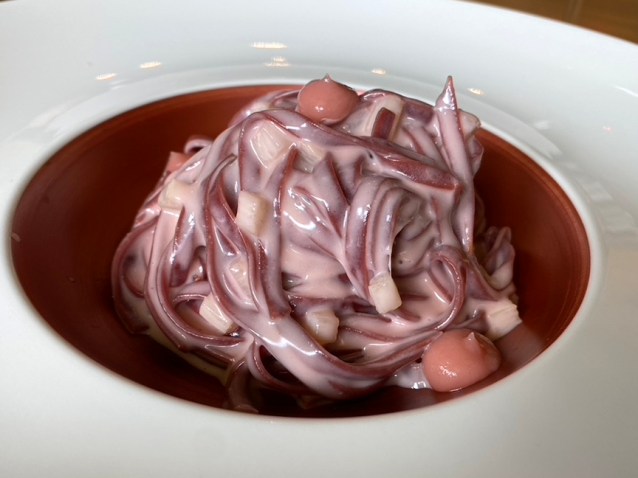
But I keep coming back: when the beet tagliolini with gorgonzola (above) arrived at our table, I thought I was going to faint.

It was the best thing I ate on my last trip to Italy. Simply spectacular, exquisite yet earthy and homey.

As Tony used to say, for Italian cuisine to be authentic, it has to be creative. This dish was all that and more.

The grilled octopus was another standout at our lunch.

Anyone who’s ever worked in the fine dining industry knows that chefs, managers, sommeliers, and owners come and go. The Dispensa, which was founded by one of Franciacorta’s most influential chefs, Vittorio Fusari, has seen a number of ownership and staff changes over the years.

But right now it has reclaimed the grace, verve, and mission of its original chef Vittorio.

I highly recommend it, even on its not-so-great days.

That’s the amuse bouche.

We paired with my friends Giovanni and Nico’s new release from the little known Botticino appellation. It’s a mostly Barbera blend that’s grown in Botticino’s marl- and limestone-rich soils and is raised in large cask. Delicious and with great depth.

As unfamiliar as Botticino may be to many Americans, anyone who’s ever passed through Grand Central Station has seen Botticino marble. Brescia province and the quarries that overlook Lake Garda are the source of that stone.

We didn’t get a chance to say hello to the new chef that day. But my faith was mended, my heart healed, and my belly sated. I can’t wait to make it back to that old lover in the heart of Franciacorta country.

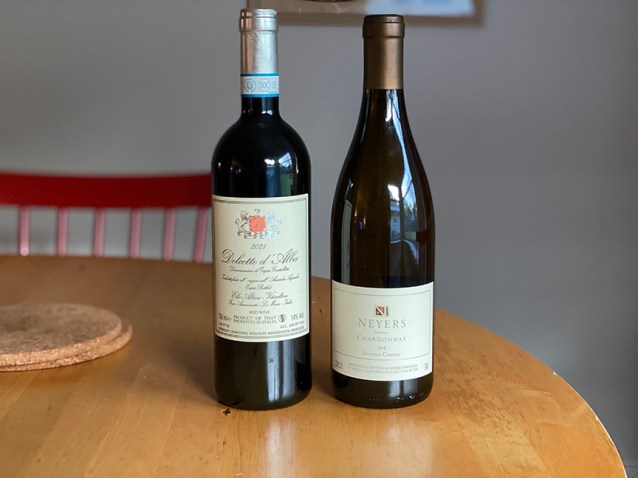
Our current house red and white, a classic Dolcetto and a Sonoma Chardonnay.

One of the things that we love the most about being “wine” people is checking in on new vintages from favorite producers that we have followed over time.

The one time that we were in Napa together, Tracie and I had the opportunity to visit the Neyers estate. It was during that same trip that we got engaged. So following the winery has an even deeper and fonder meaning for us.

Neyers has always let its wines reflect their vintage and we’ve appreciated certain releases more than others. But man, the 2021 just knocked our socks off.

It just has such a wonderful “clarity” of fruit — tropical with just a hint of citrus — and is so buoyant in the glass. At around $25 in our market, it’s become our official house white of the spring. We highly recommend it. Everyone loved it during our Passover.

The other wine we’ve just been crazy about is the Altare Dolcetto.

Elio Altare wasn’t a winery that we followed in our early years of Nebbiolophilia. We always found their top wines were excellent but a little too modern-leaning for our palates.

But the estate’s connection to Texas has given them a robust presence here and we’ve really loved their Langhe Nebbiolo over the last few years. Fantastic fruit, raised in stainless steel (or at least, I believe, gauging from our experience with the wines).

We finally managed to get our hands on some of their Dolcetto and we just fell in love with it.

We don’t drink a ton of red wine at our house. But this wine’s freshness and bright fruit just make it so moreish and food-friendly. We opened it the other night with family friends and it just kept giving and giving great berry and cherry fruit. So much fun to pair it, again around $25, with steak and loaded baked potatoes.

It’s another wine that Parzen family feels compelled to recommend.

Whatever you’re drinking and eating this weekend, we wish you a good one! See you next week. Until then…