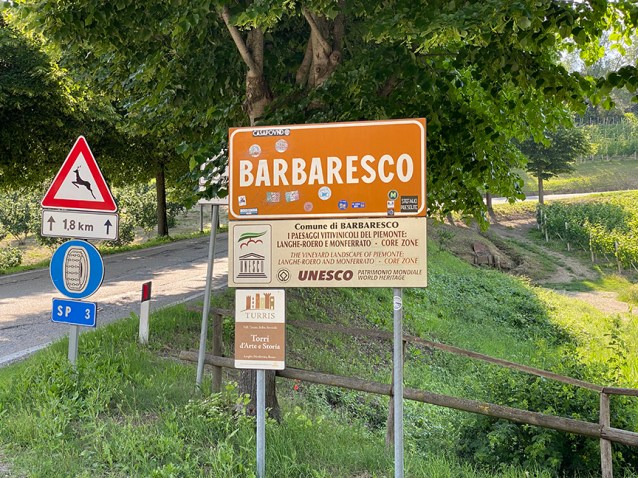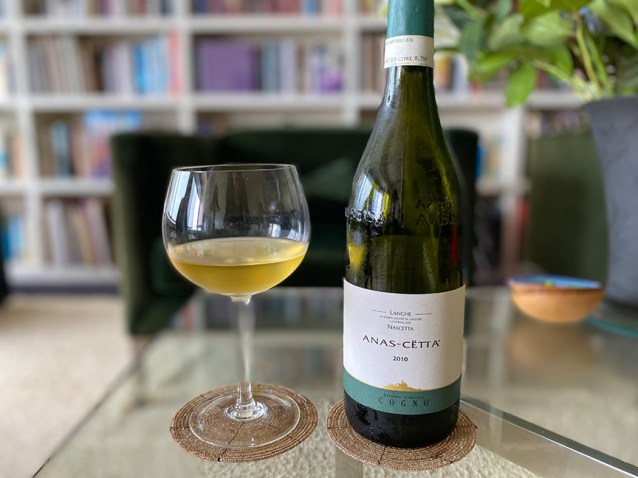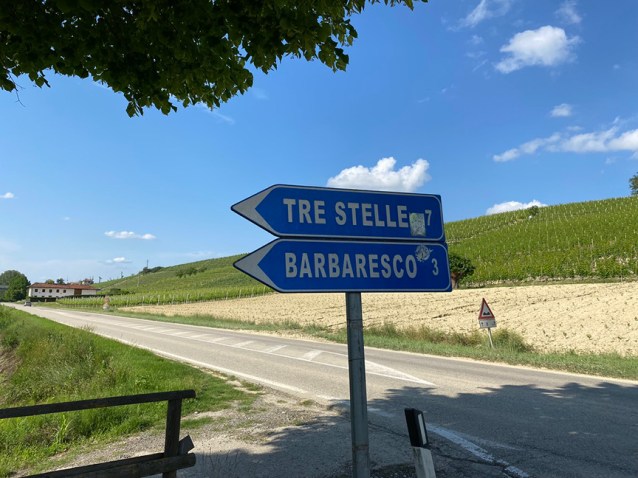
Please stop calling Barbaresco “normale”! Please!

Most Italian-focused wine professionals in the U.S. face a sticky linguistic challenge: how to distinguish between the classic expression of an appellation and a vineyard-designated or riserva category.
And it’s not an issue confined solely to purely anglophone wine pros. Italian speakers often get tripped up by the tongue-tying conundrum.

For many, the knee-jerk reaction in such cases is to call the classic wine normale or normal.

Here’s how the Oxford English Dictionary defines normal:

“Constituting or conforming to a type or standard; regular, usual, typical; ordinary, conventional.”

I’m using Barbaresco as an example but this problem stretches across a broad swath of wines where single-vineyard and riserva designations are commonly used.

The moment you call the wine “normal,” it’s as if you are saying that it’s “ordinary” or “conventional.” Think of how many classic wines for which this couldn’t be farther from the truth!

And depending on who you talk to, many Nebbiolo growers, for example, will tell you that classic, blended expressions of their wines are often the ones they hold to be most representative of their appellations. It’s only in recent memory that single-vineyard and riserva designations have proliferated. This trend, in my view, is more driven by the market than the production.

There are also plenty of winemakers who decide not to use a designation, even though they could. Should those wines be penalized because their producers chose not to give them a fancy label?

My recommendation and my practice is to call non-vineyard and non-riserva designate wines “classic.”

And let’s not even talk about the people who call the classic expressions “regular.”

Wine isn’t gasoline, is it?

Shanah tovah! Happy new year! This year we celebrate grandma’s 90th birthday. A blessing.

Please consider giving to Unicef relief efforts in Libya. Click here for more ways to give.

Shanah tovah, everyone! Happy new year!
May your new year be filled with light, joy, and good health!

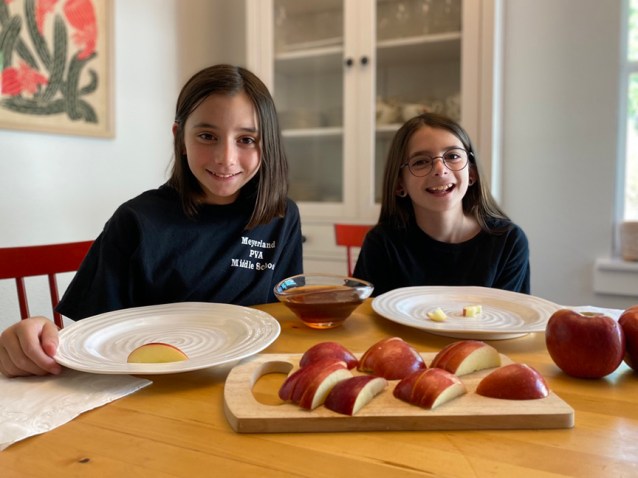
Every year for the holiday, we eat apples and honey to remember life’s sweetness.

This year we have something special to celebrate: grandma (my mother Judy) is turning 90 next week. We’ll be flying out to San Diego to spend the weekend with her. And she’s asked me to organize a wine tasting for her and her friends. We’re all looking forward to it.

Georgia (above, left), age 11 going on 12, started middle school at the end of last month. She’s enjoying playing violin in the orchestra and her creative writing elective.

Lila Jane (right), just turned 10 and starting 5th grade, is now a “big kid” at her elementary school. She’s one of the top cello players in her class and says she wants to be a music teacher.

Poo, poo, poo… we have a lot to be thankful for. Too many blessings to count.

Every year before the High Holidays, I turn to the excellent writers at Chabad.org for inspiration for the year ahead.

Here’s the passage that I can’t stop thinking about:

Our Sages tell us that when we emulate G‑d to provide new life to others with generosity and love, this paves the way for the awesome gift of Rosh Hashanah, the gift of new life, that G‑d lovingly grants every one of us.

Happy new year.

Do scores still matter 15 years after “Parkerization”?

It seems like another world, doesn’t it?

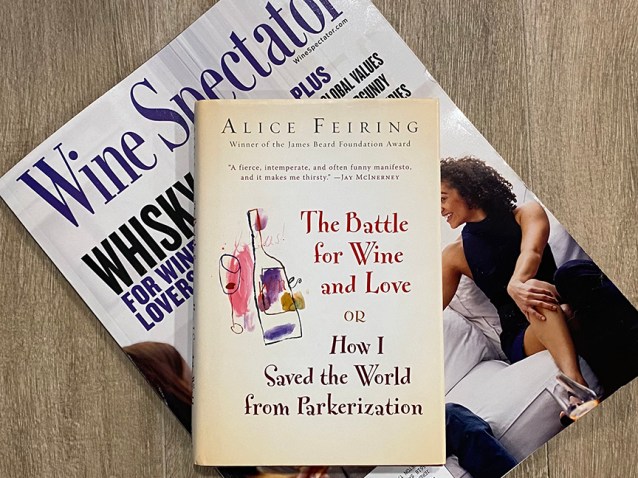
The iPhone had only been existence for a year, Facebook was just beginning to take off, the financial crisis was in full swing, and Alice Feiring released her controversial book, The Battle for Wine and Love or how I Saved the World from Parkerization.

The year was 2008 and a bold new wine culture was emerging in the U.S. By that point, 30 years had passed — yes, three decades! — since Robert Parker introduced the world to his 100-point scoring system in 1978.

Wine Spectator adopted the 100-point system in 1985, some seven years after it was first employed by Parker. (The score-less masthead had been launched two years prior to Parker’s Wine Advocate, in 1976.)

But it took nearly a quarter of a century before Alice’s shot that was heard around the world.

It’s incredible to think how many years passed before anyone really seemed to care about wines scores — except for consumers and the winemakers themselves.

But by the end of the first decade of this century, “Parkerization” had become public enemy number one for the newly emerging hipster wine crowd.

At Slow Food University where I teach wine communications in the grad program, the students look up with glazed-over eyes when I do an overview of how scores affect wine sales and production. Most of them haven’t even heard of Parker or Spectator — no joke.

On the one side, detractors argue that scores reify wine through a purely subjective exercise.

On the other side, supporters contend that scores have made European wine more accessible to a generation of Americans. President Chirac didn’t make Parker a Chevalier of the Legion of Honor for nothing.

Today, retailers and collectors across the U.S. rely on scores. In Asia, by all accounts, scores are a key element in how wine is marketed.

There’s more than some validity to the argument that historically scores have helped to raise the status of wine as a luxury product across a wide demographic, global swath. To that point, aligning oneself with those against scores is also a means for promoting a wine.

Future generations may not care about them, but they continue to drive the industry in intuitive and counter-intuitive ways.

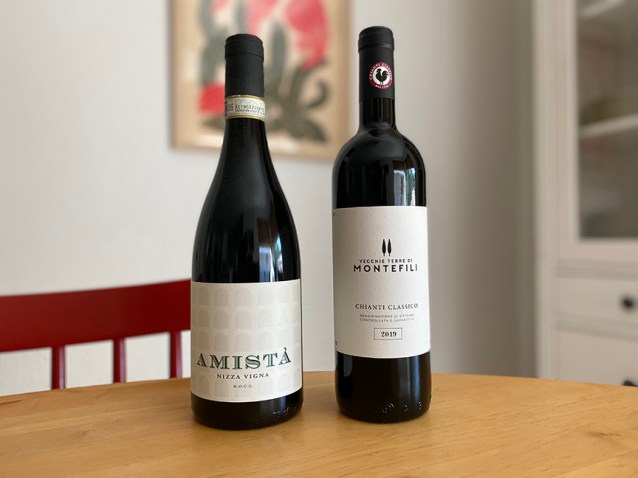
Congratulations to my client and above all friend Michele Marsiaj and his winemaker Luca D’Attoma on the 95 point score their Amistà Nizza Riserva has received from James Suckling. It’s the first Nizza, they believe, to be awarded such a high rating. Now, that’s something, isn’t it?

Southern and central Italian harvest impacted by extreme and unpredictable weather.

Above: picking dates came about two weeks later than they did in 2022 according to WineNews.it. “Harvest has finally begun,” wrote the Stanig winery (Friuli) on its social media today. “The challenges of climate uncertainty in recent months have made us focus even more of our energy and attention on the work that needs to be done.” Image via the Stanig Facebook.

In a series of posts this week, one of the leading Italian-language resources for wine industry news, WineNews.it, reports that central and some parts of southern Italy will experience a drop of 20-40 percent in production owed to widespread outbreaks of peronospora (downy mildew), severe hail events, and a prolonged heat wave with record temperatures.

In the north, there will be a slight drop in production: -2 percent in Piedmont and -4.5 percent in Emilia-Romagna. In Veneto there will be an increase of 5 percent and in Lombardy 15 percent.

But as you head south, the numbers start to drop: -20 percent in Tuscany and Latium; -25 percent in the Marches; -30 percent in Sicily and Puglia; and -40 percent in Abruzzo.

In Tuscany, Chianti Classico has been severely impacted, the authors of the posts report. According to the presidents of the Chianti and Chianti Classico consortia, there will be areas with significant drops (up to 40 percent) while others will experience a much smaller decrease, if any.

Earlier this year, the Brunello consortium predicted a 5 percent drop. But its president hasn’t spoken publicly about the crop forecast since late July. Some observers believe this estimate to be overly optimistic.

Even with widespread issues and challenges caused by climate change, including record high temperatures this summer, Italy should see just a 12 percent drop in its overall production.

See the WineNews.it posts here and here.

“Still the one.” Shelley Lindgren keeps it rocking at the legendary A16 in SF.

Remember the song from the 70s by Orleans?

“We’re still having fun and you’re still the one.”

That lyric kept going through my head as a couple of wine industry friends and I dined at A16 the other in San Francisco.

A16 changed the way Americans viewed southern Italian food and southern Italian wine when it first opened in 2004 nearly 20 years ago.

This is a restaurant — an institution! — that has weathered the financial crisis and Covid. And the best news is that the restaurant continues to perform at an extremely high level.

Shelley was swamped with fans when I ran into her a few weeks ago at TexSom near Dallas. She was there for a signing of her new book Italian Wine (Random House). By my count, that’s her fourth tome!

I don’t think anyone would disagree that Shelley is one of the greatest advocates for Italian wine and food in our generation. Her truly pioneering work has created opportunities for so many of us, including me.

And after all these years, she’s still rocking it.

One thing that really impressed me about our wonderful experience was the positive energy you felt while interacting with the servers and even the chef (we sat across from the open kitchen). You really get the sense that they love their work and they love their community at the restaurant. That’s increasingly hard to find these days. And it speaks to Shelley’s legacy as one of the top Italian-focused restaurateurs in this country.

Here’s some more of what we ate and drank. The food was so spot on. I had never tasted Tecce’s fantastic rosé. No surprise that she would have it on her list. The Quintodecimo Fiano was stunning. And as busy as she was, she found time to drop some compelling Pompeii wines at our table. The restaurant was working hard. She made it look easy.

Thank you, Shelley, for an incredible evening! And thank you for all you have done and continue to do for the world of Italian food and wine!

This was the best chickpeas and chicory I have ever had in the U.S. It was insanely good.

The caponata was another classic that really impressed.

This was just one of the three pastas we had, each excellent.

Remembering the Fernet Branca bottling facility in lower Manhattan on 9/11.

Our family’s hearts and prayers go out to earthquake victims in Morocco. Click here to donate to Unicef relief efforts (there are plenty of other platforms where you can donate as well).

That’s an image captured in the Fernet Branca bottling facility on Desbrosses St. in lower Manhattan just south of Canal St. It was taken sometime in the 1990s.

The photo arrived in my inbox last week. It was among a group of images sent by a photographer named Ken Tannenbaum. He and his family lived in Tribeca back in the late 1990s and at some point, the Tribeca Trib (a local paper) asked him to take some photos of the space.

I don’t know what inspired him to search for other people who would remember the space. But somehow he found me.

Back in 1999, when I first broke out as a freelance writer, I landed one of my first gigs with the new management at the Fernet Branca space. I helped them to launch and publish a monthly print newsletter.

Fernet Branca was still a widely available product in the U.S. in the 1980s. In the 1930s, the brand was so popular here that the company opened the bottling facility.

But as I understand it, they continued to sell Fernet Branca as a medicine rather than as an alcoholic beverage.

If you talk to Italians and Italian-Americans of a certain age, they will tell you that they didn’t drink Fernet Branca to party. They “took” it when they felt under the weather. Many people, usually about 10-20 years older than me, have told me that their mothers gave them an espresso spiked with an egg yolk and a shot of Fernet Branca every morning.

In the 1980s, the FDA came down hard on the brand. Evidently, they had never re-registered it as an alcoholic beverage.

At some point during that decade, the U.S. government shut them down and they abandoned the facility.

When Fernet Branca called me in 2000, they were relaunching the brand and had seen something I had written about it.

They invited me to see the space. It was like a scene out of Mel Brooks’ “Young Frankenstein.” Evidently, they just picked up and left and left everything behind.

The image above comes from the space’s counterfeit testing lab. Hence all the test tubes.

On the morning of September 11, 2001, I was heading to the Atlantic Avenue stop to catch the 2 train that would take me to the Fernet Branca space. Before I left my apartment, I called one of my colleagues to confirm a 9 a.m. meeting.

He screamed at me: “Are you fucking crazy? Turn on the TV!” And then he hung up.

I went upstairs to my landlord’s apartment and we watched — in absolute disbelief and absolute horror — as the second tower was struck by the plane.

Had I not called my colleague, I would have been traveling underneath the World Trade Center right around the time that the second plane hit.

I was extremely fortunate. I’ll never forget the singed documents that rained over Park Slope, Brooklyn that afternoon.

G-d bless everyone who lost their lives and suffered that day. G-d bless their families. G-d bless America.

Thanks for reading.

You can take a grape out of Italy. But you can’t take Italy out of the grape. I loved the highly quaffable wines of Jupiter Wine Co.

There’s a long Californian tradition of growing Italian grape varieties that stretches back to the early wave of Italian immigration to the state in the late 19th century.

Barbera, for example, was widely grown in what we now call California wine country. It was planted there by Piedmontese migrants who fled extreme hardship in their home country. Had Prohibition not come along, we’d be probably be drinking Californian Barbera instead of Cabernet Sauvignon today.

Over the last decade or so, there’s been a revived interest in Italian grape varieties in California. Idlewild Wines in Healdsburg became a pioneer in this movement with its focus on Piedmontese grape varieties.

The winery’s general manager, Thomas DeBiase, has now branched out with his own line of Italian grape varieties. It’s called Jupiter Wine Co.

That’s his super popular Vermentino above. You’ll find it, he told me, by-the-glass at some of San Francisco’s hippest spots. The label was designed by artist Evan Dorkin (who just happens to be an ex-schoolmate of Thomas’).

All the wines are spontaneously fermented. And little to no sulfur is added.

I really loved how varietally expressive these wines were. One of my big disappointments with Italian grapes grown in California has been their lack of classic character, probably due more to winemaking than to growing practices.

Thomas seems to have threaded that needle with this project. The Vermentino tasted like Vermentino (perhaps more peninsular than insular but totally spot on). The Sangiovese had that unmistakable plum note and the wonderful lift that fresh Sangiovese has when it’s good.

I also really loved how clean the wines were. That’s another tricky issue for producers of uninoculated wines.

His years of working with Idlewild, where the new line is made as well, have allowed him to hone his skill as a winemaker. And it shows in these fresh, youthful expressions of Italy via California.

The labels take it over the top.

We tasted the wines yesterday at his food and wine shop in downtown Healdsburg, Ciao Bruto (adjacent to the winery). I love chatting Italian wine with Thomas. He’s one of the best Italian-focused tasters I know and his approach to everything he does is so thoughtful and soulful. Profits from Jupiter Wine Co. are invested in housing solutions for the houseless.

Thanks again, Thomas, for a great tasting! And congrats on the success of your new project!

I really loved Sorella in SF, a “wine people” destination.

Writing on the fly, from the road today in northern California.

But just had to share how much I loved Sorella in Nob Hill (San Francisco).

Owner/wine director Gianpaolo Paterlini is one of the top Italian-focused wine professionals in the country imho.

And where his family’s legendary Acquerello is one of the city’s leading gastronomic destinations, their Sorella is a casual and approachable spot with a wonderful by-the-glass program and a super focused and food-friendly list.

Perfect for “wine people” like me and you.

I drank my friend Mitja Sirk’s bianco, a wine I have only seen in Italy. Super with raw oysters and the Parmigiano budino.

The pricing was reasonable, which is a huge plus in a city where fine dining costs have continued to rise.

The atmosphere was chill and welcoming. I just loved this place. The ideal ending to a long day on the road.

Today, I’m heading up to wine country for appointments and a dinner I’m looking forward to in Santa Rosa tonight.

Wish me luck, wish me speed! Thanks for being here.

On the origins and evolution of the word and title “sommelier.”

Above: “Down with the Sommelier!” an early Prohibition-era Times editorial where the author warns that the fabric of American life would unravel were Americans to import the concept of the Parisian sommelier.

The recent TexSom conversation about the meaning of the word and title of sommelier prompted me to take a look, à la William Safire, at the term’s origins.

The word comes to English via the French sommelier. But its etymology can be traced back to the ancient Latin sauma, denoting the burden of a beast of burden, in other words, a unit of weight.

In Medieval French (circa 1300 C.E.), sommelier denoted the overseer of beasts of burden. The term soon evolved to signify the person charged with transporting the belongings of the [royal] court. Royals traveled with their own wine in the Middle Ages. And that’s when the word sommelier conflated with the word butler, the keeper of bottles (cf. Old French botellier, French bouteiller).

An early documented usage in English dates back to the 16th century:

    1543 To gyve commaundement that your sommelier at Bordeaulx might be suffred to departe with such wynes as he had provided for Your Majestie (State Papers Henry VIII, 1849, 9.325).

The meaning of the title remained virtually unchanged until the early 20th century when it began to be attributed to a restaurant worker tasked with cellar management and wine service.

See the 1921 Times piece referenced above.

By the end of the century, however, the term had begun to evolve.

I found this definition in a 1990s edition of Orange Coast Magazine (as in Orange County, California):

    An individual with the knowledge of a wine maker [sic], the palate of a four-star chef, the insight of a diplomat, the authority of a general, the wit of a comedian and the patience of a saint.

Perhaps with the rise of sommelier competitions in both the U.S. and France, perhaps with the new wave of restaurants and wine culture in Reagan-era America, perhaps with the raised profile of sommelier guilds, the sommelier had come to denote a larger-than-life figure, as the quote above illustrates.

Fast forward to the current era when food and wine culture writer Mike Steinberger deftly defined the figure of the new sommelier:

    To judge by all the reverence they are accorded, you’d think chefs were the most interesting people on the planet. In truth, they are sometimes not even the most interesting people in their own restaurants. Often, that distinction belongs to the sommelier. Not only are their life experiences frequently more varied than those of many chefs—wine cellars are crawling with academic overachievers and white-collar refugees—their motivations are also quite different. While high-end restaurant cooking in the United States is increasingly marked by the pursuit of celebrity and lucre, wine service is generally guided by another impulse: a desire to educate and enthuse. With their missionary zeal, America’s sommeliers have helped convert us from a nation of beer chuggers into a land of Riesling aficionados. Along the way, they have revolutionized their own profession, turning a dead-end, white-men-only métier into an exemplar of upward mobility and diversity (Slate.com 2008).

Such a great writer, right?

That leads us to the present day, some 15 years later.

One of the interesting things that emerged in the TexSom dialog was that the word is evolving still today.

As one of the panelists put it, a sommelier is someone who advocates for wines. In other words, to some it no longer denotes solely and exclusively a person who manages a cellar and serves wine in a restaurant. As the confabulation reveled, many in our industry define now themselves as sommeliers because of their advocacy for wines and wine education and not because they are employed at a restaurant.

As one attendee recounted, he worked for two decades as a restaurant sommelier but now he works as an educator and agent for a major distributor of fine wines. He still considers himself a sommelier even though he no longer works in a restaurant.

I used to get paid to play guitar. Now I just play guitar for enjoyment. Am I still a guitar player?

I have worked as a floor sommelier in New York, Los Angeles, and Houston. But currently, I make my living writing and talking about wine. Am I still a sommelier?

The term continues to evolve… À bas le sommelier? Mais non! Vive le sommelier! Thanks for reading.

There were tears at this year’s TexSom. Tears of joy.

One of the most compelling moments of this year’s TexSom (the popular annual gathering of wine professionals in Irving, Texas near Dallas) was when speaker Julie Dalton (below, third from left) broke into tears while describing her gratitude for what she has achieved in her career.

Gratitude, she pointed out later during the session, is an emotion that wine professionals should embrace.

The theme discussed by her and her fellow panelists (below from left, Brandon Kerne, Stevie Stacionis, and Zwann Grays, far right) was “What’s a ‘Sommelier Wine’?”

The conversation began with a tasting of wines that have become popular in U.S. wine culture thanks to sommeliers’ advocacy.

Muscadet was a perfect example of this. Many wine professionals will remember the period around 2007-08 when Muscadet, with its mineral flavors and food-friendly acidity, became a favorite of top wine directors across the country. Stevie pointed out that it was also a white wine that those young professionals could afford as French and Californian whites became more and more expensive during the first decade of this century.

But the dialog veered swiftly into a lively debate over who can rightly call themselves a “sommelier” and what the title truly means.

At the end of the session, a long-time attendee raised his hand and was greeted with robust applause when he said that “this is the best seminar I’ve ever attended” at the gathering.

Since its inception in 2005, the conference has gone through some well-documented ups and downs. As it rebuilds itself in the wake of the Covid-era closures, its new cast of characters is as diverse and talented as the community it represents.

In the introduction to the two seminars I sat in on, the presenter reminded attendees that they should report any misconduct. They simply had to speak to a volunteer or could also use an anonymous online platform. The conference’s new code of conduct was shared with attendees when they registered.

It had been many years since I attended the conference (I was there to pour and talk about Abruzzo wines). I was genuinely blown away by the overall vibe of camaraderie and solidarity. It was wonderful to reconnect with so many colleagues from across the country and the state. And it felt like TexSom is fulfilling its mission to a greater degree than ever before: creating community, bolstering wine education, and supporting wine professionals along their journey, no matter what that path may be.

I cannot sing the praises of conference co-founder and director James Tidwell loudly enough. He has done a truly superb job of shepherding this extraordinary resource over the years and bringing it in line with the times.

Chapeau bas, James! Thank you for a great experience!