Soppressa, a few clarifications in the wake of the scandal at Vinitaly

In the wake of the recent controversy stirred by my note on “Tuscan” soppressa, many of my friends and colleagues have benevolently chided me for the lacunate information posted here on the blog.

For the record, soppressa or soprèssa (as it is often spelled in Veneto) is a classic cured pig’s meat salame produced in the provinces of Verona, Vicenza, and Treviso (as well as in other areas of what was once called the Most Serena Republic of Venice).

Technically, for soppressa di be called soppressa, it must be produced using pigs raised in the production area (as in the official appellation regulations for Sopressa Vicentina, for example).
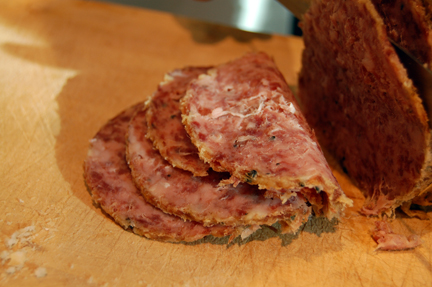
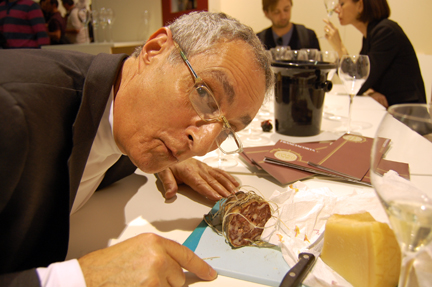
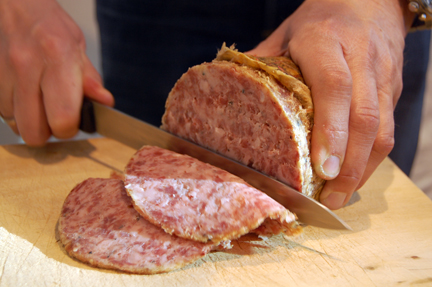
When I wrote “Tuscan soppressa” the other day, I was referring to the fact that my good friend Riccardo (below) — whom I know from summers touring with my cover band in the Veneto back in the early 1990s — produces his soppressa (trevigiana in its classification) using pigs raised in Tuscany. The secret to its supreme quality, he says, is the fact that he uses the entire beast, including the chops, the loin, and tender loin. In traditional production, the best cuts are reserved for other uses.

As a consummate venetophile, I certainly cannot blame my friends for the fun they’ve had at my expense. But now that I have published this errata corrige, I hope they will cease in their unwarranted derision.
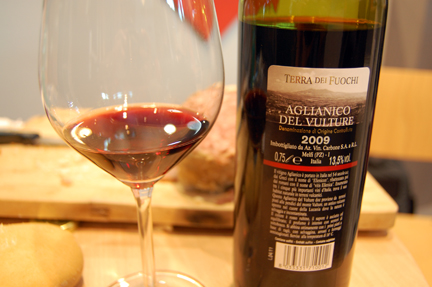
And the end of the day yesterday, having completed our respective rounds at the Italian wine trade fair Vinitaly, we reconvened for a snack of Riccardo’s excellent insaccato — intestine encased — salame with our friend Sara Carbone’s Aglianico del Vulture – a brilliant however blasphemous pairing. (Btw, one of the unique elements of soppressa is that large cow’s intestines are used for the casing as opposed to porcine.)

Amen…

My Vinitaly day II (highlights so far)

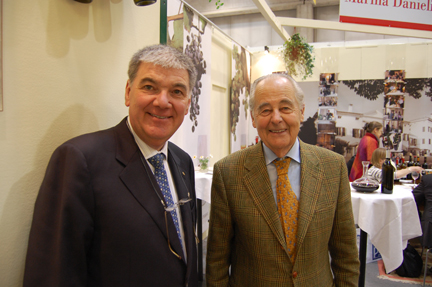
The legendary Giorgio Grai (right) spoke to me about the “gymnasium of taste” where one trains to understand and to “compose” wine. One of the most fascinating conversations of 2012 (so far). Thanks again to Francesco Bonfio (left) for making our time together possible.

Stay tuned…

The Union of Authentic Grape Growers and Winemakers (and the best soppressa I’ve ever tasted)

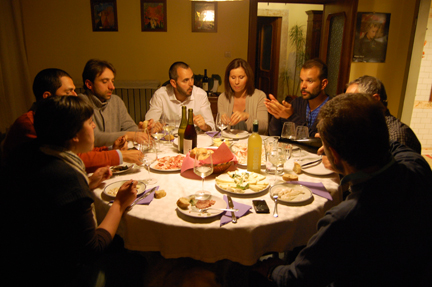
Alfonso and I were dinner guests last night in the home of Stefano and Katerina Menti who live just above the village of Gambellara (Vicenza). They were hosting the first-ever meeting of the new Unione Viticoltori Autentici — Union of Authentic Grape Growers and Winemakers. The acronym UVA spells grape in Italian.

From left, clockwise: Eleonora Costa and her husband Luigi Armanino of Crealto (Monferrato); Nicola Ferrari of Monte Santoccio (Valpolicella); Stefano and Katerina Menti of Menti (Gambellara); Francesco Cirelli of Cirelli (Abruzzo); Alfonso; and my good friend Riccardo Zanotto, producer and distributor (Treviso).

Although Riccardo kept joking that the get-together felt like a meeting of Freemasons, you couldn’t help feeling that these young winemakers shared a sense of esotericism. After all, in a world dominated by the Zonins (literally down the road) and the Gajas (at the upper end of the scale), there’s not much place for authentic wine.

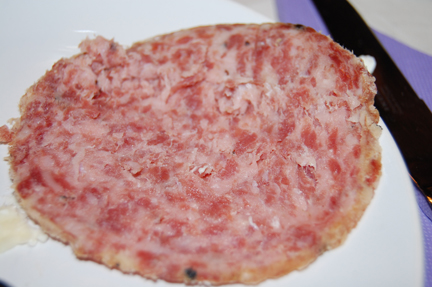
Everyone was showing their best wines and there wasn’t a loser in the bunch. But the star of the evening was Riccardo’s soppressa from Tuscany. It was easy to slice, like a conventionally made soppressa, but once on your knife, it was more like a chunky pâté — hands down the best soppressa I’ve ever had. “Pig. All it has in it,” said Riccardo, “is pig.”

I loved all the wines and wish I had time this morning to post my notes on each one but I’ve got to head over the fair now.

Two highlights were…

Stefano Menti’s gently sparkling lees-aged Garganega was the type of wine I wish Tracie P and I could drink every day. A balance of salty and bright citrus and white stone fruit, chewy and fresh… fanfriggin’ delicious.

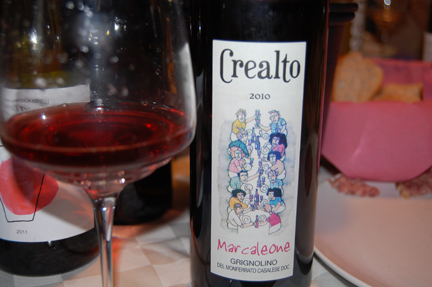
And the old-vine Grignolino by Crealto was fantastic… Fresh and bright on the nose, tannic but sill very light in the mouth, definitely one of the top 5 expressions of Grignolino that I’ve ever tasted (and if you’ve only tasted commercial Grignolino this is a good benchmark for what traditional Grignolino can be).

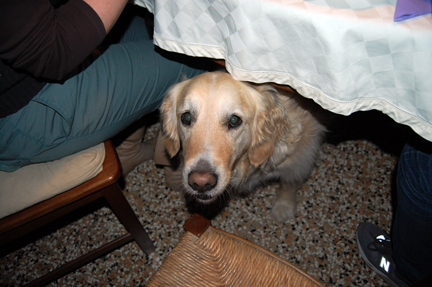
Of course, you can’t have a meeting of a new secret society without a secret society dog…

I’m off to my first day at the Italian wine industry fair Vinitaly… stay tuned!

Do Bianchi and please try not to curse (if possible)

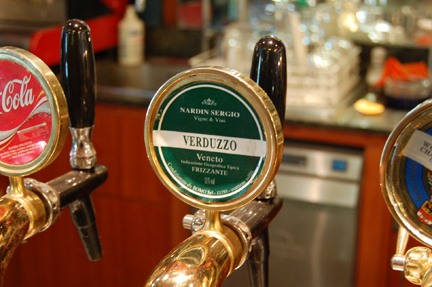
Before heading to the first-ever meeting of the Unione dei Viticoltori Autentici in Gambellara (Vicenza), Alfonso and I stopped at our favorite bar in the village, the Trattoria al Passaggio for do bianchi — two little glasses of white wine.

If you’ve ever lived in the Veneto, you know that using the name of the Lord in vain is kind of like getting out of bed and going to work each morning. You may not want to, but you just have to.

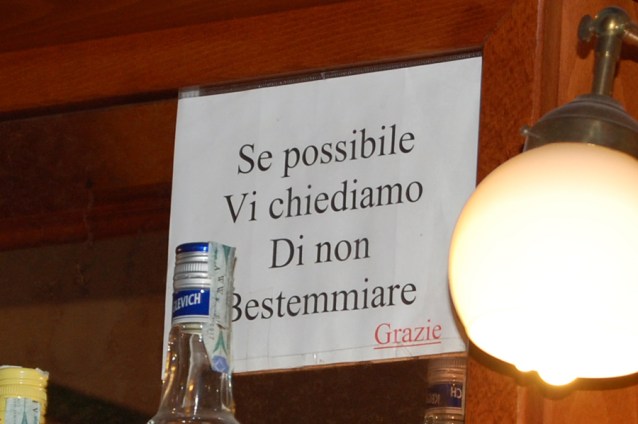
I asked the owner if the sign below worked: “If possible, we ask that you do not curse [blasphemy].” He said it did…

There’s a long tradition of blasphemy in the Veneto, stretching back to the Venetian Republic’s historic political opposition to the Vatican. Today, although avoided in polite circles, blasphemy is used there — in some extreme cases — the same way American speakers of English might use a “crutch” expression like, you know.

Of course, the ancient notion of “cursing the gods” stretch back to antiquity and beyond. And every Italian region I’ve visited has its own colorful variations of blasphemy — always avoided like the plague in polite society.

I loved the qualifier of the owner’s admonition: if possible…

Probably not the case in a “company town” where the company in question happens to be Zonin…

I can’t smile without them…

We took these Polaroids this morning as I was packing and getting ready to leave for Europe.

I wept in the parking lot at the airport when I kissed them goodbye and when the TSA agent asked me if she could go to Venice in my place, I couldn’t hold back the tears.

Everyone says that you can’t know what it’s like to be a parent until you become one and that it changes your life in ways you simply can’t imagine…

No one ever told me about the heartbreak… I just can’t smile without them…

You know I can’t smile without you
I can’t smile without you
I can’t laugh and I can’t sing
I’m finding it hard to do anything
You see I feel sad when you’re sad
I feel glad when you’re glad
If you only knew what I’m going through
I just can’t smile without you

You came along just like a song
And brightened my day
Who would of believed that you where part of a dream
Now it all seems light years away

And now you know I can’t smile without you
I can’t smile without you
I can’t laugh and I can’t sing
I’m finding it hard to do anything
You see I feel sad when your sad
I feel glad when you’re glad
If you only knew what I’m going through
I just can’t smile

Now some people say happiness takes so very long to find
Well, I’m finding it hard leaving your love behind me

Alice and I pay a visit to the “Wine Seer” (New York Stories III)

“@Levi_opens_wine an amazing wine seer, don’t you think, @DoBianchi?” tweeted Alice at the end of the night after we visited with Levi and Brooklyn Guy uptown last Friday night.

In my view, Levi is arguably the coolest sommelier in the U.S. right now and beyond his razor-sharp expertise in Italian wine, he always seems to be just one step ahead of the curve, shaping the discourse and defining the dialectic — a wine “seer,” as Alice put.

It’s not that I didn’t want to see all of my other friends last week in the City. I only had about 48 hours on the ground and they were consumed mostly by meetings with my top client. And Alice, Brooklyn Guy, and Levi were the people I needed to see on this trip.

It was also great to catch up with celebrity sommelier Michael Madrigale, who was working the floor at Boulud Sud that night with Levi.

But it was Levi who had the goods and the dope that I wanted to smoke.

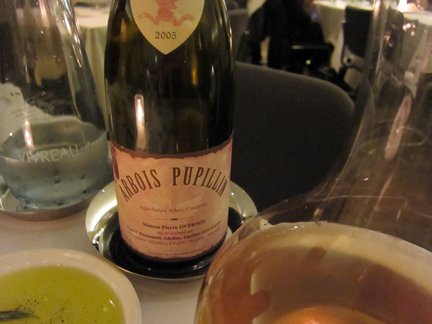
The first wine he opened was the 2005 Overnoy Arbois Pupillin (made from Savagnin), a wine that Levi knows is hard to find beyond the island of Manhattan. An oxidative, tannic, orange wine from the Jura… In many ways this wine represented a synagoga (a coming together) of fascinations that have exited some of us over the last decade. The wine was salty and dense, with its muscle dominating its grace; its delicacy and nuance emerging and revealing itself only as we patiently observed its evolution.

Brooklyn Guy offered that this was an ideal expression of this wine, noting that he had seen a lot of bottle variation in his purchases.

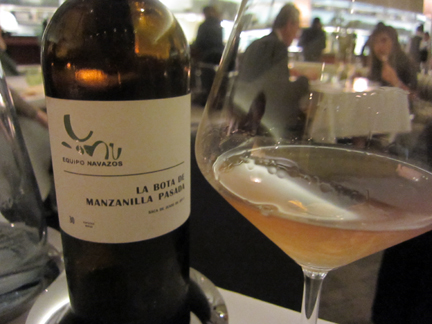
But the pièce de résistance was the Equipos Navaros Bota de Manzanilla Pasada (Sherry).

Brooklyn Guy (aka “the Brook,” as Eric the Red calls him) and Levi have both visited Jerez in the last few years and it was thrilling to hear them hold court on this wine, produced by a generic, commercial winery that holds back certain privileged casks.

“Sherry is a forgotten wine,” said Brooklyn Guy, as Levi expressed his view that the category delivers wines that should be served with food instead of as an aperitif, as do the English and Anglophilic Americans.

I highly recommend checking both of their blogs — Brooklyn Guy and So You Want to be a Sommelier, respectively — and their threads on Sherry and their discoveries.

Is Sherry going to be the next big thing in the U.S.?

@Levi_opens_wine an amazing wine seer, don’t you think, @DoBianchi?