Move over pizza, pinsa is here to stay. #pinsaenvy

No one knows for certain where the word pinsa came from. It is believed that it is a inflection of pinza or pinzo meaning extremely full.

What is known for certain is that this Italian neologism first began to appear around 2008 in Rome. By the late 2010s, it was a well-established lemma in the Italian language.

I had seen pinserie in Italy’s capital (pinserie, pin-ze-REE-eh, plural of pinseria, pin-ze-REE-ah, a place where pinse are made). But I was surprised when I returned recently to my beloved Brescia in Lombardy in the north to discover that there is now a popular pinseria there.

It would seem the pinsa is here to stay!

By seemingly every definition, a pinsa is neither a pizza or a focaccia (even if those words are nearly seamlessly interchangeable in Italy depending on where you are and what you are eating).

But the concept is the same: high-quality flour pies fired in a convex oven, sometimes with toppings already added, other times with toppings added after the pie is churned out.

The etymon pinzo is suspected because the toppings of a pinsa or pizza or focaccia can be considered a “filling,” the way a pastry or a calzone is “stuffed.”
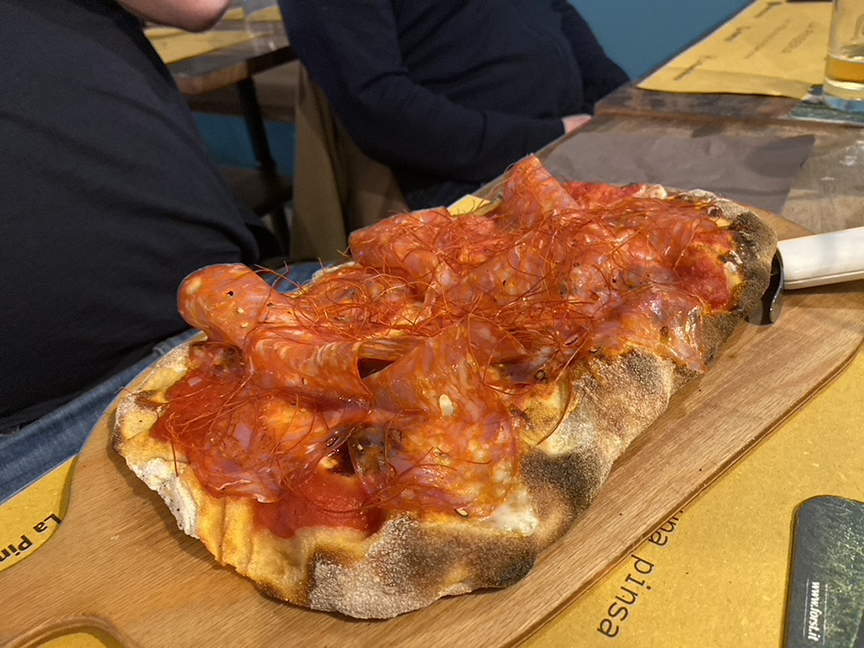
The pinse at the Pinseria in Brescia were excellent.

I also really loved their jalapeño poppers. Yes, you read that right. Italians are WAY into what they call “jalapeño poppers,” even though they don’t use jalapeños but rather a red Italian-grown pepper.

The concept is the same as for jalapeño poppers in the U.S., except here they use high-quality ingredients (instead of Sysco).

The jalapeño poppers at the Pinseria were great and so were all the Roman street food apps. The beer list was great, too.

Move over, pizza! I hope you’ll recover from your pinsa envy!
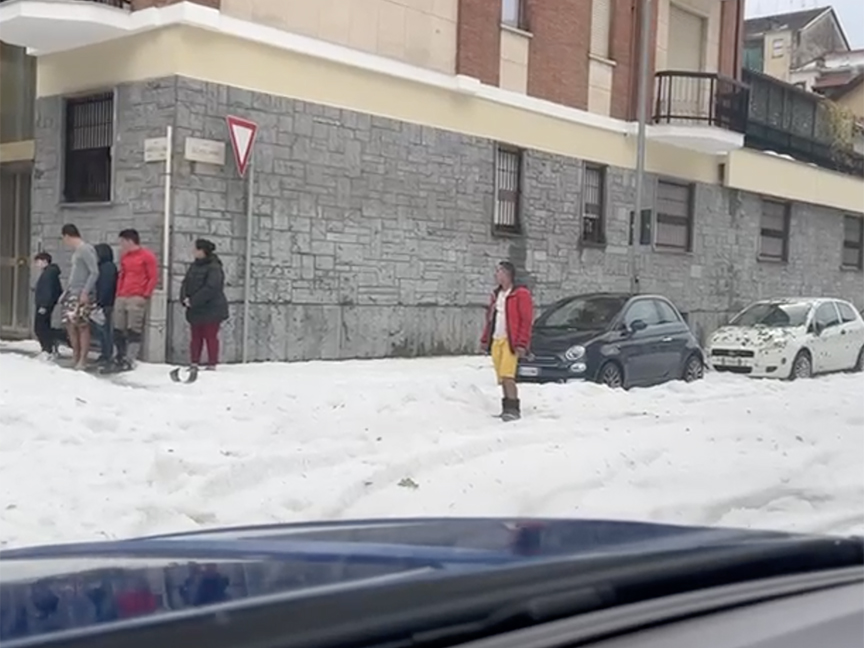
Hail like I’ve never seen before in Italy — or anywhere.

Our family’s hearts and prayers go out to everyone across the U.S. who was impacted by catastrophic weather over the Memorial Day weekend. We just had a few rounds of severe meteorological events in Houston, including some close calls for our community. Extreme weather seem to be the bywords of the day.

This video was shot on May 24, 2024, by my colleague in Turin as he was trying to get home after our late-afternoon meeting in the city center.

That’s hail, not snow. Yes, hail.

We were meeting in a room with a view of the expansive Piazza Vittorio. The weather changed from partly sunny to cloudy and then became suddenly violent.

Everyone I’ve encountered on this trip to Italy keeps talking not just about climate change but also about how rapidly and intensely and unpredictably weather events seem to develop.

Weather forecasts they say are only partly reliable. And it’s affecting everything from outdoor restaurant seating to grape growing to erosion to flash flooding and more. I’ve been coming to Italy for nearly 40 years and I’ve never seen anything like this.

Video courtesy Paolo Tondat.

Dispatch from Italy.

I’ve only been in Italy for a few days but it’s been a whirlwind trip already.

On Tuesday, I presented the wines and vermouth of Amistà for a wonderful group from Miami at the winery’s farmhouse bed and breakfast.

Then it was off to Alto Adige for an extraordinary visit with Hofstätter.

Today, I’m back in Piedmont for an Amistà tasting with a group from Texas in Turin.

I’ve barely been able to catch my breath and enjoy the tide of spring flowers that have sprung up across wine country. It’s truly breathtaking to see.

The shot above is from one of Hofstätter’s top vineyards for Gewürztraminer. The ancient pine tree (directly above) stands nearby. And below a “money shot” of the famous San Michele Church in the Sant’Urbano vineyard where their top Pinot Noir is grown.

The weather has been very strange in recent weeks, with intense rains that caused some flooding and created major issues for some growers. Climate change and the accompanying challenges continue to keep winemakers extremely busy. And they all say the same thing: it’s the extreme nature of weather events that keeps everyone guessing.

Next week I’ll be heading to Milan to attend a concert with friends. Then it’s back to Piedmont for another event before I head to Abruzzo for a few days of tasting.

The best news is that Tracie and the girls will be joining me early next month! And we are going to have a genuine family vacation. The girls have made me promise that we won’t go to any wineries! We’re going to travel by train and the girls are going to get their first taste of the Grand Tour.

Writing on the fly today but it only takes a few days on the ground to be reminded that Italy’s ceaseless beauty, cultural richness, and warm humanity never fail to astound even the weary traveler.

Thanks for being here. I’m looking forward to sharing my notes from my trip.

Focus on the Chianti recipe misses the point. Ricasoli’s game-changing discoveries were acidity and terroir. 100 years of Chianti Classico consortium.

This week marked the 100th year since the Chianti Classico consortium was founded.

Think of that! 1924, two years after the March on Rome, a time of sunny optimism and resurgence of national pride in Italy, years before clouds of war would appear on the horizon.

A century later Tuscan resilience, ingenuity, entrepreneurial acumen, and Chianti terroir have endured war, economic catastrophe and revival, booms and busts. And Chianti Classico and the interest in its wines are arguably more robust than ever in history.

The organizers of the wonderful Top Drop festival in Vancouver asked me to celebrate the anniversary in my keynote talk at the gathering earlier this week.

Chianti Classico and all those uniquely Tuscan attributes above are a model and an inspiration for a wine trade in a moment of crisis. Its arc shows how Tuscan — Italian — creativity and diligence offer a roadmap for a brighter wine industry future.

The Iron Baron, Bettino Ricasoli (1809-1880), is often remembered today for the “Chianti recipe” he created (read it here).

But for those who have read his celebrated exchange of letters with professor Cesare Studiati in at the University of Pisa, the focus on the formula misses the point.

Ricasoli and his colleague realized that acidity was the key to making wines that would retain their quality during shipping.

They discovered that the marriage of native grape varieties with their terroir produced wines with higher levels of acidity.

From their research and work in the field emerged a new wave of Sangiovese growers who followed Ricasoli’s example: like the baron, they ripped out their gaggle of grape varieties and replanted primarily to what is considered the quintessential Tuscan grape.

Think of that! How powerful to consider an advent of terroir!

It’s another reason why we owe so much to Chianti Classico — the wine arguably more closely aligned with a place than any other. And maybe it will inspire us to remember how Tuscan imagination and resourcefulness are essential elements of the terroir that has made Chianti Classico a wine icon.

A fantastic wine program and wonderful esprit at L’Abattoir in Vancouver BC.

Writing on the fly this morning as I prepare my keynote talk for the Top Drop festival in Vancouver BC this morning.

But have to give a warm shoutout and thanks to wine director Andrew Forsyth at L’Abattoir in the city’s Gastown.

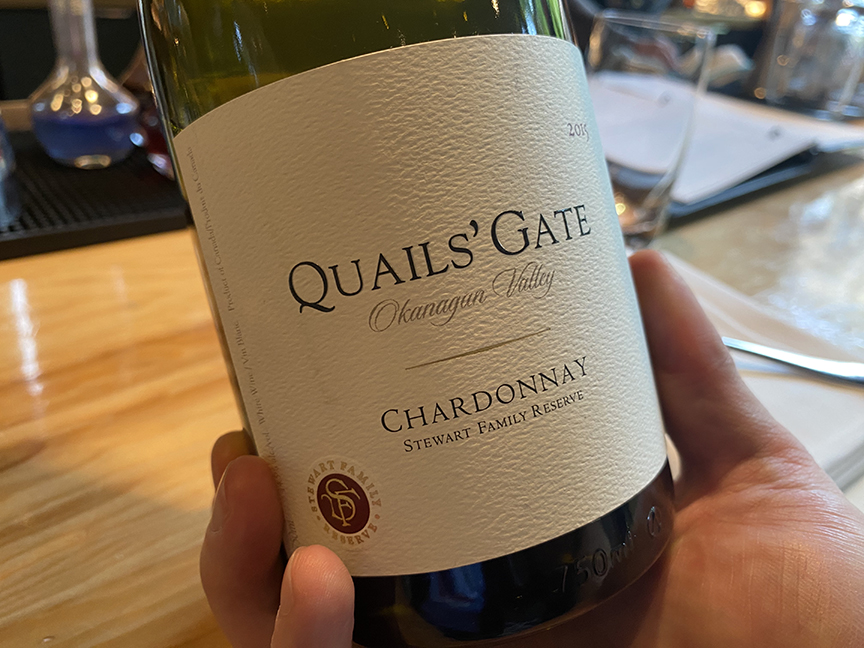
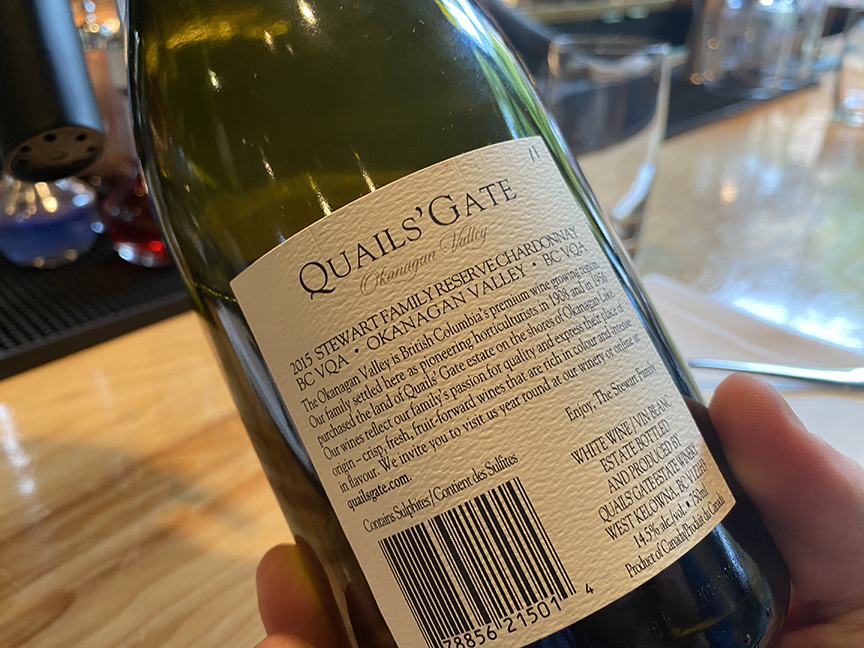
On the recommendation of the festival organizer, I popped in last night for an extraordinary glass of 2015 Chardonnay by Quail’s Gate in the Okanagan Valley.

Wow, what a wine! Still extremely fresh, it was like biting into a bowl of lovingly ripened tropical fruit.

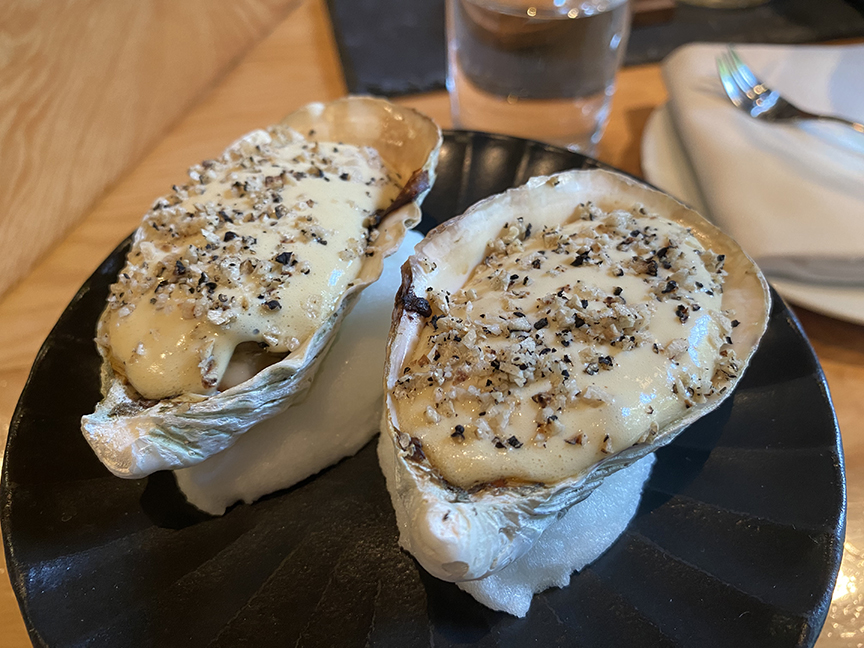
Paired fantastic with the restaurant’s signature baked oysters topped with a savory zabaione.

I went with Andrew’s excellent recommendation but I could have gone a thousand different directions with his gorgeous list (and wow, the prices in Canada are great!).

I was also super impressed by the general esprit of the staff. Everyone I interacted with engaged me with conversation and notes on the menu and wines. I loved this place and highly recommend it.

Oh, and please don’t tell Tracie that I had the below for a late-night snack (not at L’Abattoir, obviously!).

This is such an amazing food and wine town! I’m looking forward to the festival tonight and tomorrow and hopefully will get some raw oysters in before I head out tomorrow for California.

Thanks for being here! Wish me luck and wish me speed…

“My Boy,” a love song I wrote for RooRoo (aka Rusty).

So many folks from across the world called to make sure we were alright following the rains that caused catastrophic flooding in Houston last week. Our heartfelt thanks goes out to all of them.

Our neck of the woods was spared by the rising waters. But RooRoo (aka Rusty), one of our two rescue dogs, had a really rough time of it. He’s terrified of the rain, thunder, and lightning. Understandable for a dog who was abandoned most likely after Hurricane Harvey and left to fend for himself.

He and I were awakened by thunder and lightning early Sunday morning and he wouldn’t leave my side until the storm subsided.

And that was when this song came to me. By 9 a.m. it was recorded and mixed.

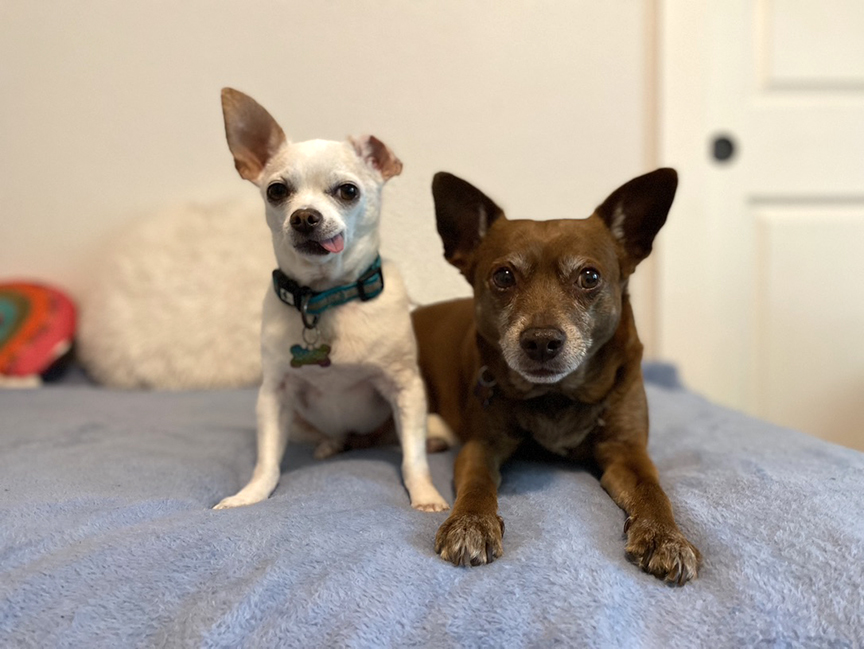
That’s RooRoo on the right in the photo above, with our other dog Paco.

Whenever I comfort RooRoo during a tempest, I always remember that I’m only returning the favor. During the early closures of 2020, when we were still a single-income household and I barely knew how I was going to pay the rent and feed our family, he spent many a sleepless 3 a.m. faithfully by my side. He would look up at me with those wide eyes as the panic attacks came and went. He didn’t have to say the words: it’s going to be okay, daddy, we’ll get through this together.

And “he saved my life on a stormy Texas night.”

I hope you enjoy my love song to RooRoo. Lila Jane directed and edited the video. Thanks for listening. And thanks, again, to everyone who called to make sure we were alright.

He’s a sly boy
He’s a shy boy
He’s an apple of my eye boy
He’s a cry boy
He’s a sigh boy
He’s got no alibi boy

Once he saved my life
On a rainy Texas night
Cause he’s my boy
Cause he’s my boy

He’s a brown boy
He’s a clown boy
He’s a take me back to town boy

He’s a snide boy
Wide eyed boy
He’s a never leave my side boy

I know he’ll save my life
On another rainy night
Cause he’s my boy

When the storms come back to Houston
And the lightning fires up the sky
He will hold me, he will scold me
Cause I can not stop the rain
From fallin down
As he lies by my side

Cause he’s my boy my boy
a bundle of my joy boy
Cause he’s my boy my boy
He’s my wonder why boy

I know he’ll save my life
On a stormy Texas night
Cause he’s my boy

Terroir is “landscape, people, language, air, aromas, sounds.” Notes on why Italian wines taste differently on either side of the Atlantic.

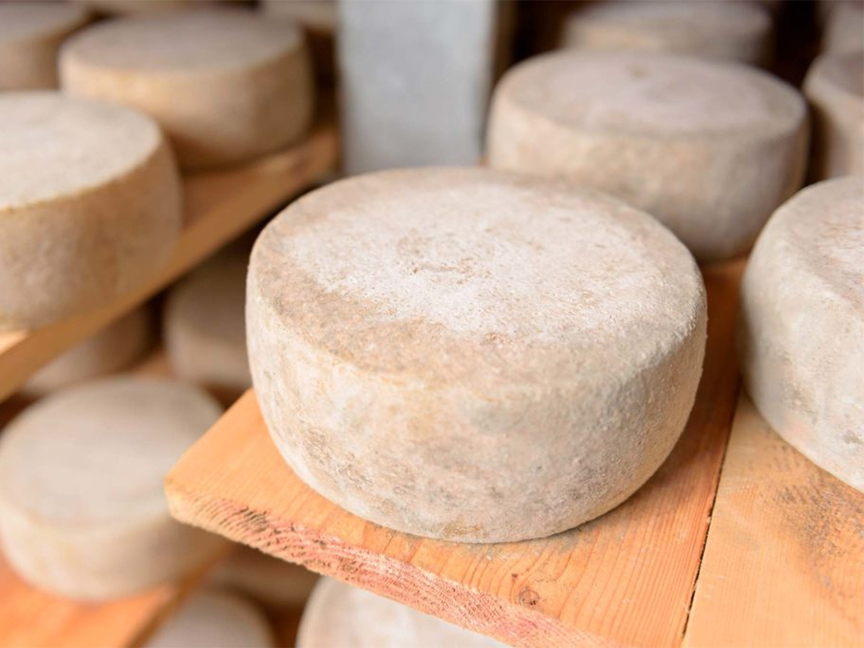
Above: Pecorino aging in the cellars of the Caseificio di Mario in Pienza, a stone’s throw from Montalcino, Tuscany.

Yesterday’s post on the differences in tasting Italian wines on either side of the Atlantic (“Is restrained sulfur the reason why Italian wines are easier on the body when consumed in Italy?”) elicited a tide of insightful comments where readers shared their experiences.

On the Facebook, the indomitable Silvana Biasutti, artist and mother to two of Montalcino’s most famous winemakers, wrote this (translation mine, although Silvana is fluently bilingual and literary):

    When I’m in Italy, in Tuscany, I go to the store to pick out an excellent Pecorino. Years ago, when I was still living in Milan, I would go to Tuscany and eat that Pecorino. It was so good that I would take a big piece of it back to Milan with me. Unfortunately, in Milan, it would lose a lot of its extraordinary flavor.
    When a food and wine are genuinely (and not just rhetorically) an expression of a land (of terroir), they lose something when they leave their natural environment. And they are always better when consumed with people from that place. Landscape, people, language, air, aromas, sounds — they are all part of a flavor. This isn’t just an impression of mine. It’s the way it is.

Truer words have never been uttered so eloquently.

Her notes were echoed by another keen observer of terroir, my wonderful friend and hero of the medical profession, Andy Pasternak, who wrote:

    So many variables contribute to this and you mentioned some of the main ones. I know it’s an old trope, but “if it grows together, it goes together” definitely holds true more in Italy. Another consideration that I’ve been thinking about is eating/drinking outside versus indoors and just some of the other aromas you get that interact with your food and wine. For example, the same white wine is likely going to taste different if I’m eating crudo outdoors on the coast of the Adriatic versus drinking it at a restaurant in a casino in Las Vegas.

Check out the thread and more comments here. And thanks to everyone who commented. It’s a reminder that our love and passion for great gastronomy continues to bring our vibrant community together.

Is restrained sulfur the reason why Italian wines are easier on the body when consumed in Italy?

It’s a question that I get asked a lot: is restrained sulfur the reason why Italian wines are easier on the body when consumed in Italy?

And even before the wine community’s current obsession with sulfur and that bizarrely applied word “sulfites,” the same conundrum took the shape of why do the wines in Italy taste better than they do here?

In the case of the latter query, the answer sometimes came in the form of because the Italians keep the best wines for themselves. (A tint of an old and unhappy trope there?)

Today, many people tell me that they believe it’s because Italians use less sulfur.

A friend and colleague from California wrote me the following earlier this week:

    I’m on perhaps 20 facebook groups abut Italian travel, and on virtually every one, once a month, there’s a discussion about how people can drink the wine in Italy because “they don’t add sulfites over there.” Or “they have no additives over there in their wine.” People are judging this based on their reaction to wines while in Italy, vs here in the US.

My belief is that it’s not a question of additives or sulfur.

In my view and experience, the wines often “taste better” to vacationing American travelers for the following reasons: 1) they are eating fewer processed foods while in Italy; 2) they are eating more wholesome and balanced meals, including foods that are easier to digest; and 3) they are more relaxed, less stressed, probably sleeping more, which also aids in digestion.

They’re probably also having better sex than when they are at home. Just kidding but there’s something to that, too!

When you order “house wine” in a country restaurant in Italy, you are probably drinking a wine that has more sulfur added than your $130 Napa Valley Cabernet Sauvignon. Tavern wines are usually bulk wines, often sold by the demijohn.

That’s a photo of tagliatelle al ragù that I ordered in a hotel restaurant near the Bologna airport. It wasn’t actually the best or most wholesome meal of my trip. But it was a hell of a lot healthier than the Sysco-driven food we often eat stateside.

Paired great with a glass of cheap Lambrusco!

In your experience, why does the wine taste better and feel better in Italy?

THANK YOU Chef Pascarella and team! What an amazing night at Alici Oyster Bar in Atlanta.

In the wine business, there are good nights and there are bad nights. And then there are those unforgettable nights when you are reminded what a blessing it can be to be in this trade.

This morning as I’m waiting to board an early flight back to Houston from one of my favorite cities in America, I am feeling immense gratitude for the dinner Chef Pat Pascarella and his team prepared for our Abruzzo consortium dinner last night at his amazing Alici Oyster Bar in Atlanta.

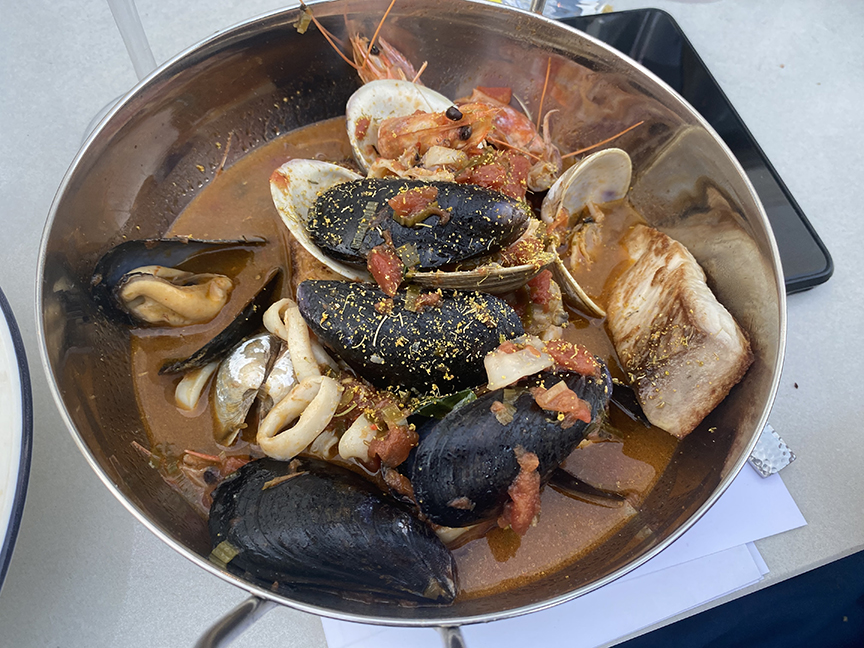
If only you could hear the oohs and aahs that met the presentation of his brodetto, one of the iconic dishes in Abruzzese gastronomy! And the notes of elation didn’t just come from the wine professionals who attended our event. Even my colleagues from the consortium, the president and communications director, were wowed by the menu and the meal.

In my line of business, there are nights when you arrive at your event and the wine is still in its boxes waiting to be wiped of its Styrofoam snow. And then there are NIGHTS when you arrive at the venue and the staff has already chilled the whites and Cerasuolo with ice tubs at the ready.

Chef Pat, I cannot thank you enough for the thoughtful and truly heartfelt menu. And your team, my goodness, what an incredible group of young restaurant pros.

I’m also feeling grateful for all the Atlanta wine folks who came out to taste and chat with us. This was my second event for Abruzzo in Atlanta and let me tell you, this city has a vibrant and rich wine scene. And there is a feeling of solidarity and collegiality matched only by the professionalism of its members.

Last night’s dinner was one of those great ones that make you remember why we get up at the crack of dawn to rush to airport and board another plane… and do it all again.

Atlanta, mon amour, I hope to see you soon!

An Italian speeding ticket story with a happy ending.

Happy International Workers’ Day!

Oops, I did it again.

Just after leaving the Milan airport last month, I got clocked doing 120 kilometers an hour in a 110 kph zone. Yes, that’s 6.21 miles per hour over the speed limit.

I’m no speed demon. As a matter of fact, I’m more of an overly cautious, defensive driver.

But as European traffic laws and electronic surveillance of drivers become increasingly stringent and robust, people like me are ticketed more frequently, often because we simply don’t realize we’ve entered a new speed limit zone.

The most frustrating thing about Italian speeding and traffic tickets is that they are incredibly difficult to pay from abroad. And by the time you receive the official ticket (not just the notice from the rental car agency), you’ve already accrued penalties that drive up the cost from around €50 to nearly €200.

Here’s the good news. It used to be that you had to pay a local authority via a bank wire. Now, Italy has implemented a new portal called Pagopa.

But here’s the catch. When the rental agency forwards the notice about the ticket, it includes the ticket reference number but does not include the code for the recipient of the money (the local authority who processes the payment).

Hoping to avoid subsequent penalties for late payment, I wrote to the Pagopa help email asking for assistance. They responded the next day and provided the second code I needed. And voilà, I paid my ticket on time! A miracle! At least in my experience…

A good friend recently told me that he was able to pay a ticket using PayPal. But in his case, he was already 60 past the payment due date and so he had to pay the extra fines.

It’s great news about Pagopa.

But for the first time ever, I managed to avoid the extra fines.

Thank you, Pagopa! You are awesome!