
 According to the Wiki, the 20th-century critical theorist Harold Bloom’s “anxiety of influence” was “based primarily on [his] belief that there is no such thing as an original poem, that every new composition is simply a misreading or misinterpretation of an earlier poem and that influence is unavoidable and inescapable; all writers inevitably, to some degree, adopt, manipulate or alter and assimilate certain aspects of the content or subject matter, literary style or form from their predecessors.”
Bloom’s “anxiety” came to mind a few weeks ago when Tracie and I opened a bottle of Gino Cuneo’s 2014 Ripasso, a wine made using partially dried Corvina, Molinara, and Rodinella grapes in the style of Valpolicella. The main technical difference between his and his Veneto counterparts’ wines is that he grows his fruit in Washington State.
But unlike Bloom, who often saw the detriment of literature owed to influence, we discovered in Gino’s wine a wonderful continuity with the wines of the “precursor,” as the famous Yale scholar might have called it.
The historic reach of influence in North American viticulture is widespread and pervasive — and sometimes even invasive.
A great example of this is the planting of Francophile “international” grape varieties in Sonoma and Napa in the era that followed the repeal of Prohibition and the end of the Second World War. It’s widely accepted today that Chardonnay and Cabernet Sauvignon where not the ideal varieties to plant in Northern California’s arid climate where average temperatures of late summer generally and greatly exceed those in the grapes’ respective spiritual homelands, namely Burgundy and Bordeaux.
But the landed gentry of that era, as it were, saw French wines as the model — their anxiety of influence — for the wines they wanted to grow and drink. Prior to Prohibition, the previous generation of grape farmers there were Italophile and often Italian. The new California wine of the post-WWII epoch was conceived as an “ennoblement” of the region’s viticulture. (It’s important to remember that Italian immigrants were often considered second-class citizens in America at that time.)
By the time the enoblogopshere began to take shape in the 2000s, there was already a distinct new wave of wine lovers who decried “California Chardonnay” and “Napa Valley Cab” as mediocre, misguided, and ill-conceived imitations of their French models.
These and other transcultural questions of Bloomian influence crossed my mind the other night as we enjoyed Cuneo’s wine with a well-done porterhouse steak (that’s the way our girls like it; a parental-filial compromise).
The thing that struck me about it was how classic the wine showed, with notes of almond and black cherry that are typical of Valpolicella-grown Corvina. It also had the alcohol and the power that the ripasso method traditionally delivers. (It’s my impression that Cuneo makes this wine more like a lighter-style Amarone than a ripasso-method wine. Technically, a Ripasso is made by fermenting the new must on the solids of previously vinified Amarone. I believe that this wine, on the other hand, is made partially from dried grapes. Gino, if you are here, please share the vinification. Thank you!)
In my experience, Italian-inspired wines from the U.S. often lose their classic varietal traits. It’s rare that a California-grown Sangiovese or Barbera evokes aromas and flavors of the same grapes grown in their land of origin.
Tracie and I have a high bar for Italianate wine made in the U.S. But this one really thrilled our palates and commanded our attention with its pseudo-typicity and delicious flavors and food-friendliness.
Isn’t great when a bottle of wine gets you thinking thoughts like this? It seems the anxiety of influence isn’t so bad after all…
Thank you, Gino, for sharing this bottle of wine with us! We really enjoyed it!
 Above: a sunset in La Jolla, California where I grew up. Before my family moved there, realtors redlined Jews until it became apparent that community wouldn’t thrive without them.
 Some folks will remember that I used to run a wine club in California where I would sell mixed six-packs from my warehouse in San Diego.
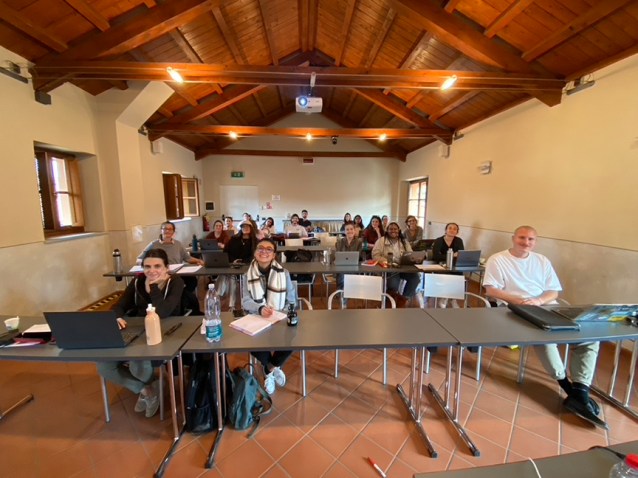
  Above: my graduate student class at the Slow Food University of Gastronomic Sciences in Piedmont, Italy, on the last day of our seminars earlier this month.
 Just over the course of the last month, I’ve had the great fortune to interact with a half dozen wine professionals with whom I worked (and/or drank) during the late 1990s and early aughts in New York City.
 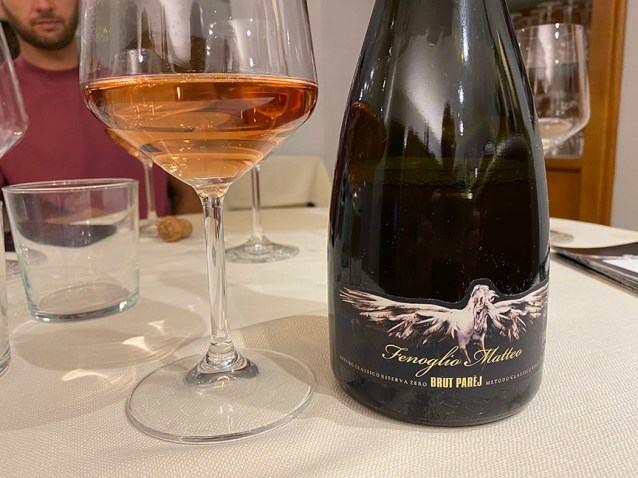 It’s not every day that you get an Instagram message from someone named Fenoglio.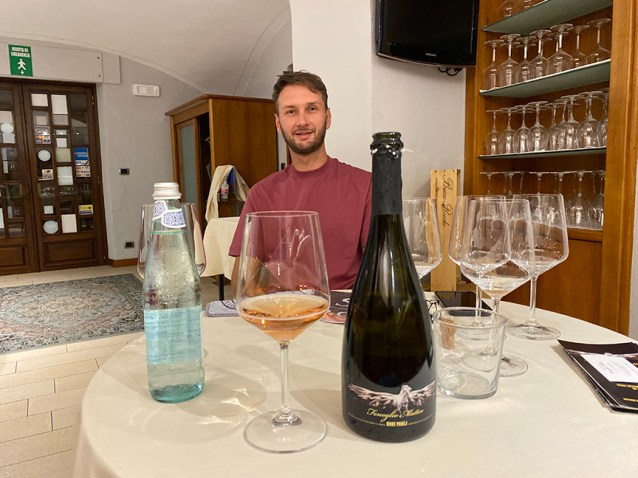
 It’s been a whirlwind.
  Happy birthday Tracie! The girls and I love you! Our doggies love you, too!
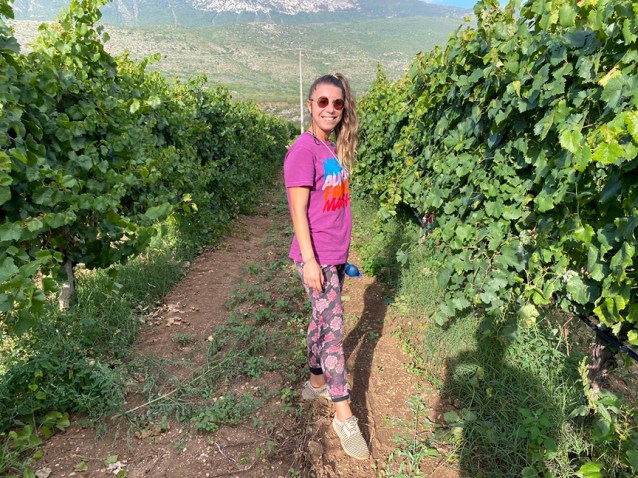 Above: brilliant, energetic, and super cool, Giulia Cataldi Madonna isn’t the winemaker that most people expect to find when they visit Abruzzo, one of Italy’s most undervalued wine regions. The work people like Giulia are doing there might just hold the key to the future of Italian viticulture.
 Above: Pecorino grapes at Cataldi Moadonna in Ofena commune were healthy and ready to pick despite the hot conditions. Ofena growers like Giulia have been dealing with extreme weather for generations. Their strategies offer clues into how Italian winemakers will need to face the challenges of climate change.
 Above: I’m going to get into trouble for saying this but Giulia told me that she agrees with me 100 percent when I say that Cerasuolo d’Abruzzo is not a rosé wine. It’s a red wine. More on that later.
 Next Thursday (10/13) in New York, I’ll be pouring and talking about “a wine for the worst kind of thieves”: Garganega (pictured in photo above, snapped a few weeks ago in Soave).
 Do Bianchi