
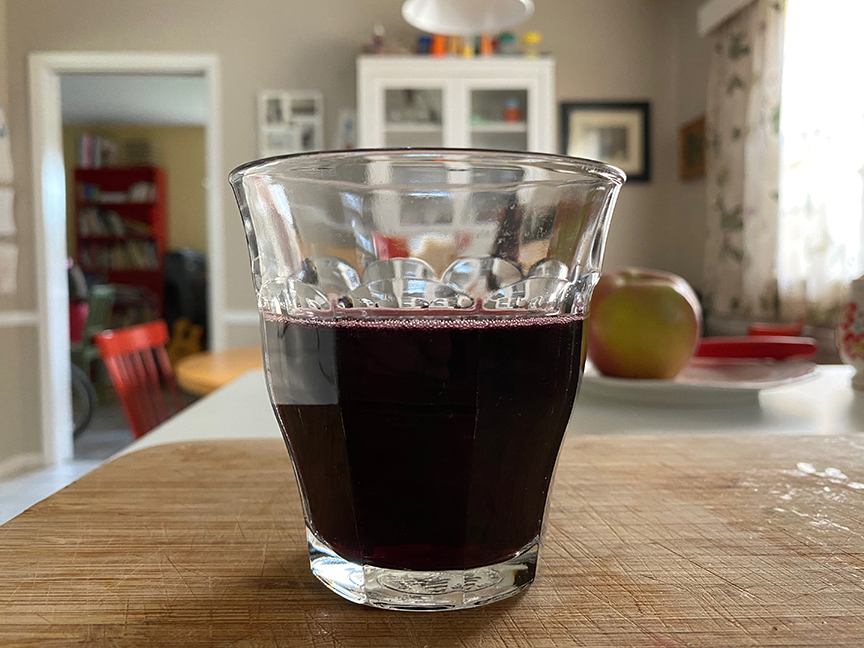
What’s the best glass for serving Lambrusco?

The quest for the perfect glass for the perfect wine is one that has long vexed wine lovers and professionals.

While there are some genuine technical aspects to consider when pairing stemware and wines, the fetishization of matching glass and fermented grape must is driven primarily by glaziers. They need, after all, to sell you more glasses.

In regard to stemware shapes historically paired with regional wines, the match is more often than not determined by one simple variable: local tradition. Whether the slightly flared balloons of Langa or the broader vessels of Burgundy, the different shapes perform the exact same functions (aeration and heat diffusion). But their shapes are different because the people who make the wines “have always done it that way” and “as long as anyone can remember.”

Like most 21-century wine professionals in the U.S., we use a classic Bordeaux glass for nearly all the wines we serve at our house — red, white, and sparkling — with one notable exception: Lambrusco. When it comes to the many wonderful sparkling reds and rosés from Emilia that we love to pour, the “stem” has to be a classic tumbler like the one in the image above. It’s what we call a “glass of the world” in our family lexicon because it’s the type of drinking vessel that you find in taverns and public houses across the globe.

In Emilia, where the locals drink Lambrusco ubiquitously and nearly exclusively (don’t ever try to bring them Brunello as I once foolishly did), the tumbler is the hands down glass of choice.

Is there a technical motivation behind this tasting? No, not as far as I can ascertain. Lambrusco tastes just as good in our tumblrs as it does in our Bordeaux stems. (But please, please, please: never serve Lambrusco in a flute. And on second thought, never serve ANY wine in a flute. But that’s another story for another day.)

In my view, the glass choice for Lambrusco is an aesthetic and ideological one. Low in alcohol and (ideally) with bright fruit and gentle fizziness, Lambrusco is meant to be a crowd pleaser for everyone to enjoy at the table. And so it only makes sense for it to be served in a “glass of the world,” a nod to its demotic nature.

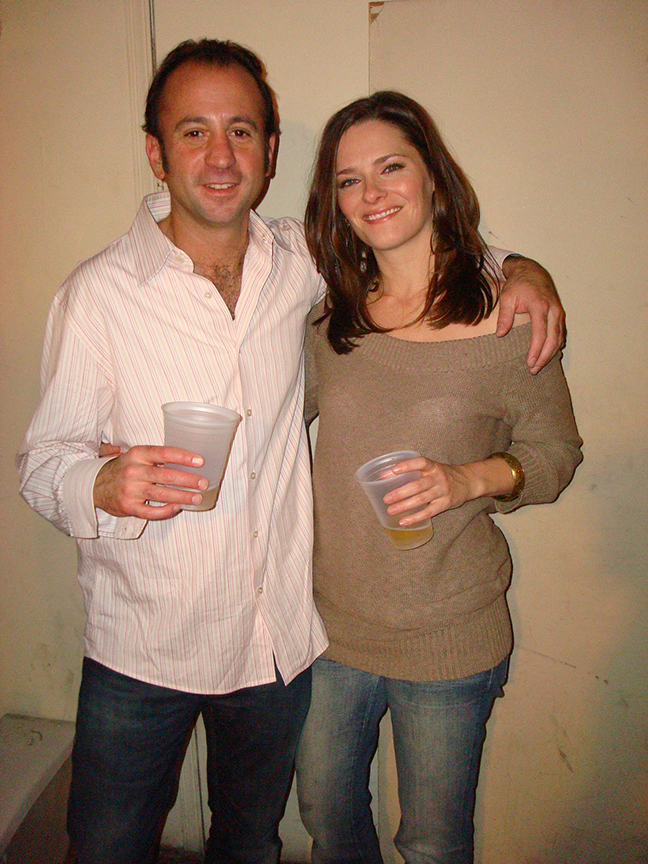
No matter what wine you are pouring tonight, remember: if you can’t be with the glass you love, love the glass you’re with. One of the greatest wine experiences I’ve ever had was sharing Bollinger Special Cuvée Champagne with Tracie backstage at one of my band’s show at the Mercury Lounge on the Lower East Side when we were first dating. We poured it in clear plastic cups, the only option available (below). So go figure!

Oh and by the way, the Lambrusco in the glass last night was paired with nachos topped with refried beans and freshly sliced jalapeños. It one of the most satisfying pairings I’ve had this month. For real.

If you’re joining me tonight for our virtual wine dinner with Alessandro Medici of Lambrusco great Medici Ermete, be sure to use your tumblers instead of traditional wine glasses. And you’ll see what I’m talking about.
I heart Lambrusco: Taste with Alessandro Medici and me this Thursday in Houston.

In my experience, there’s no other wine in the world that more ably expresses the character of the people who make it than Lambrusco.

It’s as if the Emilians — the most joyous and sensual of Italians — had found a way to bottle themselves.

I’ve found this across the board, whether tasting with my many close friends there or opening a bottle at home with dinner. I don’t quite know how to describe or explain it. But if ever there were a genie in a bottle, it’s got to be a bottle of Lambrusco.

The magic ethos of their wines is just one of the reasons I’m thrilled to welcome my friend Alessandro Medici this week for our Thursday night virtual wine dinner at Roma in Houston (my client).

Alessandro is a rising star of Italian sparkling and he’s bringing fresh new ideas and energy to his family’s winemaking legacy. I like him a lot and he’s also a graduate of the Slow Food University of Gastronomic Sciences where I teach (in normal years), another reason I think he’s got the “right stuff.”

See the menu and reservation details here.

And thanks for the support: these events are what’s keeping this restaurant alive. Support local businesses, including my own, by eating great Italian food and drinking great Italian wines with the people who love and make them.

Nicola “Dudu” Durandi, beloved Friulian winemaker, dies at 43.

Above: Nicola “Dudu” Durandi (right), beloved Friulian winemaker with Melania Spagnoli, Texas sales manager for his U.S.-based importing and distributing company.

Nicola Durandi, 43, a legacy grape grower and winemaker from Friuli has died. According to a local media report, the cause was a heart attack.

Known affectionately as “Dudu,” Nicola was a beloved figure in Udine where he lived with his wife and children.

His family’s Antonutti winery is one of Friuli’s leading producers of fine wines. He worked as the estate’s brand ambassador in the U.S.

Over the years, I met and tasted with Nicola on a number of occasions in Texas, a state he visited regularly. Earlier this year, he was the featured guest at one of the virtual wine dinners I host for a restaurant here in Houston.

Nicola was a warm man, with a broad smile and a hearty handshake. And he had that classic Friulian eagerness and genuineness about him.

Tracie and I were both immensely saddened to hear of his sudden passing and we would like to share our heartfelt condolences with his family. Our condolences also go out to the Impero wine team. Nicola will be sorely missed.

Sit tibi terra levis Nicolae.

Donald Trump and the Partisan Johnny (Beppe Fenoglio)

Yesterday, my Italian colleague and friend Filippo Larganà, editor of the popular Piedmont-centric wine blog Sapori del Piemonte, asked me to write a note about the Tuesday evening presidential debate for his site.

Here’s a link to my “op-ed” entitled “Donald Trump and the Partisan Johnny” (in Italian).

For readers who don’t know the works of Beppe Fenoglio, he was one of the most widely read authors of the 20th-century in Italy. His most famous work was his auto-biographical novel Il partigiano Johnny (The Partisan Johnny), the story of an Italian soldier in the Second World War.

After the 1943 armistice with the Allies, Johnny abandoned his post and headed back to his native Piedmont where he joined the partisans fighting German and Fascist armies.

In my post for Filippo’s site, I wrote about how Fenoglio saw Piedmont’s farming culture and its values as the source for the human courage and solidarity that were needed to vanquish the occupying forces.

Piedmontese viticulture grew out of that same culture and humanity.

It’s up to us to draw on those same values as we face the rising but still stoppable racism and racist violence in our own country.

When we find it, we’ll share the human courage and solidarity of those partisans. And perhaps instead of saying, I’m not a racist, but…, we’ll say I’m not a racist, but instead an anti-racist.

Heartfelt thanks to Filippo for letting me share my thoughts with his readers. And special thanks to Strega Off for allowing me to use their photo.

Image courtesy Strega Off, the organizers of an event that celebrates the prestigious Italian Strega literary prize.