Selvapiana Chianti Rufina 2014: good to the last drop (3 days later)

selvapiana-chianti-rufina-2014Just a quickie this very busy Thursday morning as the food and wine world seems to be finally getting back online.

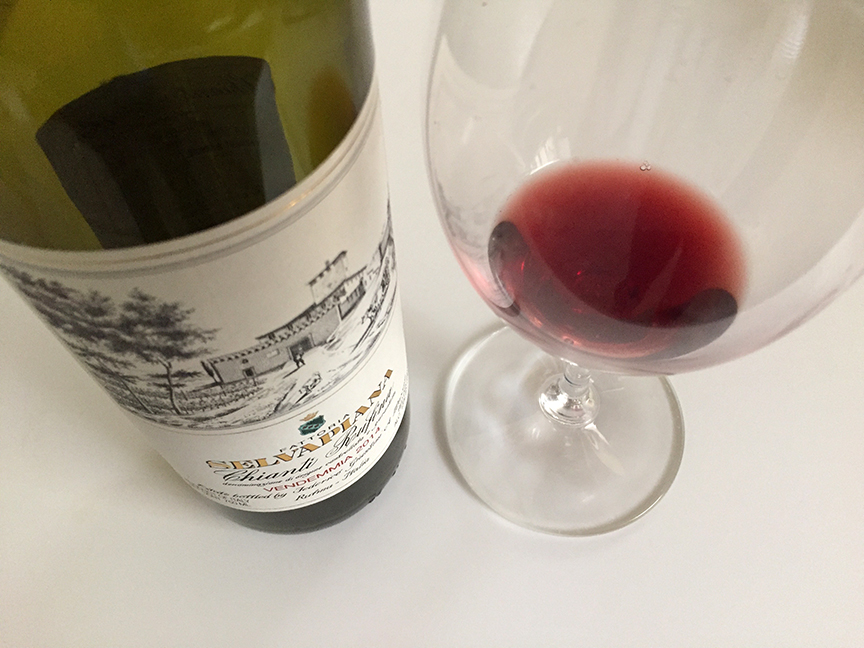
I opened the above bottle of Selvapiana Chianti Rufina 2014 four nights ago and drank two glasses with dinner over the last three evenings.

And man, the very last glass, which I paired with rotisserie chicken and a baked potato (dressed simply with extra-virgin olive oil, Kosher salt, and freshly cracked pepper), was the best of all.

I was just blown away by how vibrant and how varietally expressive this wine was. It wasn’t just hanging in there on the third night. It was actually even better than the previous evening.

What a great wine and what a great value… All things considered, for the price (around $17 in my market) and quality and availability throughout the U.S., this is one of my all-time top wines. Definitely in my top 5 for greater Chianti. It also paired gorgeously with Tracie P’s Neapolitan-style ragù on nights one and two.

That’s all I have time for today… more tomorrow… Thanks for being here.

Italian wine in 2016: a year that dramatically reshaped the industry and gave us “Asti Secco”

vietti-sale-baroloAbove: the sale of legacy Barolo grower and producer Vietti was one of the most talked about stories of 2016. But there were many other stories that dramatically reshaped Italy’s viticultural landscape.

“The year came to a close with another major loss,” wrote Italian wine critic Monica Larner last week in her excellent almanac for 2016 on RobertParker.com:

    The Felluga family of Gorizia in Friuli Venezia Giulia announced on December 27 that their much-celebrated patriarch Livio Felluga had passed away a few days prior. He was 102 years old. Mr. Felluga’s extraordinary life saw two world wars and Italy’s post-war economic boom. He shaped the wine identity of Northeast Italy and championed the concept of quality Italian white wines that would spark an important export phenomenon. Among Mr. Felluga’s most important contribution is his approach to farming. He famously refurbished previously abandoned vineyards and painstakingly brought old vines back to prime production health. He implemented modern trellising, high density planting and systems to guarantee low yields.

Felluga was just one of three Italian icons who transhumanized in 2016, to borrow Dante’s neologism. Stanko Radikon and Giacomo Tachis, both of whom Monica remembers in her piece, were two others. In their own ways, each of them radically re-envisioned and re-routed the trajectory of Italian wine. Their lives form a triptych of the Italian wine trade’s transformation since the end of the Second World War.

When future observers of the Italian wine trade look back on the fateful year of 2016 (a year of radical social-political-and-cultural upheaval throughout the world), they will also remember the “all-out land-grab,” as Monica put it, in Italy’s premium-brand appellations. 12 months ago, no Cassandra could have predicted what has been widely called the “Burgundization” of Italians most prominent appellations.

“Some have dubbed it the ‘Burgundization’ of Italian wine,” wrote Monica, “because like in Burgundy, there is simmering resistance and palpable discomfort in Italy over foreign and corporate capital in local wine.”

The Vietti sale to an American investor was arguably the most talked-about. But Biondi-Santi, Cerbaiona, and countless other leading high-end and high-profile brands in Langa, Bolgheri, and Montalcino changed hands in 2016. Many of the properties went to foreign investors and many went to the growing number of Italy’s corporate winery groups.

(It’s behind a paywall but Monica’s is such a great overview of this transformational year in Italian wine. I highly recommend it to you.)

The year’s necrology and its feudalization will be the elements that will be remembered most by future observers of the Italian wine trade. But there were other stories that will have far-reaching implications for Italian wine.

In 2016, Langa winemakers handily crushed greater Piedmont’s attempt to create a Piemonte Nebbiolo DOC. It was one of the most pitched battles of the year for Italian winemakers.

“The Langhe have won the Nebbiolo war,” wrote leading Italian wine writer Luciano Ferraro for the national daily Corriere della Sera after the dust had settled.
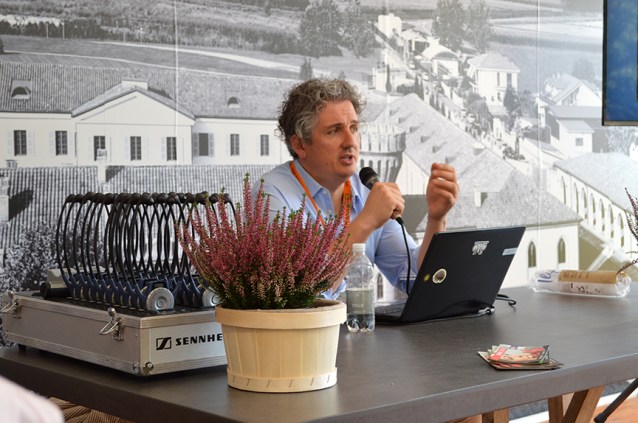
michele-antonio-finoAbove: my friend and UniSG colleague Michele Fino. In widely read and reposted editorials last year, he wrote in favor of a Piemonte Nebbiolo DOC and against changes in the Asti DOCG that would allow producers to write “Secco” on their labels.

Another Piedmontese conquest, scarcely noticed by the American wine media, was the move by Moscato d’Asti producers to allow bottlers to include the word “Secco,” meaning dry in Italian, on their labels.

In a September 2016 post entitled “Why ‘Asti Secco’ Is Unacceptable” for Intravino, my UniSG colleague and legal expert Michele Fino (above) explained (my paraphrasis): Asti, Marsala, and Franciacorta are the only Italian DOCGs where producers are not required to write “DOCG” on the label; as a result of the new appellation regulations, bottlers will now be able to write “Asti Secco” on their labels.

Many, like Fino, see this linguistic contortionism as an attempt by Asti bottlers to take a greater slice of the ever-more lucrative and ever-growing Prosecco market.

Prosecco bottlers have lobbied aggressively to block adoption of the new rule but the Italian agriculture ministry is expected to approve the changes next week.

It’s likely that Asti producers will present the new labels this spring at Vinitaly and Prowein.

What Cassandra could have imagined that Target and Walmart shoppers would see “Cupcake Asti Secco” on the shelves next holiday season?

In the wake of 2016, when the world witnessed a truly epochal shift in political and cultural currency, it seems that no deal is off the table.

Happy 2017, everyone! Thanks for being here and thanks for reading. I’m looking forward to another year in Italian wine with you. Stay tuned…

Hitler humor no longer funny in Trump America

The misery that is now upon us is but the passing of greed — the bitterness of men who fear the way of human progress (Charlie Chaplin, 1940).

donald-trump-hitlerMel Brooks’ musical “The Producers” is one of the greatest joys and regrets of my life as a parent.

Tracie P and I are big Broadway musical fans. And so it was only natural that our love of “song and dance” would rub off on our children.

Early on in our lives as parents, we had to eliminate “The Book of Mormon” from our playlists because of the pervasive profanity and the delicate subject matter. After all, my in-laws are devout Methodists.

But with a little real-time manual editing (Yiddish profanity doesn’t count), “The Producers” managed to make the cut. And our girls love it. The number “Springtime for Hitler” is their favorite and it’s their most frequently requested song (trumping even “Let it Go” from “Frozen,” believe it or not, another big hit at our house). They have no idea what it means or why it’s funny. They just love the music and the cadence of the actors (“ever eat with one?”).

We have a rule: “The Producers” can only be sung in the car, at home, or on the phone (Georgia P added that last medium for good measure) because not everyone likes “The Producers” as much as we do.

All things considered, we’ve struck a healthy balance of self-censorship and a sense of what’s appropriate at home and in public. Georgia is always the first to admonish me if she catches me humming “Keep it Gay” at the mall.

But in the light of the numerous anti-Semitic episodes that have taken place in the U.S. since the advent of Trump America (some of them very close to home), the Hitler humor that we used to enjoy together (“You’re looking for a war? Here’s World War II!”) has lost its sheen.

Less than two weeks before Christmas last year, anti-Semitic episodes were reported at the University of Houston. Our niece (Tracie’s side of the family) is in her second year of college at UH and it’s conceivable that our own children will go to school there someday. I never would have thought that anti-Semitism would still be so prevalent in my daughters’ lifetime. But evidently it’s alive and well on college campuses (and it was already on the rise before the election).

Just a few days later, it was reported that Lt. Gen. Michael T. Flynn, Trump’s nominee for national security advisor, met with Heinz-Christian Strache, leader of Austria’s far-right Freedom Party, a political party that nearly came to power in the country’s parliamentary elections last fall, a party that espouses anti-immigrant and anti-Semitic rhetoric (remember that many Muslims are Semites), a party founded by ex-members of the Nazi party. How’s that for funny?

And just last week, swastikas and “white power” were among the graffiti spray-painted on the walls of a high school in an affluent Houston neighborhood.

My friends in New York City (where I lived for 10 years in my 30s) tell me that they have recently seen “Trump” scrawled next to swastikas on the subway. And it was only a few days after the election that Adam Yauch Park in Brooklyn Heights (Brooklyn Heights!) was defaced with swastikas and slogans of “Go Trump.” I “never, ever, ever” saw anything like that in my decade in city where the Statue of Liberty looks out over Ellis Island.

I don’t ascribe or attribute these episodes to Trump. But I do know that before the presidential campaign and election, such episodes were a rare occurrence. Now they are not.

That’s going to be a lot harder to explain to my semi-Semitic children than the humor in “The Producers.”

Hitler humor has a long and grand tradition in the U.S. Disney and Spike Jones were among the pioneers (see video below) as was Charlie Chaplin. Lenny Bruce was another (“How Hitler Got Started” is one of the brilliant sketches of the American comedy canon imho).

Mel Brooks’ musical and 1968 film by the same title are supreme expressions of that legacy. But they just aren’t funny anymore. The chord they strike now rings too close to home.

Please view and listen to Chaplin’s speech below, the finale of “The Great Dictator” (1940). His words couldn’t ring more true.

Image via Wikipedia Creative Commons.

Italian wine events this month (and beyond) in Texas… super cool…

slow-wine-tasting-austin-2017Above: three Austin-based wine professionals who attended last year’s Texas stop on the Slow Wine Guide Tasting Tour. The Slow Wine editors traveled to each stop by van. Hearing their stories of eating salad at Burger King during their “coast to coast” trip was equal parts hilarious and tragic. Taking them all to see Dale Watson at the Continental Club in Austin that night was one of my proudest moments as a Texan.

So many super cool Italian wine events happening this month in Texas between Houston and Austin. I’m happy to report that I won’t be presenting at any of them: I’ll just be enjoying them as a fan, lover, and student of Italian wine. I hope to see you there!

Vietti Wine Dinner with Luca Currado
January 18 at Tony’s in Houston

Tony is my friend and client (I manage media for his restaurant group) and I’m looking forward as much to his menu as hearing Luca’s thoughts on recent vintages.

Here are details and registration info.

Benvenuto Brunello
January 19 in Houston

The fact that Benvenuto Brunello is coming back to Houston for a second time reflects the city’s upwardly mobile status in the national wine community. As the price of oil continues to rise, so will the flow of Brunello’s garnet gold.

Here is registration info.

Slow Wine Guide Tasting
January 30 in Austin

As an adjunct professor at the University of Gastronomic Sciences, I’m part of the Slow Food/Wine team and universe. But even beyond my professional bias, I think it’s safe to say that this is an extraordinary tasting and gathering of Italian wines and winemakers.

Here’s the list of presenting wineries and a link for registration.

Dale Watson is scheduled to play that night at the Continental Club. If I miss you at the tasting, meet me for a shot and a beer back at the show. Should be fun times (always is).

And looking down the road toward the horizon…

In early March, I’ll be one of the presenters at Taste of Italy Houston, the third annual trade and consumer food and wine festival organized by the Italy-America Chamber of Commerce Texas.

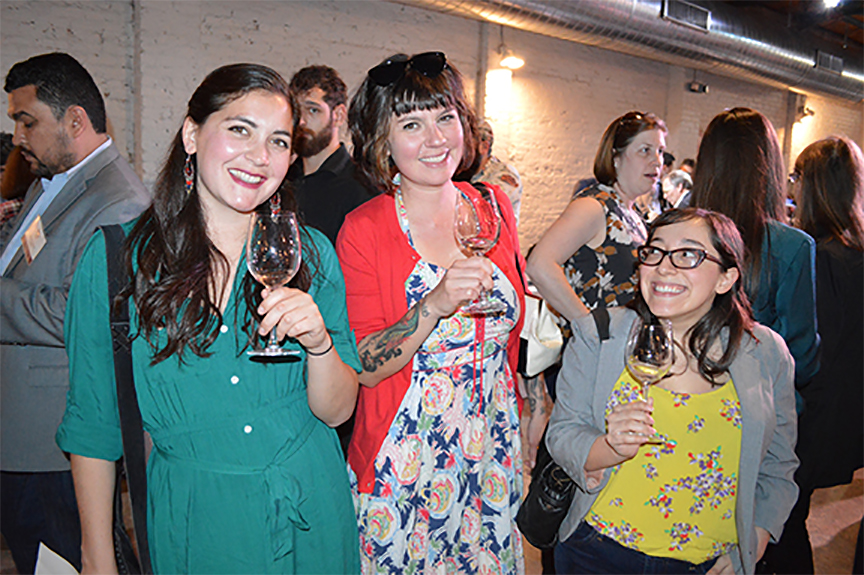
That’s Chamber director Alessia Paolicchi (below, far left) and deputy director Maurizio Gamberucci (second from right). I’ve been working with the Chamber for nearly a year now and really love and thoroughly enjoy our partnership.

Celebrity sommelier David Lynch and Houston Chronicle columnist J.C. Reid will also be panelists this year. It’s a great lineup and I’ve been impressed in years past by the caliber of the exhibitors.

Here’s a link to pre-register.

The “Carbonara: Pecorino vs. Parmigiano Reggiano” panel and tasting is sure to be a highlight from this year’s gathering.

2017 is already shaping up to be a great one in Italian wine and food. I hope to get to taste with you this month!

taste-of-italy-houston

Carbonara, the ultimate hypertext? A post @NPR (and more @UniSG)

From the department of “food for thought”…

best-carbonara-recipeText, extratext, metatext, paratext… None intrigues me more than hypertext.

hypertext, text which does not form a single sequence and which may be read in various orders” (Oxford English Dictionary).

In 1997, critical theorist Gérard Genette, a giant among literary scholars, wrote:

“Our ‘media’ age has seen the proliferation of a type of discourse around texts that was unknown in the classical world and a fortiori in antiquity and the Middle Ages, when text often circulated in an almost raw condition, in the form of manuscripts devoid of any formula of presentation. I say an almost raw condition because the sole fact of transcription — but equally, of oral transmission — brings to the ideality of the text some degree of materialization, graphic or phonic.”

To Genette’s graphic or phonic, may we add gastronomic?

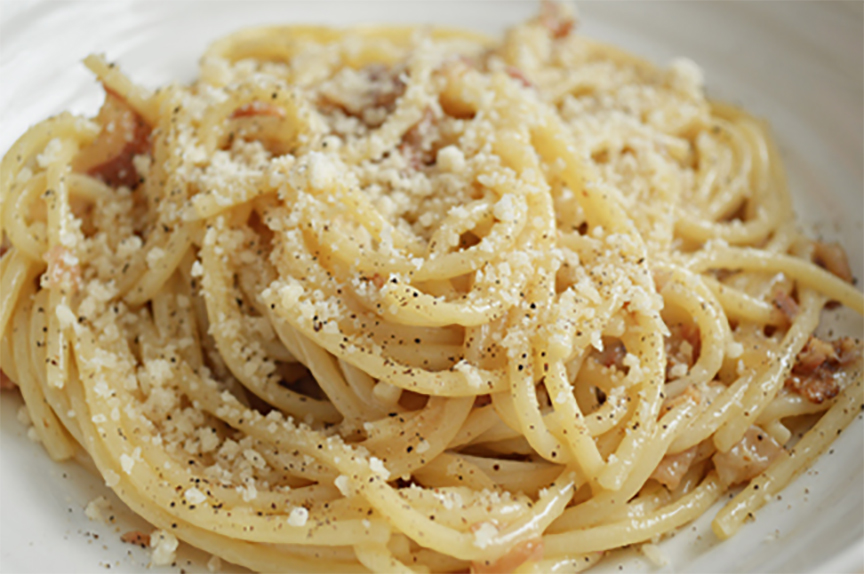
In my view, no culinary legacy embodies Genette’s notion of paratext and its child hypertext more than carbonara. The hypertext and Bloomian misunderstanding surrounding (and drowning out) this text are astounding imho.

I was really thrilled to be quoted as a UniSG professor this week in this excellent post on carbonara for “the salt” on NPR by Deena Prichep.

Carbonara as hangover food? The hypertext just keeps expanding in an infinite enogastronomic universe full of contamination, corruption, and coalescence.

BTW, the enrollment deadline for the Master’s in Food Culture and Communications at the University of Gastronomic Sciences (UniSG) in Piedmont, Italy is January 18. I’ll be teaching a seminar on English-Language food writing (in English) there this year. Carbonara and its hypertext will be one of the topics we will cover in depth.

Above: carbonara by Tracie P.