A new day for Franciacorta: Monica Larner’s game-changing article for Wine Advocate

franciacorta monica larnerAbove: the 2015 harvest in Franciacorta.
“My idea this year,” writes Monica Larner in a feature story on Franciacorta for the current issue of Wine Advocate, “is to start working on a definition of what Franciacorta is. This is not an easy task given that the wide world of Italian sparkling wines represents a cross section of style, methods, grapes and diverse territories. My hope is to start a conversation that can be continued over the next few years as the region reaches a better sense of territorial identity. It appears to me that Franciacorta has spent too much effort trying to communicate what it is not. The focus, I believe, should be on what it is.”

Her words are music to my ears!

And not only because I’ve been trying to get people to stop calling Franciacorta “Italy’s answer to Champagne” (see my post from earlier this year BREAKING NEWS: Franciacorta IS NOT CHAMPAGNE!).

Since she joined the Wine Advocate staff in 2013, Monica has made great strides in getting readers and wine lovers to revisit their perceptions of Italian viticulture.

In August of that same year, just a few months after her name appeared for the first time on Robert Parker, Jr.’s masthead, she expanded the publication’s vintage chart to include wines beyond Tuscany and Piedmont. This was a huge breakthrough for Italian wine and the people who love and drink it.

But perhaps more significantly, Monica has managed to infuse the pages of the storied Wine Advocate with a fresh approach and appeal for the increasingly youthful audience for fine wines in the U.S. today.

Her feature on Franciacorta is a great example of this, imho.

For obvious copyright reasons, I can’t repost her paywall article here but I highly recommend it to you. She also reviews 50 Franciacorta wines in the current issue of the magazine.

I don’t have any hard data to back this up but this is most likely the first time that a major wine publication has reviewed so many Franciacorta labels at once. How cool is that?

I did post the notes I sent her when she wrote me asking for a quote for the piece.

Check them out here on the Franciacorta Real Story blog that I’ve been writing this year as the official U.S. trade ambassador for the Franciacorta growers association.

Beyond her excellent work with Wine Advocate, wine and foodie Facebook users like me have been having a great time following her feed.

Whether she’s tasting the first bottle of Tignanello ever produced with Piero Antinori, vacationing in France, or just sharing nuggets from her life in Rome, she is expressing the best of what a life in fine wine has to offer.

And it’s just what Italian wine needs. Thank you, Monica! Chapeau bas

Gambero Rosso “suspends” Friuli producers in wake of adulteration allegations

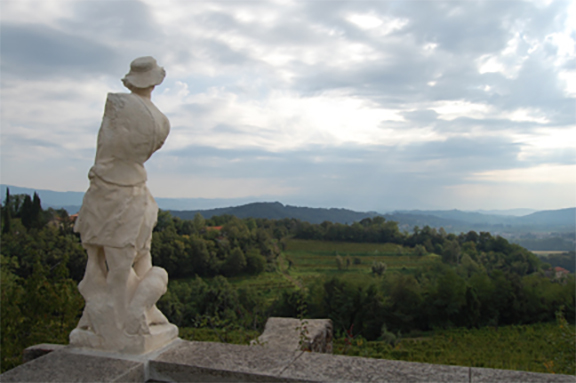
rosazzo abbeyAbove: a view from the Abbey of Rosazzo in Friulian wine country.

In a press release issued today, the editors of the 2016 Gambero Rosso Guide to the Wines of Italy have informed readers that they have “suspended” an undisclosed number of Friulian producers of Sauvignon Blanc from the list of Tre Bicchieri (Three Glass) winners.

They have released the names of winners of the prestigious award, they write, “with a reduced flight [of wines] because of ongoing legal questions… for which we have preferred to suspend our evaluation” (source: Intravino; translation mine).

Allegations that 15 Friulian winemakers had used prohibited additives in their wines were first made public in September of this year.

In an op-ed he published on the popular Italian wine blog Intravino after anti-adulteration authorities raided wineries and the laboratory of at least one winery consultant, wine writer and sommelier Andrea Gori openly criticized the Gambero Rosso editors for accolades they had previously bestowed on wineries named in the inquiry.

And in an op-ed posted here on Do Bianchi, venerated Friuli producer Nicola Manferrari noted:

    The inquiry was borne out of a suspicion in turn owed to the intense aroma of certain Sauvignon [wines]. These wines have a pungent character that doesn’t align with traditional-style wines produced here. This wouldn’t matter much if it weren’t for the many leading trade publications, not to mention the experts who judge international [wine] competitions, who have devoted ample attention to these wines and have made them the standard-bearers of classic Friulian Sauvignon.

As an observer of the Italian wine trade for many years now, I have seen firsthand the power and impact of the coveted Tre Bicchieri award. The winners are included in a traveling tasting that visits three major U.S. markets and their wines often enjoy significantly more robust sales as a result of the prize and the attention it receives.

Of the 24 winners announced today, only one has been awarded the Tre Bicchieri award for a Sauvignon [Blanc].

Many Italian wine guides release the names of winners for their top prizes in September and October each year. The Gambero Rosso began announcing the names of regional winners of the Tre Bicchieri awards last month.

Related posts:

Sauvignon Blanc scandal explodes in Friuli as authorities investigate alleged use of prohibited additives (September 11, 2015).

Read Friulian winemaker Roberto Snidarcig’s response to allegations here.

Read an interview with Friulian Sauvignon Blanc expert Giovanni Bigot here.

Read Friulian winemaker Nicola Manferrari’s op-ed here.

All the shitty wine I drink in Houston (in case you were wondering)

whitney seng houston wine sommelierIn case you’re worried about me here in Houston and all the shitty wine I’m drinking, I thought I’d share some images from last night’s Iron Sommelier competition and charity event held at the swank Houstonian hotel, spa, and resort.

I personally couldn’t afford to get into a high-roller gathering like this but my gig blogging about the wine scene here for the Houston Press, the city’s weekly rag, does have its perks.

That’s sommelier Whitney Seng (above), who competed in the event and works at the River Oaks Country Club, where the well-heeled petroleum crowd hangs out.

He didn’t win or place last night but I loved his Alpine theme and the Terlan 2012 Pinot Bianco Riserva Vorberg that he was pouring. What a killer shitty wine!

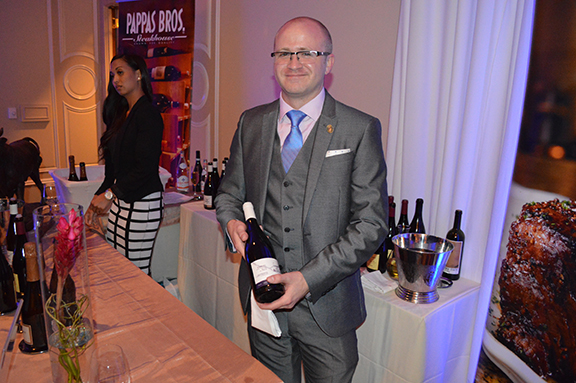
james watkins pappas brosThat’s James Watkins who was representing and competing for Pappas Bros. Steakhouse, where the oil and gas crew blow wads of cash each night before heading to our city’s ubiquitous strip clubs.

James was pouring Catherine & Pierre Breton 2006 Bourgueil.

I mean, how cool lame is that? You’d expect him to be coughing up some Napa Valley “Cab”! James didn’t win anything either.

matej skerlj wines malvasiaMy super good buddy Nathan Smith was pouring a flight of macerated wines from Friuli, including Radikon, Graver, and Matej Skerlj’s Malvasia from Carso, one of the hottest lamest newcomers on the Italian wine scene.

Nathan came in second place last night. He lost to some really interesting dude loser who grew up in Greece and runs an all-Greek wine program in one of our city’s ugliest neighborhoods.

Click here to read my post today for the Houston Press.

The “real scandal” in Friuli: Nicola Manferrari of Borgo del Tiglio on allegations of adulterated Sauvignon Blanc in Friuli

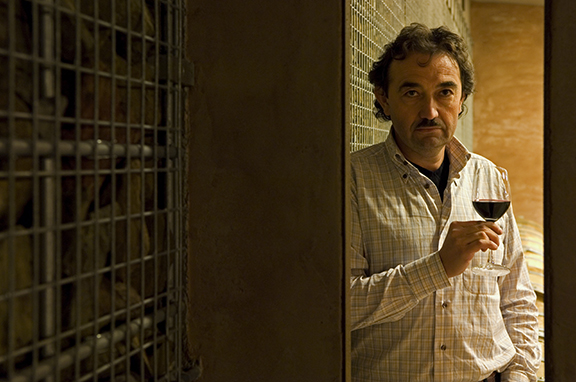
il dottor nicola manferrari nella nuova cantina di borgo del tiglio

Among leading Italian wine professionals and their American counterparts, Nicola Manferrari (above, photo courtesy his Borgo del Tiglio estate) is widely considered to be one of Friuli’s greatest winemakers.

In the wake of allegations that some of Friuli’s top wineries have been adding prohibited additives to their Sauvignon Blanc to enhance the wines’ aromas, I asked Manferrari to share his insights on the legacy of Sauvignon Blanc there.

His response came in the form of a riveting 3,000+ word essay that I have excerpted (for space and time’s sake) and translated here. I’ll post more from our exchange down the road.

In the course of our correspondence, Nicola emphasized that he is not a producer of Sauvignon Blanc as a monovarietal wine Sauvignon Blanc, bottled as a monovarietal wine, is not the focus of his production. He does however grow and vinify Sauvignon Blanc for his Studio di Bianco (Study in White).

I hope readers will find his notes as compelling as I did. Buona lettura.

Sauvignon [Blanc] first arrived here from France around the mid-19th century. It seems that it arrived after a French noblewoman married a local aristocrat. In other words, Sauvignon found its way on the unpredictable wings of love as it followed cupid’s arrow.

Phylloxera hadn’t arrived here yet and the Sauvignon that was brought here adapted itself to the place where it was grown. It gave rise to a phenotype that is much different than the Sauvignon clones, for example, that arrive today from France.

Our original Sauvignon has an oval berry and loosely clustered bunches. It’s not very productive. Its must is rich with sugars and acidity. The locally selected clones have these characteristics and they are totally different than the French clones.

For my Studio di Bianco [editor’s note: Studio di Bianco or Study in White is one of Manferrari’s top wines], I use grapes from an old vineyard and the grapes are this type of Sauvignon, the old Friulian Sauvignon. Naturally, over the years everything gets mixed up and so there are other clones in the area. But these days, the tendency is to plant different clones or selected clones that come from this original, ancient line. This is true at least for hillside vineyards. One of the reasons is that it is more resistant to grey rot.

[In regard to vinification of Sauvignon in Friuli today] my Sauvignon is not a technical one. There are as many techniques [for vinifying] Sauvignon as there are ideas on which the different techniques were based and developed.

One of the most popular techniques for making Sauvignon is that of constantly protecting it from oxygen [editor’s note: in other words, in reduction]. The idea is that the aroma is already present in the grapes as a free molecule and so it needs to be protected from oxidation from the outset, unlike other grape varieties where the aroma in the must is bound in [an aroma] precursor.

The reductive environment supposedly helps the development of certain aromatic molecules that are typically found in the aromas of Sauvignon. But the resulting wines are so fragile that they need to be protected from the air until they are to be consumed. Ultimately, the wines produced are like people who suffer from chronic conditions and need to be treated for their illnesses for their entire lives. Making a wine like this would be too stressful for me.

[In regard to allegations that Sauvignon Blanc producers in Friuli have been using prohibited additives to adulterate their wines aromas] the investigator’s office is doing its job and when the inquiry is closed, we will know whether or not Sauvignon has been doctored and if so by whom.

For years now, there have been rumors that the aromas of certain Sauvignon [wines] have been adulterated. But then again, there have also been all kinds of rumors that were often disproven by the facts. People like to speak ill of others.

The investigator’s allegation that additives have been used to accentuate aromas still needs to be proven.

It’s definitely not a question of health risks. The problem is fraud: The sale of wines that have been produced in a manner different from the way they are labeled.

You can put whatever you want in an industrial beverage. But a DOC wine must respect the appellation regulations. This is the problem. It’s a matter that will have to be decided by the courts and it could take years before the inquiry is completed and we have a definitive answer.

There’s another and more general observation that we can make, however, and I believe it wine lovers and consumers will find it even more interesting.

The inquiry was borne out of a suspicion in turn owed to the intense aroma of certain Sauvignon [wines]. These wines have a pungent character that doesn’t align with traditional-style wines produced here.

This wouldn’t matter much if it weren’t for the many leading trade publications, not to mention the experts who judge international [wine] competitions, who have devoted ample attention to these wines and have made them the standard-bearers of classic Friulian Sauvignon.

Winemakers who want their wines to be unique because their vineyards are unique should ask themselves: “Am I really doing everything I can to make the best wine I can from my vineyard?”

In that case, everything from the vineyard that gives character to the wine is a positive. And everything that masks the character of the wine is a negative. And this should be the true philosophy of the DOC.

As far as I’m concerned, the true Sauvignon scandal isn’t whether or not investigators will convict someone of having using prohibited additives in the wines. The real scandal is that the unique character that a DOC wine gets from the vineyard can be masked by flavors and aroma added by the use of technology.