An orange, natural wine from the Veneto (and my very own mimetic desire)

Above: One of my favorite places in the world, a scene from Petrarch’s house in the hilltop town of Arquà in the heart of the Colli Eugenei (the Euganean Hills) in the province of Padua. One of my mentors, Professor Vittore Branca, believed that Petrarch spoke with a northern cadence, even though he was born to Tuscan parents in Arezzo. Petrarch spent most of his life in southern France, Milan, and Arquà. (Photo courtesy Padova Cultura.)

Nearly every Italian who’s ever heard me speak Italian will remark that I speak Italian with a simpatico Veneto accent. Some will place it in Padua, others (when I’ve got a belly full of wine) in Treviso (non è vero, Briciole?). But the many years I spent of study and touring with my Italian-based band in the Veneto profoundly informed and shaped my “Italian” identity.

When I saw that Franco had posted about what must be a truly wonderful orange, natural wine from my beloved Euganean Hills outside Padua, I couldn’t resist the mimetic desire it stirred in me.

Were they not the site of countless Sunday evenings spent with friends eating roast pollastro and patatine fritte, accompanied by side-splitting joke-telling in Veneto dialect and carafes of Malvasia and Cabernet Franc! Were they not the home to some of the most unique, distinct, and distinctive wines produced in the Veneto! Did they not abound with a dolce aura, a sweet air, and immense beauty!

The Euganean Hills would still hold a special place in my heart for it is there that my beloved Petrarch spent the last years of his life, under the protection of the Carraresi family, the lords of medieval Padua, and it is there he finished the final notes of the transcription of his autograph and idiograph version of the Rerum vulgarium fragmenta (Fragments of Vernacular Things), his song book, his 366 poems devoted to the blond-haired and fair Laura (a laical breviary, with a poem for every day of the year and a proemium). Today, that beautiful book — singular also for its humanist script and the unusual binding format — resides in the Vatican Library (Codex Vaticanus 3195). It was the subject of my doctoral thesis: I have examined it myself, I have held it in my hands and run my fingers across its vellum leaves and scrutinized their pores, and I have felt its aura.

O to see those hills again! Someday, I’ll take Tracie B to visit them and and breath in their dolce aura, to see Petrarch’s house, and to taste the wines.

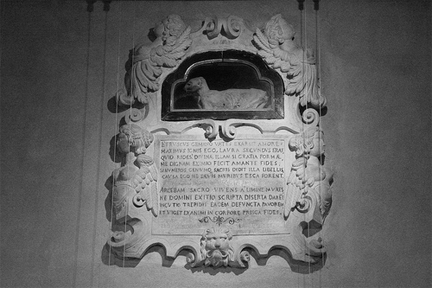
And I will tell my sweet Tracie B (my Laura and my dolce aura, with her fair skin as white as ivory, her eyes as blue as the fresh, clear water that flows in the streams of trans-Alpine lands)… I will tell her the same thing the vecchiette, the little old ladies, in Monselice at the foot of the Colli Euganei say as you begin your ascent to Arquà: non dimenticare di salutare la gatta del Petrarcadon’t forget to say hello to Petrarch’s cat

Above: The famous “gatta del Petrarca,” Petrarch’s female feline, who, as Modenese poet Alessandro Tassoni wrote in the 17th-century epic poem, The Rape of the Bucket, still bars the tops from crossing the dotta soglia, the erudite threshold. (Photo by Arquà Petrarca.)

Someday Tracie B will see it, too. In the meantime we can only dream of natural skin-contact Garganega and roast poissons.

Click here to read my translation of Franco’s post.

Buona domenica a tutti!

Best margarita in Texas (and Tex Mex gefilte fish)

bar annie

Above: “The best margarita in Texas,” according to my friend, client, and sommelier extraordinaire Julio Hernández, as served at the legendary RDG Bar Annie in Houston.

Last night after pouring and speaking about Italian wines at my client’s tasting in Houston, my friend Julio treated me to what he calls “best margarita” at the legendary RDG Bar Annie, where there may be a recession going on but there is no shortage of bling and great food.

bar annie

Above: Many believe that owner and master chef Robert del Grande is the founding father of “Southwest American” cuisine. His signature shrimp meatballs were delicious. Raw shrimp is finely chopped and formed into balls and then poached. Tex Mex gefilte fish!

The margarita recipe? Equal parts Herradura Silver Tequila, Cointreau, and lime juice (half Persian lime, half Key lime). “Silver tequila has that stoney minerality,” said Julio, “that we Chablis drinkers like so much.”

bar annie

Above: Fried tortilla strips topped with crab meat and avocado. Soooooo good, especially paired with the cocktail. Also not to be missed, although not as photogenic, are the crab beignets with creamy Tabasco sauce.

I gotta say (and I’m not kidding here, Alfonso!) that this was the best margarita I’ve had since moving to Texas and Julio is right: the dominant minerality balanced the acidity of the lime and the sweetness of the Cointreau, making it more food friendly than any margarita I’ve ever had.

bar annie

Above: Julio, left, with Bar Annie wine director José Perez Montufar.

One of the unique things about Bar Annie is that it combines Houston glamor with truly great food AND a world-class wine list. There were many trophy wines on the list, way beyond my reach, but in every section there was a little gem, like the Inama Carmenere Più, that I can afford on a night on the town.

bar annie

Above: There is no shortage of bling at Bar Annie, as evidenced by the valet parking lot. The trade-in value on my Hyundai Sonata was a Christmas windfall! ;-)

2009 has been a wonderful, wonderful year for me, despite the recession and my own struggles to make a living in this economy. Sometimes it helps to have friends in high places.

Thanks again, Julio and José, for a truly special treat!

And happy Friday ya’ll! I’ve been on the road all week and “moving boxes,” as we say in the biz, and I can’t wait to get home to my super fine lady!

Che bigolo! A sexy pairing with Pierre Péters

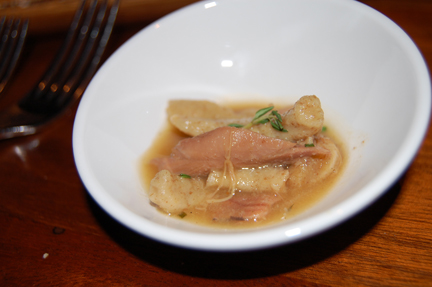
Above: Not exactly traditional but delicious. Buckwheat bigoli with guinea hen last night at Trio in Austin.

My Italian friends will get the joke from last night. When Tracie B and I saw that Trio chef Todd Duplechan was offering buckwheat bigoli on his menu at Trio, I couldn’t resist the pun: I turned and asked sommelier Mark Sayre, “do you think that Todd will let me taste his bigolo?”

Here’s what “Trevisan humanist” Bepo Maffioli had to say about bigoli in his landmark Cucina Veneziana (1982):

    “Brown” bigoli — the buckwheat long noodles of Bassano and Treviso — went through a dark period because Italian law requires that only durum wheat flour be used to make pasta. As a result, bigoli were considered an adulterated product. But then, sentence was passed, and they were found to be a traditional product and thus were permissible for consumption. Since the time of the “vigils,” bigoli a puro oio, in other words, dressed with just extra-virgin olive oil, has been one of the most common dishes for abstinence and fast days. Christmas Eve, Ash Wednesday, and Good Friday have always been holidays for bigoli in salsa (literally, bigoli in sauce) in nearly every city of the Veneto. This dish was almost always made by pairing bigoli and salt-cured sardines but the ingredients could change depending on the city and province and sometimes even the township.

[His thoughts on “adulteration” and culinary law (playful in this case) might seem ironic in the light of the pasta price fixing scandal that surfaced this week in Italy and the Chianti adulteration controversy that first raised its ugly head last week. Ne nuntium necare!]

Like the Tuscan pinci or pici, the Veneto word bigoli is a generic term that denotes long, round artisanal noodles. Most believe it comes from baco or worm. Many Veneto cookery authors use it interchangeably with spaghetti, which simply means little strings (from spago or string). In English, the term spaghetti evokes a particular shape of long noodle. But in Italian, it is a generic term that can be used in certain contexts to denote a wide variety of long, round noodles. The expression bigoli in salsa, literally bigoli in sauce, is used elastically to denote the traditional Venetian dish bigoli with sardines or anchovies as well as other preparations.

For obvious reasons, bigolo, when singular, is a euphemism for the male sex.

Todd served his buckwheat bigoli with guinea hen. They were shorter than traditional bigoli but delicious nonetheless.

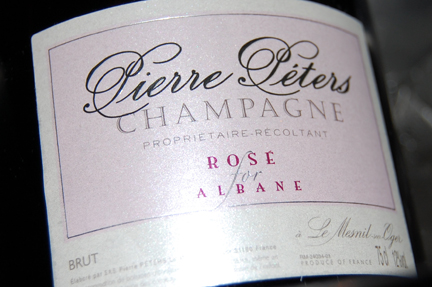
Above: Pierre Péters rosé at Trio. I had never tasted this superb wine before. What a fantastic, exquisite expression of Champagne! There is so much great wine in the world. Anyone who’s really into wine will tell you, the more I learn, the more I realize how little I know.

Our friends April and Craig Collins graciously and generously treated us to a bottle of Pierre Péters rosé to celebrate the holiday season. What an amazing wine! Ubi major minor cessat: for notes on the producer and the wines, I’ll point you to the experts here and here.

As we sipped this delicious and gorgeous pink wine (full of luscious fruit balanced by stern minerality), I couldn’t help but think to myself about how some of my wine blogging colleagues warned me (fruitlessly) that I wouldn’t find good wine to drink in Texas. Well, I’m here to tell ya, they got them some pretty darn good wine down here in this fine state!

Above: Master sommelier candidate Craig Collins and his lovely wife April are the leading man and lady of the Austin wine scene.

Thanks again, April and Craig, for turning us on to (and treating us to) such an amazing wine!

Sometimes less is more: 1996 La Ca’ Növa Barbaresco

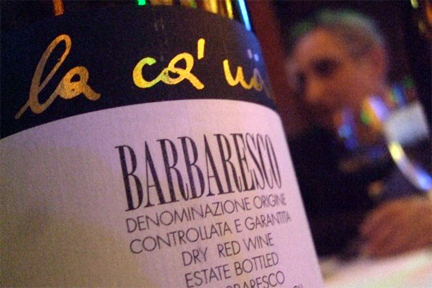
Above: Sometimes less is more. The thing I liked the most about this well-priced wine was how straightforward and earnest it was. Photo by The Brad’s Adventures in Food.

When 1996 Langa wines first arrived in this country, the vintage was touted as one of the greatest in living memory. And indeed, it was a fantastic vintage. The wines have many, many more years of vibrant life ahead of them but I’ve also been surprised by how well some of the 96s are drinking this year.

I don’t know how the above bottle found its way into The Italian Wine Guy’s cellar, but I was psyched that he wanted to pop it last night at dinner in Dallas. I really can’t find much information on La Ca’ Növa winery but I can say that I really liked the wine. It was straightforward and earnest in the glass, not a super star, just a hard-worker who wanted to deliver an honest wine. It was all about mushroom and dirt. There doesn’t seem to be any 96 left on the market (or at least on WineSearcher) but the available bottlings of classic Barbaresco seem to weigh in under $40. Sometimes less is more…

In other news…

It’s been a year since I arrived permanently in Texas (after driving across country in the ol’ Volvo). It’s been such a wonderful and wonderfully crazy time and Tracie B and I have been having so much fun planning our wedding. We have so much to be thankful for. The love and support of both our families, our health, and a bright future together. I’ve made so many great friends here and we’ve been having a blast celebrating the holidays with friends and family, old and new. Thanks, everyone, for reading and for all the support over this last year and beyond. I really can’t tell you just how much it means to me… it means the world… :-)

@Tracie B I love you and I never knew I could find such happiness and such goodness within and all around me. I’m so glad for a lovely lady from a small town in East Texas, with an “appetite and a dream…” :-)

I’ll never forget the first time I read that tag line on your blog and I’m so happy that I did… it changed my life forever and in ways I could have never imagined… I love you…

Photo by The Nichols.

Stars fell on Toscana…

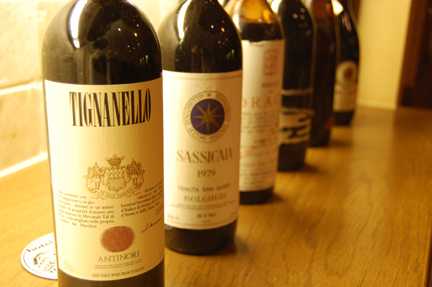
Above: The 1990 Tignanello was youthful and powerful and had a woody note on the nose that some folks like but a turn-off for me. The 1979 Sassicaia was unbelievably good and had that goudron, tarry note that you find in left-bank Bordeaux yet still tasted uniquely Tuscan — at least to me. Photos by Tracie B.

In what seems to me such an uncanny confluence of events, Tracie B and I had the wonderful opportunity to taste two truly iconic wines of Tuscany, from two (arguably) outstanding vintages, on Saturday night — 1990 Tignanello and 1979 Sassicaia. I say “uncanny” partly because there was a white elephant in the room: despite the festive nature of our get-together a casa di Alfonso, no one could ignore the news that broke in Chianti last week. Alfonso had graciously offered to open not just a few gems from his cellar, inspired in part by BrooklynGuy’s recent post on one of the wines he happened to have in his collection. But when he “stood the bottles upright” last week in anticipation, none of us imagined that Tuscan wine would once again find itself in crisis.

Above: Ace made one of his signature dishes, grilled eggplant layered with hard-boiled eggs and tomato sauce, topped with grated pecorino romano and the fired au gratin.

Eric’s exquisite post from last week added another layer of uncanniness to our fête. Tempus vincit omnia: the owner and curator of the Tignanello estate, the Antinori family and enologist Renzo Cotarella, recently told Eric that they plan to replant the legendary Fiorano estate near Rome, where its now defunct master, Prince Buoncompagni Ludovisi, purportedly once swore (as legend has it) that he had ripped out his vines so that his son-in-law, Piero Antinori, would never have the chance to bring modernity to the farm. Tempus vincit omnia.

Above: The 1994 Primitivo di Manduria by Savese was still a baby! It was such a wonderful treat to get to taste this wine with some age on it — a fantastic example of how traditionally made wine, even when made from a grape lacking tannic structure like Primitivo, can achieve ineffable nuance with age.

But like the grated pecorino romano that Ace used to finish his eggplant pie, a final layer of uncanniness was provided by the superb 1994 Primitivo di Manduria from Savese, which we paired with dried figs from Calabria. He stood the Primitivo upright after reading Franco’s wonderful post on his visit with Vittorio Pichierri at the Savese winery. Our “blend” of wines from Tuscany and Apulia seemed to unwittingly match the rumors that arrive these days via the internet from Etruria (I hope they’re untrue but I fear they are not).

Thanks again, Ace, for a truly unforgettable serata da leoni. It felt like stars fell on Toscana that night…

Sing these lyrics, substituting “Toscana” for “Alabama”…

We lived our little drama,
We kissed in a field of white,
And stars fell on Alabama,
Last night.

I can’t forget the glamour,
Your eyes held a tender light,
And stars fell on Alabama,
Last night

I never planned in my imagination,
A situation — so heavenly,
A fairy land where no one else could enter,
And in the center — just you and me.

My heart beat like a hammer,
My arms wound around you tight,
And stars fell on Alabama,
Last night.

Lowrider Sunday in Dallas

Loriders in the parking lot at the El Pollo Regio on Gaston in Dallas. “Ahh… Que rico pollo!”

That chicken looked might tasty but Alfonso’s on a diet of grilled salmon Jaboulet Hermitage La Chapelle 1985 so we’ll just have to suffer tonight… ;-)

One riot, one ranger

Tracie B and I were treated to what can only be called an “epic” meal and flight of wines last night da Alfonso in Dallas. Many truly great bottles were opened, including the 1990 Tignanello that Alfonso had “stood upright” after reading BrooklynGuy’s post on it, and a 1979 Sassicaia, which just totally blew me away.

So much is going on in the blogosphere and beyond and I have a lot to post about (I regret that the news from Chianti is not good and I will post about it tomorrow at VinoWire and here). I’m staying on in Dallas for work tomorrow and so Tracie B took a commuter flight home from Love Field.

This afternoon, when I took her to the airport, I finally got to see the famous Texas Ranger statue that Étienne de Montille told me about when he visited here. He loves repeating the line “one riot, one ranger,” inscribed in the pedestal of the statue. The aphorism is apocryphal (evidently) but it ably evokes the ethos of the legendarily indomitable Texas Rangers.

Stay tuned for more tomorrow… and in the meantime… buona domenica ya’ll!

A vintage image of an Italian vintage long forgotten

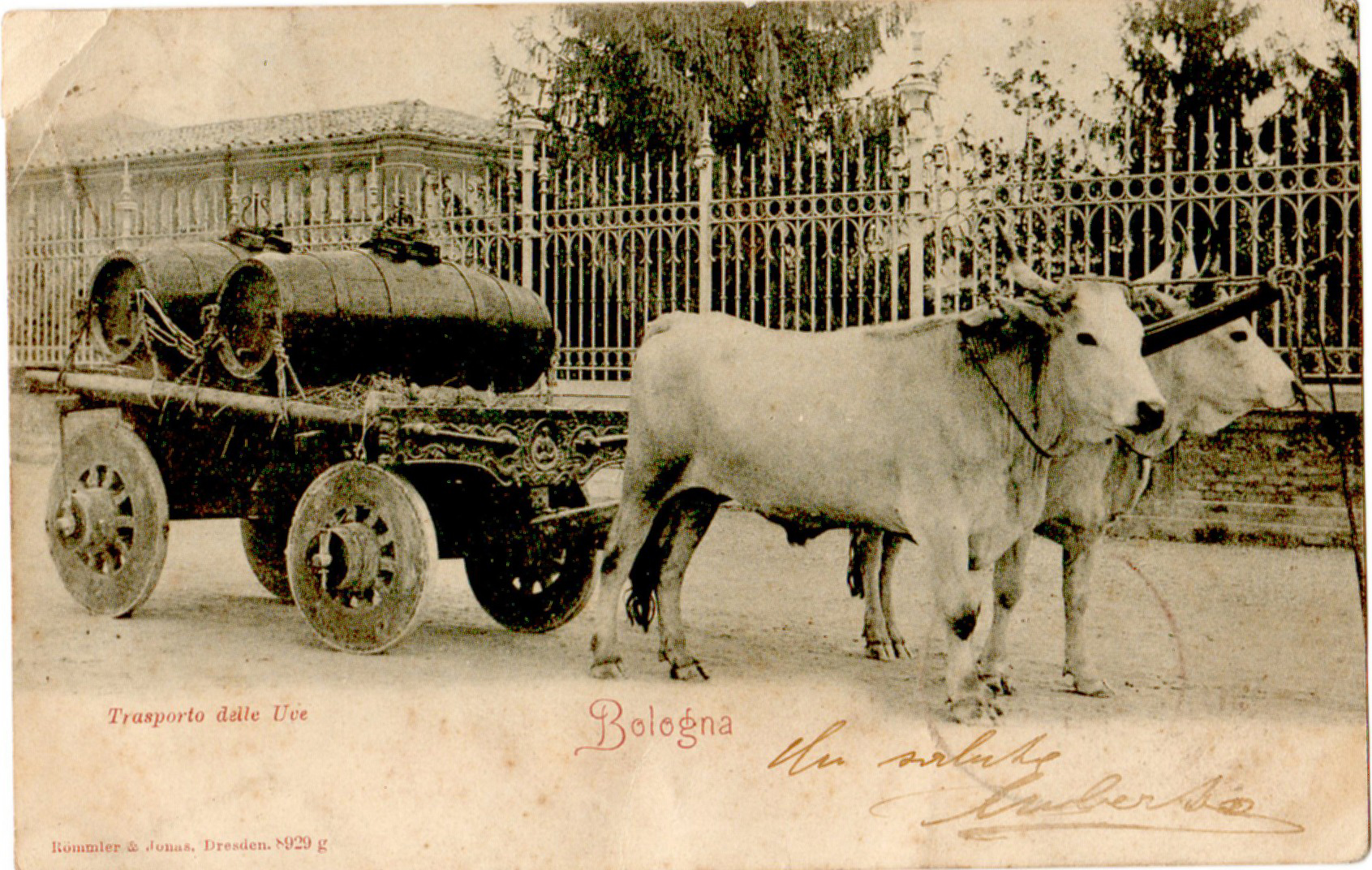
Above: Grape transport early 1900s (?), Bologna, signed “Greetings from Umberto.” It makes me wonder if fermentation has already begun in those casks. Click the image to see a hi-res version.

So much junk mail appears in my inbox these days, most of it from publicists who haven’t really taken the time to see what my blog is really about (BrooklynGuy gets his share, too, and he wrote this funny post about the phenomenon).

But every once in a while, I find myself on the user-end of a mass mailing that catches my eye.

Today, I received an email from a man I’ve never met, nor heard of, Carlo Cassinis, who writes:

    We have started a collection of postcards having the theme “agriculture and enology.”

    Please find attached the last postcard we have received. We are asking you to look in your attics and cellars to unearth postcards like this.

    We are sending this message to all of our friends with the hope that they will read it and pass it on to all of their friends and everyone in their address books.

    As soon as we have enough interesting material, we will mount an exhibit in the cellars of the Vicara winery.

    If you have any material like this, please send it to Carlo Cassinis V.lo S. Sebastiano 13 15020 Ponzano Monferrato (Al)

    Thank you and looking forward to hearing from you.

    Carlo Cassinis

Carlo didn’t include a link to his winery’s website but it wasn’t hard to find.

I like the postcard and the image made me think about how much the Italian wine industry has changed over the last century. I’m still reeling from the news of yet another adulteration scandal in Tuscany. As the Italian Wine Guy said to me today, we’ve been working so hard for so many years to promote Italian wine in this country because we love it so much. And then something like this happens and it seems as if we have to start all over again, sharing the true greatness of the wines of Italy.

The weather is cold here in Austin and it’s a melancholy Friday “deep in December” sitting at my desk…

Try to remember the kind of September
When life was slow and oh, so mellow.
Try to remember the kind of September
When grass was green and grain was yellow.
Try to remember the kind of September
When you were a tender and callow fellow.
Try to remember, and if you remember,
Then follow.

Follow, follow, follow, follow, follow,
Follow, follow, follow, follow.

Try to remember when life was so tender
That no one wept except the willow.
Try to remember when life was so tender
That dreams were kept beside your pillow.
Try to remember when life was so tender
That love was an ember about to billow.
Try to remember, and if you remember,
Then follow.

Follow, follow, follow, follow, follow,
Follow, follow, follow, follow.

Follow, follow, follow, follow, follow,
Follow, follow, follow, follow.

Follow, follow, follow, follow, follow,
Follow, follow, follow, follow.

Deep in December, it’s nice to remember,
Although you know the snow will follow.
Deep in December, it’s nice to remember,
Without a hurt the heart is hollow.
Deep in December, it’s nice to remember,
The fire of September that made us mellow.
Deep in December, our hearts should remember
And follow.

Chiantigate? News of a new controversy breaks in Italy

When the first dispatch arrived in my inbox this morning with my nearly daily dose of WineNews.it, I just didn’t want to believe it was true. But then, after lunch, when Franco’s post appeared in my feed, I knew there was no ignoring it: Italian authorities believe that roughly 10 million liters of current-release Chianti and Toscana IGT and purportedly smaller amounts of Brunello and Rosso di Montalcino have been “cut” with inferior wines not in accordance with appellation regulations. News of the authorities’s investigation and their subsequent request for a preemptive seizure of wine was widely reported today in the Italian news media. Seventeen persons and forty-two wineries, including some of the big players (according to the reports), are under investigation.

What can I say? It literally makes me feel sick: I love Italy, I love Italian wine, I have more good friends in Italy than I can count, and the majority of Italian winemakers I know personally (and I know a lot) are honest, earnest, hard-working folks. And I will continue to buy, drink, enjoy, love, and write about Italian wines. But the news of yet another controversy makes me feel sick. Franco has stated openly that he no longer wants to write about the Brunello controversy or any other Italian wine controversy for that matter. But as a chronicler of the world Italian wine, he felt obliged today to repost the story for the sake of “the completeness of information.” And, so, as his colleague, friend, and partner, I, too, feel obliged to report it here.

When I was a child my family went through a crisis that was reported by the media. And whenever there was a story in the papers, my mother taught me to be the one to tell my friends — so that they would hear it from me and not from a stranger. It was one of the best lessons she ever taught me.

Well, here I am again, and my “family” is in trouble. And I want you to hear it from me. So be it. Surely, it is the saddest form of wine writing.

Ne nuntium necare.

Mad World 2000 Brunello

il poggione

Above: The 2000 Brunello di Montalcino by Il Poggione rocked my world last night at Jaynes Gastropub in San Diego.

It’s been a mad, mad week already, between travel, wedding planning, business meetings with a California client, and catching up with old friends.

Last night, to celebrate Jaynes Gastropub family-member Nicholas George’s successful level 2 sommelier certification exam, Jayne and Jon treated the extended-family crew assembled at the bar to a bottle of 2000 Brunello di Montalcino by one of my favorite (and one of Tom Hyland’s favorite) producers, Il Poggione. 2000 was such a warm vintage in Tuscany (and throughout Italy) and many of the wines have that stewed tomato thing going on. But not this bottling: it was powerfully tannic and it rocked with bright acidity and plum and cherry fruit. I’m sure that winemakers Fabrizio and his son Alessandro Bindocci would tell me that their higher elevation in Sant’Angelo in Colle and their 40-plus-year-old vines allowed them to make great wine in a not-so classic vintage.

Congratulations, Nicholas! Chapeau bas!

mad world

Above: The famous upright piano featured in my buddy Mike’s version of “Mad World.”

Earlier in the day, I took time out to catch up with my good friend Mike Andrews and to visit his studio in Glendale. He loves to tease me that I was voted “most likely to have a successful career in music” by our high school graduating class: since launching his career as a film composer in 1999, Mike has scored countless hit movies. Mike let me take the above photo of the piano he used on his 2003 British number-one-Christmas-hit single version of Tears for Fears’s “Mad World.” He swore me to secrecy: I cannot reveal the technique he used to achieve the instrument’s unique sound on the recording (and had to photograph it obliquely). But it was a thrill to feel its aura, as Walter Benjamin might have said.

Check it out… The opening lines still give me goosebumps!

Today is another mad schedule of work and travel… More later on the California adventures of Tracie B and Jeremy P. Stay tuned…