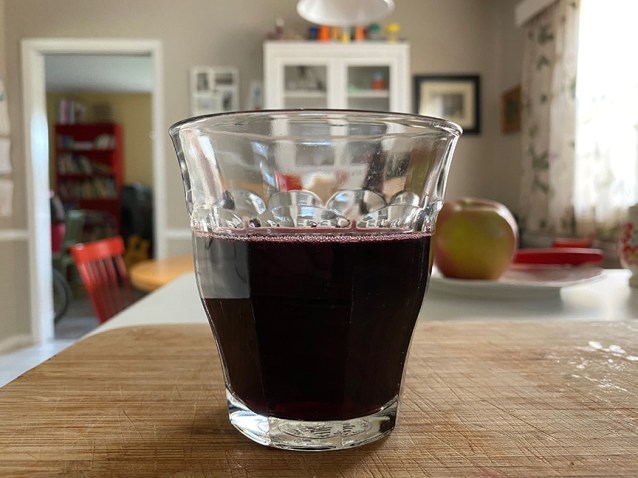
 Across the world of Italian wine and beyond, industry observers are decrying the looming demise of our trade.
Young people are drinking less and less wine, they note. People are consuming fewer alcoholic beverages in general as they focus on health and wellness. Climate change is reshaping and perhaps demystifying our notion of terroir. Italy alone has an abundance of unsellable surplus wine destined to be distilled — despite diminished production levels owed to global warming.
I spent last week in New York with my longtime friend and client Alicia Lini, producer of Lini 910 Lambrusco. We were there to meet with media. At each of our appointments, our interlocutors spoke of our mission and duty — as producers of wine and chroniclers of wine — to share the values and joy of our work with the public.
It was at one of our highest profile meetings that a young colleague, an assistant to one of the most well known wine writers in the U.S., suggested that Lambrusco could be the category to save Italian wine.
They had just returned from a trip to Emilia and had been thrilled to taste Lambrusco in its natural habitat.
Lambrusco is a great wine for young people who are just getting into wine, they said. It’s easy to understand; it’s fun and unusual for people not accustomed to red sparkling wines, a conversation piece; it’s food-friendly and low in alcohol; and — most significantly — it’s not prohibitively expensive.
All of my friends love Lambrusco, they told us.
It reminded me of what another Lambrusco producer once told me, using a ¢75 but on-point word: Lambrusco is propaedeutic, they said. As per the young professional’s notes above, it could the perfect wine “to get people into wine.”
Some believe that Lambrusco is the world’s oldest grape variety to be continuously vinified since antiquity. And some of a certain age will remember a time when Emilians served nothing but Lambrusco with the culinary treasures of their region.
Maybe our quest to “save” Italian wine would be well served by getting back to the basics.
 Please join me and Houston sports and wine writing legend
  My colleague Maurizio Gily and I are pleased to present the most recent update to our Italian-English wine glossary.
 It seems like just yesterday that
 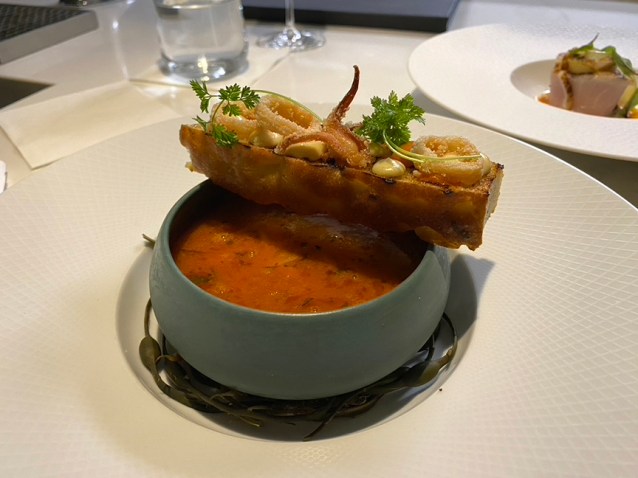 During my trip there last week, I ate at both and both were nothing short of spectacular.
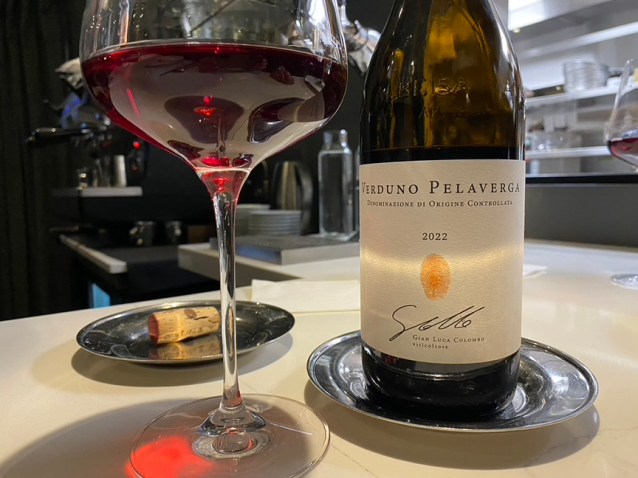
  Over at my new favorite Californian Italian, Allora, the brilliant co-owner Elizabeth-Rose Mandalou has put together a compact and precise progressive list, like the Colombo Pelaverga above. (It’s important to note that not all of the small- and mid-sized hipster distributors deliver to Sacramento. So, Elizabeth’s work is even more impressive given the challenges of limited deliveries and added costs.)
 I loved how the cheese course masqueraded as dessert.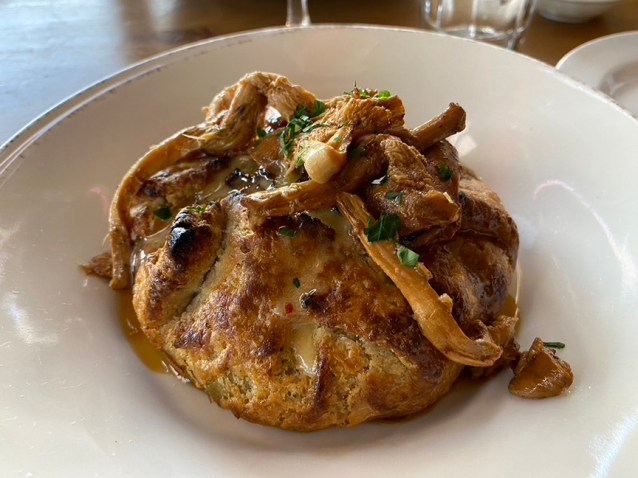
 The 2024 vintage is shaping up to be a good one over here at Do Bianchi Editorial… poo poo poo!
  Please join Tracie and our family on MLK Day, January 15, as we take part in historic MLK Day March in Orange, Texas, where Tracie grew up and her family still lives.
 The 2023 vintage will be remembered as a turning point for
  Above: Tahiirah Habibi, third from right, founder of Hue Society, created in 2015, an “organization committed to creating access and resources for Black, brown, and Indigenous communities while providing enriching cultural wine experiences for consumers and brands alike” (see below).
 Southeast Texas friends, please join us on Martin Luther King Day, Monday, January 15 for the MLK Day March in Orange, Texas, followed by our protest of the newly built Neo-Confederate memorial on MLK Dr.
 Tracie and I share our heartfelt thanks with everyone who contributed to
  In 2017, the group — the contemporary incarnation of the Ku Klux Klan — completed construction and began displaying the flags. Despite Herculean efforts by the City of Orange to block them, nothing could be done because the monument stands on private land.
  Do Bianchi