The queen of all roads, the Ancient Appian Way leads to and through Roman wine country.

One of the most compelling experiences of my year was walking down the Appia Antica, the original Via Appia. Construction of this road began in the fourth century B.C.E. and when it was completed, nearly a century later, it led from Rome all the way to Capua (just north of Naples).

The section where the above photo was taken is one of the most beautiful stretches and is immaculately maintained.

If you look carefully at the photo above, you’ll note that the photo was snapped at the corner Via Fioranello and Via Appia Antica. Literally a stone’s throw to the right (west) of where I was standing lies the legendary Fiorano farm, where some of Italy’s most compelling wines have been grown since the end of WWII by the Boncompagni family. It’s also the site where some of Italy’s earliest experiments in organic farming and spontaneous fermentation were conducted by Alberico Boncompagni Ludovisi, a winemaker who had an out-sized influence on Italian viticulture (although his name is not familiar to most Italian wine-focused professionals today).

The Antinori’s Alberico estate, named after Alberico Boncompagni Ludovisi, a grandparent to the current generation of the Florentine family, lies across the road from Fiorano.

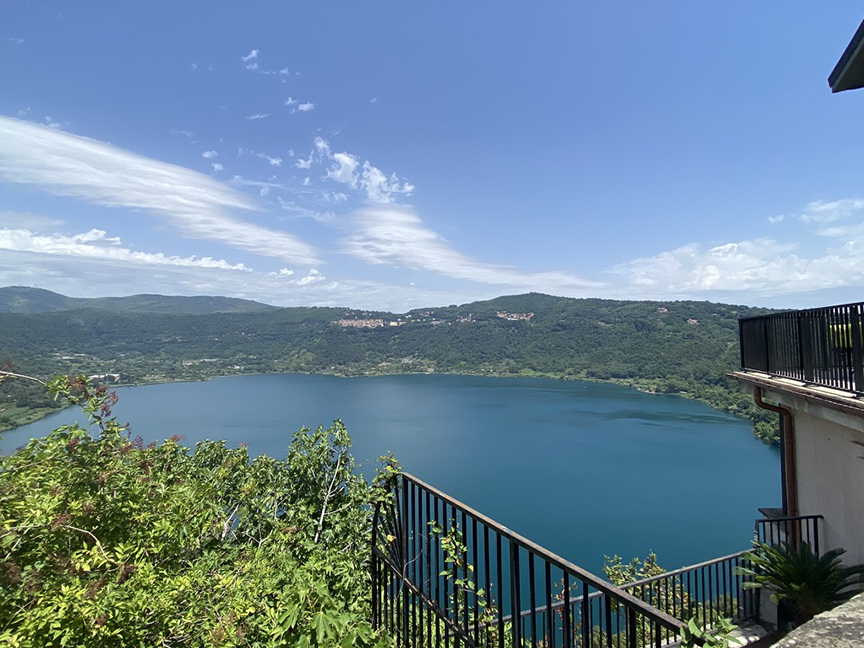
One of the things that makes this wine growing area so unique is the richly volcanic soils. As I discovered traveling down the Via Appia (the modern version of the road, which runs parallel to the ancient one), the volcano that formed Lake Albano spread volcanic ash for miles and miles to the north and the south. As a result, these lands have been coveted by wine growers since antiquity.

This July, I did a short trip along the Via Appia to visit a number of wineries there. It was a fascinating, inspiring experience. And one of the best moments came when I was given access to part of the less traveled and less tourist-friendly section.

This is the first in a series of posts where I’ll recount my journey. But it had to begin with the breathtaking moment that I first viewed the Appia Antica, the Ancient Appia. As cliché as it sounds, I could feel history and viticultural legacy pulse through my blood. It was exhilarating. Stay tuned and thanks for being here.

And for the thrifty traveler, I recommend a wonderful little hotel in Ciampino (to the left or east of where I took the above photo). It’s called Plaza Rooms Ciampino and had no services. But it was super clean and had the best wifi I’ve ever seen in Italy. It was affordable and for those wanting to go in the Rome center, it’s a 30-minute commuter train ride away. Ciampino, a small town where one of Rome’s domestic airports is located, had some fun pizzerias, too.

The first-ever mention of Nebbiolo dates back to the early 14th century. Here’s my translation, with context. A preview of my Crescenzi book and a thanks to Tenuta Carretta for the assist.

If I had a 1,000 lira note for every time someone quotes the “first-ever mention of Nebbiolo” without ever having read the original text beyond an off-hand paraphrasis in another writer’s periphrasis.

The following passage comes from Pietro de’ Crescenzi’s early 14th-century Latin treatise on agriculture, a work scholars agree is the most important book on Medieval farming practices. Crescenzi came from a noble Bolognese family and worked as an itinerant lawyer. His career took him to different parts of Italy where he observed farming and viticulture. I’m currently completing a translation for a university press.

“And there is another species of black grape that is called Nubiolum. It is delicious to eat. And it is wonderfully juicy and has slightly long berries. It does best in nutrient-rich soil that has been well manured. It does not perform well without direct sunlight and it buds early. It makes for excellent age-worthy, especially strong wine. Its berries should not be left on the clusters for more than one or two days. And this grape is highly prized in the city of Asti and surroundings.”

Thanks to a CMO grant, I’ve also been working on a translation of a work on the Tenuta Carretta winery for my friend Giovanni Minetti, the winery’s CEO.

The author offers a deep dive into feudal Piedmont in the 14th century, including a compelling narrative of the city of Asti’s power over the region at the time. Crescenzi worked for a time at the Asti court and he drank wines from “Nubiolum” there.

The Carretta translation has been extremely useful in preparing my critical apparatus for my Crescenzi book. Ultimately, the background provided will also be meaningful in an essay I’ve been writing for nearly a decade now: notes on wine in Boccaccio and in particular the tale of the Marchioness of Monferrato (where Asti is located).

Stay tuned and thank you Giovanni!

Malvidin is the anthocyanin that makes Montepulciano d’Abruzzo so unique. Taste with me Oct. 15 and 16 in LA at Rossoblu.

“The common anthocyanidins found in grapes are cyanidin, delphinidin, peonidin, petunidin, and malvidin,” write the editors of the U.C. Davis Waterhouse Laboratory’s blog. “In red grape varieties, Malvidin-3-glucoside is the most populous representing about 40% of the anthocyanins and makes up the majority of the red pigments that are acylated.”

The word anthocyanin comes from the Greek antho- for flower and cyan- for blue. It’s pronounced: antho-SIGH-a-nin.

Malvidin, from the Latin malva for mallow, is what makes red wines red.

The Montepulciano grape, which is used to make Montepulciano d’Abruzzo and Cerasuolo d’Abruzzo, is one of the varieties with the highest levels of malvidin.

As a result, during maceration, Abruzzo winemakers can obtain the color they want without “over-extracting” the wine. In other words, they can achieve the rich color for which Montepulciano d’Abruzzo and Cerasuolo d’Abruzzo are so famous for without making the wines excessively tannic and bitter. It’s part of the magic of this extraordinary grape.

On Tuesday, October 15, I’ll be leading a trade dinner hosted by the Abruzzo consortium at Rossoblu. If you work in any capacity in the food and beverage industry, you are invited! Please send me an email (jparzen@gmail.com) to snag your spot. It’s completely free to any and all trade who would like to attend.

And the next night, Wednesday, October 16, I’ll be presenting a food and wine lover dinner, again featuring the wines and cuisine of Abruzzo.

Here’s the link to sign up. The dinner cost is $95, the wine pairing is $45. It’s a great deal and we’ll be doing a retail offering at the event as well.

I hope to see you in LA! Any support from trade for the Tuesday night dinner is greatly appreciated. Thanks to everyone. Happy new year and have a great weekend!

Here’s a little preview of some of the wines we’ll be pouring at the trade event. Thanks for the support and solidarity!

Shanah tovah! Happy new year! Parzen family Rosh Hashanah letter.

Shanah tovah! Happy new year, everyone! May your year to come be filled with health, fulfillment, and joy.

Tracie, Georgia, and Lila and I will be celebrating the new year this week with some of our close family friends.

Georgia, soon to be 13, is enjoying her second year of middle school. She plays in the magnet program’s top orchestra and continues to take private lessons with the same teacher who has mentored her since she was 5! Her violin chops are so good at this point that she often plays music with me and plays on some of my recordings. She’s also playing in our neighborhood’s newly formed tennis club. So proud of her and it’s wonderful to watch her become a teenager.

Lila Jane, 11, is now in 6th grade at the same middle school. She also snagged a spot in our middle school’s top orchestra. She’s with a wonderful new teacher now (her previous teacher was also fantastic but one of her daughters is Lila’s best friend and our families have grown very close; so the mom felt it was time for a new teacher). The biggest news is that Lila is now playing electric bass and has started a band! They practice using my backline, which is now set up permanently in our music room.

Both girls are getting straight A’s and they love their school.

Tracie’s career in real estate continues to grow. She’s currently working on her biggest deal yet and with the interest rates coming down, well, she’s getting really busy. As my travel season gets going, we’re not sure how we’re going to be able to balance it all. But we have a lot of support from our family and community. Tracie has already achieved so much and she continues to build her business. She is simply one of the most amazing human beings I have ever known. I love her so much and we are both looking forward to celebrating our 15th wedding anniversary in January.

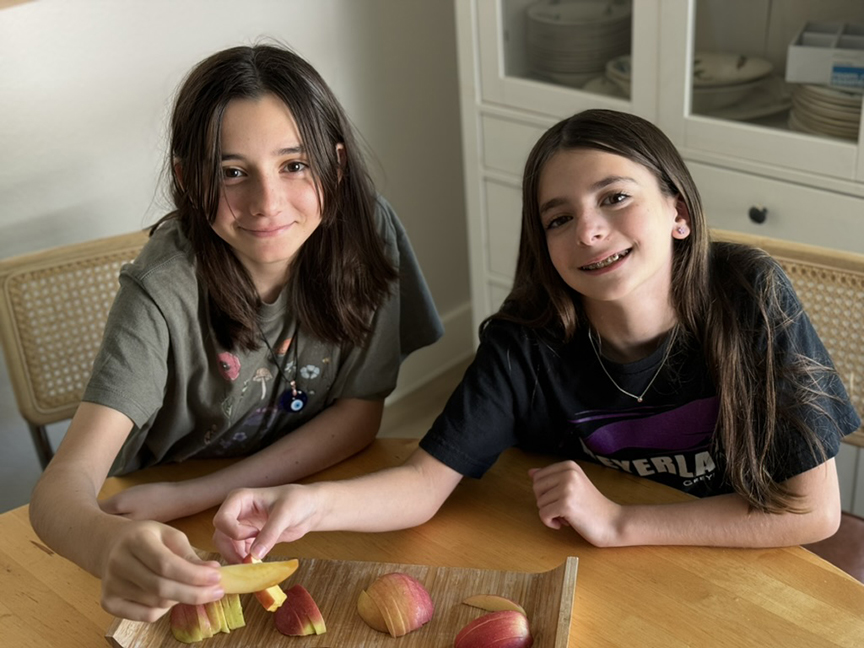
Wishing you and your loved ones a happy and healthy new year. May your year ahead be sweet like the apples and honey that the girls and I enjoy each year as the holiday approaches.

Wine shopping advice for a frustrated foodie friend. What Tracie and I are drinking at home these days.

A good friend and blogging colleague reached out to me over the weekend for wine shopping advice. She had been disappointed by the attenuated food friendliness in the wines she had recently purchased. Here’s what I shared with her. Thanks for being here everyone and thanks for the support. Buon weekend a tutti.

Hey Renia, sounds like I need to do some personal wine shopping for you! I’d be happy to. Here is what I recommend in the meantime.

1) is look at the alcohol levels on the wine. The lower the better. 11 percent is a good rule of thumb for white. 13 for red. Low or restrained alcohol tells you a lot about the style of the wine. Low alcohol is always more food friendly.

2) go to your local independent wine shop and talk to the sales persons about your preferences. You might find someone to help you at HEB or Kroger but they just don’t have the bandwidth to sit down with you and say, hey, what kind of wine do you want/need? What do you and your family regularly eat? Special occasion or glass of wine with dinner? A great wine sales person will help you find the balance you are looking for (it’s expensive but Tracie and I still like Houston Wine Merchant as a full-service shop but there are so many cool new shops now with folks who are excited to share their wine knowledge).

Lastly, 3) sometimes it’s worth it to spend a little extra. I have a friend who only drinks one glass of wine a night with dinner. He buys a mid-tier bottle of Barolo ($50?) but the wine stays good for more than a week. In the end, he’s paying less than $10 per glass for a top wine (drinking one glass a night, 6 glasses per 750ml bottle).

For reds, right now Tracie and I are enjoying Selvapiana Chianti Rufina (under $20), Calera Pinot Noir (under $25). Both stay good for at least a week. For whites, Erste Neue Pinot Bianco (under $15 at Wholefoods) and Pieropan Soave Classico ($18 at HEB if you do the six or more mix and match discount).

Hoping this is helpful. Hit me up if you want to go wine shopping together. I would love that.

Hope you guys are well. Abbraccione

Los Angeles, Abruzzo needs you. Houston, I need you.

From the department of “so much time and so little to do”…

The tasting season has just begun and I’ve got a ton of fun things lined up.

Top on my list is the two Abruzzo dinners I’ll be leading in Los Angeles at Rossoblu, my old stomping grounds.

Tuesday, October 15
Abruzzo Trade Dinner at Rossoblu
Downtown Los Angeles

I’ll be hosting an Abruzzo trade dinner. Please email me (here) if you’d like to attend. It’s open to ANYONE who works in the food and beverage industry. Chefs, servers, front of house… Anyone who would like to learn more about Abruzzo wines in a convivial setting.

Wednesday, October 16
Abruzzo food and wine lover dinner at Rossoblu
Downtown Los Angeles

The restaurant doesn’t have a registration link up yet but please save the date. This is open to anyone and costs just $140. These are super fun and the crowd is always amazing.

Monday, October 28
Do Bianchi Supper Club at Davanti
Houston

I’m super stoked about this new series that I will be doing with Oliver Calza and Chef Roberto Crescini at Davanti. I don’t have the theme for our first event but I can tell you that it will be limited to 12 persons. We’re planning to keep it moderately priced. Can’t wait for this! Email me (here) if you’d like me to hold a spot for you.

Thanks for your support and solidarity! Abruzzo and I need your tastebuds!

Other events to have on your radar…

I’m presenting an Abruzzo seminar for trade October 2 in Boston.

I won’t be in town for this but my buddy Jeff Porter is doing an Umbria event in Houston on October 8. Email him (here) to snag your spot. Jeff is an amazing presenter and wines look great.

I’ll be presenting at Taste of Italy in Dallas and El Paso, October 8 and October 10.

I just added an Abruzzo event in Denver on October 31.

And my vermouth event in Tulsa on November 18 has been confirmed.

Taste Vermouth di Torino with me next month in NYC: Amistà has a new importer and I’m coming to town! Hit me up if you would like to partner with us.

From the department of “the wine is on the water!”…

It’s a project that I hold dear: Amistà, an organic farm in the Nizza DOCG, producer of top wines grown and vinified by Luca D’Attoma and producer of an organic red wine-based Vermouth di Torino, also made by Luca.

It’s been a wonderful experience working with the vermouth, wines, and people behind the estate. And the best news is that Amistà is now imported to the U.S. by one of my best friends in the wine business, Dino Tantawi, who together with his son Adam, runs Vignaioli Selections in NYC.

One thing that sets the Amistà Vermouth di Torino apart from the crowd is the base wine. Most vermouth — including higher end Vermouth di Torino — is made from lower quality wine whereas the Amistà is made from organically farmed Nizza — the same wine that goes into the Nizza DOCG. The quality really shows in the final product.

The Amistà Vermouth di Torino is also unusual because it’s made from red — not white — wine. This means that no caramel is added, something that makes a huge difference in the aromatized wine’s flavors and texture.

The other thing that makes it a star among vermouth is that is blended by Luca who has been having a lot of fun delving into a world that he usually doesn’t inhabit.

It’s a remarkable product and I can’t wait to pour it for you.

I’ll be working the market with Dino and Adam the week of October 21. Please let me know if you’d like to taste with us.

And with our relaunch, we are also looking for regional partners. Texas is already in the works and California is next. But please reach out if you’d like to try the vermouth and/or chat with me about it.

I’m super geeked about this next chapter and I’m looking forward to connecting with like-minded souls. Even if you are just curious to taste, please let me know.

The wine — and the Vermouth di Torino — are on the water!

The Abruzzo subzone that everyone is talking about comes to life in a new book

Above: Chiara Ciavolich and Francesco Valentini in late July at a presentation of a new book on Loreto Aprutino by Francesco’s son Gabriele, published by a newly established consortium of Loreto Aprutino growers (image via the Custodes Laureti Facebook).

Armando Castagno, Italy’s greatest living wine writer imho, and I once got into a fight.

You can’t blame American wine writers, I told him, for not knowing or writing about a particular appellation, even despite the elevated overarching quality of the wines. It’s the producers’ fault, I argued: they should work more diligently to market their wines and themselves.

No, no, no! Armando, a good friend, admonished me. That is the very job of the wine writers! To go out and find the wines and write about them!

Armando was recently asked to present a new book on Loreto Aprutino, the Abruzzo subzone that everyone — wine writers in particular — should be talking about.

Published in a bilingual version, the English title is The Wine-Growing Lands of Loreto Aprutino, by Bologna University researcher Gabriele Valentini (not to be confused with Francesco’s son Gabriele). Not exactly a sexy title, unless like me, you are interested in understanding soil, climate, tradition, and all else that goes into the great terroirs of the world.

The group behind the project, Custodes Laureti (Latin for the guardians of Loreto Aprutino), count some of Abruzzo’s top producers as members: Amorotti, Ciavolich, De Fermo, Talamonti, Torri dei Beati, and Valentini.

But it’s the new survey of Loreto Aprutino’s history and — most significantly — its soil types and the impact of a changing climate that has me on the edge of my seat. I highly recommend it to you.

The Custodes Laureti are still working on their website. But you can contact them via email at custodeslaureti@gmail.com and you can also visit their Facebook.

Over the course of my 18 months working with the Abruzzo consortium as their U.S. ambassador, I have received countless emails from wine writing colleagues asking me how to get an appointment at just one Abruzzo winery in particular, eliding the rest. I have heard would-be wine professionals wax on about the same two or three wineries — over and over again — that have appeared in the writings of a handful of bloggers and journalists.

It’s time, as Nietzsche wrote, to look behind the sacred texts. Abruzzo wine country has so much for us to discover. American wine writers, your work is cut out for you! If you have trouble obtaining a copy, I’ll be happy to lend you mine.

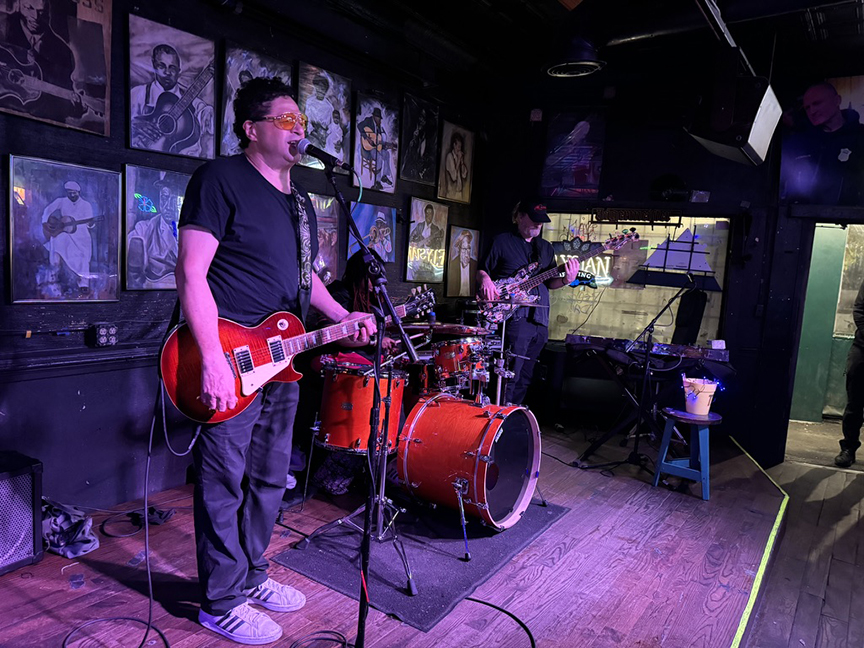
Rock out with us Sunday @vinsantohtx!

NO COVER me and Katie White LIVE THIS SUNDAY with the biodynamic band @vinsantohtx 4-5 pm kid friendly @tracieparzen and the girls will be there too come on down Katie the boys and I have a great set for you thank you for your support drink good wine eat pinsa and hang with the crew!

A new blog for J. Hofstätter is a dream gig for me.

Who said wine blogging was dead?

When J. Hofstätter’s U.S. importer reached out to me earlier this year to talk about launching a media project for the winery, I couldn’t have been more thrilled.

I have tasted with Martin Foradori-Hofstätter over the years and have always loved the wines. And I’ve always felt a connection to Alto Adige because of my many visits there during my university days. I’ve even visited the Ladin library there (super cool btw).

M.S. Walker, the winery’s U.S. partner, asked me to create a media suite for the winery. There was already so much great information out there, they reckoned, but it needed to be organized and articulated on an internet-friendly platform.

Thus was born the Hofstätter Media Resource blog (HofstatterMedia.com).

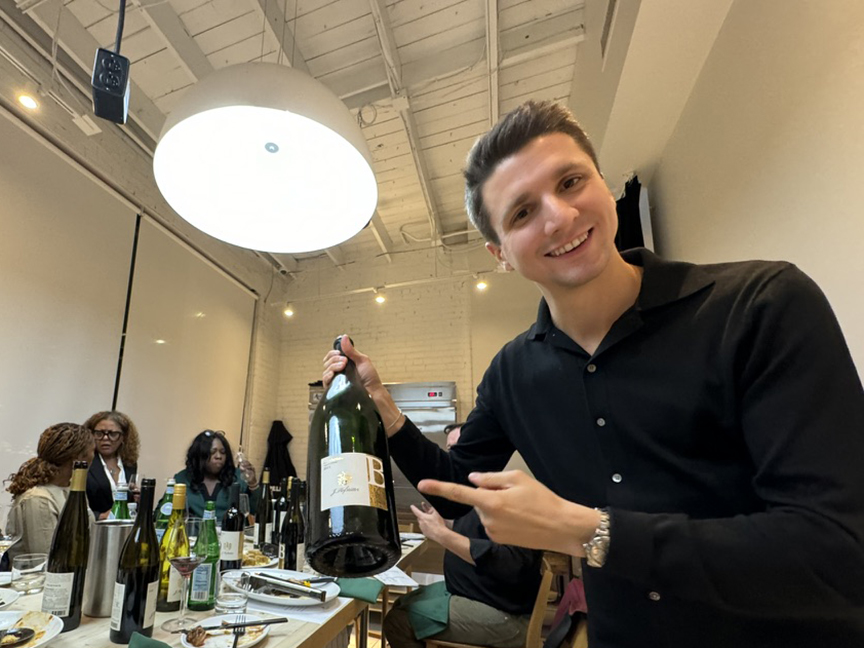
As soon as we headed up to Bolzano province where I met with Martin’s son Niklas (above).

What an incredible visit!

The project focus is the winery’s single-vineyard designate wines. That’s the famous Sant’Urbano vineyard (above) on the Barthenau farmstead on the east side of the valley where their top wines are grown.

I wish I could convey the electricity — literally, a buzz — as Niklas, who is the super coolest dude btw, physically walked me through the soil types on both sides of the valley.

He and I have been having so much fun with the campaign and we’ve also started a YouTube where he shares his insights and anecdotes about South Tyrolean viticulture.

Ultimately, the winery will be sharing some of our posts on their own social media. But you can follow it all in real time over at the blog, including an email subscription link.

The winery is currently posting a series of harvest photos. It’s worth checking out (here).

I feel so blessed to do what I do for a living and to get to work with such talented and brilliant people like Niklas.

Did someone say that wine blogging is dead?

The wines and the stories are well worth the visit.

Please check out our site and thanks for the support and solidarity!