Taste with rising star wine writer Sarah Phillips next Monday in Houston.

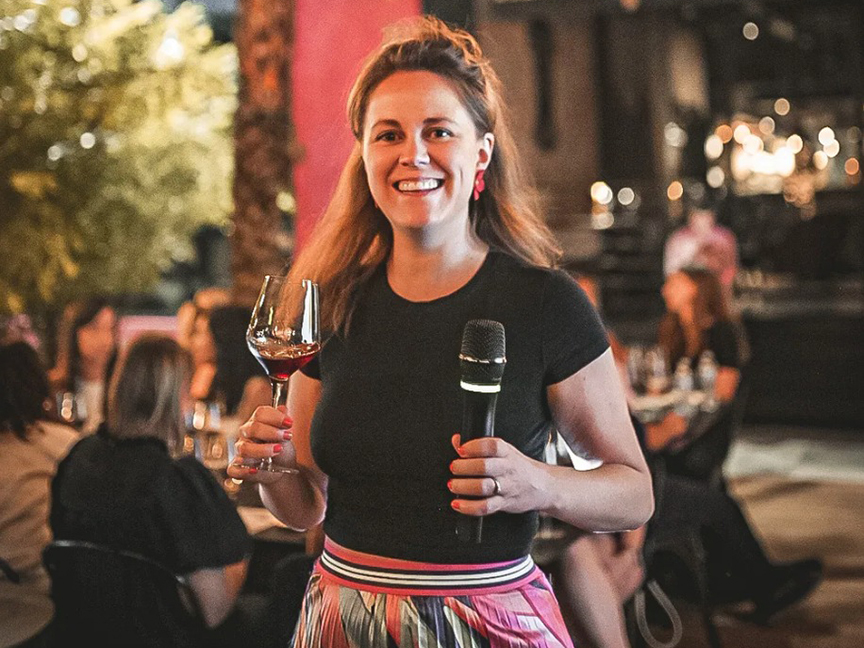
Giving a huge shout-out this morning to my friend Sarah Phillips (above). She is one of the best U.S.-based wine writers right now imho and she is currently studying to become an MW.

Her work first came to my attention via the Jancis Robinson wine writing competition (she won, of course).

A few years ago, when I was working in situ with an importer in Miami where she lives, I got to know her and her husband Aidan through attending tastings together. We became fast friends. They are the nicest people and I have deep respect not just for Sarah’s work but also her work ethic and her ecumenical approach to wine writing and education.

She and Amanda Barnes MW will be leading a South American Wines seminar at the Texas Wine School in Houston next Monday morning, March 17.

Click here for details and registration.

I don’t get out to many tastings these days and South America is not exactly in my wheelhouse. But I wouldn’t miss Sarah and her tour for the world.

I hope you’ll join me.

Thank you to Sarah and Amanda for coming to Houston!

My visit to the White House: here’s what I told the President.

While in Washington D.C. this week, I was thrilled to be welcomed at the White House. Here’s what I told the President.

President Trump, your Excellency, let me begin by saying what an honor it is to be here. If only my Jewish mother could see me now! Thank you for the opportunity to share the wine industry’s concerns with you.

And please allow me also to thank you also for creating a new benchmark for U.S. wine. The superb, world-class wines you have produced in Virginia are among North America’s best wines.

Dear Mr. President, as in industries and trades across our great land, the wine — big and small — is worried about the many uncertainties on the horizon.

Just today, we learned that Canada has banned the sale of Californian wine. The state that first made American wine great was already reeling from the impact of wine country fires and the more recent devastation in Los Angeles.

Across the country, small business owners are holding their breath as they await updates on EU-targeted tariffs.

Staffing at the FDA is an even more urgent issue for importers who are struggling to understand and implement new rules for nutritional and organic labeling. A colleague recently told me her only reliable point of agency contact is the inspector who visits the warehouse.

Many of our European partners are pivoting away from America. They are freaking out about expanding war in Europe, tariffs, market disruptions, new labeling requirements. Many are looking to friendlier, thirstier markets. As a result, we and downstream businesses are losing “placements” and “depletions” to big time wine. Will we ever get them back?

Lastly, Mr. President, sir, we in the U.S. wine trade are counting on you and we trust in you to keep our economy great so that our industry may continue to thrive as it has for the past four decades.

Thank you Mr. President. I feel blessed to have been given this opportunity. G-d bless you, G-d bless America.

FTR Although prêt-à-porter, the President seemed to approve of my black Hugo Boss two-piece.

A trade fair in Houston gives me hope for wine’s future in America.

It’s a scary time to be shipping Italian wine from Europe these days.

No one knows when or to what extent the U.S. government will impose tariffs on European goods, although most expect that the tax is inevitable.

With the new Russia-U.S. alignment, there are fears in Europe that war could spread to other former Soviet block countries. Supply chains (like glass from Ukraine for wine bottles) have already been severely impacted by the conflict and with the breakdown in Ukraine-U.S. relations, there is no clarity on when a cease-fire could begin.

But perhaps even more daunting for Italian winemakers is the fact that the U.S. government has made severe cuts to human resources at the FDA just when new organic labeling regulations have come into effect.

At our exhibitors panel on Sunday night as part of the Taste of Italy Houston trade fair, the Italy-America Chamber of Commerce invited a top wine and food importer, a top Italian wine buyer, and a Michelin-starred chef to speak to wine and food producers presenting their products. It’s one of the events I am most proud to be a part of: each year, our panelists offer genuinely useful information and guidance for companies who export their goods to the U.S.

But the moment that filled me with hope was when Tom Dobson, Italian wine buyer for Spec’s, one of the largest wine retailers in the world, said that he believes wine sales are going to return to their pre-Covid levels. The pandemic caused wine sales to spike, he explained, but volume and value decreased significantly over the last two “post-Covid” years. With moderate confidence, he told our group that he believes we are on track to revive our industry. His outlook, he explained, is based on the mountains of data that he analyzes every day for his company.

His comments were echoed by Michelin-starred chef Felipe Riccio of Houston restaurant March. While his observations were more anecdotal in nature, he talked about how he and his team are seeing an upward trend in wine sales again. And his restaurant group continues is ambitious plans to expand.

Uncertainty is not good for wine sales but guarded, well-informed optimism is great for a beleaguered industry. I, for one, am hopeful.

Thanks to everyone who made the 11th annual Taste of Italy fair a success.

The Russia-U.S. alliance is shameful, the Ukraine shakedown despicable. Americans must speak out!

The U.S. government’s sea change in Russia-U.S. relations and the resulting Russia-U.S. alliance are shameful abjurations of values held by generations of Americans.

The mineral rights shakedown of a vulnerable people by an emboldened MAGA movement is despicable.

In the light of these aberrations, I am ashamed to be an American. And I feel compelled to speak out and I hope that other Americans will feel the same.

I recognize that most Americans don’t even know where Ukraine is. They could hardly care about what happens to a people in a faraway land, an ocean between us.

But I also believe that a majority of Americans, from all stripes, know that Russia’s leader is a cutthroat, malevolent dictator who has murdered and imprisoned his opponents, exploited his people for personal gain, a cunning dissembler who has sent hundreds of thousands of people to their deaths.

The U.S. government must acknowledge that Russia started the war in Ukraine. The U.S. government must stand up to the Russian dictator and call him out for what he is.

Realpolitik is unavoidable in world affairs. Russia’s gains in the war might be irreversible.

But if America doesn’t stand up to dictators and murderers any longer, then we must speak out and up. We must call for policy change.

The current administration’s push to reshape the government and its role is misguided and potentially dangerous in my view. The American people seemed to have wanted upheaval in their governance and social services. Fair enough. Let’s see what happens.

The Putin-Trump alliance is a step too far — way to far. It undermines everything our country stood for throughout my lifetime and my parents’ lifetimes.

Political consultant James Carville’s recent Times editorial where he called on democrats to stand by and do nothing is bullshit — an immature, irresponsible, and unacceptable response to the emetic reshaping of American values by the MAGA movement.

It’s time to speak out and up, people! Thanks for being here, thanks for the solidarity. Thanks for believing that there is hope for American dreams and ideals.

A visit to the Cincinnato cooperative in Roman wine country was one of my most compelling visits last year.

One of the most compelling visits of my 2024 in wine was with winemaker Giovanna Trisorio who runs the Cincinnato cooperative in Latina province south of Rome.

I’d tasted the wines over the years and after she and I connected at Vinitaly last year, I wanted to get my boots on the ground and try to wrap my mind around why Cincinnato’s wines and so many other wines from this area are so good.

For the record, the Cincinnato cooperative is located just off the ancient Appian Way about an hour south of the capital. It’s one of the most stunning drives you’ll ever make.

First you travel through the Castelli Romani where it’s hard not to miss the renaissance of grape growers there. Make sure you stop to look at the gorgeous lakes which were formed by the ancient craters of a volcano. It’s such an important element to understanding the volcanic legacy of the winemaking there.

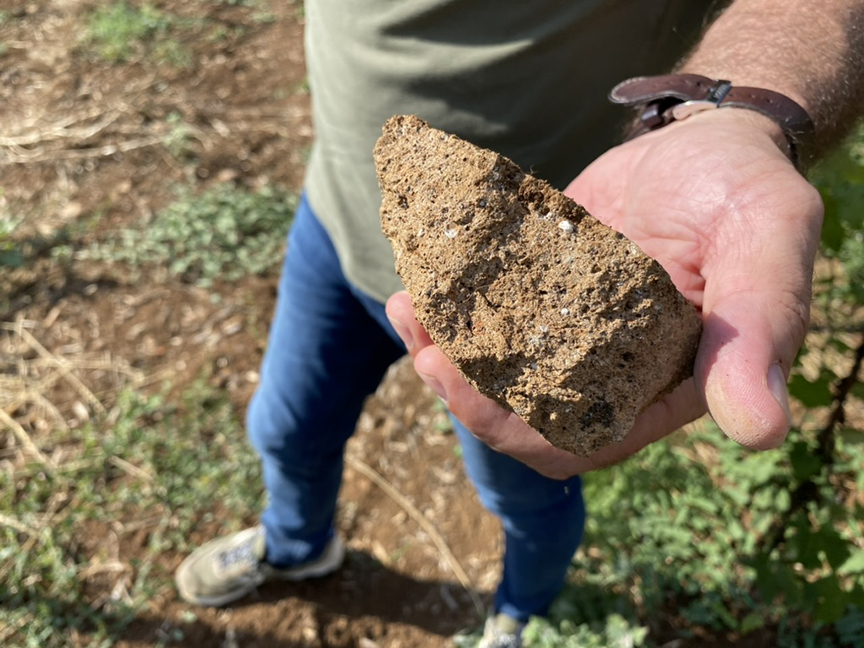
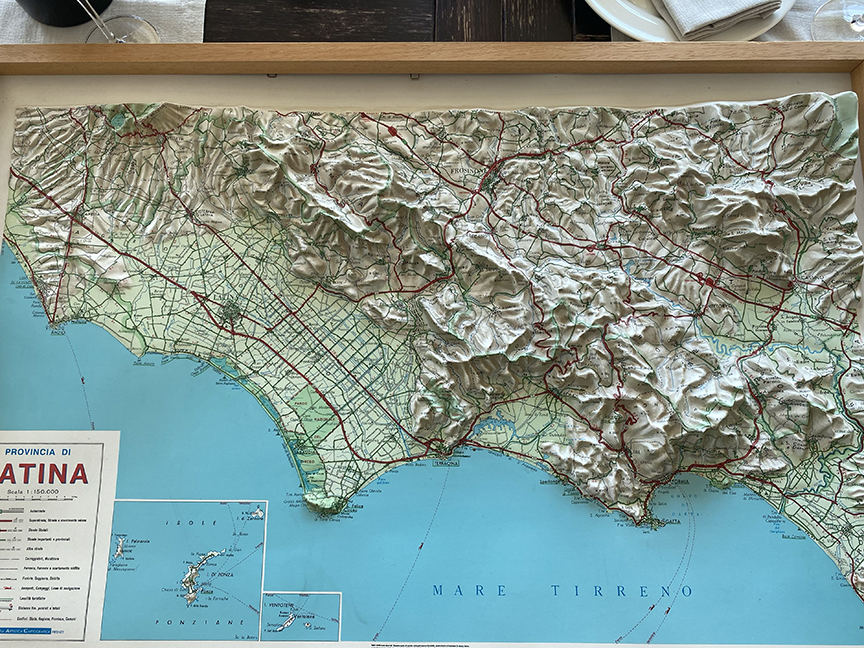
But then you drive down into the Latina plains. The best vineyards, I discovered, are those that rise up in the foothills on the eastern side of the valley. There, where you can feel the maritime influence of the sea, the volcanic soils make for some of the best wines produced in central Italy. It’s such an amazing place to see. Check out the topographic map of the area below.

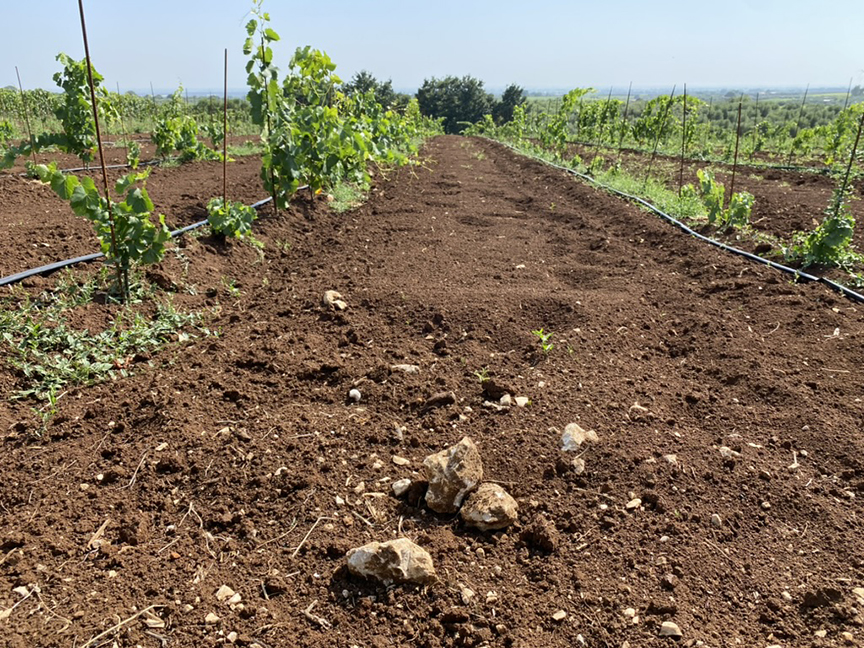
As you can see from the images, the soil is richly volcanic. But as you can see in the photo of a newly planted vineyard, there is also a limestone component.

These soils were created thanks to the eruptions of a volcano that would form the high-altitude lakes, Albano and Nemi, in the Castelli Romani.

Giovanna’s wines are fantastic, very focused, and very market ready. The whites in particular really impressed me. But the reds have the power and depth — again, thanks to the soils and unique exposure there — that the market looks for.

For the record, the cooperative is named after Cincinnatus, the ancient Roman statesman and farmer whose story inspired our own George Washington.

The coooperative also has one of the best tasting rooms and hospitality programs in the region. I highly recommend the wines but also encourage you to make the journey yourself. You won’t be disappointed!

Jam and taste with me in Houston, taste with me on the Slow Wine tour!

From the department of “so much time and so little to do”…

The year is finally back in full swing and I’m stoked to be playing so much music this season!

The BioDynamic Band featuring Katie White will be making its first Meyerland area appearance this Sunday 2/16, 3-5pm, at Emmit’s Place (South Post Oak and Benning).

This is a family-friendly show and will also feature a band from our girls’ middle school. Super talented kids btw. $5 cover, family-friendly food and drinks, adult beverages for the rest of us.

Click here to buy tickets and tickets can also be purchased at the door.

On Sunday 2/23, 4-6pm, we will be returning to Vinsanto for our monthly gig and the wine bar’s second anniversary!

For those who have never been to one of our shows, it’s my dream gig: great wine and food paired with jams from the 80s and 70s.

NO COVER and Riccardo always has a special btg white, rosé, and red. The pinsa at Vinsanto is fantastic and our girls LOVE the chef’s hand-cut fries.

And now the wine…

On Monday, March 3, I will be presenting a series of seminars at the 11th annual Taste of Italy trade fair in Houston, presented by my client, the Italy-America Chamber of Commerce.

The “Texas BBQ and Italian Wine” seminar always sells out really quickly so be sure to reserve your spot now.

This is a wonderful event and a great opportunity to taste and meet with Italian producers who are working here or working to get their products here.

And while I’ll be missing the Slow Wine date in New York this year (thank you Susannah for covering for me!), I’ll be pouring and leading seminars for the Abruzzo consortium at all the other stops in Boston 3/5, Washington D.C. 3/6, Denver 3/10, and Los Angeles 3/12.

My seminars are really fun and Slow Wine is always a great occasion to connect with like-minded wine and food folks. I really enjoy the tour.

Register for any and of all of the events here.

Thanks for your support!

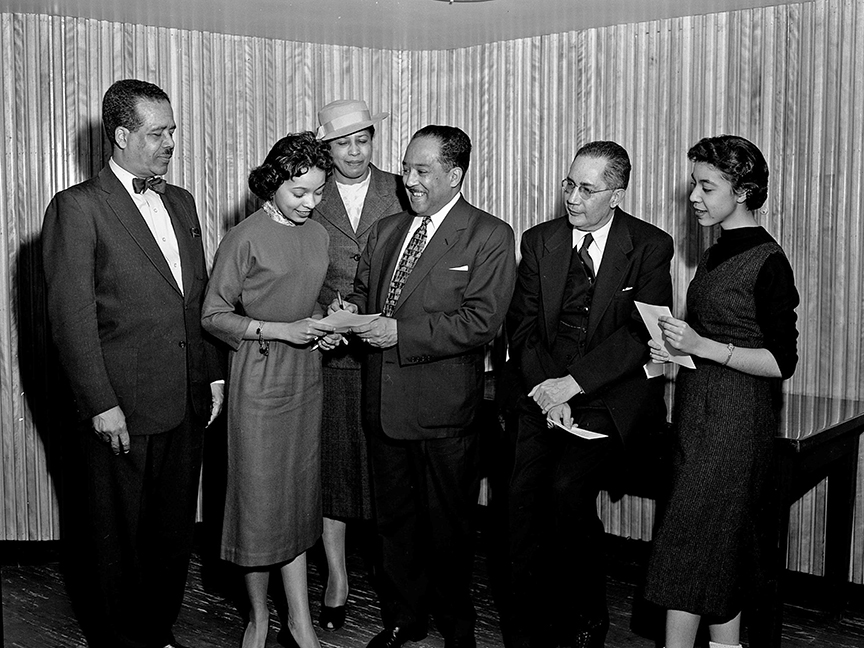
Photo by Nichols Photographers.

Langston Hughes’ poetry has been a guiding light for my entire life. But it was his prose that showed me the way. A Black History Month post.

Above: Langston Hughes signs autographs after a reading. Image via Washington Area Spark’s Flickr (Creative Commons).

As long as I live, I’ll never forget reading the poetry of Langston Hughes in my sophomore year in high school. The words seemed to jump off the page in my American lit. anthology. His marriage of literature and music danced on the page and in my mind. The blues were literary! I was hooked. In the college years that followed, I would play hooky by finding old first editions in the University of California libraries and poring over them again and again, even transcribing some of the poems to better understand their prosody. And prosody — versification, metrics are synonyms — would become my focus during grad school.

But even more profound than the poetry’s effect was the collision between me and Hughes’ autobiography The Big Sea.

“Life is a big sea full of many fish,” he wrote. “I let down my nets and pulled. I’m still pulling.”

From his tales of Paris to his journey to Italy, the words felt like that gulp of fresh air you take halfway through a long run, filling your brain with blood and your veins with energy.

I knew that I longed to escape my life, to escape my hometown. And Hughes’ big sea called to me, pulled at me, nagged at me.

Some 40 years later, I’m glad I listened to and heeded that calling. I can’t wait for my children to be old enough to read and appreciate this book. And I highly recommend it to you.

Over the course of creative life, I’ve set Langston Hughes to music; I’ve thrown Langston Hughes reading parties (Sean, remember???!!!); and I’ve returned over and over again to the poetry and prose when I needed that gulp of fresh air to keep me going.

At my funeral, I hope someone will read the lines: “Life is a big sea full of many fish. He let down his nets and pulled.”

Happy Black History Month!

Amorotti shoots for the natural wine stars, a young/old Abruzzo estate on the rise.

I cannot share any of the photos I took at the Amorotti winery in the picturesque village of Loreto Aprutino, which lies roughly 30 minutes by car inland from the Adriatic coast in Abruzzo.

That’s because legacy grape grower and winemaker Gaetano Carboni wants to isolate the unique community of bacteria and yeast that populate his ancient cellar. Visits are extremely limited (I was honored to be received) in part because he doesn’t want to upset the balance of microorganisms that have allowed him to ferment spontaneously in the space since his first commercially released vintage in 2017.

Why are photos not allowed? He let me take them but asked me not to publish them. Gaetano, I discovered, is the nicest person and extremely polite and proper. But he is afraid that too much exposure will ultimately bring too many visitors and threaten the delicate biome he has captured.

What I can show you is the above photo of the Gran Sasso massif, snapped in the village of Cappelle sul Tavo, about halfway along the windy road that leads to Loreto Aprutino from the seaside.

As you drive up to the hamlet, you realize that you are surrounded by seemingly endless olive groves. The olive oil raised there is considered by many to be among the best in the world.

But when you get there and look back on the sea, which you can see clearly from the hilltop village, you can literally taste the dolce aere, the delicate breeze that kisses the groves and the patchwork of vineyards interspersed among them. Then you look to the west to the massif and you notice how it protects the hamlet like a sleeping giant.

It’s then that you realize what a unique and special growing zone this is.

Loreto Aprutino is home to some of Abruzzo’s most famous and oldest wineries: Valentini, Ciavolich, Torre dei Beati, just to name a few.

Gaetano’s family can trace their history back to the Renaissance, just like those above. But it’s only been in recent years that he has begun making wine from vines that were once reserved solely for family consumption. His family, like the Valentini, for example, are among the region’s most important producers of olive oil.

The wines are excellent, the story compelling. I highly recommend them. And when you do visit one evening before dinner on a chilling winter night, look out for the cats that rule the streets of this magical village.

A fantastic Italian Merlot tasted while on a secret mission.

Owing to the sensitive nature of the weekend’s top secret mission, details of where we dined cannot be revealed.

I did however want to share my joy in drinking a bottle of mostly Merlot from Lis Neris in Friuli. I’ve known and followed the winery for years and have loved the wines.

When I saw a 2016 Merlot-Cabernet Sauvignon blend for a reasonable price, I snagged it and man, was I rewarded with freshness, rich but buoyant fruit, hallmark Merlot flavors, and a great pairing for a perfectly aged prime New York strip topped with Roquefort.

As much as we all (wrongly) dissed Merlot from Tuscany and Umbria in the 2000s (me included), I never stopped drinking Merlot from Friuli (and from Veneto) where diluvial and limestone soils deliver some of the best Italian expressions of the grape variety (the other place where I’ve had great Merlot is the volcanic-rich soils of Latium).

At eight years from harvest, the Lis Neris was at its peak of fruit and earthiness. What a great wine! And what a great value!

Oh, and the secret mission, you ask? It was a success!

The Italian wine world mourns the loss of one of its brightest lights, Giampaolo Gravina, 58.

Social media and the internet overflow with heartfelt tributes to Italian philosopher, critic, educator, and wine writer Giampaolo Gravina, who died today.

According to numerous posts by both mainstream and wine-focused media, Giampaolo, 58, passed away in Friuli where he was attending a wine event. A sudden and unexpected health crisis was the cause according to posts on social media.

The red thread that pulses through all of the remembrances is Giampaolo’s gentle yet immensely powerful way of writing and talking about wine. I believe many of my colleagues would agree that his unique approach to wine and wine criticism was a reflection of his personality — brilliant, erudite, wise, reserved, precise, judicious, and beautifully human.

As noted Florentine sommelier and wine writer Andrea Gori put it in a social media post, “Giampaolo, you were the exception.”

Author of numerous books on wine, including well-received tomes on Burgundy and the Italian new wave, he was also a longtime wine critic for L’Espresso, the high-profile news weekly. He also contributed to academic journals with scholarly essays on aesthetics, the focus of his studies at the University of Rome. These included his musings on wine tasting as a cultural and intellectual experience and enterprise.

Giampaolo was also my colleague: we were both professors in the graduate program at the Slow Food University of Gastronomic Sciences in Pollenzo, Piedmont.

I knew and tasted with him many times over the years. He would often tease me that I was his one friend from Texas who wasn’t interested in sports or the Houston Rockets — passions of his.

Please head over to social media to see the tide of posts about his unending warmth and humanity. The world is a dimmer place today without him.

Sit tibi terra levis Ioannes Paule.

Screenshot: Intravino.