
 Above: one of the best executions of carbonara I’ve ever had was prepared by a Roman using guanciale and Pecorino Romano. The cook in question is one of the most brilliant and informed writers in Italy I know. But does he know the origins of his city’s synecdoche dish?
“A philologist looks behind the ‘holy books,’” wrote Friedrich Nietzsche in The Twilight of the Idols (1889), “a physician behind the physiological depravity of the [believer]. The physician says, ‘incurable,’ the philologist says, ‘fraud’…”
This line came to mind over the weekend after a number of gourmand friends and gourmet colleagues sent me a wonderful Financial Times profile of Italian food historian Alberto Grandi entitled “Everything I, an Italian, thought I knew about Italian food is wrong.”
Grandi “has dedicated his career to debunking the myths around Italian food,” writes Marianna Giusti for the paper.
In his 2021 book Denominazione di origine inventata (Invented Designation of Origin), Grandi points out:
- that most Italians hadn’t heard of pizza until the 1950s, for example, or that carbonara is an American recipe. Many Italian “classics,” from panettone to tiramisù, are relatively recent inventions… Some of DOI’s claims might be familiar to industry insiders, but most are based on Grandi’s own findings, partly developed from existing academic literature. His skill is in taking academic research and making it digestible. And his mission is to disrupt the foundations on which we Italians have built our famous, and famously inflexible, culinary culture — a food scene where cappuccini must not be had after midday and tagliatelle must have a width of exactly 7mm.
Sounds like my cup of caffè corretto!
Anyone who follows my blog knows that I have written extensively about the origins of dishes like carbonara and puttanesca. And one of the major red threads of my research has been the debunking of myths, like the one about puttanesca being invented by sex workers and carbonara being named after purveyors of charcoal.
In case you missed the piece, check it out here (paywall).
I’m leaving tonight for Italy and plan to pick up a copy of his book while on the ground there. I can’t wait to read his book! Report forthcoming!
In the meantime, wish me luck and wish me speed. Lufthansa is on strike but I still hope to get to Italy by dinner tomorrow…
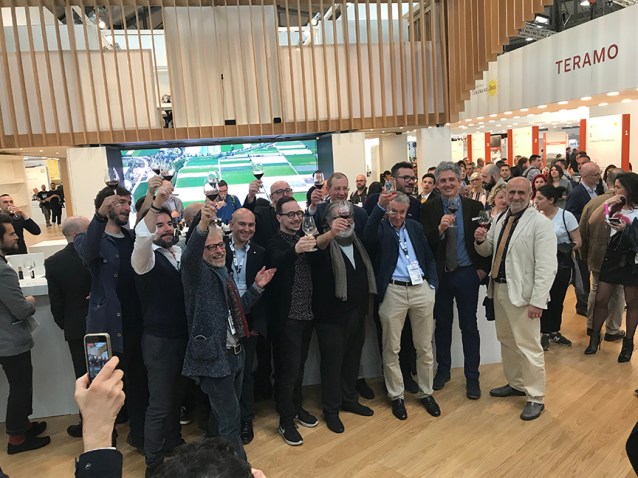 Above: I’m hoping to get an invitation to the blogger and social media party that my friends and colleagues have hosted over the years at the Abruzzo consortium stand. It’s always a great time.
 Earlier this week, a lively conversation with a group of west coast wine buyers proffered an anecdote for the viticultural ages.
  The Benazzoli sisters’ website doesn’t have an “about” page.
  Claudia, who received us that day, recounted how challenging it was to manage the winery after the loss of their father, emotionally but also professionally since the girls had hardly completed their studies.
  I highly encourage you to check out their super cool website where you immediately get a sense of the intellectual depth behind their winemaking.
  Every bottle of wine is a gamble.
 In the Bricco di Nizza, the central subzone of the Nizza DOCG, the soils are identical to those found in La Morra, the largest commune for the production of Barolo. That’s clay-rich soil, above, and limestone, below. Other areas in the DOCG, to the south and north, have sandstone soils, also ideal for Barbera.
 Previously, Barbera was vinified in Asti province as Barbera del Monferrato DOC or Barbera d’Asti DOCG, an appellation that included a “superiore” designation (originally in reference to superior alcohol content) and single-vineyard “cru” designations.
 Last week while in Los Angeles for work, I attended the Gambero Rosso Tre Bicchieri tasting. For those who have never been to one of those events, it’s a huge Italian wine industry schmooze fest. For the most part, it’s all about hugs and high fives and catching up with people who work in our trade.
 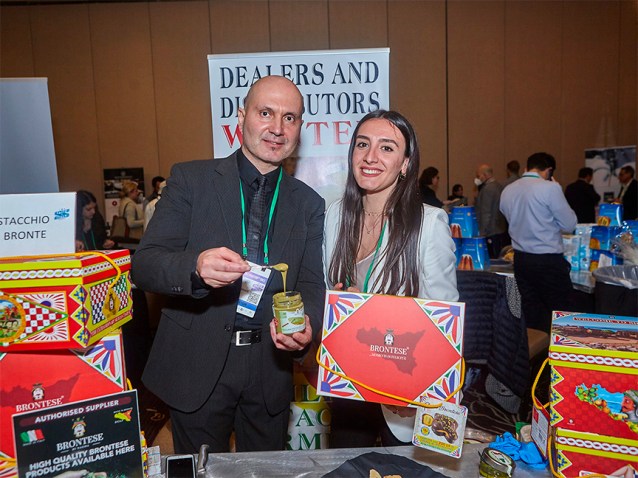 Above: producers of Sicilian pistachio cream at last year’s Taste of Italy in Houston.
 One of the great pleasures of returning to my old stomping grounds in New York City has been reconnecting with my old boss and friend, Nicola Marzovilla, legacy restaurateur and now Chianti Classico grape grower.
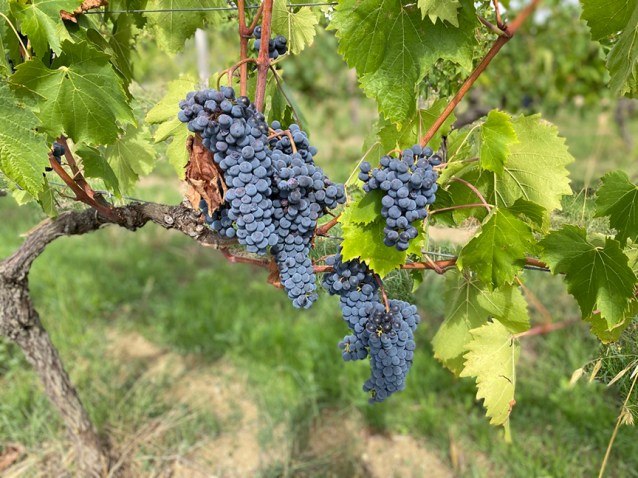 I visited Serena and the historic Montefili estate in September of last year, just a few days before the Sangiovese harvest was to begin there. I was blown away by the farm, the highest in Panzano. The village is Italy’s first organic biome: every farmer in the commune now farms there organically.
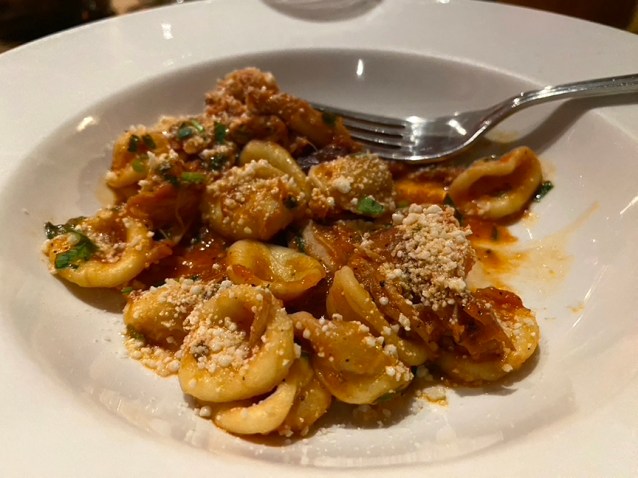 Last week when I was in town, my client and I dined at Nicola’s new and impossible-to-get-in Manhattan restaurant, Nonna Dora’s Pasta Bar, where he opened his most coveted expression of Sangiovese for us, the 2018 Vigna Vecchia — 100 percent Sangiovese made from vines that are more than 40 years old, raised in galestro and alberese-rich soils. Remember the post I did a few weeks ago,
 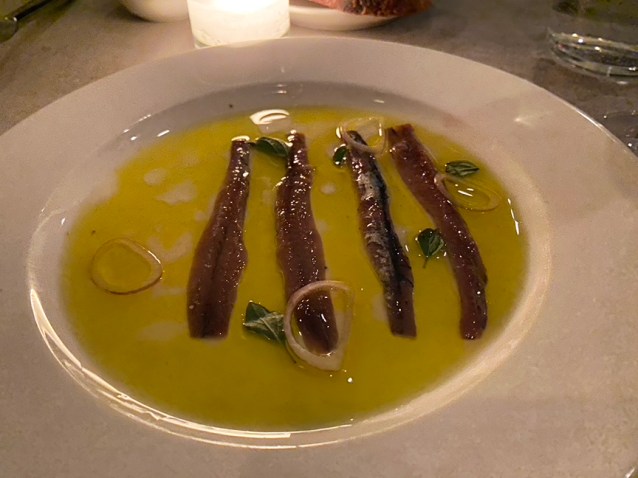 One of the most exciting stops last week during my time in New York with my client Michele Marsiaj, owner of the Amistà winery in Nizza, was at
 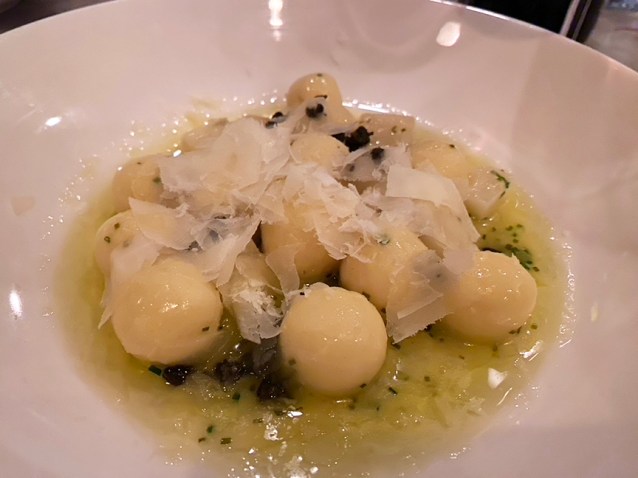 Those are the wonderfully ethereal “Parsian” gnocchi, which were hard not to inhale. Another over-the-top winner dish that we all thoroughly enjoyed.
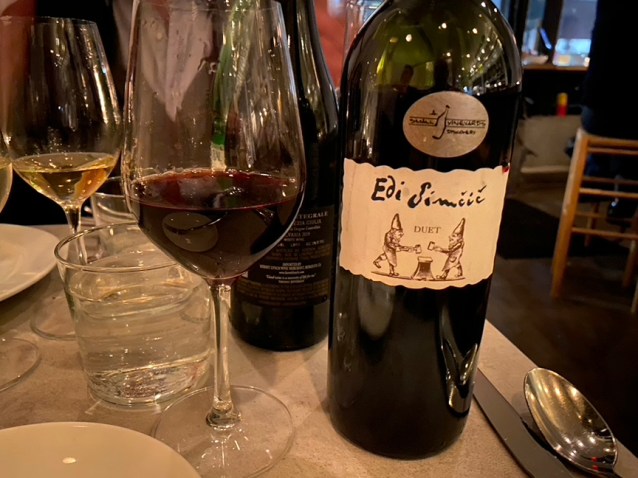 We were floored by how good it was.
 Do Bianchi