Where the terroir ends… and the mythologies begin.

Nearly every time I open and pour a wine for a wine lover or wine trade member, I’m reminded of Roland Barthes’ seminal 1957 book Mythologies. In particular, the much-cited essay “Wine and Milk” wherein he explores wine’s status as a “totem drink” and he examines its “varied mythology, which is not embarrassed by contradiction.”

I’m also reminded of a favorite poetry collection from childhood, Where the Sidewalk Ends by Shel Silverstein.

The title poem, although it has no relation to wine, provides a powerful image — at least in my mind — for understanding where terroir ends.

As in the ne plus ultra that recurs in the epic poems of Homer, Virgil, and Dante, the place where the sidewalk ends or where the Strait of Gibraltar represents the demarcation between the knowable and unknowable world.

That same allegory can be applied to the notion of terroir. For many observers and participants in the wine trade, both professional and laical, there often seems to be a ne plus ultra beyond the canonical boundaries of terroir.

But where do terroirs end and begin and where do mythologies consume and re-elaborate those terroirs?

Oh that mystical French lemma terroir! I’ll define it here as the unique confluence of climate, soil, geography, topography, exposure, human tradition and condition that shape agricultural products through the observable legacy of their influence in aroma, flavor, and texture, or lack thereof.

But terroir is also our historical and spontaneous perceptions of that same terroir, whether informed or misguided. As St. Augustine might have said, terroir does not exist without previous and future experience. Nor can it exist without mythology.

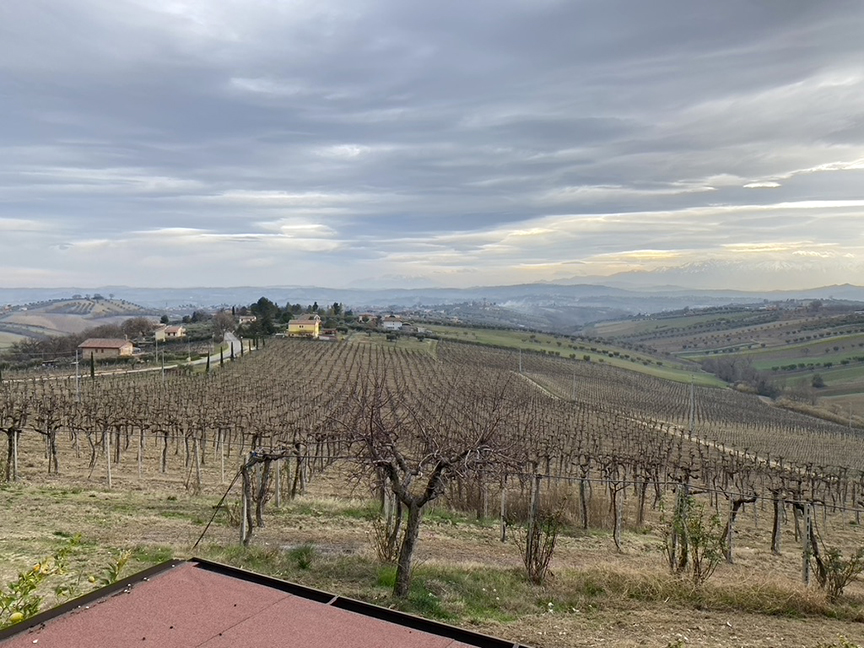
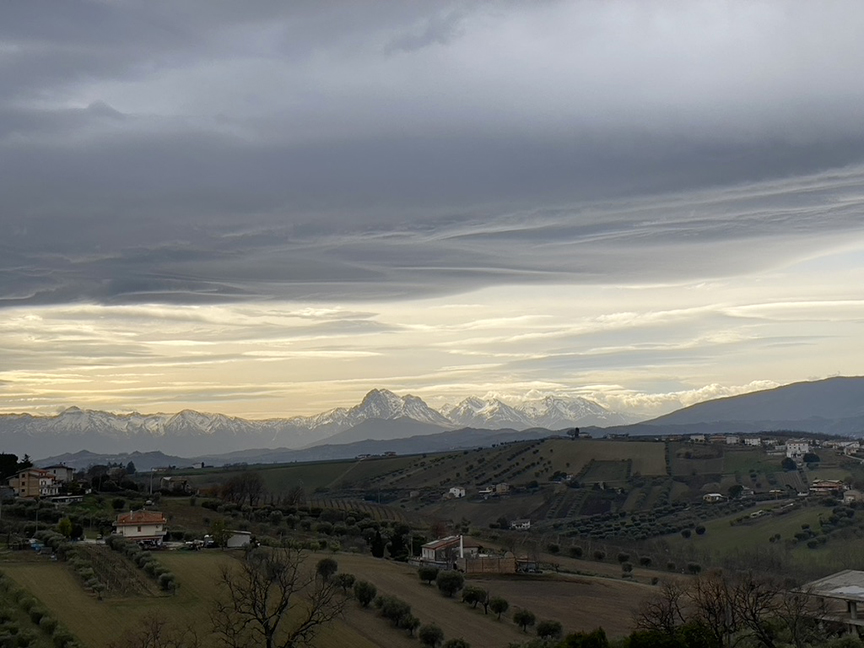
In February of this year, I stood at the edge of one of Abruzzo’s most famous farms in Controguerra. That’s a view of the Zanna vineyard at Illuminati. Note the tendone training and the (unseen) blue marl subsoils that in part define the terroir.

Few Americans make it to Illuminati. But throngs visit one of Illuminati’s contiguous neighbors. They won’t even notice any of the surrounding farms. Where do terroirs end? And where do mythologies begin?

Slow Wine, together again. Notes from my first date on the tour.

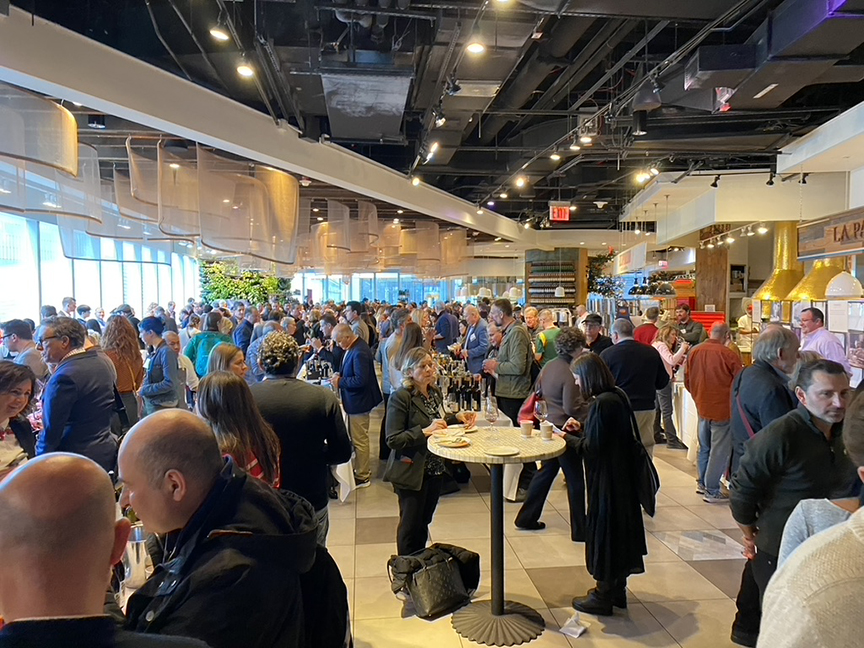
So much fun for me to get to pour at this year’s Slow Wine Guide U.S. tour yesterday in NYC!

I worked on the guide for three years as part of editor-in-chief Giancarlo Gariglio’s project to expand the guide to include coverage of U.S. wine. It was a great experience and he and I became close friends along the way. It was wonderful to see so many of my colleagues and I’m looking forward to presenting my Abruzzo seminar tomorrow in Austin and then next Monday in Denver.

There’s also an Abruzzo trade/media dinner that I’ll be presenting in Denver. There are still a few spots available. Hit me up if you’d like to attend.

The Italian wine world may be in crisis. But you wouldn’t have known that gauging the size and enthusiasm of the crowd yesterday!

It was also lovely to catch up with NYC wine friends I missed when I was in town a few weeks prior.

New York City has changed a lot over the last few years. And the restaurant and wine scene there has been impacted by industry trends (higher costs, waning interest, staffing shortages, etc.).

But for those who long for the “pre-Giuliani” City with a capital C, I highly recommend Keen’s steakhouse in midtown. It still retains that “old New York” feel and the food and wine list are top. I actually had a proper dinner with a bandmate there a few weeks ago. And yesterday, I stopped in the bar for a dry-aged steak sandwich before I got on the train to the airport. Delicious.

Being on the road with Slow Wine reminds me of touring with the band back in the day. Wish me luck and wish me speed as I light out for Austin this afternoon. We’ll be doing a ‘cue and honky tonk crawl tonight. Hit me up.

Houston folks:

I’ll be leading a complimentary tasting of two wines and a vermouth from the new Nizza DOCG at Vinsanto on Wednesday, March 27.

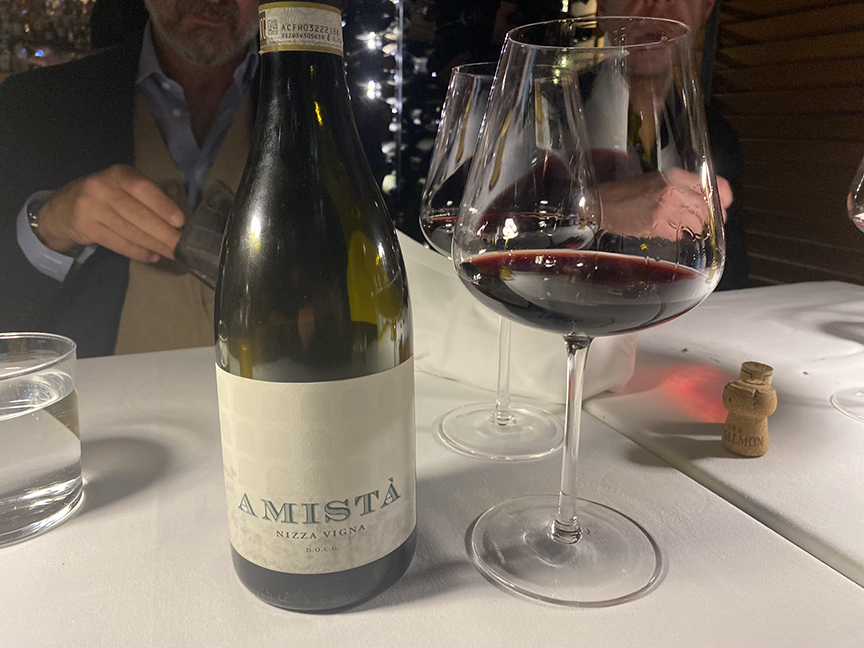
The winery I’ll be pouring and talking about is my client Amistà. But I’ll also be talking in general about Nizza and why it’s an appellation that you’re going to be hearing more about in coming years. 

Riccardo has graciously made 12 spots available for this complimentary tasting. And the classic Nizza by Amistà will be available for purchase that evening with a discount. 

And following our 45-minute tasting, we’ll all just hang out and open some bottles together. I know Riccardo is excited to host you. 

Amistà Nizza Tasting
Wednesday, March 27
Vinsanto (Memorial Green)
7:00 p.m.
complimentary

Please send me an email or DM me to reserve your spot.

I know it’s going to be a super fun evening and I look forward to reconnecting with you! Thanks, as always, for the support. Hope to see you then.

Thank you Hue Society for coming to Houston!

Tracie and I were thrilled to welcome Hue Society to Southeast Texas this week for the launch of their Houston chapter.

What a great night! Thanks to everyone who came out and made it an evening to remember. And heartfelt thanks to Giacomo Butera of Gruppo Butera here in Texas and Alicia Lini of Lini 910 in Emilia who donated wines for the event.

Please consider giving to the Hue Society fundraiser to bring its members to Italy for Vinitaly next month. They will be launching the new Verona chapter at the fair. Click here to read more about the organization.

Special thanks also to Carissa Stephens of Pur Noire for organizing and sharing the awesome photo!

Taste with me: New York (3/19), Austin (3/21), Denver (3/25), Houston (3/27), Nizza (4/10-12).

Please consider giving to the Hue Society fund raiser to bring its members to Italy for Vinitaly next month. They are opening new chapters in Verona and here in Houston, where Tracie and I are hosting a party for their founder Tahiirah tomorrow. DM me for details.

The season for tasting is here!

Please join me next week and the following for the Abruzzo seminars I’ll be giving at three stops along the Slow Wine Tour in New York (3/19), Austin (3/21), and Denver (3/25). I’ll also be pouring Abruzzo throughout the walk-around tasting at each event and in Denver, there is still availability for an Abruzzo dinner that I am presenting that evening. See this link for registration info. DM me if you want to come to the dinner.

Just added: on Wednesday, March 27, I’ll be hosting a tasting for my client Amistà, producer of great Nizza, at Vinsanto on Houston’s westside. I don’t have details yet but it will be open and free to all. It’s going to be a great night and I’ll be hanging at the bar afterward. Details to follow please DM me if you’d like to attend.

On the horizon… The week leading up to Vinitaly, I’ll be staying at the Amistà farmhouse in Nizza April 10-12. If you are heading to Langhe before the fair or if you just want to check out the Bricco di Nizza (where some of Italy’s greatest wines are raised), please hit me up. I’ll just be hanging out and pouring vermouth and wine for anyone who wants to stop by.

And I’ll be at Vinitaly this year all four days. Let’s connect in Verona and TASTE!

That’s me, above, presenting a Prosecco seminar at Taste of Italy in Houston last month. I feel so blessed to get to do what I do for a living. Thanks to everyone for the support.

Lucciola in NYC continues to wow me.

Please consider giving to the Hue Society fund raiser to bring its members to Italy for Vinitaly next month. They are opening new chapters in Verona and Houston, where Tracie and I will be hosting a party for their founder Tahiirah and team next week. DM me for details.

Writing on the fly this morning as I pack up after a week in New York City and head back to Texas.

But just had to share these pics from another incredible meal at Lucciola on the Upper West Side (right by where I used to live).

It was my third time at the restaurant and once again it just floored me with how good it was and how entertaining and engaging on so many levels.

The restaurant has become the unofficial NYC outpost of Champagne house Billecart-Salmon and they offer three different wines by the glass.

You can’t eat at Lucciola without the mandatory pinsa (flatbread) with mortadella and aged Parmigiano Reggiano.

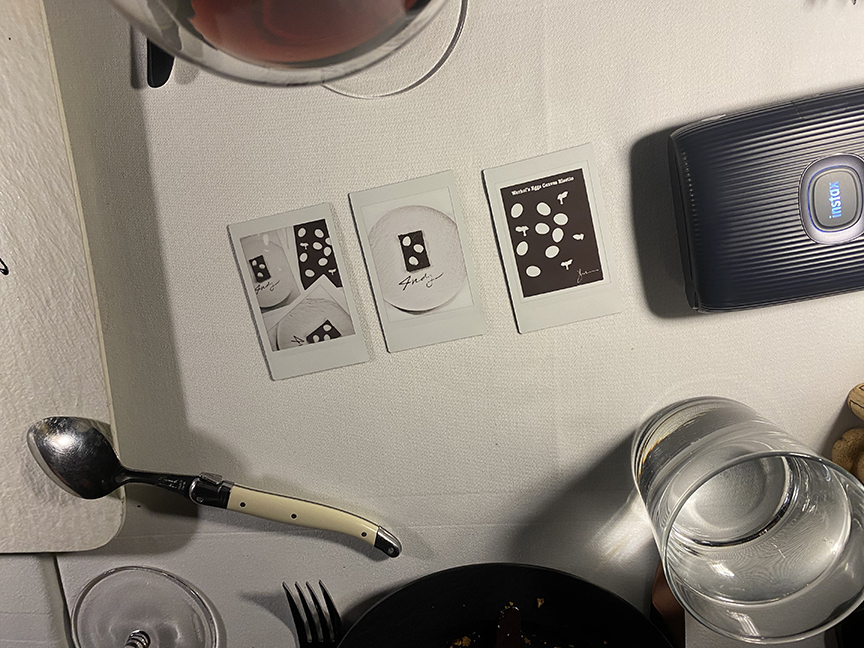
Squid ink risotto topped with poached quail eggs, an homage to Andy Warhol’s 1982 “Eggs.” This was one of the best things I’ve eaten all year.

As Chef Michele Massari was preparting the dish, he bluetoothed Polaroids to a printer on our table. How brilliant and fun is that? I loved every minute and bite and the media experience made the dish even more thrilling.

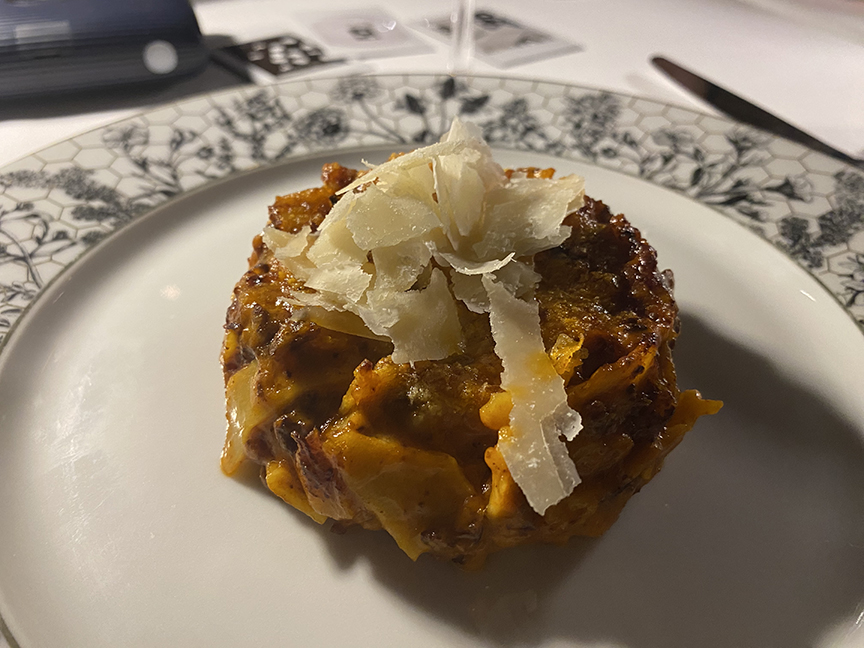
Pasticcio made with maltagliati — cuttings from the kitchen’s pasta. This dish tasted like “going home.” Emilian comfort food. So good.

We were there because Lucciola is a big fan of Amistà Nizza, a winery I’ve been working with for the last year or so. The wines are extraordinary. Luca D’Attoma is the winemaker. Great people, superlative wines.

That’s my friend and Amistà owner Michele Marsiaj (right), who met me for a few days of dining in the city (we even spotted Rita Moreno at the restaurant from the night before!).

And that’s Chef Michele Massari. I think that he is one of the greatest chefs of our generation and one of the most creative and compelling interpreters of Emilian cuisine today.

Thank you Michele for a wonderful dinner and thank you chef for an unforgettable dinner!

Now it’s time to get my butt back to Houston. Wish me luck and wish me speed. Thanks for being here. I feel blessed to get to do what I love for a living.

Great article on Abruzzo by Eric Asimov for NY Times. Stay tuned for more on Abruzzo here.

Above: a view from the Controguerra appellation in northernmost Abruzzo, looking westward. Photo was taken last month when I was on the ground there.

Please check out Eric Asimov’s wonderful article on the wines of Abruzzo for the Times, published last week.

It was a thrill to see a major wine writer like him write about the region without eliding so many of the great producers there.

As Eric notes in the piece, there are just a handful of wineries that most wine professionals know. Historically, my colleagues and I — guilty as charged — have often focused on those “stars” without taking the time to dig even a little bit deeper.

I’ve been working this year as the Abruzzo growers’ association official ambassador to the U.S. I’ve been blown away by the quality of the wines and the talent and vision of the people I’ve been tasting and meeting across this pristine and breathtaking region (just have a look at the photo above).

I can’t recommend Eric’s column enough and I encourage you to look beyond.

And for those amenable to following along here, I’ll be posting about my experiences there — recent and future. I believe a lot of people are going to be surprised by what I’ve discovered.

Writing in a hurry this morning on my way back to New York City. Wish me luck and wish me speed. And don’t miss Eric’s article!

Graziano Market in Coral Gables (Miami) is a dream come true for me.

Argentine comfort food and a deep-reaching retail offering of top Italian wines, not to mention grower Champagne and French classics?

For me, it’s a dream come true known as Graziano Market in Coral Gables, that swank, stone’s-throw-from-the-sea neighborhood in Miami where there’s a vibrant main street lined with shops and restaurants.

Graziano’s lies just off the main drag but it was already filling up early on Wednesday night when I visited for a choripan sandwich and a bottle of my client Amistà’s excellent Nizza.

Man, if I lived in Miami, I’d be here once a week. I LOVE this place.

The grilled sausage was gently spicy, with delicately textured filling. The ciabatta, lightly schmeared with aioli on one side and vinaigrette on the other, was one of the best breads I’ve eaten this year on either side of the Atlantic — yes, it was that good.

And of course, the chimichurri was served on the side to be distributed ad libitum.

I ordered my sandwich with a side of ensalada rusa, akin to the Piedmontese insalata russa or Russian salad (Russians I know call it “imperial salad”).

And that was the other thing that had me swooning: all the Italian lineage dishes that are today part of classic Argentinian cuisine, offered up in style at Graziano.

I can’t recommend it enough.

I was in town to pour Amistà at the James Suckling event. That’s James in the photo. He does such a great job of making himself available to the producers at these events. There was a “receiving” line nearly 30 feet long to visit with him. And he stayed until every last guest or presenter got their selfie. Chapeau bas, James!

It was a great if quick trip to Miami where I ate way too much, including a pan con tortilla this morning. Wow, so, so good.

Now it’s time to get my butt on a plane and back to Houston where Tra and I have a super evening planned: we are guests at the Mercury Chamber Orchestra Gala where I’m an auction item.

Wish me luck and wish me speed. And heartfelt thanks to everyone who came out to taste with me yesterday. Great event!

“I have to delete two SKUs before I can add a new one.” The wine industry’s post pandemic reset.

Above: Prosecco discounted 40 percent at a roadside retailer in Italy. Photo taken earlier this month.

“I have to delete two SKUs before I can add a new one,” said an Italian buyer for one of the largest wine retailers and distributors in the country.

He was part of a panel of leading food and wine buyers and decision-makers who were asked to address a group of visiting Italian food and wine producers. They were in Houston for the Taste of Italy trade fair, an event organized each year by the Italy-America Chamber of Commerce. (The chamber is my longtime client and I was the panel moderator.)

The theme of the conference was how to make your products relevant in the U.S. market during a time of industry crisis.

The question I posed to the panelists was how does a producer get your attention when they are pitching a product?

If you want to get in front of me, said the buyer, you need to know the market and you need to be willing to help me do my job by visiting frequently.

His words were echoed by his counterpart at a mid-sized Italian-focused food and wine importer.

You need to have all your paperwork in order, she said, noting that the time of pitching products to importers without prior FDA approval is over. She pointed out that FDA regulations have changed radically and the new requirements will go into effect in under a month’s time.

This news took a number of producers by surprise. (I attended a seminar on the new regulations in Dallas late last year. The new requirements are broad and aggressive in scope. There will be a grace period, I was told. But the new normal is going to be a harsh wake-up call for many industry veterans.)

All the panelists agreed that marketing and boots on the ground are going to be key in a saturated market that is becoming increasingly competitive because of higher costs and diminished demand.

As one of the panelists noted, it’s time to snap to!

*****

Thank you to everyone who attended our seminars and walk-around tasting yesterday. I had a blast presenting and moderating and I feel blessed to be part of such a vibrant food and wine community. Thanks to the chamber for making me part of such a great event each year.

Now, let’s roll up our sleeves and get to work!

Houston, please help Tracie and me as we welcome Tahiirah Habibi and Hue Society to our city March 13.

Hue SocietyJust in case you have been living under a wine industry rock and haven’t heard about The Hue Society and its founder Tahiirah Habibi, check out this profile of Tahiirah and her game-changing work, published this week by Imbibe.

Houstonians, Tracie and I are thrilled to invite you to meet Tahiirah and learn more about her work at two events we are organizing here.

They are coming to our city for the launch of the new Houston chapter of The Hue Society.

On Wednesday, March 13, Tracie and I will be hosting a party in our home for Tahiirah and The Hue Society national program manager Natasha Hall.

Please DM or email me for details.

And let’s please show The Hue Society what Houston is made of! I hope you can join us.

“No to insect flour. No to lab-grown meat.” EU farmers protest big agro policies. But there’s more to the story…

As a wine blogger rode across central and northern Italy the second week of February, drivers could spot protest signs from the freeway:

“No to insect flour. No to lab-grown meat.”

These were just two of the urgent slogans of opposition that appeared repeatedly along the autostrada.

Flour made from bugs and meat manufactured in a lab make for eye-catching calls to action.

But the “major tractor protests” that are being staged across Europe right now are a reflection of deep-seated problems in the way the EU administers subsidies and creates regulations for health, fairness, and — imagined — sustainability.

This week, the Marche grape growers association Terroir Marche published this post on their social media where one of its members, winemaker Giacomo Rossi of Col di Corte, describes the issues European farmers, including grape growers, are facing.

“We are farmers,” he writes, “and that’s why we stand with the farmers. We stand with everyone who practices their sacrosanct right to protest.”

I’ve translated a few salient passages from their manifesto. I hope it will help people to contextualize what’s going on with EU farmers right now and why they are protesting.

As Giacomo points out, it’s not just insect flour and lab-grown meat that has European farmers worried.

To give you a sense of the scale of the protests, the Seattle Times just published the following title earlier this morning: “Thousands of farmers advance on Madrid for a major tractor protest over EU policies.”

*****

When it comes to the European [Economic] Community [EEC], the [farmers’] true struggle is to get the EEC to simplify the bureaucracy and to revise the laws that individual countries pass in order to comply with EEC directives. There is no association of farmers that opposes these laws because to do so would be counter to their reason to exist and would reduce their profit. They live off of and thrive thanks to the senseless bureaucratization [of agriculture]…

The never-ending call to increase production derives principally from the poor management of the enormous amount of subsidies that the EEC doles out to farms. These resources tend to burden small and medium-sized farms with debt and disproportionate aid. It also compels them to spend on prohibitively expensive farming products that were created and are sold by just a handful of the big multinationals…

There is a complete disconnect between the reality of those who speculate [financially] on farmers… The banks and investment groups place bets on “weather derivatives”… It’s absurd to categorize food [products] as common commodities.