
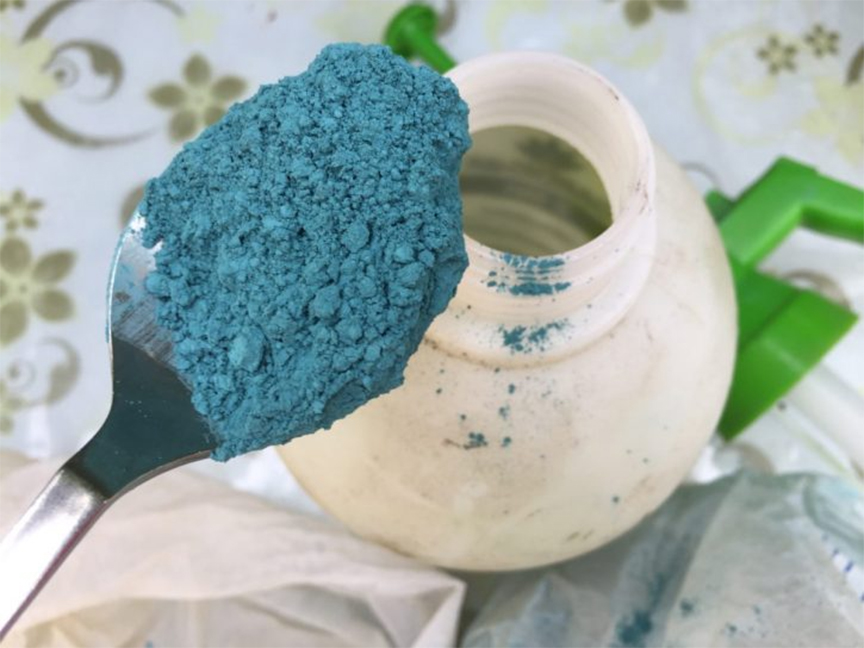
 As the wine industry continues to face crises on both sides of the Atlantic, few trade observers may have noticed the big news to arrive from Île-de-France last week: France, the second-largest producer of wine in Europe plans to prohibit nearly all copper-based fungicides.
The best reporting I’ve found so far is this post by Vitisphere (French). See also this English-language report on Drinks Business.
Since the mid-19th century, copper has been used as a preemptive protection against peronospora, a type of downy mildew that widely impacts grape growing in areas with abundant humidity. Copper spray is allowed in organic certification. As climatic patterns have changed in the last 30 years, organic growers have increasingly relied on copper sprays (and sulfur sprays, also allowed) to protect their vines.
As a result, the amount of copper in the water table in certain areas has threatened cattle farmers who depend on natural grasses for feeding their cows and pigs. In some cases, local communities’ drinking water has been compromised.
In 2018, the EU adopted strict regulation of copper and severely limited the amount that could be used over the course of the following seven years. Those restrictions are now up for review, although the EU has yet to reveal what the new policy will be.
France has now taken the lead by banning such products, which can be highly toxic for humans and cattle.
The majority of growers relying on copper is located in the south of France and the north of Italy. As rainfall in those areas becomes more and more concentrated and violent, copper — the “organic” fungicide — has become a sine qua non of organic farming.
The new ban could represent an existential threat for organic growers in certain parts of Europe. Italians are watching their counterparts on the other side of the Alps anxiously.
 Do Bianchi