
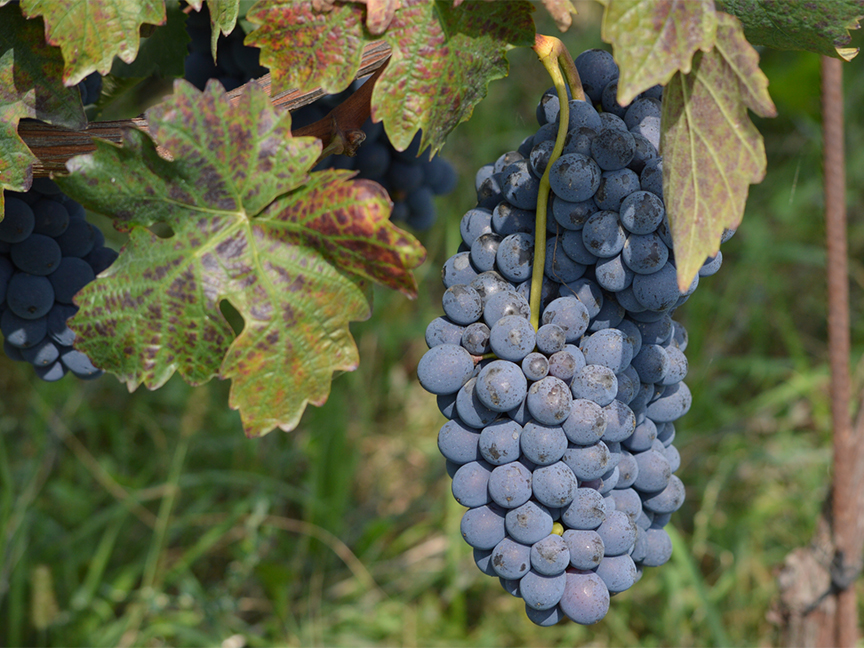
 If I had a 1,000 lira note for every time someone quotes the “first-ever mention of Nebbiolo” without ever having read the original text beyond an off-hand paraphrasis in another writer’s periphrasis.
The following passage comes from Pietro de’ Crescenzi’s early 14th-century Latin treatise on agriculture, a work scholars agree is the most important book on Medieval farming practices. Crescenzi came from a noble Bolognese family and worked as an itinerant lawyer. His career took him to different parts of Italy where he observed farming and viticulture. I’m currently completing a translation for a university press.
“And there is another species of black grape that is called Nubiolum. It is delicious to eat. And it is wonderfully juicy and has slightly long berries. It does best in nutrient-rich soil that has been well manured. It does not perform well without direct sunlight and it buds early. It makes for excellent age-worthy, especially strong wine. Its berries should not be left on the clusters for more than one or two days. And this grape is highly prized in the city of Asti and surroundings.”
Thanks to a CMO grant, I’ve also been working on a translation of a work on the Tenuta Carretta winery for my friend Giovanni Minetti, the winery’s CEO.
The author offers a deep dive into feudal Piedmont in the 14th century, including a compelling narrative of the city of Asti’s power over the region at the time. Crescenzi worked for a time at the Asti court and he drank wines from “Nubiolum” there.
The Carretta translation has been extremely useful in preparing my critical apparatus for my Crescenzi book. Ultimately, the background provided will also be meaningful in an essay I’ve been writing for nearly a decade now: notes on wine in Boccaccio and in particular the tale of the Marchioness of Monferrato (where Asti is located).
Stay tuned and thank you Giovanni!
 Do Bianchi