
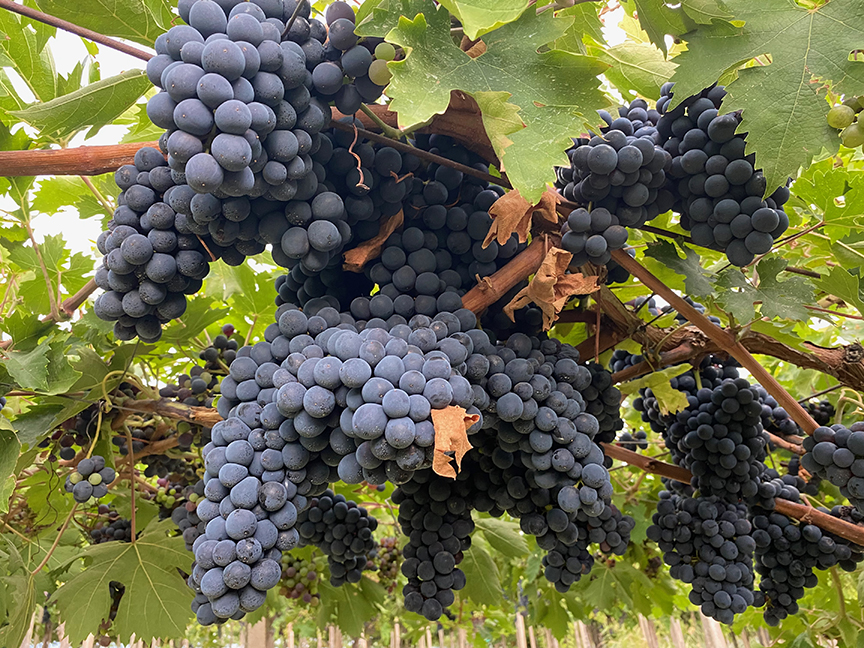
 “The common anthocyanidins found in grapes are cyanidin, delphinidin, peonidin, petunidin, and malvidin,” write the editors of the U.C. Davis Waterhouse Laboratory’s blog. “In red grape varieties, Malvidin-3-glucoside is the most populous representing about 40% of the anthocyanins and makes up the majority of the red pigments that are acylated.”
The word anthocyanin comes from the Greek antho- for flower and cyan- for blue. It’s pronounced: antho-SIGH-a-nin.
Malvidin, from the Latin malva for mallow, is what makes red wines red.
The Montepulciano grape, which is used to make Montepulciano d’Abruzzo and Cerasuolo d’Abruzzo, is one of the varieties with the highest levels of malvidin.
As a result, during maceration, Abruzzo winemakers can obtain the color they want without “over-extracting” the wine. In other words, they can achieve the rich color for which Montepulciano d’Abruzzo and Cerasuolo d’Abruzzo are so famous for without making the wines excessively tannic and bitter. It’s part of the magic of this extraordinary grape.
On Tuesday, October 15, I’ll be leading a trade dinner hosted by the Abruzzo consortium at Rossoblu. If you work in any capacity in the food and beverage industry, you are invited! Please send me an email (jparzen@gmail.com) to snag your spot. It’s completely free to any and all trade who would like to attend.
And the next night, Wednesday, October 16, I’ll be presenting a food and wine lover dinner, again featuring the wines and cuisine of Abruzzo.
Here’s the link to sign up. The dinner cost is $95, the wine pairing is $45. It’s a great deal and we’ll be doing a retail offering at the event as well.
I hope to see you in LA! Any support from trade for the Tuesday night dinner is greatly appreciated. Thanks to everyone. Happy new year and have a great weekend!
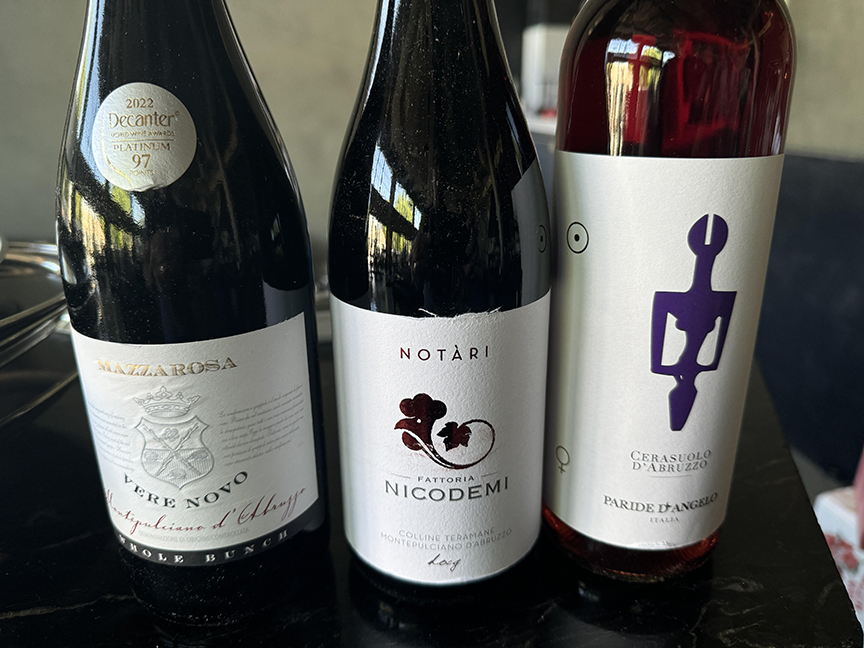
Here’s a little preview of some of the wines we’ll be pouring at the trade event. Thanks for the support and solidarity!
 Do Bianchi