Wine writer Ray Isle and Michelin guide are coming to Houston in a few weeks. And wait, there’s more!

I am so bummed to miss my longtime friend, the epic wine writer Ray Isle, when he comes to Houston week after next for a couple of events promoting his book.

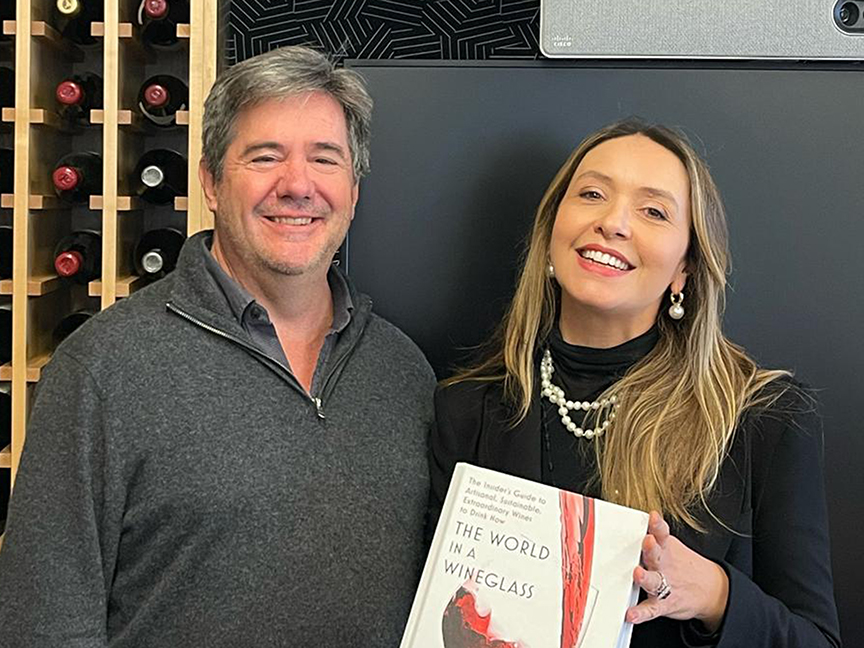
That’s Ray, above, executive wine editor for Food & Wine, and Alicia Lini when we all connected in NYC at the beginning of this year.

Man, I’ve known Ray since we were first coming up in the wine writing business. We were both contributing at the time to Gastronomica. And we both shared a deep interest in literature that overlapped with food and wine media. What a time it was to be in the city back then! The culinary hegemony was shifting from French to Italian and the global wine renaissance was taking shape more swiftly than any could document.

Ray’s been a great friend to me and I was thrilled to be able to give him a hand with a translation of Luigi Veronelli he needed for the opening of his book The World in a Wine Glass. (Thanks for the shout-out, Ray!)

Ray is one of coolest and chillest high-profile wine writers I know. He always makes time and space for everyone around him and he always approaches our shared subject matter with élan and grace. I highly recommend him and the book to you!

I’m so bummed I’ll be missing him: he’s doing a dinner at Marigold on Wednesday, November 13, and a reading and tasting at Stella’s on Thurs., Nov. 14. Look out for a link on the Marigold site for the dinner, email postoakhotel@nextjenpr.com to reserve for the reading and tasting.

Ray will be coming the same week that Michelin is announcing its rankings for Houston! The whole town is abuzz with speculations and predictions these days. Houston, which also happens to be Ray’s hometown, has been waiting for this moment for more than a decade. It’s a biggie.

And me? Ray won’t be here yet, but that week I’m…

– playing two sets at Vinsanto in Houston with Katie White on Sun., Nov. 10, from 4-6 p.m.
– presenting Niklas Foradori of Hofstätter at Vinsanto on Mon., Nov. 11, from 7-8:30 p.m.
– presenting Niklas again at 3 Parks in Atlanta on Tues., Nov. 12, from 5:30-7 p.m.

Please come out for the music, the wine, the people, and the book!
Jam with me, taste with me: Houston, Tulsa, LA, NYC and beyond. And please don’t miss our tastings with Niklas Foradori in Texas and Georgia!

My goodness, so much stuff going on!

I’m hoping you’ll join me for any and all of the below. Thank you for your support and solidarity!

Davanti, Houston
Monday, October 28

There are two spots available for our Davanti wine dinner on Monday night. It sold out at 12 so we added a few more. Please email me at jparzen@gmail.com if you’d like to join. This will be super fun and it’s a great group. Tra will be there, too. 7:00 p.m. start time.

Vinsanto, Houston
Sunday, November 10

Katie White and I will be playing two sets of music starting at 4 p.m. There’s no cover and Riccardo will be pouring a discounted btg and serving pinsa. Last gig was over the top. Bring your axe and sit in! The girls and Tra will be there as well.

Vinsanto, Houston
Monday, November 11

I’ll be presenting a special tasting and talk with Niklas Foradori, winemaker at J. Hofstätter in Alto Adige. I’ve been running a blog for the winery’s importer and we’ve been having a blast. Niklas is a wonderful speaker. The event is free and open to all. This is one not to miss. 7:00 p.m. start time.

3 Parks, Atlanta
Tuesday, November 12

Niklas and I will be taking the show on the road as we visit one of my favorite cities in America. I’m so excited to be working with Sarah Pierre, owner of 3 Parks. And we should have some older vintages of the single-vineyard wines to taste at this event. Free and open to all. 5:30 p.m. start time.

Prossimo Ristorante, Tulsa
Monday, November 18

I’ll be giving a talk and leading a tasting on Vermouth di Torino. This is a fun one. We had a blast with this in El Paso and I’m geeked to dive back in. When was the last time you tasted 12 Vermouth di Torino side-by-side? This is another one not to miss and I’m excited to explore Tulsa. Here’s the link to register.

NYC
Wednesday-Thursday, November 20-21

I’ll be doing market work and pouring Amistà Nizza and Vermouth di Torino for any interested tasters! Hit me up if you’d like to taste.

Rossoblu, Los Angeles
Wednesday, December 18

I’m returning to Rossoblu for the last our last wine dinner of the year. Details forthcoming.

Photo @jeffreytkchan.

A Castelli Romani revival begins with Jacobini.

The drive up to the historic town of Genzano in the heart of the Castelli Romani hills is a key to understanding the unique topography and geology of this storied wine region.

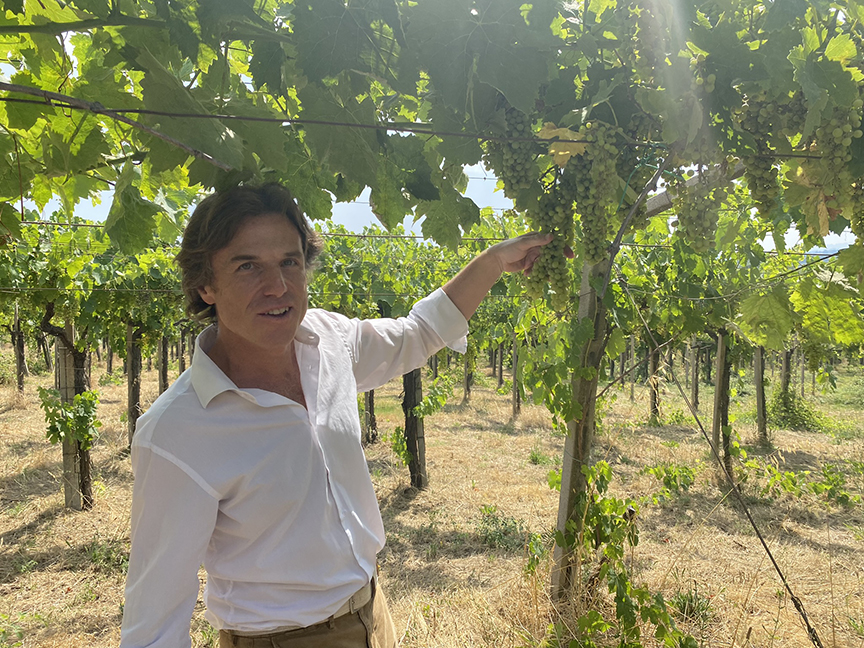
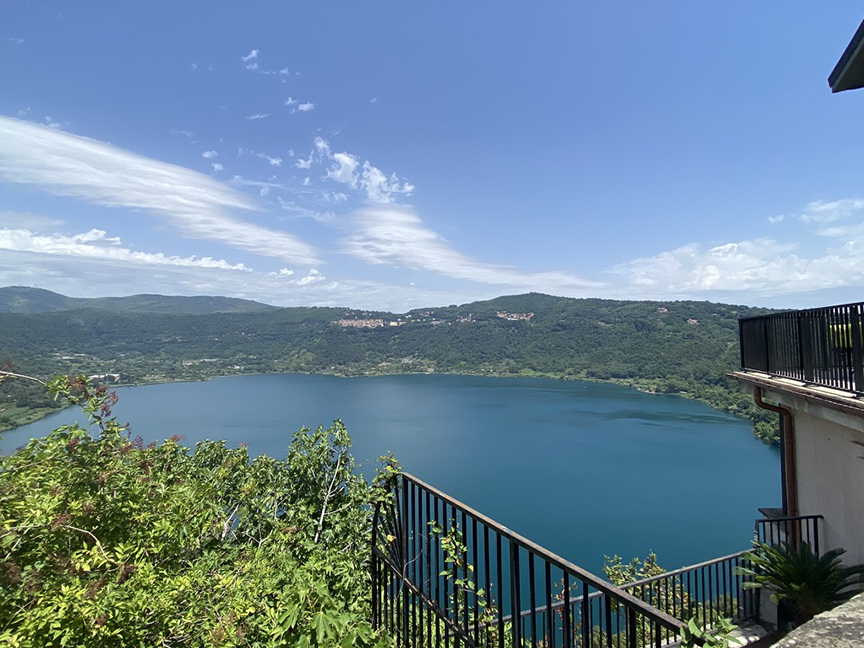
That’s Alessandro Jacobini, above, scion of one of the Castelli’s most famous families. He and his wife Nina, an American, live in his family’s historic palazzo in the center of town. It’s just a stone’s throw from Lake Nemi, below.

Like its bigger brother Lake Albano just to its north, Lake Nemi is an ancient volcanic crater. Not only did ancient eruptions in the Castelli create these two magnificent, resplendent bodies of water. They also provided the volcanic ash — rich in organic material — that would be scattered for miles and miles to the south and to the west.

By the time of the Renaissance, the Castelli were already widely known for their superior wines — grown in volcanic soils.

The Jacobini were among the founders of the now legendary Fontana di Papa cooperative, which, at its peak, counted 400 grower-members. Named after a fountain built by 15th-century Pope Innocent VIII, Fontana di Papa produced some of Italy’s most famous wines in the second half of the 20th century.

Today, the Jacobini are no longer part of the cooperative. They are producing wines under their own label and they are part of a greater movement, including a newly revived Fontana di Papa, to re-establish the Castelli as a top wine destination.

I can report that the Castelli hills retain the same magic and even glamor that they did for Roman visitors in the 50s and 60s. I’ve been giddily surprised to learn how many songs were dedicated to the pleasures of the Castelli in that period. My favorite is the one by Gabriella Ferri (check out this citizen video for the nostalgic images).

Alessandro’s wife Nina runs a wonderful blog devoted to the Castelli, a great resource.

And if the trip weren’t worth it for the views and the wines, the porchetta is the best you’ll ever have.

An urban winery in Rome finds success in America despite a challenging market. What is its secret?

One of the most memorable lines ever uttered at an Italian food and wine trade conference still sticks with me.

The theme of the panel was “how to make your product relevant in the U.S. market and how to get on buyers’ radar.”

The speaker is a well-known and widely respected buyer from a legacy wine shop and gourmet food market in northern California.

The number one thing you need to do, he told the Italian exhibitors in Houston that day, is to “make a good product.”

You might be surprised how many people expect to sell their wines in the U.S. even when the wines have little appeal for the target customer.

When I made my way to visit a wine grower in Rome’s urban wine country, I already knew that her product was good. I had tasted at the Taste of Italy trade fair in Houston where I consult with the Italy-America Chamber of Commerce.

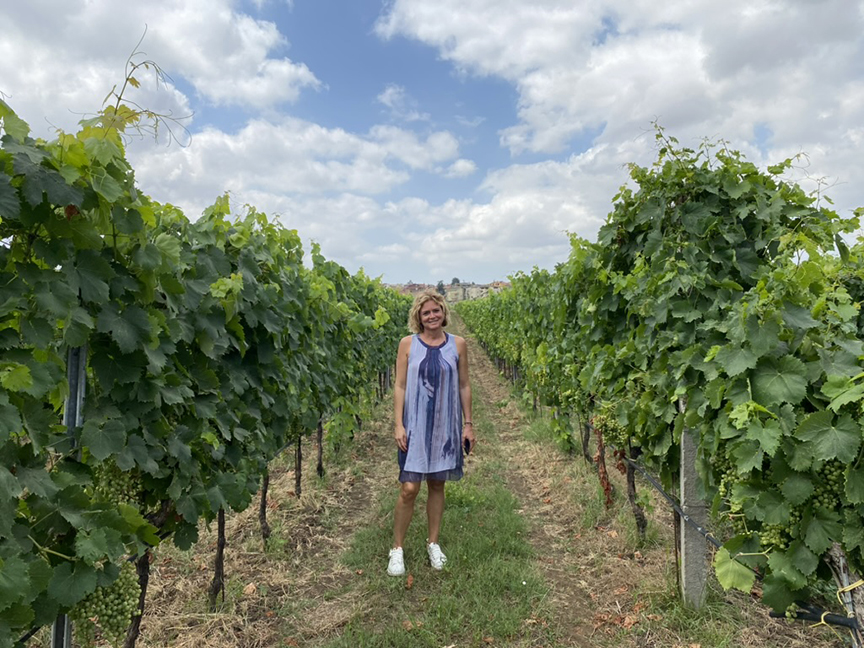
Silvana Lulli, above, grows wine in richly volcanic soils just outside of Rome along the ancient Appian Way at her family’s winery Parvus Ager.

I asked her what made the difference in getting her wines to the U.S. Here’s what she wrote me (translation mine).

    It certainly wasn’t easy. Having good wine isn’t enough. You need to know the right people to accompany you on this “journey.” But I believe that the thing that really makes the difference is being willing to put yourself into play on the ground. Today, people need to see the person who is behind a product that is produced thousands of miles away. For them, meeting me is almost like being able to bring them to my vineyard and my winery.

I really loved her fresh, bright, salty, citrusy Vermentino, one of her best sellers and one of the wines that is on its way to the U.S. now.

You can see the city in the background of the photo above. Her family’s winery is literally surrounded by urbanity. She also has access to one of the most beautiful stretches of the Appian Way. During the summer, she does an evening light show tour of her vineyards and the old road.

Look out for her wines coming to a shop near you soon! Congrats Silvana on your success! Well deserved!

I am voting for Kamala Harris. Here’s why. Please vote!

Our household supports Kamala Harris for president.

We believe she is the most qualified person to lead our country for the next four years and beyond.

Kamala Harris is also the person best suited — thanks to her character and experience — to forge a new era of political partnership with Republicans. We believe that character matters.

*****

If elected, Donald Trump would continue his quest to diminish the role of the government in regulating business and enforcing environmental protections.

Kamala Harris will protect the institutions that safeguard Americans.

Donald Trump’s economic policies would enrich the rich alone.

Kamala Harris will make America a better place to live for a greater number of Americans.

Donald Trump would continue to vacillate in his support for reproductive rights.

Kamala Harris is committed to bolstering and broadening those rights.

Donald Trump would, at best, attenuate our support for Ukraine.

Kamala Harris will continue our unflinching support.

With Donald Trump, I believe there will be little chance for a two-state solution for Palestinians and Israelis.

Kamala Harris is the right person to craft a new U.S. approach to achieving long-term peace.

Donald Trump believes that immigration is the greatest problem our nation currently faces.

I believe that immigration is a vital element in our country’s long-term prosperity. And I believe in the American dream that any citizen of the world should feel welcome here and be given a chance to achieve that dream.

All human beings, no matter their national or economic status, should be treated with dignity and compassion. This is the ethos of the Kamala Harris ticket.

That said, Democrats must stop denigrating Trump supporters. The menacing Trump supporter is out there, for sure, spouting misinformation and hateful rhetoric. But the overwhelming majority of them are people just like me, trying to figure out their place in the world and to do what’s best for their families. I see that every day during my travels in America.

I am voting for Kamala Harris. She is the person best prepared to work for all Americans.

The story of how Chef Steve and I met in Italy so many years ago. THANK YOU Dina and Steve for such an amazing Abruzzo dinner!

Friends are like good wine
And I’ve had the best…

So drink up.

Man, what a great night last night at Rossoblu where I presented a packed Abruzzo consortium dinner!

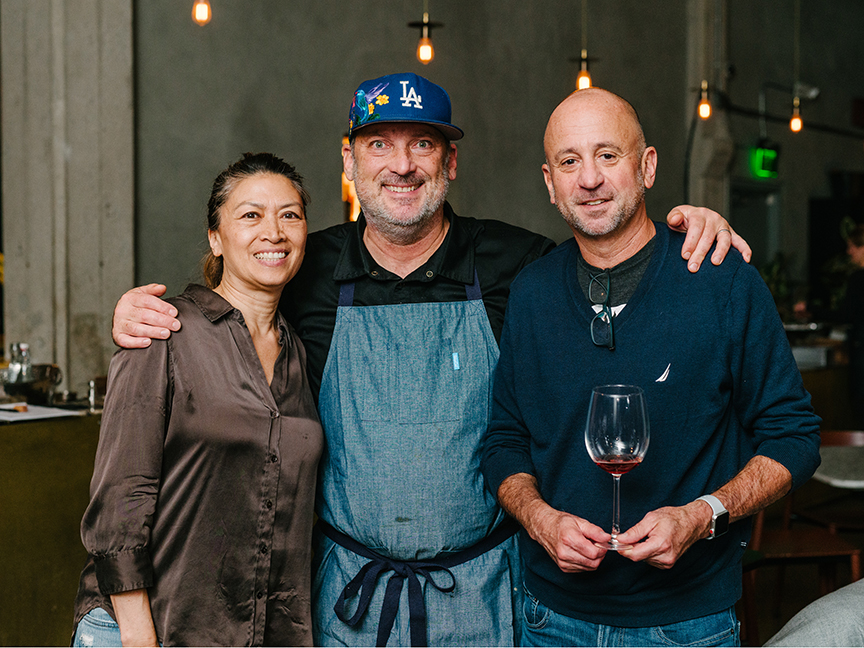
I have to give a shout out to my friends Chef Steve Samson (above, center) and his wife and business partner Dina Samson (above, left).

For seven years, I wrote the wine list at their epic southern Italian restaurant Sotto. It’s one of the chapters of my career that I’m most proud of.

Chef Steve and I met on our junior year abroad in Italy when we were both 19 years old. We became fast friends and it didn’t take long before I was heading down to Bologna with him to play a ton of music and hang with his group of childhood friends. His mom was from Bologna and he spent his summers there as a kid. I was so lucky to connect with him fresh off the boat! And I’m still very close to our Bologna crew.

After college, I headed to grad school and chef began working with the legendary Los Angeles restaurateur Piero Selvaggio.

One of Piero’s best friends was Charles Speroni, one of the major benefactors of the Italian department at UCLA where I did my doctorate. And through that connection, Steve and I were reunited again.

Somehow we both managed to move to New York at the same time. And again, our paths connected over great food and wine and a long history together. In New York, Steve would introduce me to another musician with whom I would play countless shows on the Lower East Side scene.

It just seemed to be destiny that one day we would work together. That moment came in 2009 when he and Dina opened Sotto. Chef’s cooking was praised glowingly by Jonathan Gold in the Weekly and Irene Virbila in the Times. She loved our origin story and retold it multiple times in her column. Los Angeles magazine called our list one of the best programs in the city.

Over the last couple of years, I’ve been presenting wine dinners at their downtown restaurant Rossoblu. And they’re going to be seeing a lot more of me in LA as we launch a couple of exciting new projects. Stay tuned.

Thank you, Steve and Dina! Friends are like good wine and I’ve had the best!

Photo by Jeffrey Chan.

My favorite Italian restaurant in Houston is hosting my wine dinner on Monday, October 28 (menu and details).

There are a lot of high-end and high-concept Italian restaurants in Houston these days and I will always have a soft spot for the hand-extruded spaghetti al pomodoro at Tony’s.

But when people ask me what our favorite Italian restaurant in Houston is, there is only one answer: Davanti, where chef Roberto Crescini makes his own pasta and grinds his own meat for his ragù.

Chef and I have been talking about doing a wine dinner series for a few years now and now, we’ve finally gotten around to putting the first one together.

He, manager Oliver Calza (super cool guy btw), and I worked really hard to make this reasonably priced at $120 inclusive; see menu below. And for those who like the wines and want to take some home, there will also be a retail offering that evening.

The coolest thing is that Roberto is from Brescia! That city has become my home base in Italy over the last 10 years or so. Let’s just say that when Roberto and I connect, we speak each other’s language.

The seating will be limited to 12 people. Please email/DM me if you’d like me to hold you a spot (jparzen@gmail.com).

This is going to be good one, folks! Thank you for the support. I hope to see you then.

In other news, my Abruzzo trade dinner at Rossoblu in LA tomorrow night is full. I’m sorry that we weren’t able to accommodate everyone but I’m so glad to be beating the drum for Abruzzo.

I believe that our Abruzzo food and wine lover dinner on Wednesday night, also at Rossoblu, is almost sold out. But for those who want to grab the last few spots, here’s the link.

Wine Dinner October 28

Aperitivo

Crostino Con Baccalà Mantecato
Raina Umbria Bianco Grechetto 2023

Antipasto

Manhattan Clam Chowder
Marotti Campi Verdicchio
Castelli di Jesi Riserva Salmariano 2020

Primo Piatto

Large Rigatoni Al Cinghiale
Chianti Classico Riecine 2021

Secondo Piatto

Agnello alla Napoletana
Scuotto Taurasi 2019

$120

Wine pairing, tax, and gratuity included.

The queen of all roads, the Ancient Appian Way leads to and through Roman wine country.

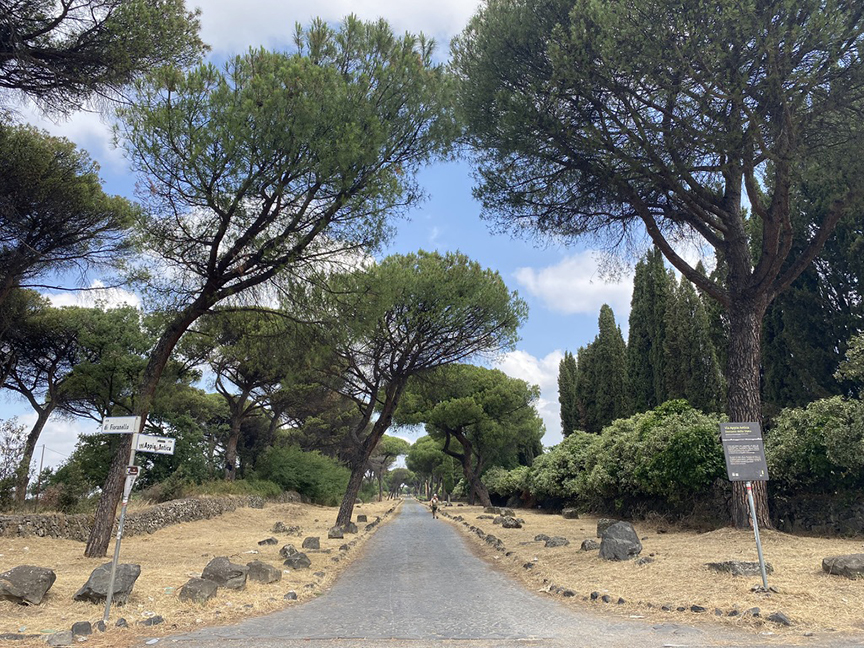
One of the most compelling experiences of my year was walking down the Appia Antica, the original Via Appia. Construction of this road began in the fourth century B.C.E. and when it was completed, nearly a century later, it led from Rome all the way to Capua (just north of Naples).

The section where the above photo was taken is one of the most beautiful stretches and is immaculately maintained.

If you look carefully at the photo above, you’ll note that the photo was snapped at the corner Via Fioranello and Via Appia Antica. Literally a stone’s throw to the right (west) of where I was standing lies the legendary Fiorano farm, where some of Italy’s most compelling wines have been grown since the end of WWII by the Boncompagni family. It’s also the site where some of Italy’s earliest experiments in organic farming and spontaneous fermentation were conducted by Alberico Boncompagni Ludovisi, a winemaker who had an out-sized influence on Italian viticulture (although his name is not familiar to most Italian wine-focused professionals today).

The Antinori’s Alberico estate, named after Alberico Boncompagni Ludovisi, a grandparent to the current generation of the Florentine family, lies across the road from Fiorano.

One of the things that makes this wine growing area so unique is the richly volcanic soils. As I discovered traveling down the Via Appia (the modern version of the road, which runs parallel to the ancient one), the volcano that formed Lake Albano spread volcanic ash for miles and miles to the north and the south. As a result, these lands have been coveted by wine growers since antiquity.

This July, I did a short trip along the Via Appia to visit a number of wineries there. It was a fascinating, inspiring experience. And one of the best moments came when I was given access to part of the less traveled and less tourist-friendly section.

This is the first in a series of posts where I’ll recount my journey. But it had to begin with the breathtaking moment that I first viewed the Appia Antica, the Ancient Appia. As cliché as it sounds, I could feel history and viticultural legacy pulse through my blood. It was exhilarating. Stay tuned and thanks for being here.

And for the thrifty traveler, I recommend a wonderful little hotel in Ciampino (to the left or east of where I took the above photo). It’s called Plaza Rooms Ciampino and had no services. But it was super clean and had the best wifi I’ve ever seen in Italy. It was affordable and for those wanting to go in the Rome center, it’s a 30-minute commuter train ride away. Ciampino, a small town where one of Rome’s domestic airports is located, had some fun pizzerias, too.

The first-ever mention of Nebbiolo dates back to the early 14th century. Here’s my translation, with context. A preview of my Crescenzi book and a thanks to Tenuta Carretta for the assist.

If I had a 1,000 lira note for every time someone quotes the “first-ever mention of Nebbiolo” without ever having read the original text beyond an off-hand paraphrasis in another writer’s periphrasis.

The following passage comes from Pietro de’ Crescenzi’s early 14th-century Latin treatise on agriculture, a work scholars agree is the most important book on Medieval farming practices. Crescenzi came from a noble Bolognese family and worked as an itinerant lawyer. His career took him to different parts of Italy where he observed farming and viticulture. I’m currently completing a translation for a university press.

“And there is another species of black grape that is called Nubiolum. It is delicious to eat. And it is wonderfully juicy and has slightly long berries. It does best in nutrient-rich soil that has been well manured. It does not perform well without direct sunlight and it buds early. It makes for excellent age-worthy, especially strong wine. Its berries should not be left on the clusters for more than one or two days. And this grape is highly prized in the city of Asti and surroundings.”

Thanks to a CMO grant, I’ve also been working on a translation of a work on the Tenuta Carretta winery for my friend Giovanni Minetti, the winery’s CEO.

The author offers a deep dive into feudal Piedmont in the 14th century, including a compelling narrative of the city of Asti’s power over the region at the time. Crescenzi worked for a time at the Asti court and he drank wines from “Nubiolum” there.

The Carretta translation has been extremely useful in preparing my critical apparatus for my Crescenzi book. Ultimately, the background provided will also be meaningful in an essay I’ve been writing for nearly a decade now: notes on wine in Boccaccio and in particular the tale of the Marchioness of Monferrato (where Asti is located).

Stay tuned and thank you Giovanni!

Malvidin is the anthocyanin that makes Montepulciano d’Abruzzo so unique. Taste with me Oct. 15 and 16 in LA at Rossoblu.

“The common anthocyanidins found in grapes are cyanidin, delphinidin, peonidin, petunidin, and malvidin,” write the editors of the U.C. Davis Waterhouse Laboratory’s blog. “In red grape varieties, Malvidin-3-glucoside is the most populous representing about 40% of the anthocyanins and makes up the majority of the red pigments that are acylated.”

The word anthocyanin comes from the Greek antho- for flower and cyan- for blue. It’s pronounced: antho-SIGH-a-nin.

Malvidin, from the Latin malva for mallow, is what makes red wines red.

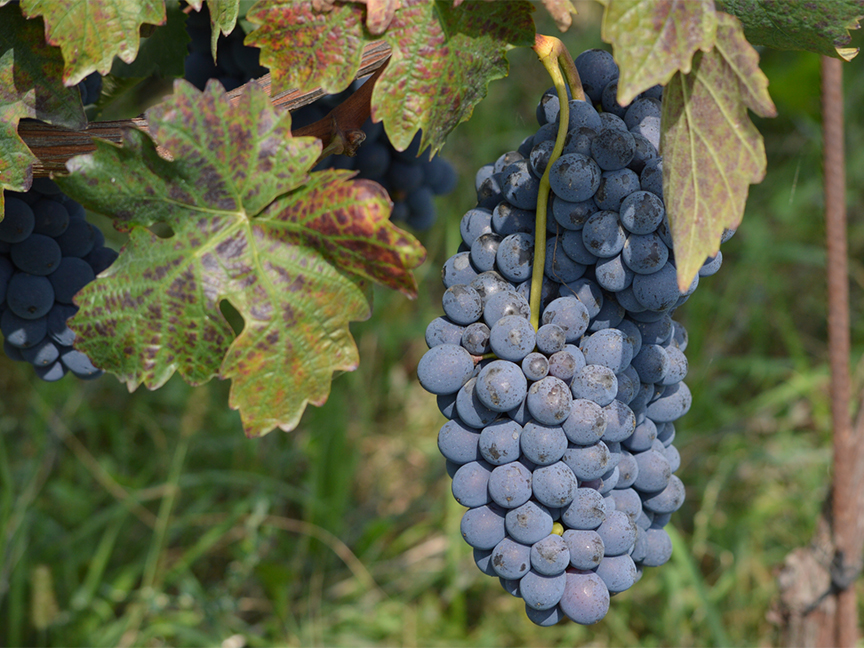
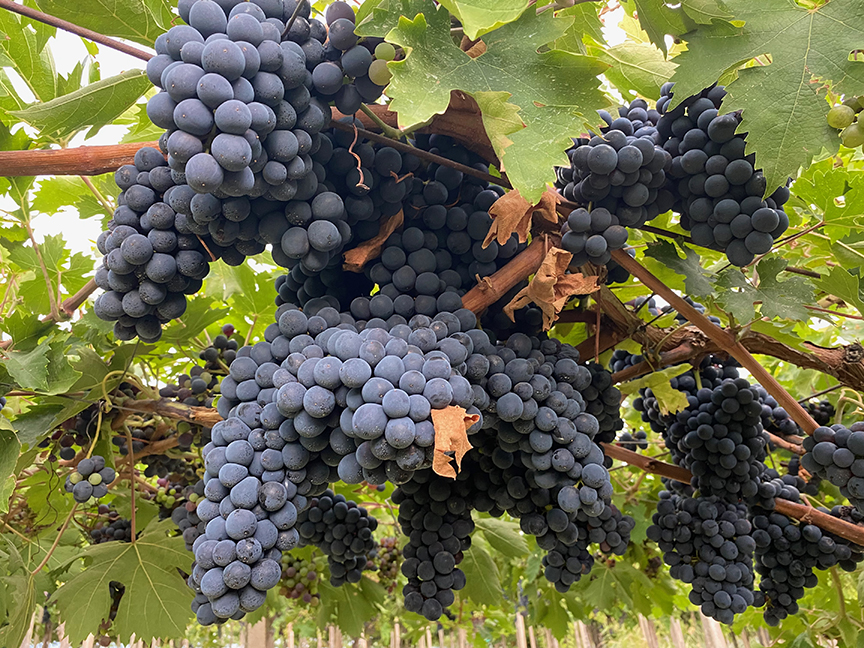
The Montepulciano grape, which is used to make Montepulciano d’Abruzzo and Cerasuolo d’Abruzzo, is one of the varieties with the highest levels of malvidin.

As a result, during maceration, Abruzzo winemakers can obtain the color they want without “over-extracting” the wine. In other words, they can achieve the rich color for which Montepulciano d’Abruzzo and Cerasuolo d’Abruzzo are so famous for without making the wines excessively tannic and bitter. It’s part of the magic of this extraordinary grape.

On Tuesday, October 15, I’ll be leading a trade dinner hosted by the Abruzzo consortium at Rossoblu. If you work in any capacity in the food and beverage industry, you are invited! Please send me an email (jparzen@gmail.com) to snag your spot. It’s completely free to any and all trade who would like to attend.

And the next night, Wednesday, October 16, I’ll be presenting a food and wine lover dinner, again featuring the wines and cuisine of Abruzzo.

Here’s the link to sign up. The dinner cost is $95, the wine pairing is $45. It’s a great deal and we’ll be doing a retail offering at the event as well.

I hope to see you in LA! Any support from trade for the Tuesday night dinner is greatly appreciated. Thanks to everyone. Happy new year and have a great weekend!

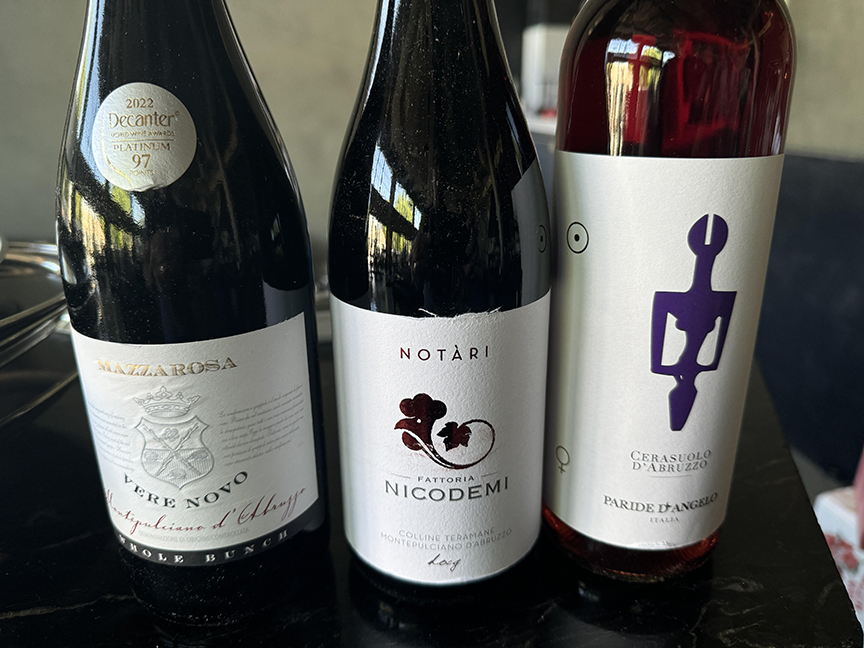
Here’s a little preview of some of the wines we’ll be pouring at the trade event. Thanks for the support and solidarity!