
 It seems like another world, doesn’t it?
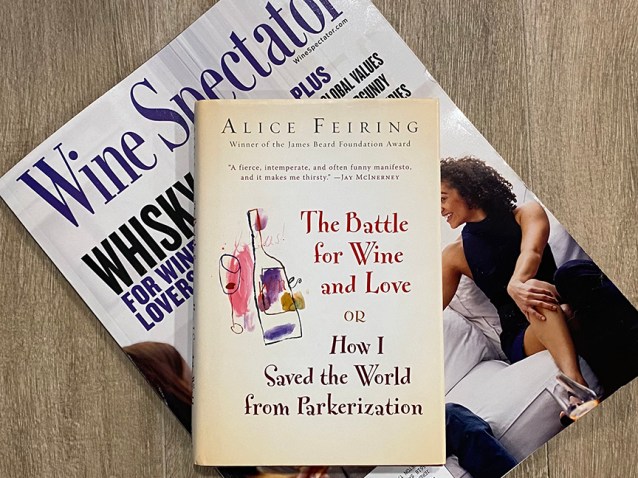
The iPhone had only been existence for a year, Facebook was just beginning to take off, the financial crisis was in full swing, and Alice Feiring released her controversial book, The Battle for Wine and Love or how I Saved the World from Parkerization.
The year was 2008 and a bold new wine culture was emerging in the U.S. By that point, 30 years had passed — yes, three decades! — since Robert Parker introduced the world to his 100-point scoring system in 1978.
Wine Spectator adopted the 100-point system in 1985, some seven years after it was first employed by Parker. (The score-less masthead had been launched two years prior to Parker’s Wine Advocate, in 1976.)
But it took nearly a quarter of a century before Alice’s shot that was heard around the world.
It’s incredible to think how many years passed before anyone really seemed to care about wines scores — except for consumers and the winemakers themselves.
But by the end of the first decade of this century, “Parkerization” had become public enemy number one for the newly emerging hipster wine crowd.
At Slow Food University where I teach wine communications in the grad program, the students look up with glazed-over eyes when I do an overview of how scores affect wine sales and production. Most of them haven’t even heard of Parker or Spectator — no joke.
On the one side, detractors argue that scores reify wine through a purely subjective exercise.
On the other side, supporters contend that scores have made European wine more accessible to a generation of Americans. President Chirac didn’t make Parker a Chevalier of the Legion of Honor for nothing.
Today, retailers and collectors across the U.S. rely on scores. In Asia, by all accounts, scores are a key element in how wine is marketed.
There’s more than some validity to the argument that historically scores have helped to raise the status of wine as a luxury product across a wide demographic, global swath. To that point, aligning oneself with those against scores is also a means for promoting a wine.
Future generations may not care about them, but they continue to drive the industry in intuitive and counter-intuitive ways.
Congratulations to my client and above all friend Michele Marsiaj and his winemaker Luca D’Attoma on the 95 point score their Amistà Nizza Riserva has received from James Suckling. It’s the first Nizza, they believe, to be awarded such a high rating. Now, that’s something, isn’t it?
 Do Bianchi