
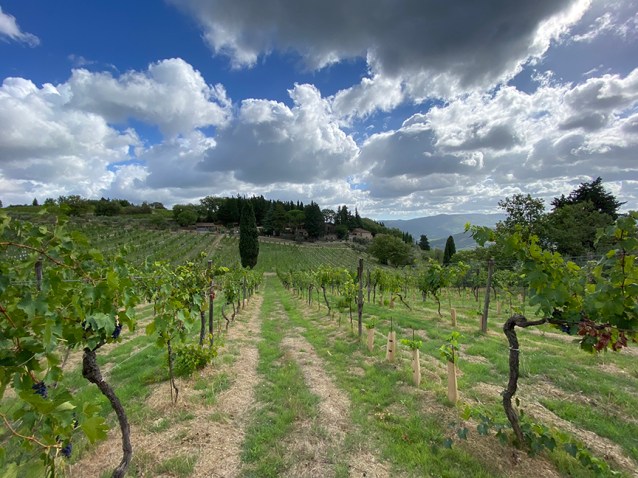
 Back in early September as the red grape harvest was just about to begin in central Italy, I visited the Montefili farm and winery in Panzano in the heart of Chianti Classico. It was a glorious and highly photogenic time to be in the vineyards. But the thing I was most interested in photographing was the rocks.
Disclosure: the estate is owned by my friend and former employer Nicola Marzovilla.
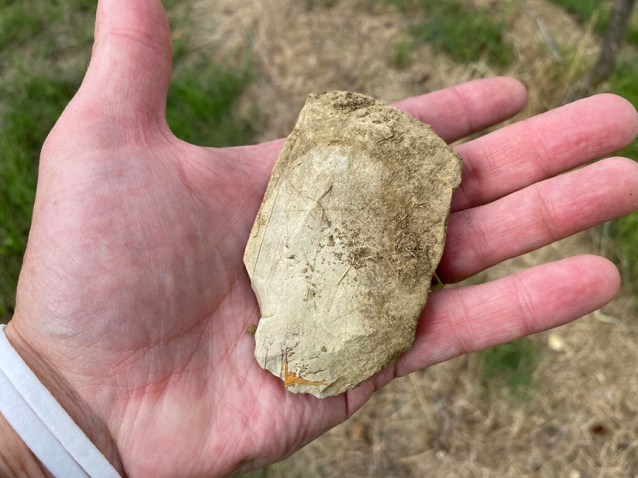
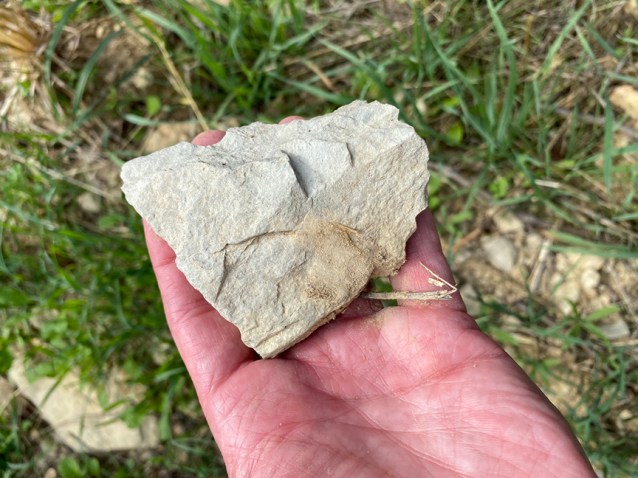
Those are classic examples of galestro above and alberese below.
Note how the galestro is almost yellow in color while the alberese is nearly white.
Philologists don’t entirely agree on the origins of the term galestro but some believe it comes from the French glaise meaning clay.
The word alberese, most agree, comes from the Latin alba meaning white.
 Although these types of rocks can be found in other parts of Tuscany, Chiantigiana is where you’ll find their highest concentration. And while rocks similar to alberese are found in other parts of Europe, galestro seems to be unique to the Tuscany.
Alberese is generally defined as limestone, in other words, calcareous deposits formed in ancient seabeds.
The best definition I can find for galestro is that penned by wine writer and Tuscan wine expert Monty Waldin as “a rock formation of stone (mudstone or clay but not compact clay) and sand which will become clay, but has not yet reached the full clay stage.”
As the great Chianti-focused vineyard manager Ruggero Mazzilli writes, galestro is typically found at the highest altitudes in Chianti while alberese is found closer to the valley floors.
I highly recommend his excellent post “How changes in vineyard altitude within the Chianti Classico region affect climate and soil factors” where he discusses these and other Chianti soil types in great detail. (Scroll down for the English translation.)
 In my experience, galestro soils tend to deliver wines with a more robust fruit character while wines made from fruit grown in alberese soils can be more mineral and savory.
One thing however is certain, as Mazzilli writes, “Sangiovese, as a varietal, has an enormous capacity to adapt its behavior based on the environment in which it is grown.” And as he notes, these soil types (and others present in Chianti) are an important element in shaping their unique qualities.
I still don’t have all the details but I will be leading a Chianti seminar at Vinology in Houston on Thursday, February 2. We’ll be tasting wines from different parts of Chiantigiana and talking soil types and growing conditions. It’s going to be a fun time for sure. Please save the date!
 Sometimes wine is work. Sometimes it’s fun. When the two overlap, it’s always a joy. But when it’s pure fun, the experience can be truly transcendent.
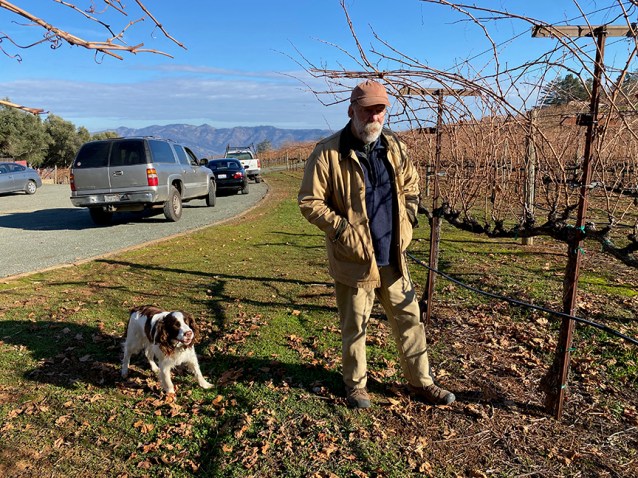
 That’s a view of the northern tip of the Napa Valley as seen from Stu and his brother Charles’ property. They first planted grapes their in 1972. Today, their wines are one of California’s top wines. Think of that! 1972! Think how the world was different then and how different our perceptions of wine.
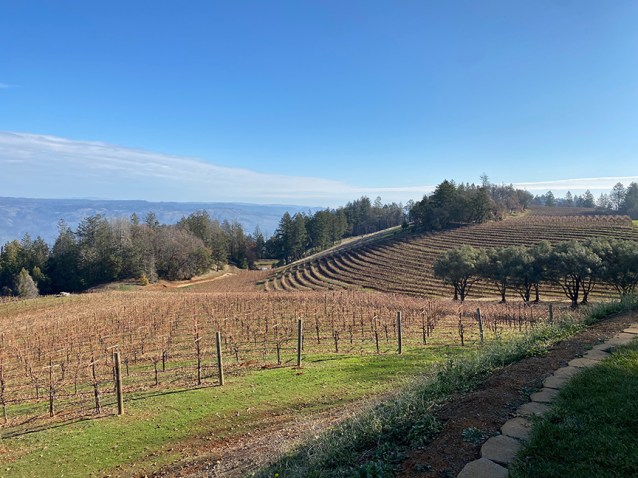 I was actually in wine country for an Italian client of mine, believe it or not (that’s another story for another time).
 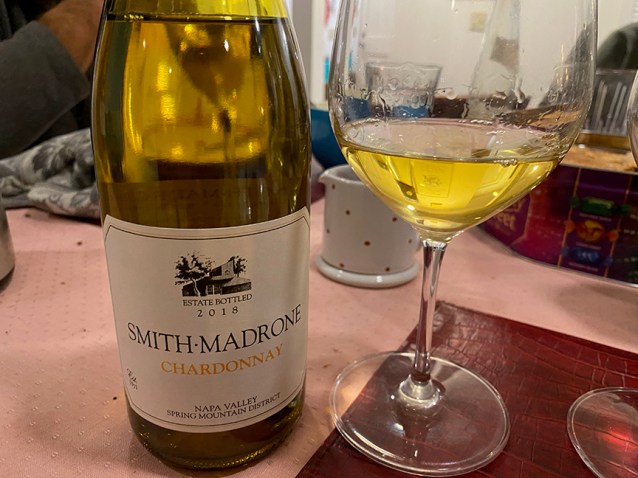 I’ve always been a huge fan of the wines and I was stoked to get to spend some extended time with them when I worked on the Slow Wine Guide.
 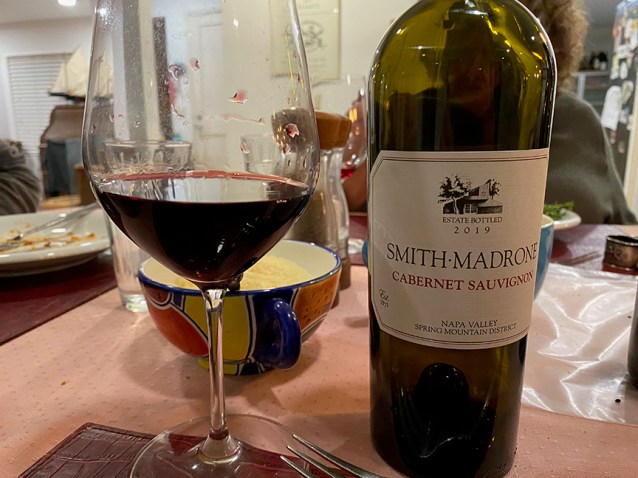 During our vineyard tour, we talked about training methods (he likes cordon for his Cabernet Franc), about row orientation (he’s done some interesting things with contour vs. non-contour planting), and fire prevention.
 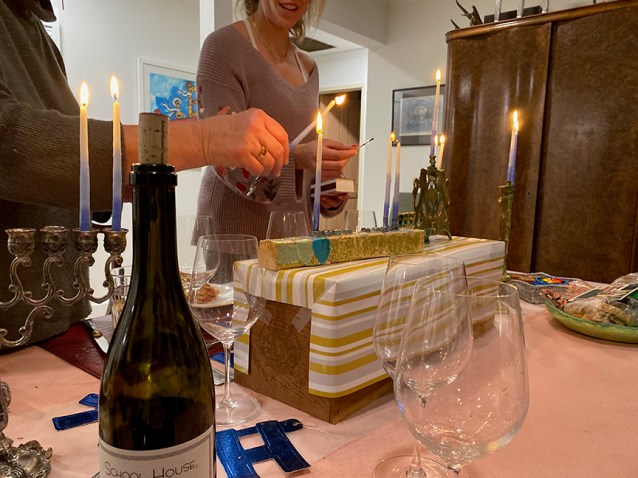 After dinner, I said to Julie Ann, “wow, that was like getting to have dinner with Bruce Springsteen!” It’s not every day that you are invited to sit at the table of one of the winemakers you admire most.
 Do Bianchi